Fika: What Sweden Actually Means By It
Not a coffee break. A scheduled pause, usually twice a day, that the working day is built around rather than interrupted by.
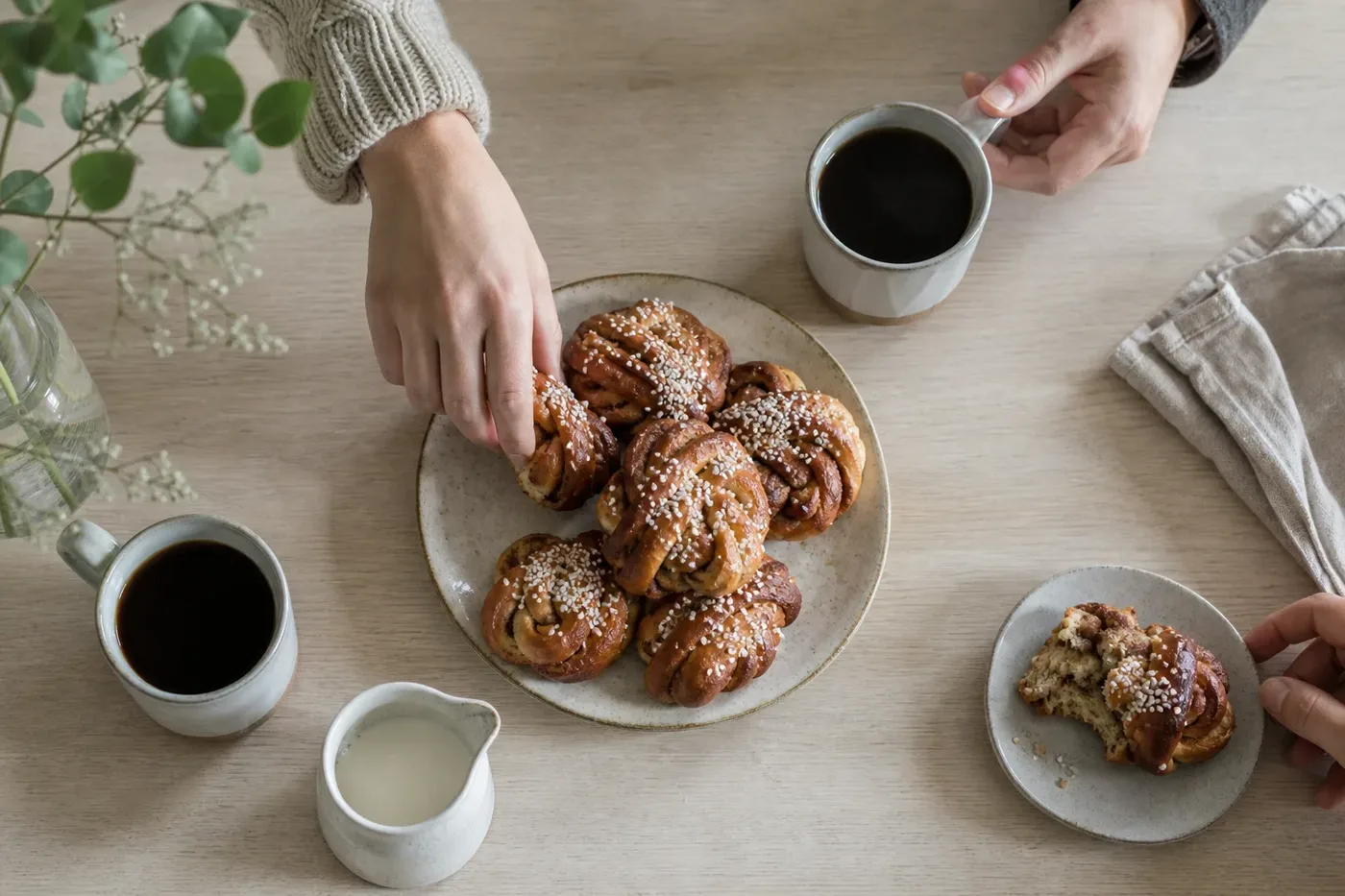
Fika is a scheduled pause, taken with other people, involving coffee and usually something sweet. Translating it as "coffee break" loses the two parts that matter: it is social by definition, and it is planned into the day rather than squeezed around it.
Where the word fika comes from
Fika is back-slang. Nineteenth century Swedish reversed the syllables of kaffi, an old spelling of coffee, to make fika, in the same playful way English produced back-slang of its own. It works as both noun and verb: you can have a fika and you can fika, and "ska vi fika?" is an invitation to sit down with somebody.
Fika as a workplace institution in Sweden
This is what usually gets lost in the exported version. In a great many Swedish workplaces fika happens at roughly fixed times, often mid-morning and mid-afternoon, and people stop and go. It is not individual, it is not taken at your desk, and it is not optional in the sense that skipping it repeatedly is noticed.
The reasoning is straightforwardly practical: it flattens hierarchy for fifteen minutes, it is where colleagues who would not otherwise speak actually talk, and the information that moves in it is real. Companies that treat it as a perk to be trimmed tend to discover what it was doing.
What is eaten at fika
Something sweet, and the canonical choice is a kanelbulle, a cardamom-scented cinnamon bun. Cardamom rather than cinnamon is the Nordic signature and it turns up across Swedish baking. At the formal end there is fikabord, a spread of several cakes and biscuits, and a traditional standard of seven sorts for a proper occasion.
The pairing is not incidental. The coffee is drunk with the food rather than before or after it, which is part of why Swedish coffee is brewed the way it is.
The coffee served at fika
Filter, usually, and typically light. The Nordic countries roast lighter than almost anywhere else, which produces a cleaner, more acidic cup that cuts through sweet baking rather than competing with it. A dark, bittersweet espresso next to a cinnamon bun is two heavy things at once; a light roast is the better partner and the regional preference is not a coincidence.
It is also usually made in quantity, in a drip coffee maker or a pot, because fika is several people at a table rather than one person at a counter. Sweden is consistently near the top of the world's per-head coffee consumption tables, and twice-daily fika is most of the explanation.
Cinnamon bun day, semla and the fika calendar
Sweden has a national cinnamon bun day on 4 October, kanelbullens dag, which was invented by a baking industry association in 1999 and adopted with complete sincerity. Semla, the cardamom bun filled with almond paste and cream, has its own season running to Shrove Tuesday. There is a waffle day and a saffron bun at Christmas.
The point is not that Swedes invented eating cake. It is that fika has a supporting calendar, which is what an institution looks like from the outside: not an individual preference but a thing the year is organised around.
How to do fika properly outside Sweden
The transplantable part is not the bun. It is stopping, at a set time, with other people, away from the desk, with no agenda. Everything else is detail. A fika taken alone with a laptop open is just a coffee, which is fine, and it is not what the word means.
If you want the full version, brew filter rather than espresso, make enough for everybody, put something sweet out, and do not check your phone. The Ethiopian ceremony takes the same idea considerably further in the other direction.
Fika at home
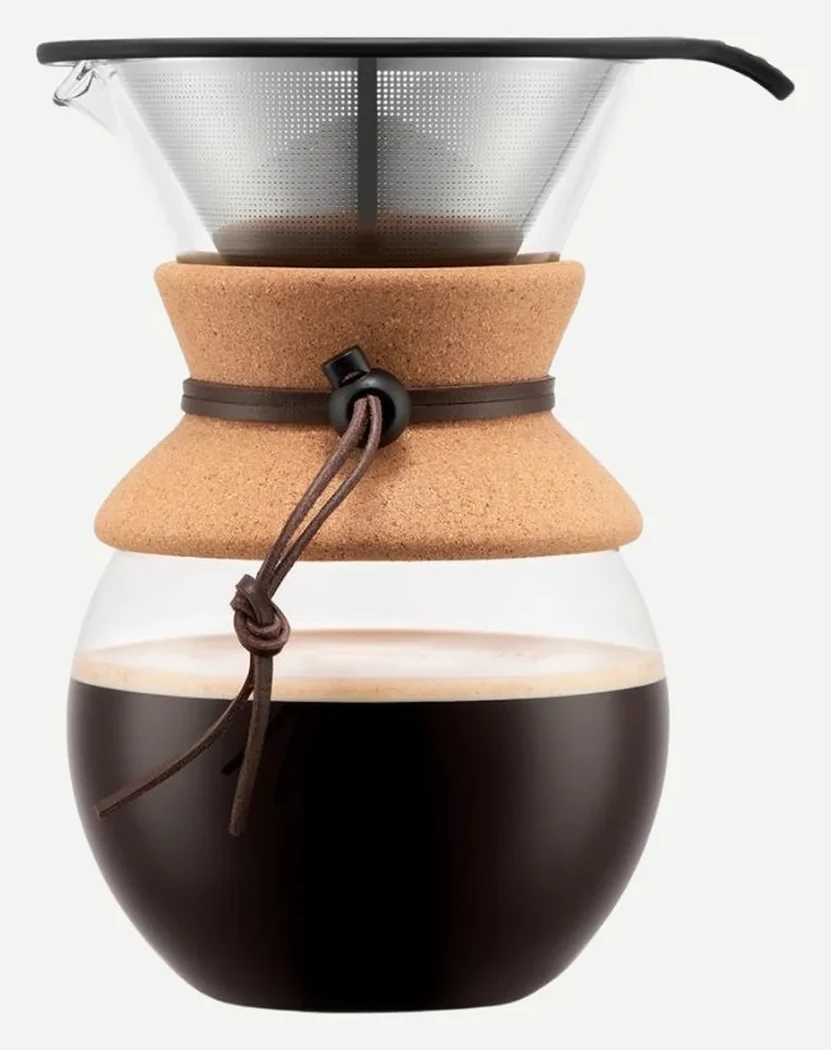
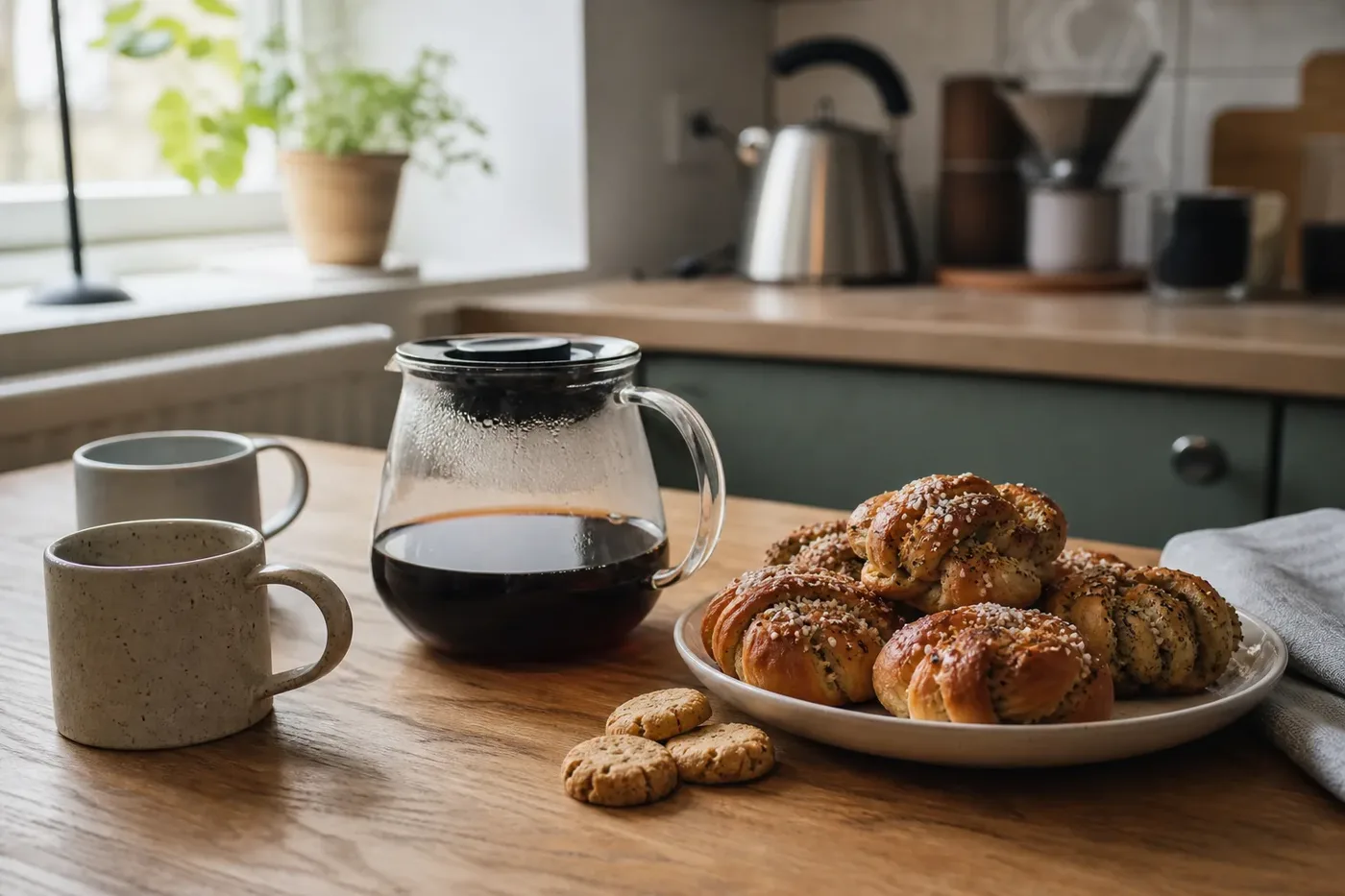
The home version is the same idea at the kitchen table: a pot of filter coffee, something sweet, and people sitting down together, usually in the afternoon. A visitor to a Swedish home can expect to be offered one. The coffee is poured for everybody at once from one pot, which is why an automatic drip coffee maker or a large pour over carafe is the usual kit rather than an espresso machine.
Light roast is not weak coffee
Swedish filter coffee is light in roast, and people used to dark roasts often expect it to be thin. It is not, because roast colour and strength are separate things. Strength comes from how much coffee goes into the water, and a light roast brewed at the usual filter ratio, around 60 grams per litre, tastes full and clean. The coffee to water ratio covers how to set it.
Kokkaffe, the older Swedish boiled coffee
Before drip machines, much of Scandinavia made boiled coffee, kokkaffe: coarse grounds simmered in a pot of water, then left to settle before pouring. It is still made at summer cottages and over campfires. In the far north of Sweden and in Finland one version puts cubes of a mild, squeaky cheese called kaffeost into the cup, which soak up the coffee and are eaten with a spoon. Filter coffee has since replaced boiled coffee at most tables.
Fika at work outside Sweden
Companies abroad have copied the custom, and the ones that make it work keep the parts that make it fika: a fixed time, everybody invited, and a reason to stop, usually coffee and cake. A machine in the corner is not a fika. A fifteen minute break at three o'clock that the whole team takes together is. For a room full of people, see coffee makers for an office.
Fika FAQ
What does fika mean?
A scheduled social pause with coffee and usually something sweet. The word is nineteenth century back-slang: the syllables of kaffi, an old spelling of coffee, reversed. It works as both a noun and a verb.
Is fika just a coffee break?
No, and the difference matters. It is social by definition rather than individual, it happens at roughly fixed times rather than whenever you need one, and it is taken away from the desk. A coffee drunk alone at a laptop is not a fika.
What coffee is drunk at fika?
Filter coffee, usually lightly roasted. The Nordic countries roast lighter than almost anywhere, which gives a cleaner and more acidic cup that cuts through sweet baking instead of competing with it.