Torrefacto Coffee Beans: What Sugar Roasting Does to Taste
Sugar added to the beans during roasting, where it caramelises and then burns. A Spanish tradition born of scarcity that never went away.
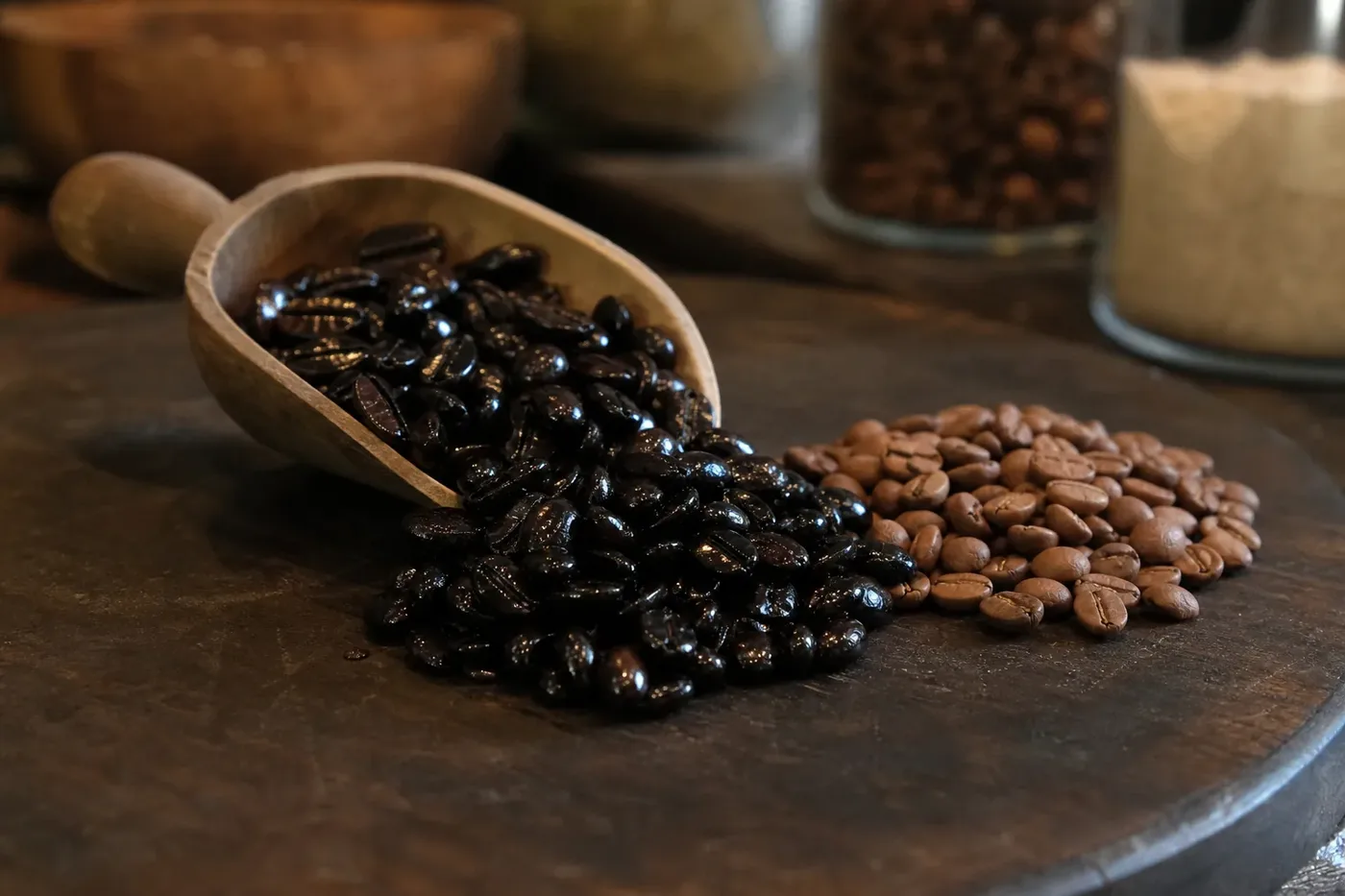
Torrefacto is a roasting method, not a bean. Sugar is thrown into the drum near the end of the roast, where it melts over the beans, caramelises and then starts to burn, leaving them glossy, almost black, and slightly tacky to the touch.
It is standard in Spain and common in Portugal, Argentina, Paraguay, Uruguay and Costa Rica. If you have drunk coffee in a Spanish bar and found it aggressively dark and faintly burnt in a way you could not place, this is probably why.
Why torrefacto exists: coffee was expensive
The method spread through Spain in the first half of the twentieth century, through civil war and the years of rationing that followed, and the reasons were economic rather than culinary. The sugar glaze seals the bean and slows oxidation, so roasted coffee kept longer in shops without decent storage. It also added weight, and it let sellers stretch a scarce and costly product.
What is interesting is that the shortage ended and the taste did not. Two generations grew up on it, and a flavour people grow up on stops being a compromise and becomes what coffee is supposed to taste like.
What torrefacto does to the taste of coffee
The sugar does not sweeten it. By the end of the roast it has gone past caramel into carbon, so the result is more bitter rather than less, with a heavy body, a lingering burnt-sugar edge and very little acidity. Origin character is gone entirely, which for a cheap bean is arguably the point.
It is a more extreme version of what any dark roast does. Roasting hard is how a roaster makes different beans taste the same; torrefacto takes that to its logical conclusion and adds a coating on top.
Torrefacto mezcla: the blend you are actually drinking
Pure torrefacto is uncommon on a shelf. What you usually buy in Spain is mezcla, a mixture of natural-roasted and torrefacto beans, most often somewhere between 20 and 50 percent torrefacto. The packet states the proportion, and that number tells you more about how the coffee will taste than anything else printed on it.
How to spot torrefacto beans
The beans are darker than a dark roast and distinctly shiny, and they tend to clump slightly because the glaze is sticky. That shine is not the same as the surface oil on a very dark natural roast, which is a different thing entirely: one is the bean's own oil pushed out by heat, the other is burnt sugar applied from outside.
In writing, look for the words torrefacto, mezcla, or in Latin America sometimes just "azucarado". If the ingredients list mentions sugar at all, that is your answer, because ordinary roasted coffee has exactly one ingredient.
Is torrefacto bad coffee?
It is a tradition rather than a fraud, and dismissing it is easy and a bit lazy. What is fair to say is that it removes the possibility of tasting the bean, so it is incompatible with everything specialty roasting is trying to do, and it hides quality differences that a roaster publishing a roast date is trying to show you.
It also behaves differently in a machine. The glaze caramelises further under espresso pressure and can leave residue in a grinder and a group head, so if you use it regularly, clean more often than you otherwise would.
What to drink instead of torrefacto
If what appeals is the heavy, bittersweet, low-acid character rather than the sugar, a well-made medium-dark roast gets you most of the way with none of the coating, and it survives milk just as well. The coffees we have reviewed are filterable by roast level for exactly that reason.
Where you will find torrefacto
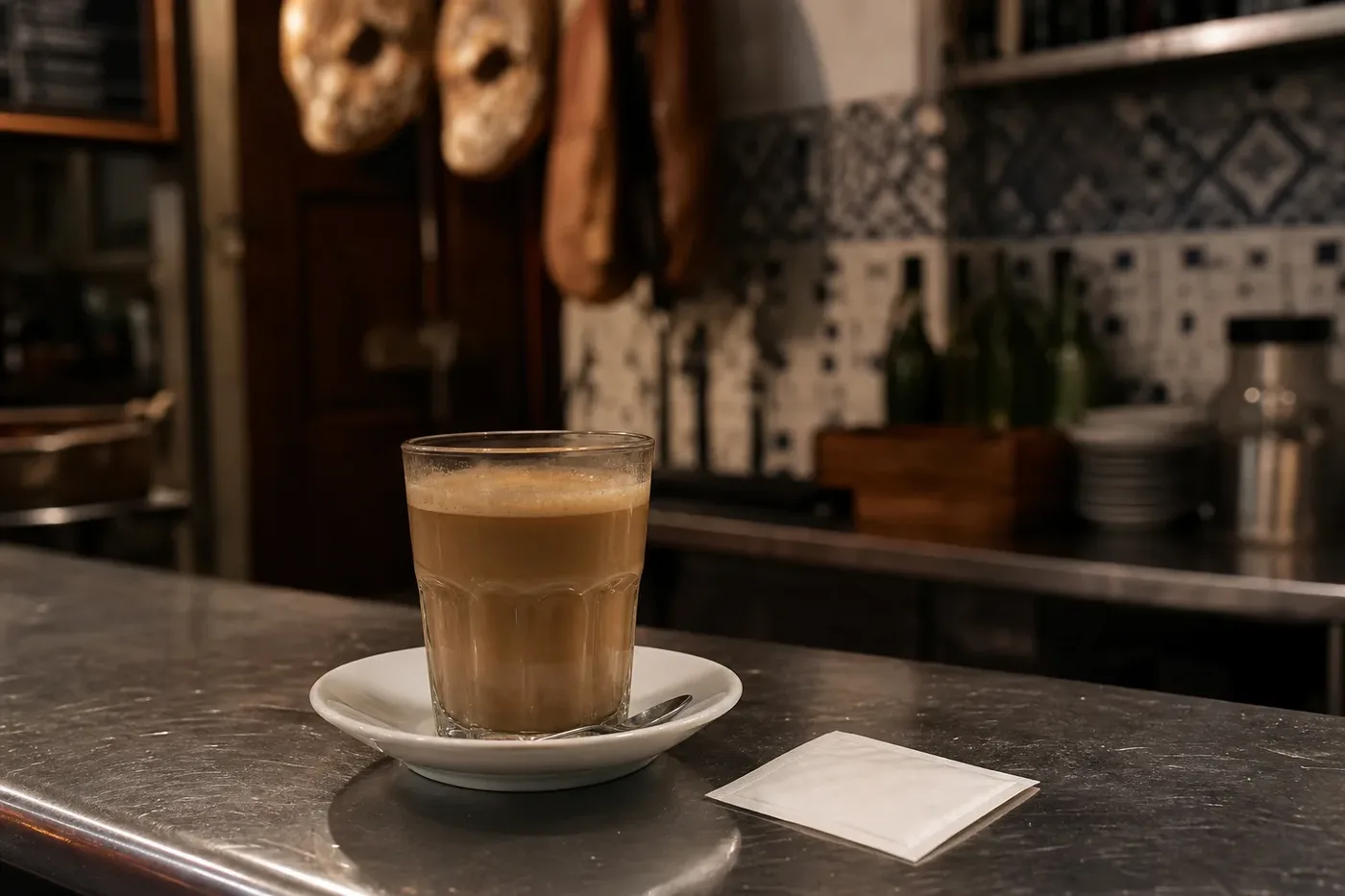
Torrefacto is most at home in Spain, where it became common during years of shortage and never fully left, and it also turns up in Portugal, parts of Latin America and some supermarket blends elsewhere. In Spain you are most likely to drink it in an ordinary bar's cafe con leche, often as a mezcla, rather than in a specialty cafe, which will almost always use natural roast coffee. On a supermarket shelf the word is printed on the pack, usually beside natural or mezcla, so it is easy to choose or avoid.
How to brew torrefacto coffee
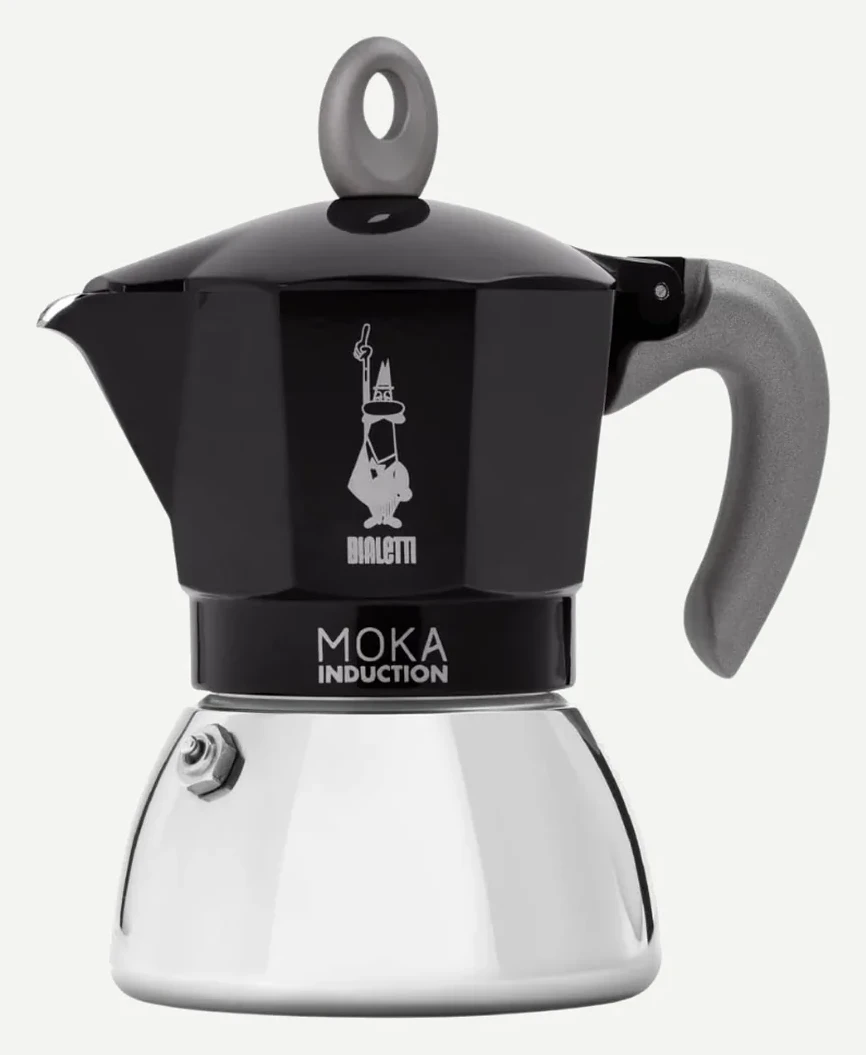
Torrefacto coffee is very dark and very soluble, so it over-extracts easily. Use a little less coffee than usual, water just off the boil rather than boiling, and a shorter brew. It is at its best the way Spanish bars serve it, with plenty of hot milk, which softens the burnt-sugar edge into something closer to caramel. Drunk black, a moka pot or a quick French press is kinder to it than a long drip brew. Our guide to using a moka pot covers the stovetop method most Spanish homes use.
Torrefacto FAQ
Does torrefacto coffee taste sweet?
No, the opposite. The sugar is added late in the roast and goes past caramel into carbon, so it reads as bitter and burnt rather than sweet. It adds body and a lingering burnt-sugar edge, and removes most of the acidity.
Why do Spanish coffees use torrefacto?
It spread during the twentieth century for economic reasons: the sugar glaze slowed oxidation so coffee kept longer, added weight, and stretched a scarce and expensive product. The scarcity ended and the taste stayed, because two generations grew up on it.
What does mezcla mean on a coffee packet?
A blend of natural-roasted and torrefacto beans, usually between 20 and 50 percent torrefacto, with the proportion stated on the pack. That number tells you more about how it will taste than anything else printed on it.