Espresso Tonic: What It Is and How to Make It
A shot of espresso poured over iced tonic water, first made in Oslo in 2007. Why the espresso goes in last, and how to make one at home.
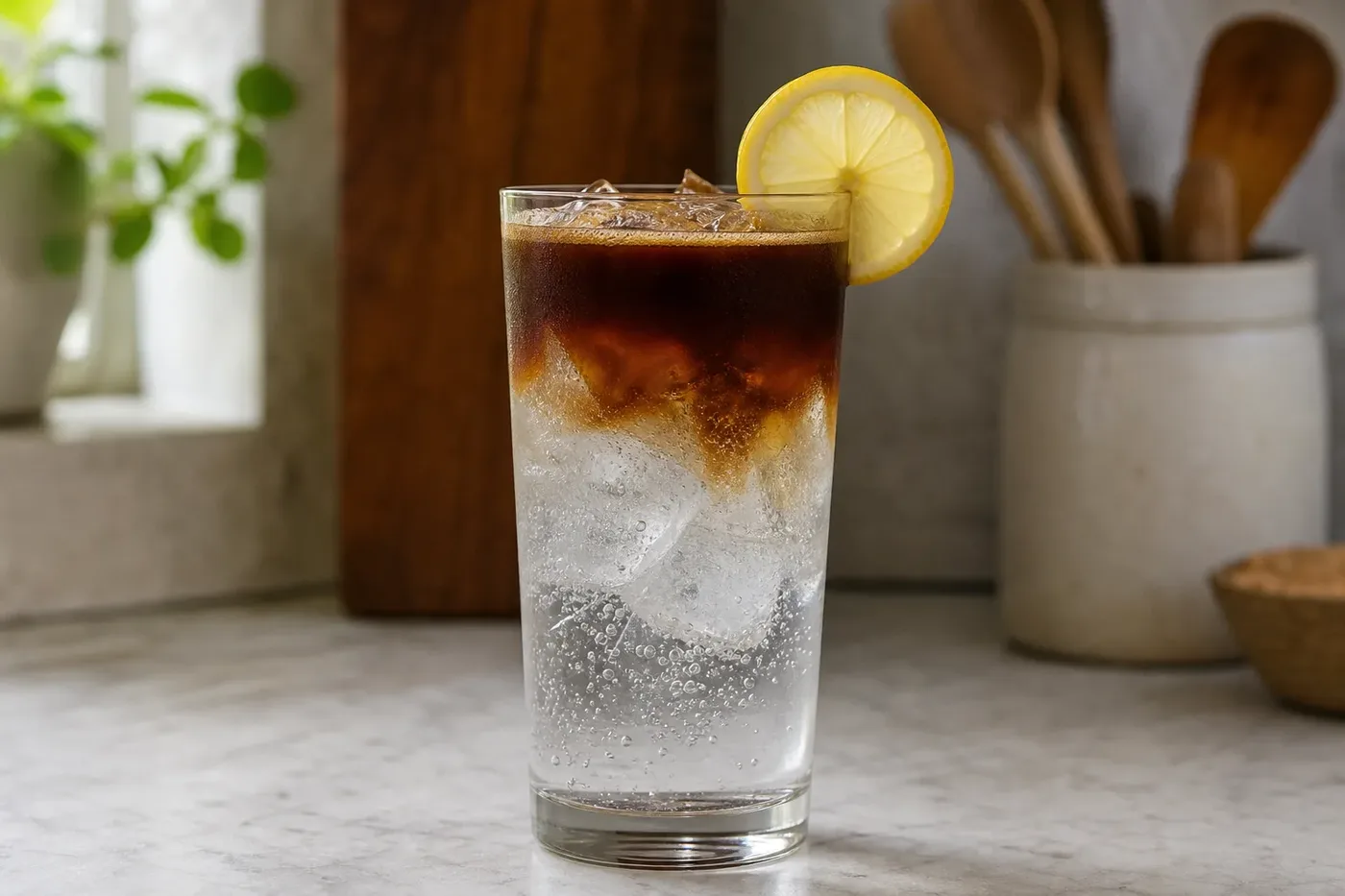
An espresso tonic is a shot of espresso poured over tonic water and ice. It is bitter, sparkling and a little sweet, and it looks striking in a clear glass: the espresso sits on top of the tonic as a dark layer before it slowly sinks.
Where it comes from
The earliest record of the drink is from Oslo in 2007, where it was mixed by a barista working with Anne Lunell and Charles Nystrand, who went on to found the Swedish roaster Koppi. Later that year it appeared on Koppi's own menu in Helsingborg, Sweden, as "Kaffe & Tonic", and from there it spread into specialty cafes elsewhere.
Why the espresso goes in last
The order matters. Pour the espresso onto cold tonic and you get a neat layered drink. Pour the tonic onto the espresso and you get a large head of foam that can spill over the glass.
The reason is the bubbles. Tonic is full of dissolved gas, and espresso is full of oils and fine particles that give that gas somewhere to form bubbles. Poured into the espresso, the tonic foams all at once. Poured slowly on top of cold tonic, the espresso meets far less of it at a time and keeps the fizz in. The same logic is why the Fat Americano, espresso over cola, also puts the coffee in last.
How to make one
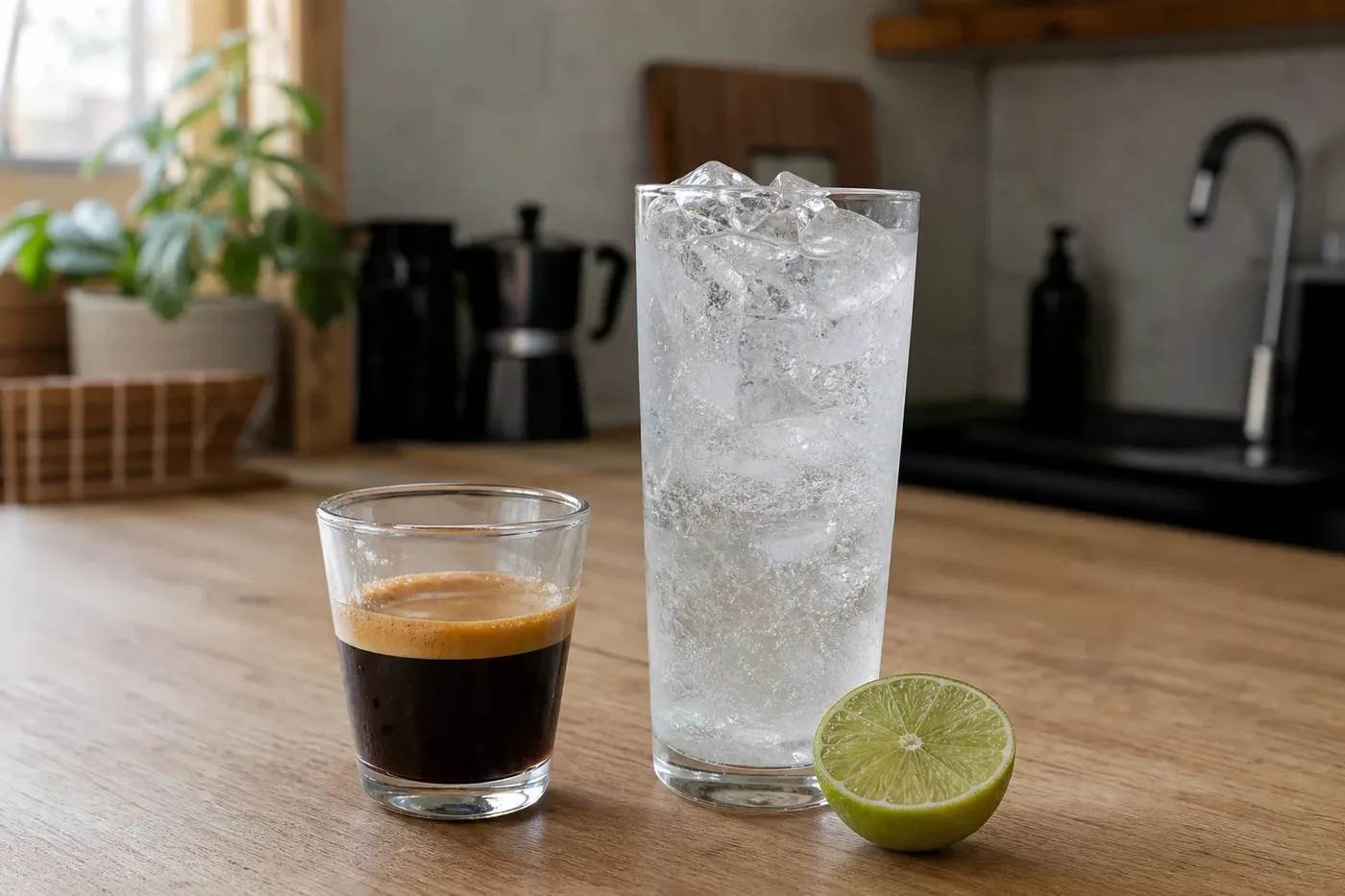
There is no official ratio, and recipes vary. Most start with a glass of ice, fill it with tonic to around two thirds, and pour a single shot over the top. Adjust from there: more tonic for a lighter, more refreshing drink, less for more coffee.
- Fill a tall glass with ice.
- Add cold tonic water to about two thirds of the glass.
- Pull a shot of espresso.
- Pour it slowly over the back of a spoon or down the side of the glass, so it settles on top.
Some cafes add a little sugar syrup or a slice of lemon, and flavours such as cherry, lime or honey turn up on menus too. The plain version is the one to try first.
How it tastes
The first sip is mostly espresso, strong and a little sour from the coffee's own acidity. As the shot sinks into the tonic, the drink turns lighter and fizzier, and the quinine in the tonic adds a dry, bitter edge of its own. That is two kinds of bitterness in one glass, coffee and quinine, softened by whatever sugar the tonic carries, which is why the choice of tonic changes the drink so much. Stirring it gives you one even taste from top to bottom; leaving it lets the drink change as you go.
Espresso tonic vs Fat Americano
Both are an espresso poured over something cold and fizzy, with the coffee going in last. The difference is sugar. Tonic is dry and bitter, so an espresso tonic tastes adult and sharp; cola is sweet, so a Fat Americano tastes closer to a soft drink with coffee in it. Pick the tonic if you drink your coffee black, and the cola if you take sugar.
Which coffee and which tonic
This is a matter of taste rather than rule, but the logic is simple. Tonic brings its own bitterness from quinine, so a very dark, bitter espresso on top of it can taste harsh. A lighter, fruitier espresso tends to work better, because its brightness sits well against the tonic. Tonics also vary a lot in sweetness: a drier one lets the coffee show, a sweeter one makes the drink closer to a soft drink.
Caffeine
All the caffeine comes from the espresso, because tonic water has none. A single shot carries roughly 60 to 75 mg by the figures in our guide to caffeine in coffee, so an espresso tonic has about the same as a short espresso, just stretched into a long, cold drink.
Common questions
What is an espresso tonic?
A shot of espresso poured over tonic water and ice, served as a long, cold, sparkling drink.
Who invented espresso tonic?
The earliest record is from Oslo in 2007, made by a barista working with the future founders of the Swedish roaster Koppi, which put it on its menu in Helsingborg later that year as Kaffe & Tonic.
Why do you pour the espresso on top?
Poured onto cold tonic, the espresso settles as a layer and the fizz stays in. Pouring tonic onto espresso makes a large head of foam that can spill over.
Does espresso tonic have caffeine?
Yes, from the espresso only, since tonic water has none. A single shot carries roughly 60 to 75 mg.