Fat Americano: The Korean Espresso and Coca-Cola Drink
A double shot poured over a cold can of Coca-Cola and a glass of ice. Alex Choi served the first one in Korea in 2014, and the order of the pour is the whole technique.
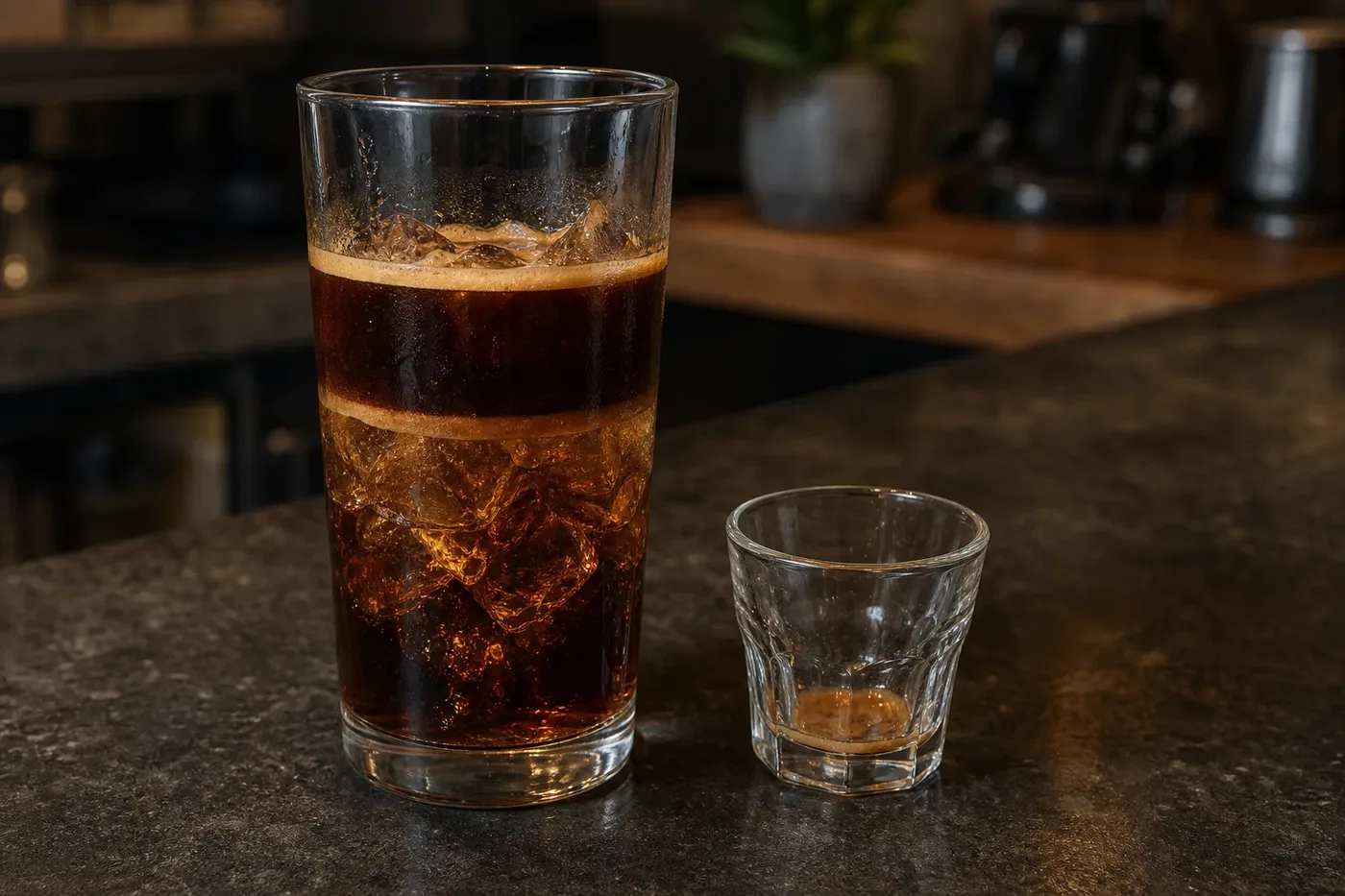
A Fat Americano is a double shot of espresso poured over a full can of cold Coca-Cola and a glass of ice. It is an iced americano with the water taken out and something sweet put in its place, and like most drinks built in layers, the order of the pour is the technique.
The build
Three things, and no syrup, no milk and no measuring jug:
- A tall glass filled with ice.
- One cold 12 oz can of Coca-Cola Classic, poured over the ice.
- A double shot of espresso, poured over the cola.
That is the recipe as Sprudge printed it in June 2014, and every version since is a variation on it. Nobody's instructions tell you to stir, and there is a reason not to: the shot sits on the surface for a moment before it sinks, and stirring straight away flattens both the layer and the fizz you poured the cola in for.
One practical thing no recipe mentions. A 12 oz can is 355 ml and a double shot is around 60 ml, so you are asking a glass to hold 415 ml of liquid before a single cube goes in. A standard 16 oz tumbler packed with ice will not take it. Use a glass nearer 600 ml, or pour about two thirds of the can and keep the rest.
Where it comes from
Alex Choi created it at Alex The Coffee in Korea, and Sprudge published the recipe on 2 June 2014 as a summer drink. The espresso was the house Modern "Sol", which Sprudge describes as dark chocolate and ripe fruit in the cup, and the write-up calls the finished drink refreshing, sweet, balanced and full of caffeine.
Coffee and cola together is older and wider than one cafe, and Coca-Cola itself sold the idea back at us: Coffee Plus in Japanese vending machines from 2017, then Coca-Cola with Coffee in the United States from 2021 in Dark Blend, Vanilla and Caramel, since discontinued. What Alex The Coffee contributed was the build, and the build is what survived.
The name is a guess, and it is not ours
No source explains it. Sprudge does not, the recipe sites repeating it do not, and none of the coverage we could find offers an origin for the word fat. What can be said is what the drink is next to: an iced americano is espresso over ice topped with cold water, and this is the same build with the water replaced by something carrying 140 calories and 39 g of sugar a can. Read that way the name describes the swap. That is a reading rather than a fact, and until somebody produces Alex Choi saying otherwise it should be treated as one.
Why the espresso goes in last
This is the same question an americano asks, and the answer is the same one. Pour liquid onto espresso and the crema breaks up and disperses; pour espresso onto liquid and the crema stays on top, where it holds aroma and gives the first mouthful more weight. It is why a long black is ordered separately from an americano in Australia and New Zealand rather than being treated as the same drink.
Carbonation adds a second reason. Hot espresso hitting cold carbonated liquid drives gas out of it quickly, so a fast pour foams over the rim and takes the fizz with it. Pour slowly, down the side of the glass or over the back of a spoon, and you keep both the layer and the bubbles. A dirty coffee uses the same trick to suspend espresso on cold milk.
Which espresso suits it
Worth saying that this is reasoning from the one documented example rather than a tested rule. Alex The Coffee used a dark chocolate and ripe fruit profile, and that direction makes sense against cola, whose flavour is built on caramel, citrus oil and spice. A chocolatey medium to dark espresso meets those notes rather than arguing with them.
A bright, acidic, lightly roasted natural is the harder choice here, because cola arrives already acidic and already sweet, and two sharp things stacked tend to read as sour rather than as complex. If a light roast is what is in the hopper, pull it a little shorter and thicker so it has the body to sit against the sugar.
What is in it
The caffeine comes from both, and most of it from the coffee. A single shot runs 60 to 75 mg by the figures on our caffeine page, so a double is 120 to 150, and the can adds 34. Call the drink 155 to 185 mg, which is more than most recipe sites claim for it and more than a mug of filter coffee.
The sugar is the can's alone: 39 g, or 42 g if it is the vanilla bottling, and the espresso adds effectively nothing to that. There is no version of this drink that is not a soft drink with coffee in it, which is worth knowing rather than worth avoiding.
Without an espresso machine
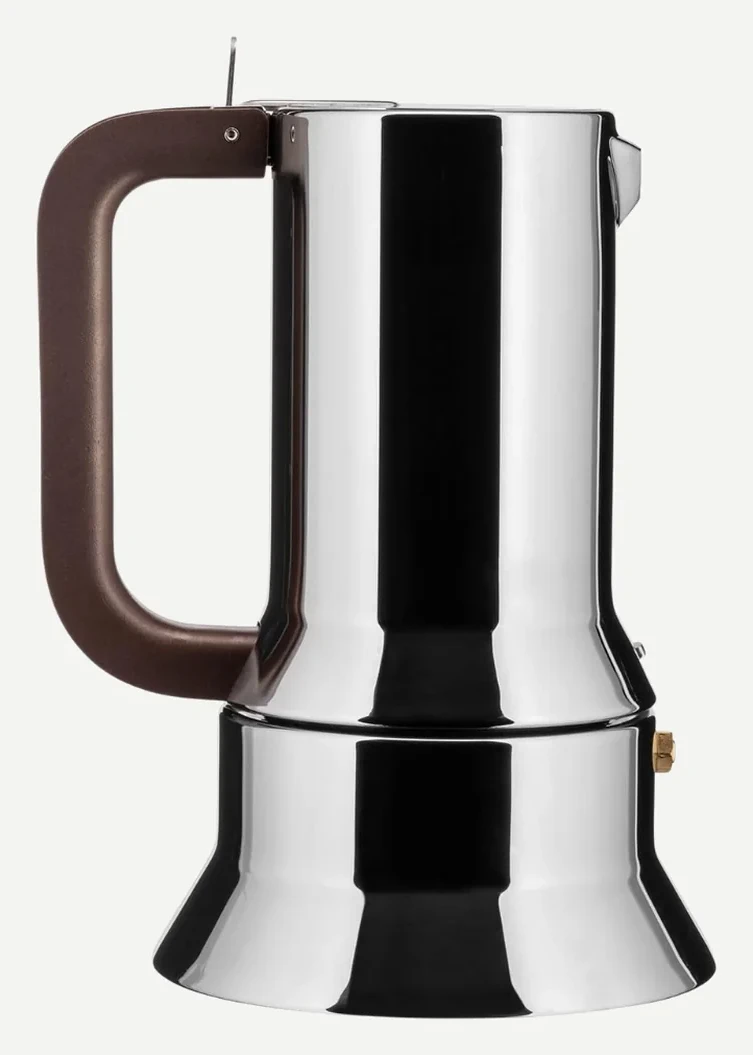
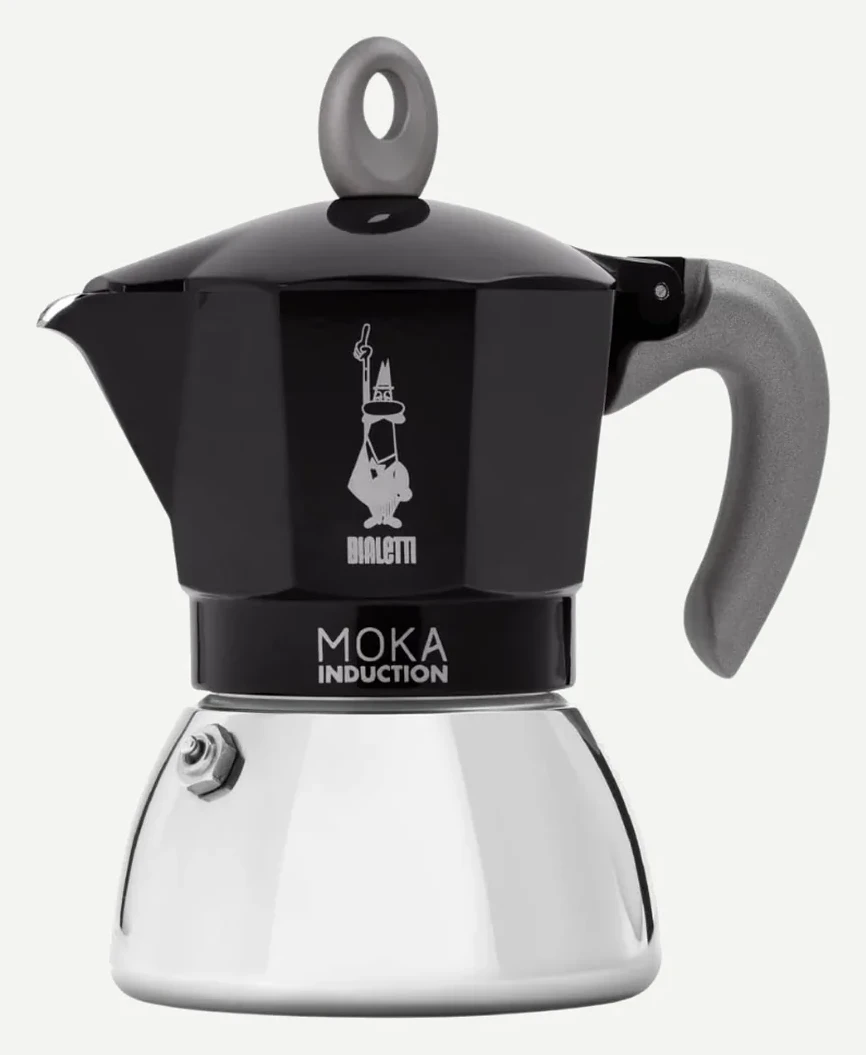
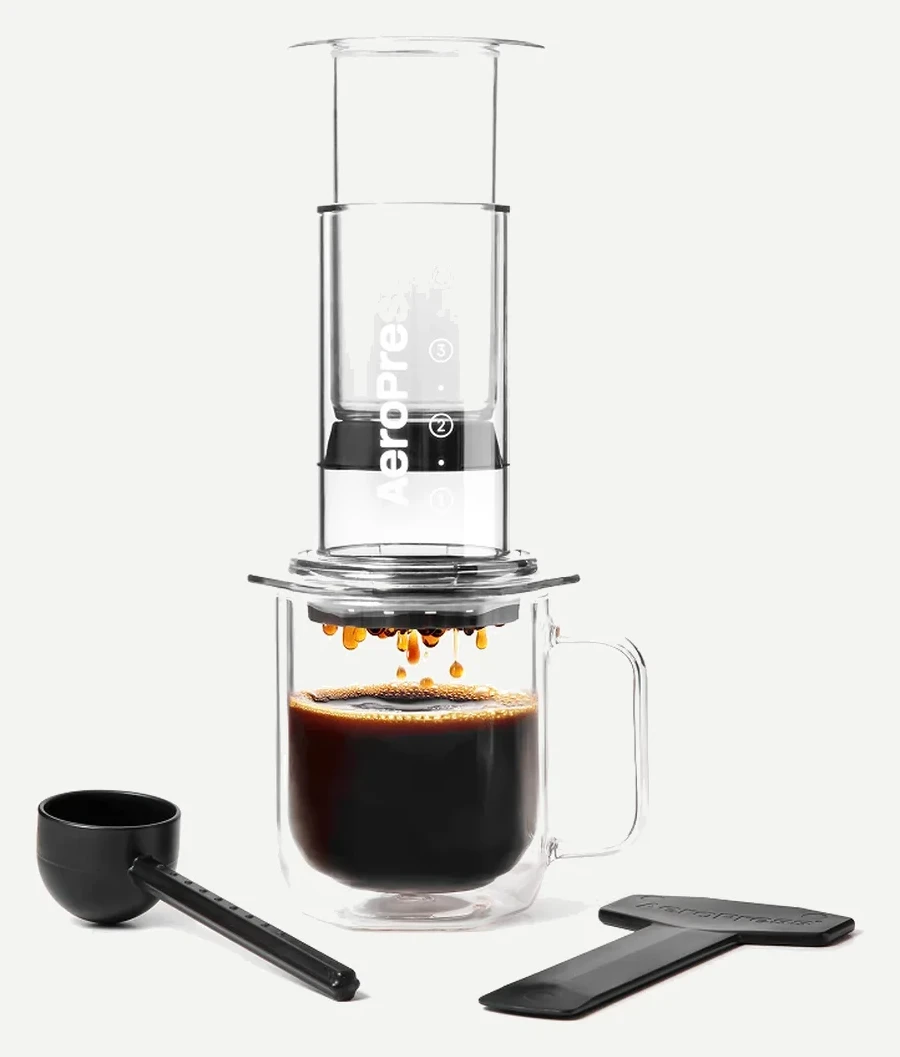
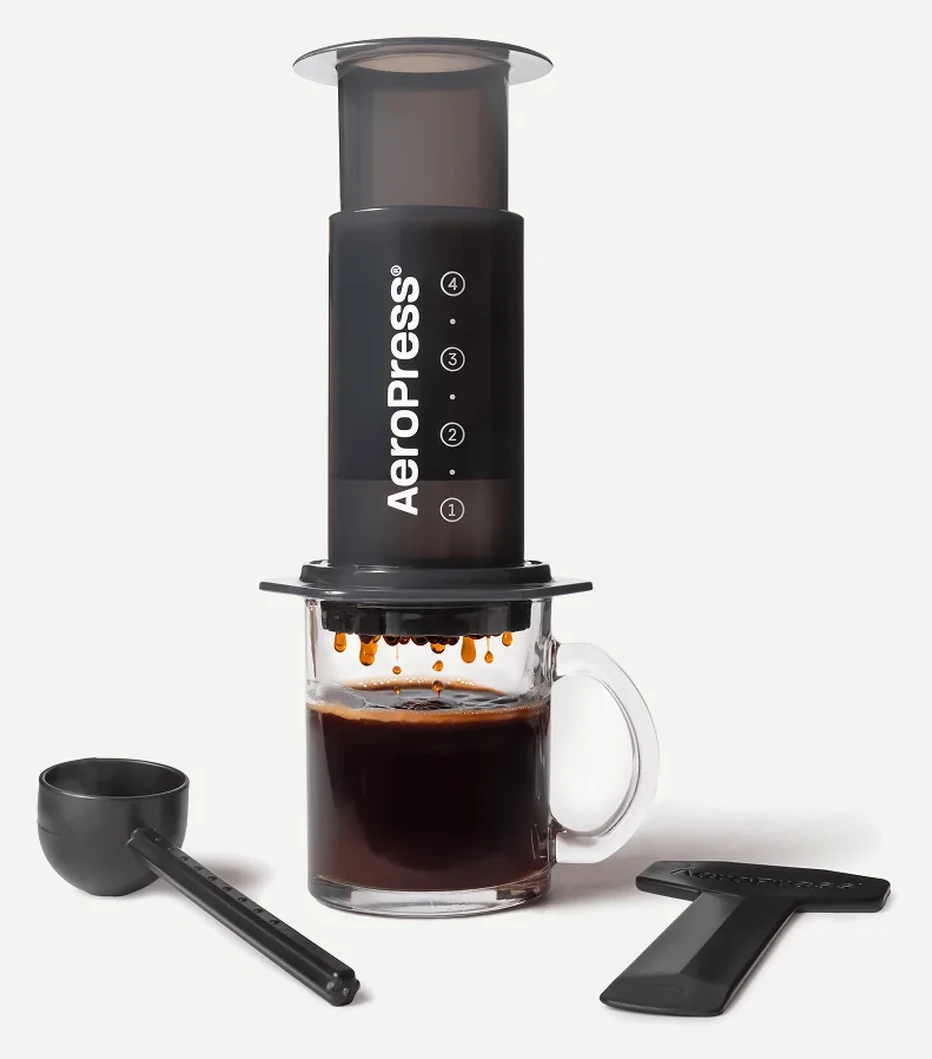
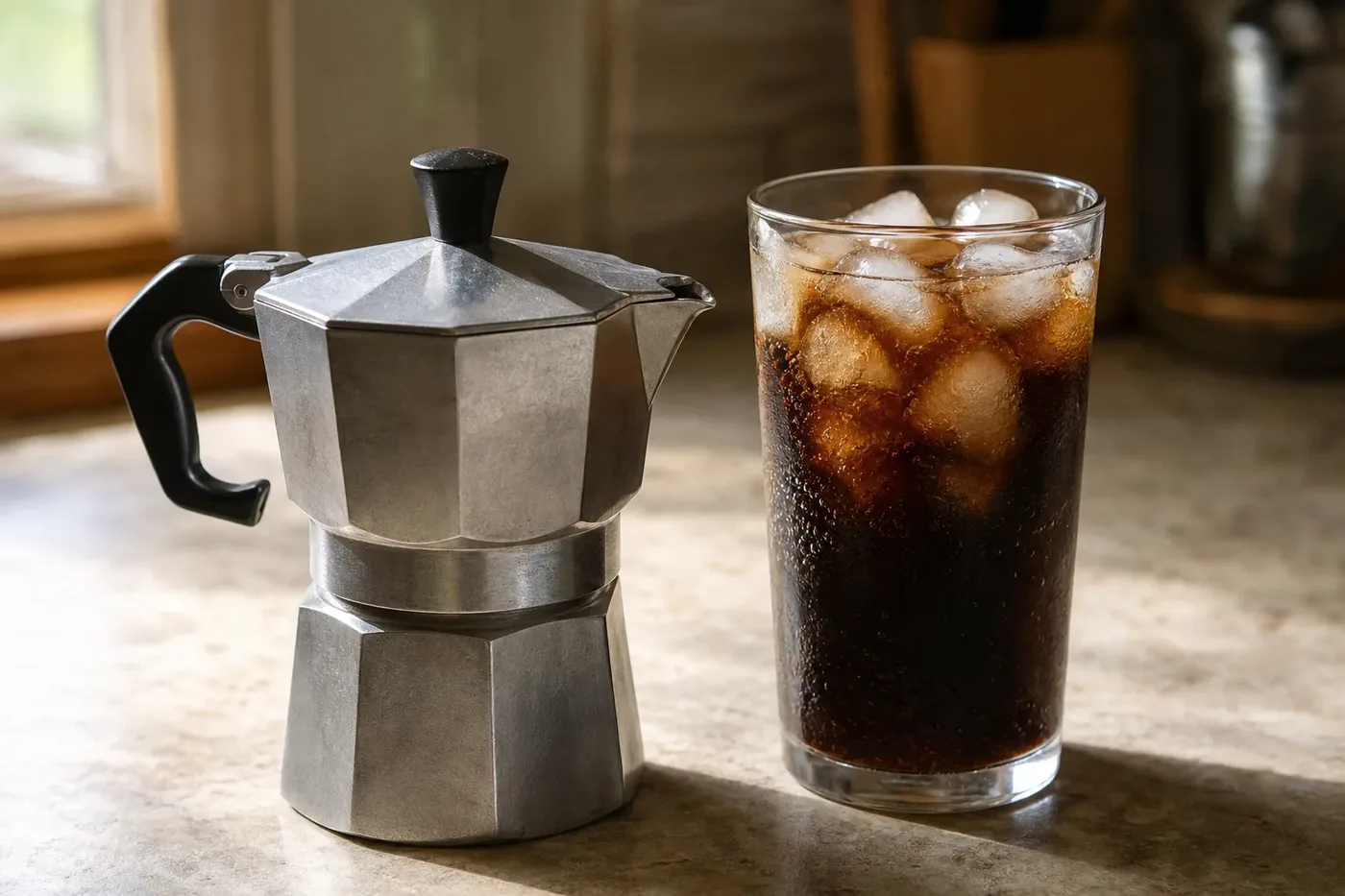
The drink needs a small volume of strong, thick coffee, which is a job several brewers can do. A moka pot comes closest: it makes roughly the right amount at roughly the right strength, and the darker roasts it suits are the ones that sit well against cola anyway. Cold brew concentrate, undiluted, works too and has the advantage of already being cold, so it sinks more slowly and holds its layer longer; the difference between concentrate and the drinking-strength version is covered in cold brew and iced coffee.
What does not work is a mug of filter coffee. Pour 240 ml of it into a can of cola and you have diluted both, with no layer, no crema and not much of either flavour. Whatever you use, keep it to about 60 ml and make it strong.
Variations, and one thing this is not
The obvious substitutions all work, because the cola is doing the flavouring: vanilla and cherry bottlings, a diet cola if the sugar is the problem, decaf if the caffeine is. A spoon of sweetened condensed milk stirred into the bottom is a common addition and turns it into a different and heavier drink.
What it is not is coffee brewed with cola. That trend runs the cola through the grounds instead of water, which is a different thing entirely and does not work for reasons set out in brewing coffee with Coke. Here the coffee is made properly with water and meets the cola in the glass. That distinction is the whole reason this drink lasted a decade and the other one is a video.
Common questions
What is a Fat Americano?
A double shot of espresso poured over a cold 12 oz can of Coca-Cola in a tall glass of ice. It was created by Alex Choi at Alex The Coffee in Korea and published by Sprudge in June 2014.
Why is it called a Fat Americano?
No source explains the name. The likeliest reading is that it is an iced americano with the cold water swapped for cola, which adds 140 calories and 39 g of sugar a can, but that is a reading rather than a documented origin.
Do you pour the espresso first or the Coke first?
Cola first, over the ice, then the espresso on top. Pouring espresso onto the cola keeps the crema floating instead of breaking it up, and a slow pour stops the carbonation foaming over.
How much caffeine is in a Fat Americano?
Roughly 155 to 185 mg: 120 to 150 mg from the double shot, plus the 34 mg in a 12 fl oz can of Coca-Cola. That is more than a standard mug of filter coffee.
Is a Fat Americano the same as brewing coffee with Coke?
No. The Fat Americano brews the coffee with water and combines the two in the glass. Brewing with cola pours it through the grounds instead of water, which extracts poorly and tastes mostly of flat cola.