Vanilla Extract in Coffee: How Much, and When to Add It
A cheaper and more controllable way to get vanilla into a cup than buying it flavoured. What extract legally is, and how much a cup takes.
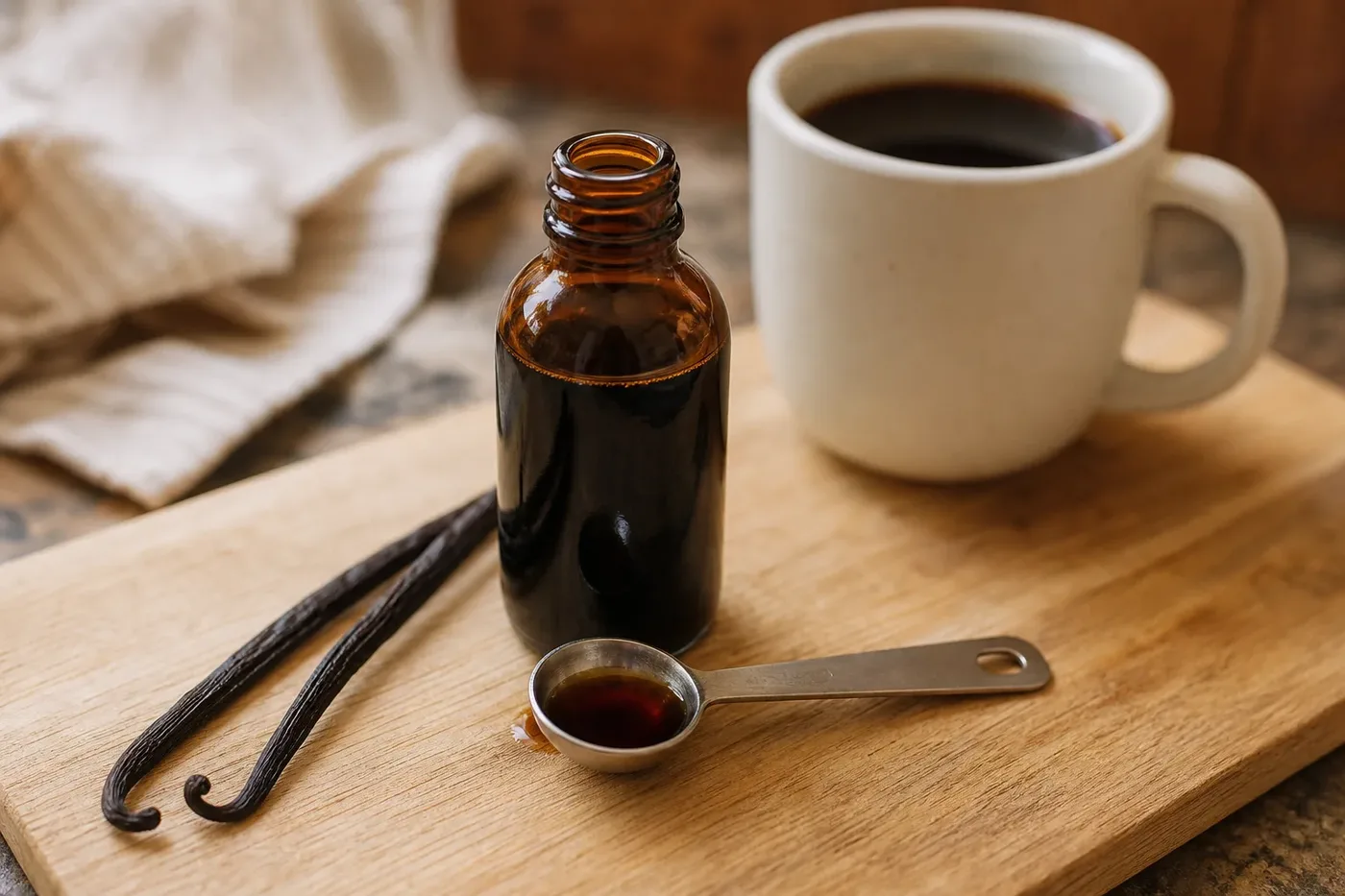
Vanilla extract turns any coffee into a vanilla one, per cup rather than per bag, and a bottle outlasts several bags of flavoured beans. The two things worth knowing are how much to use and what the label on the bottle means.
How much, and when
Start at a quarter to half a teaspoon per 8 to 12 ounce cup, and about a teaspoon for a full pot. Extract is concentrated and the failure mode is one-directional: too little is fixed with a few more drops, and too much cannot be taken out.
On timing, the usual guidance is to wait about a minute after brewing rather than stirring it into coffee straight off the boil, because the aroma compounds are volatile and very hot liquid drives them off. Add, taste, adjust. The method is the same in an americano, a latte or a mug of filter coffee.
What the bottle legally has to be
In the US, vanilla extract has a standard of identity, 21 CFR 169.175. It defines the product as "the solution in aqueous ethyl alcohol of the sapid and odorous principles extractable from vanilla beans", and it sets two floors: the alcohol content must be "not less than 35 percent by volume", and the vanilla content "not less than one unit per gallon", a unit being 13.35 ounces of beans. That is what single fold means, and a two-fold extract has to say so on the name.
Two neighbours on the shelf are defined separately. Vanilla flavoring, 21 CFR 169.177, is essentially the same product with less than 35 percent alcohol. Vanilla-vanillin extract, 21 CFR 169.180, may add synthetic vanillin, capped at an ounce per unit of vanilla, and must state "contains vanillin, an artificial flavor" on the label.
What fold means on a label
The unit in that regulation is the whole basis of extract strength. One unit is 13.35 ounces of vanilla beans, at no more than 25 percent moisture, per gallon, and an extract holding one unit is single fold. Where two or more units are present, the rule says the name "shall include the designation '__-fold'", filled in with the number of units, which is why a bottle marked two-fold is twice the bean strength rather than a marketing flourish.
For coffee it means the dose is not fixed. A two-fold extract needs roughly half of what the quantities above assume, so the taste-and-adjust method matters more the stronger the bottle is.
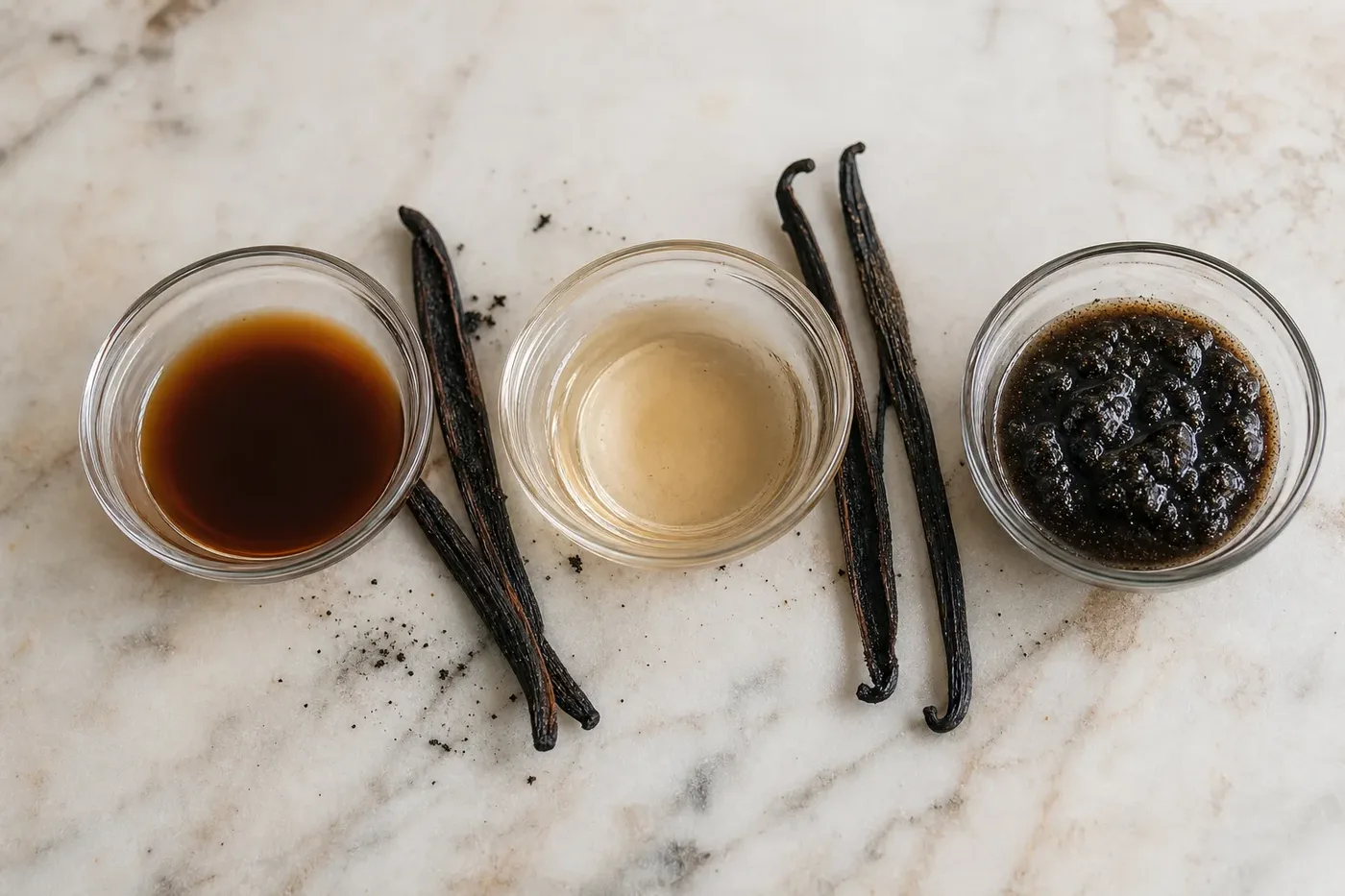
Extract, imitation and paste
- Pure extract. Beans steeped in alcohol, carrying hundreds of aroma compounds besides vanillin. It is the one the regulation above describes.
- Imitation vanilla. Flavour from synthetic vanillin alone, usually made from guaiacol, plus water and often colouring. Simpler, and it is what the artificial wording on a label is pointing at.
- Vanilla paste. Ground beans and seeds blended with extract and a syrup. It carries visible seed flecks, and unlike the three above it is not a category the CFR defines.
Why this beats buying it flavoured
A flavoured bean is coated with oil after roasting, so the flavour is fixed at the roaster and applied to every cup from that bag, whether you want it or not. Extract keeps the decision in your hands: the coffee is chosen on its own merits and the vanilla is added to the cup that wants it. What the flavoured-bean process involves is in French vanilla coffee.
It is also cheaper per cup than syrup for most people, and it adds no sugar, which means the sweetness is a separate decision rather than one made for you.
Vanilla in iced coffee
Extract mixes into cold coffee easily because it is a liquid, unlike sugar, so it works well in iced drinks. The alcohol it is made with is noticeable for a moment in a hot cup and barely at all in a cold one. For an iced drink, stir the extract into the milk rather than the coffee, and it spreads more evenly. If you also want sweetness, add a syrup alongside it, since extract adds flavour but no sugar; our iced latte guide covers the base drink.
Which coffees suit vanilla
Vanilla softens and rounds a cup, so it pairs best with coffee that already tastes of chocolate, caramel or nuts, typical of a medium roast. It also takes the edge off a darker roast's bitterness. With a light, fruity or floral coffee the vanilla tends to sit on top rather than blend in, and the fruit you paid for gets lost. If you buy a light roast for its tasting notes, try it plain first. Vanilla is also a good way to finish a bag you are not enjoying: a coffee that tastes flat on its own is far more pleasant with vanilla and a little milk.
Common questions
How much vanilla extract should I put in coffee?
A quarter to half a teaspoon per cup, or about a teaspoon for a full pot. Add a little, taste it, then add more, because extract is concentrated and cannot be removed.
When should I add vanilla extract to coffee?
Once the coffee has cooled slightly, about a minute after brewing. Stirring it into liquid straight off the boil drives off the aroma the extract is there for.
What is the difference between vanilla extract and imitation vanilla?
Extract is made by steeping vanilla beans in alcohol and under US food rules must be at least 35 percent alcohol. Imitation vanilla gets its flavour from vanillin made in a lab, and tastes simpler.
Does vanilla extract sweeten coffee?
No. It adds aroma and flavour, not sugar. Anything sweet has to be added separately.