French Vanilla Coffee: What the Name Actually Means
It is not a bean, a region or a legal category. It is a flavour borrowed from a style of ice cream, and the label rules tell you the rest.
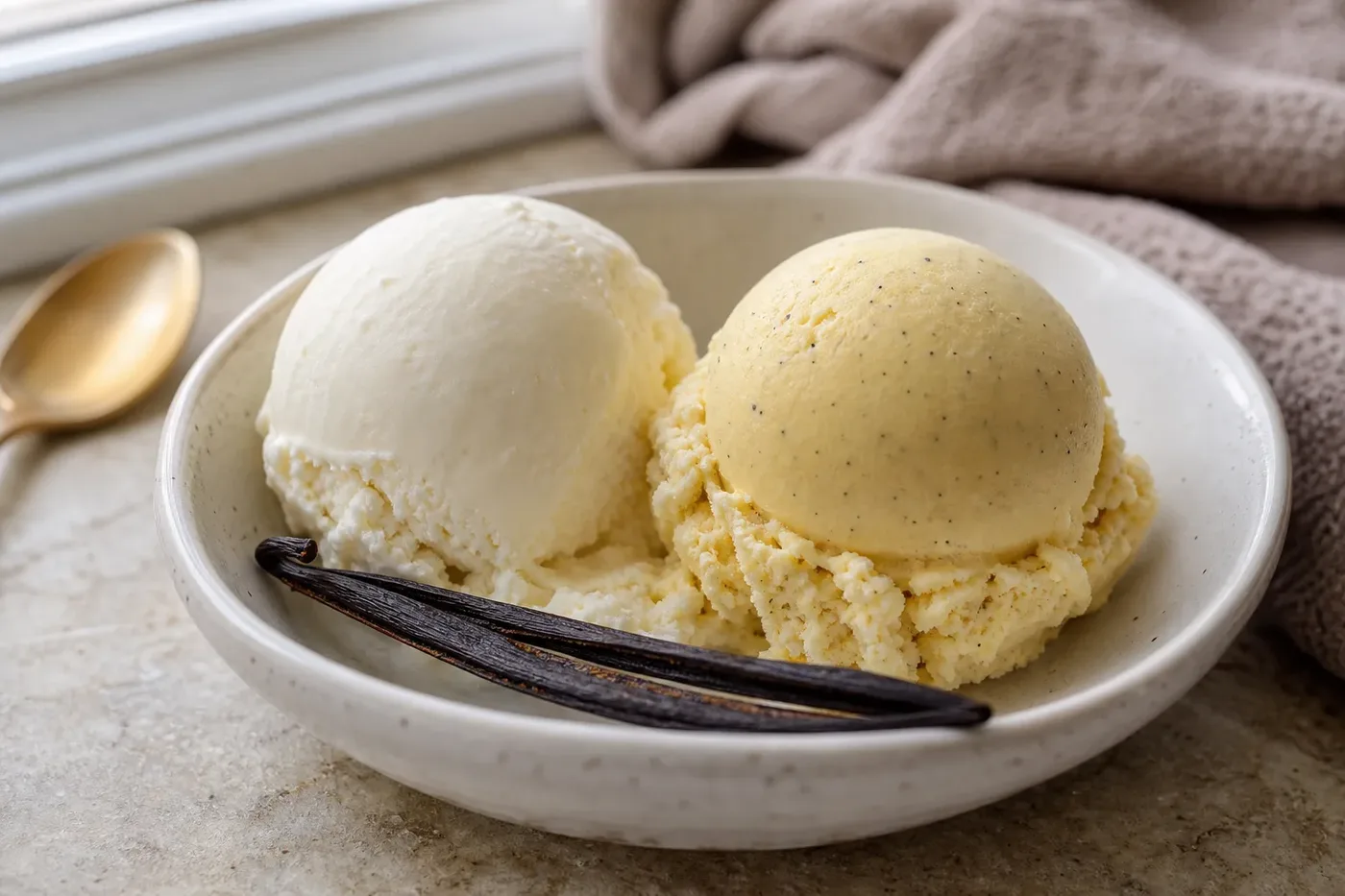
French vanilla is not a variety of vanilla, a growing region or a legal category. It is the name of a style of ice cream, borrowed by flavour makers, and the US regulations that cover vanilla do not mention it at all.
It starts as a way of making ice cream
French vanilla describes a method rather than an ingredient: a custard base, made by cooking egg yolks with milk or cream. The yolks are what make it yellower, denser and richer than the egg-free style. So the difference between vanilla and French vanilla ice cream is the eggs, not the vanilla.
The flavour that method produces, vanilla with a custard and caramel edge, is what the name now sells. When it appears on coffee, creamer or syrup, it is describing that taste, not a recipe anybody followed.
Why French at all
Vanilla is not French. The orchid is native to Mexico and Central America, and it was brought to Europe from there. What France did was cultivate it: the plant was established in French colonies, including Réunion and Madagascar, which is still where much of the world's vanilla comes from, and that trade tied the flavour to France in a way the botany never did.
The other half is the dessert. Vanilla became a flavour in its own right in the early eighteenth century, and Thomas Jefferson brought a vanilla ice cream recipe back from his years as ambassador in Paris. By the time the phrase reached a bag of coffee beans it had travelled a long way from either, which is why it now means a taste rather than a place.
What the rules actually cover
The FDA sets standards of identity for vanilla extract, vanilla flavoring and vanilla-vanillin extract under 21 CFR Part 169. There is no standard for French vanilla, so the words carry no legal requirement of their own.
What does apply is the general flavour labelling rule, 21 CFR 101.22(i). If the characterising flavour is simulated by an artificial flavour, the name has to be accompanied by "artificial" or "artificially flavored". If no artificial flavour is used, the plain flavour name is enough. That is the sentence worth reading on the bag, because it is the only part the law insists on.
How a flavoured bean is made
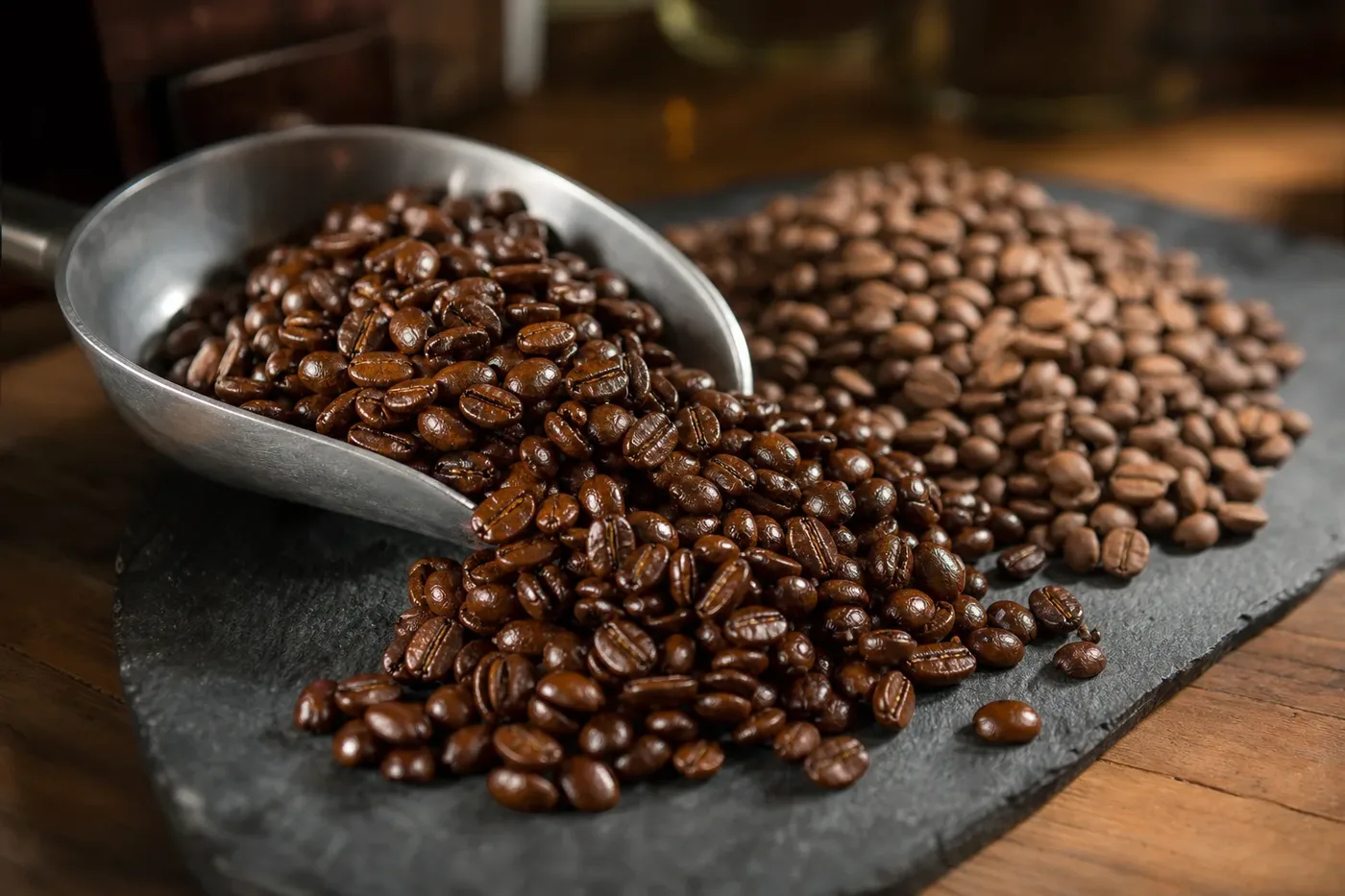
Flavoured coffee is not grown flavoured. Roasters spray a liquid flavouring oil onto beans while they are still warm and porous from the roast, then tumble them in a drum for roughly 15 to 30 minutes so the coating is even. The oils are usually around 3 percent of the finished weight and combine extracts with food-grade carriers such as propylene glycol. The beans are then rested and sealed so the solvents evaporate, which is where the glossy look of a flavoured bean comes from.
Two practical consequences follow. The flavour sits on the outside of the bean rather than inside it, and a flavoured bean is oily, which is why some grinders stay cleaner if you keep flavoured coffee to a separate one. Storage matters more too, for the same reason it matters for any roasted coffee: see how to store coffee beans.
What that means when you are buying
Read the flavour name first and the rest of the label second. "French vanilla" tells you the intended taste and nothing about what produced it, so the artificial-flavour wording is the part that carries information. A bag that says vanilla with no qualifier is telling you, under the same rule, that no artificial flavour is doing the work.
If what you want is vanilla in the cup rather than on the bean, the other route is to add it yourself, which is covered in vanilla extract in coffee. That way the coffee is chosen on its own merits, and the flavour is a decision you make per cup rather than per bag. Unflavoured beans worth starting from are in our coffee bean reviews.
Common questions
What is the difference between vanilla and French vanilla?
In ice cream, French vanilla means a custard base made with egg yolks, which is richer and yellower than the egg-free kind. On coffee it is a flavour name borrowed from that style, describing vanilla with a custard or caramel edge.
Is French vanilla a type of vanilla bean?
No. There is no French vanilla plant or region. Vanilla is native to Mexico and Central America, and France's association with it comes from its colonial plantations and its ice cream.
Does French vanilla coffee contain real vanilla?
The name alone does not tell you. Under 21 CFR 101.22(i), if an artificial flavour creates the flavour, the label must say artificial or artificially flavored, so that wording is what answers the question.
Is French vanilla coffee sweet?
Not by itself. Flavouring oils add aroma and taste rather than sugar, so a flavoured black coffee has no sweetness unless you add some.