

What is a moka pot gasket?
The ring that seals the two halves together, and the only part of a moka pot that wears out.
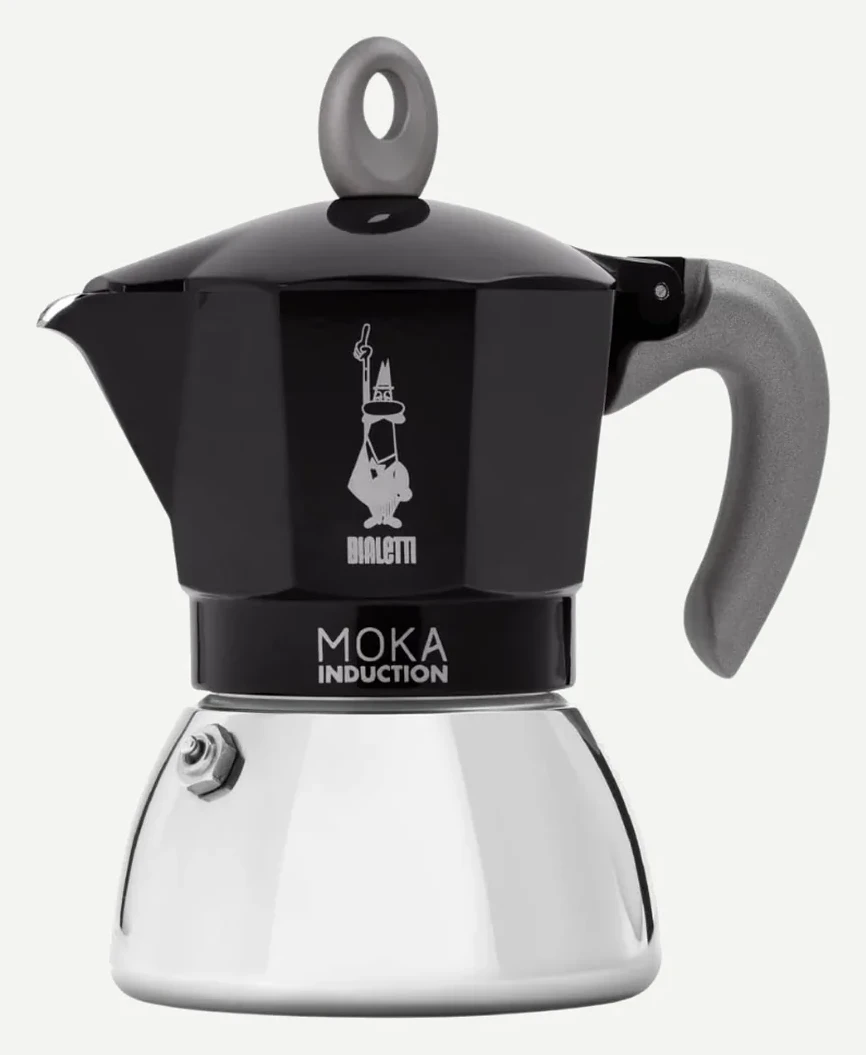
Bialetti sells this as a replacement gasket and filter plate for its 6 cup stovetop espresso makers. The gasket sits under the filter plate in the upper chamber and presses against the rim of the lower one when the pot is screwed together.
Why the seal is the whole mechanism
A moka pot works on pressure, and pressure needs somewhere it cannot escape.
Heat turns water in the base to steam. The steam has nowhere to go except through the coffee and up the funnel, and that pressure is what pushes the water through the bed. It is the entire principle.
If the seal leaks, pressure escapes at the join instead of building. What comes out the top is weak, slow, or nothing at all, and steam hisses from the middle of the pot. That is not the pot failing, it is a five-pound rubber ring that has hardened.
How to tell yours has gone
Four signs, and people usually blame the coffee for all of them.
Steam or drips escaping from the join while it brews is the obvious one. Coffee that suddenly comes through weaker than it used to, with the same beans and grind, is the common one. A pot that needs an unusual amount of force to tighten, or that suddenly needs less. And a gasket that has gone hard, shiny, cracked at the edge, or no longer springs back when pressed.
Expect one to two years of daily use. Heat cycles are what age it, so a pot used twice a day ages its gasket faster than one used at weekends.
Change the filter plate at the same time
It comes in the pack for a reason.
The perforated metal plate sits directly on top of the gasket, and its holes clog with coffee oils and fine grounds over the same period. A clogged plate restricts flow, which raises pressure and makes the pot spit.
Both parts are cheap and both are replaced in the same thirty seconds, so there is no sense in doing one and not the other.
Fit the right size, which is by cup count
This one is for 6 cup pots and it will not fit others.
Moka pots are sized by the number of small Italian cups they make, and each size has its own gasket diameter. A gasket for a 3 cup Bialetti Moka Express will not seal a 6 cup, and Bialetti sells separate parts for 1, 3, 6, 9 and 12 cup pots.
Check the number stamped on your pot before ordering. It is the commonest mistake with this purchase and the reason for most of the disappointed reviews on parts like this.
Is it worth it?
Obviously, and this page exists because almost nobody does it.
A moka pot is otherwise a solid piece of aluminium or steel with no moving parts. Replacing a gasket costs a fraction of a new pot and takes seconds, and a well-kept Moka Express lasts decades.
Every moka pot review on this site says the gasket is the wear part and tells you to check replacements are sold. This is what that looks like when you actually need it. Bialetti publishes no material for the gasket on this listing and no expected life.
Who should buy it (and who should not)
Buy it if your moka pot has been getting weaker.
It suits anybody with a Bialetti 6 cup that has been in use a year or more, and it is worth keeping a spare before you need one.
Do not buy it without checking your pot's cup size. And do not buy it for a non-Bialetti pot without confirming the diameter, since other makers use their own sizes.
Frequently Asked Questions
How often should you replace a moka pot gasket?
Every one to two years with daily use. Heat cycles age it, so heavy use wears it faster.
How do I know mine needs changing?
Steam escaping from the join, coffee suddenly weaker with the same beans, or a gasket that is hard, cracked or no longer springs back.
Does it fit any moka pot?
No. This is for Bialetti 6 cup pots. Gaskets are sized by cup count and are not interchangeable.
Should I replace the filter plate too?
Yes, and it is in the pack. The plate clogs with oils over the same period and a clogged plate makes the pot spit.
Can I use the pot without a gasket?
No. Without a seal there is no pressure, and pressure is the entire mechanism.