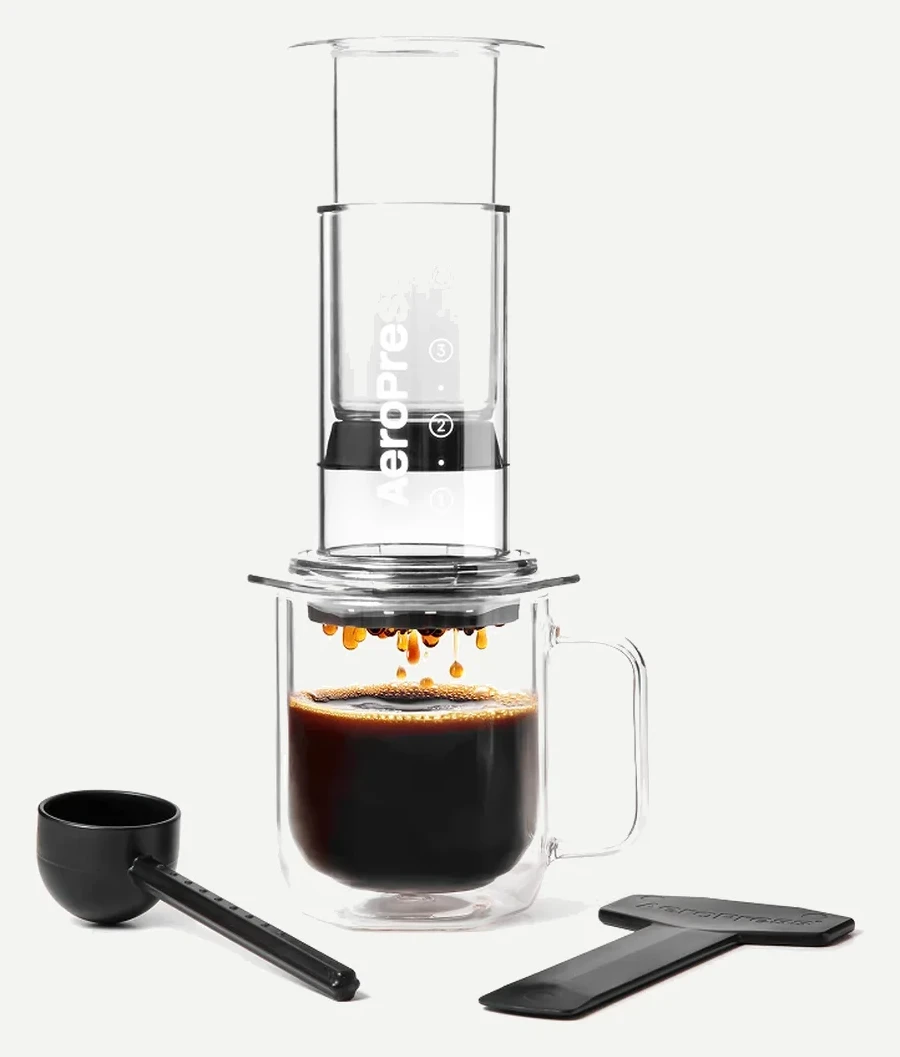
What are AeroPress micro-filters?
The thin paper disc that goes in the cap, and it does more to the cup than most people realise.
AeroPress publishes biodegradable, compostable paper made from white, chlorine-free, food-safe paper for a flavour profile free of papery or chemical taste, ultra thin and tightly woven with micro-sized holes that catch grounds for zero grit, and states the paper absorbs bitter tasting oils for a cleaner, brighter cup than a metal filter, preserving clarity in light and medium roasts. 350 filters per pack, for standard size AeroPress makers.
Paper against metal, and what you are actually choosing
The filter decides how much of the coffee's oil reaches you, and oil carries body.
Coffee oils are where much of the mouthfeel and the heavy, rounded flavours live. A metal filter passes them, which is why French press coffee is thick and why a metal filter in an AeroPress Original gives a heavier drink.
Paper traps them, along with the finest particles. The cup is cleaner, brighter and thinner, and delicate flavours that oils would mask come through. AeroPress's point about light and medium roasts is right: those are the coffees with the most to lose behind oil.
Neither is better. If you drink light, fruity specialty coffee and want to taste the origin, paper. If you drink dark roasts and want body, metal. Owning both costs almost nothing and is the sensible answer.
Chlorine-free matters more than it sounds
Bleached paper can leave a taste, and that is what rinsing is for.
The standard advice to rinse a paper filter with hot water before brewing exists because paper can contribute a papery or chemical note to the first cup through it. Chlorine-free paper reduces that considerably.
Rinsing also preheats the brewer and seats the filter, so it is still worth doing. With an AeroPress it takes two seconds because the cap is already off.
350 is the size to buy
One filter per brew, so it is roughly a year for one person.
Smaller packs exist and cost disproportionately more per filter. Paper does not go off in any practical sense if kept dry, so buying the larger pack is straightforwardly cheaper.
They are compostable, which is a real advantage over the plastic pods this site also covers: a used AeroPress filter and its puck go into a food caddy together.
Is it worth it?
It is not really a purchase decision, it is a consumable, and this is the right pack size.
If you own an AeroPress you need these, or a metal filter instead. 12,883 reviews reflect that rather than any judgement about quality.
AeroPress publishes no micron rating for the paper and no dimensions on this listing. It fits standard AeroPress makers; the AeroPress Go Travel and the AeroPress Premium use the same standard size, but the XL does not.
Who should buy it (and who should not)
Buy it if you own an AeroPress and are running low.
It suits anybody brewing light or medium roasts who wants clarity, and anybody who composts.
Do not buy it if you prefer a heavier cup, where a reusable metal filter is the better fit and cheaper over time. And check your AeroPress size before ordering.
Frequently Asked Questions
Do you need to rinse AeroPress filters?
It helps, though this paper is chlorine-free so the papery taste is much reduced. Rinsing also preheats the brewer.
Paper or metal filter for an AeroPress?
Paper for a cleaner, brighter cup that shows origin character. Metal for more body and oils. They are different drinks.
Are they compostable?
Yes, and the puck goes with them.
Can you reuse one?
You can rinse and reuse a filter a few times, though the paper weakens and the cup loses some clarity.
Do they fit the AeroPress Go?
Yes, both use the standard size. The XL does not.