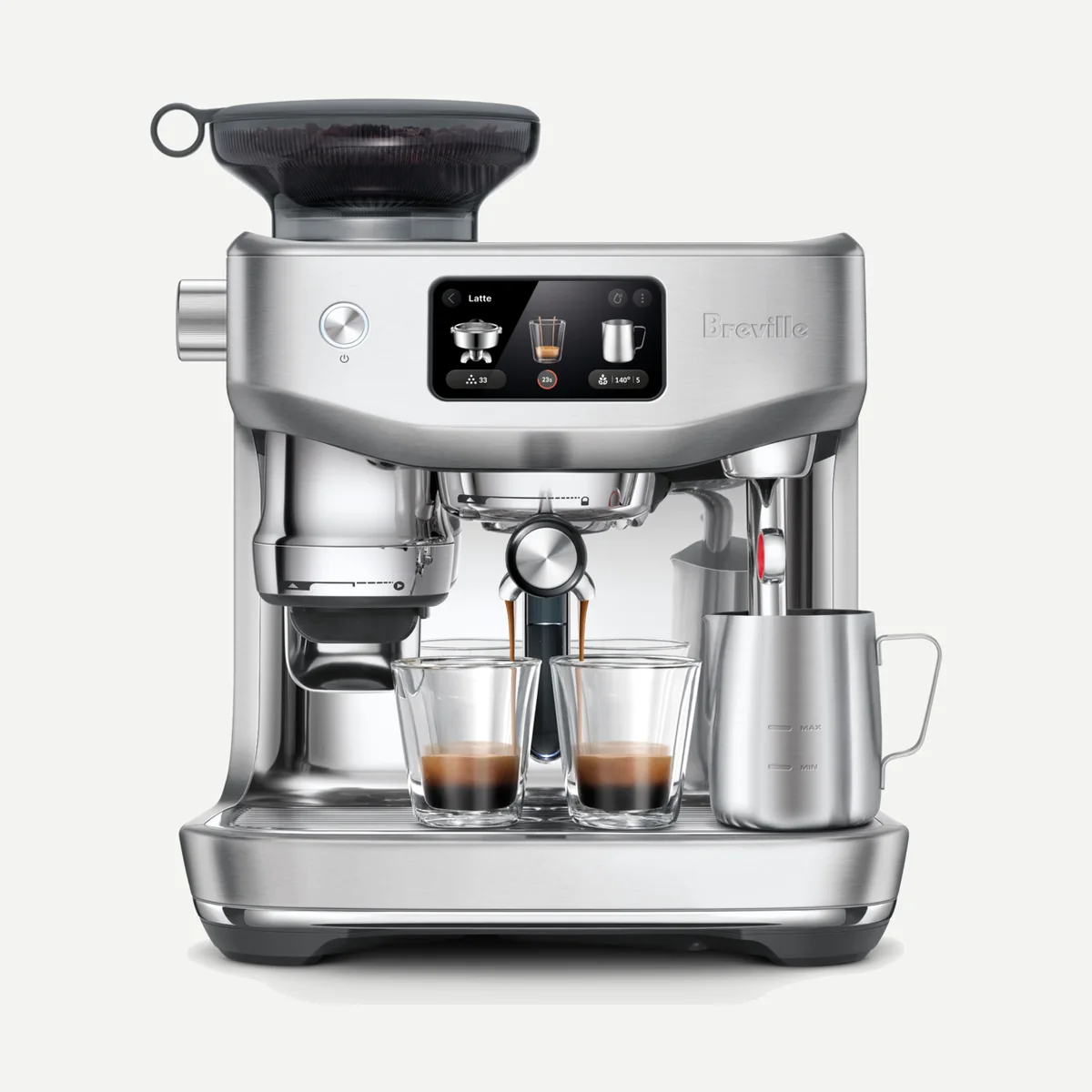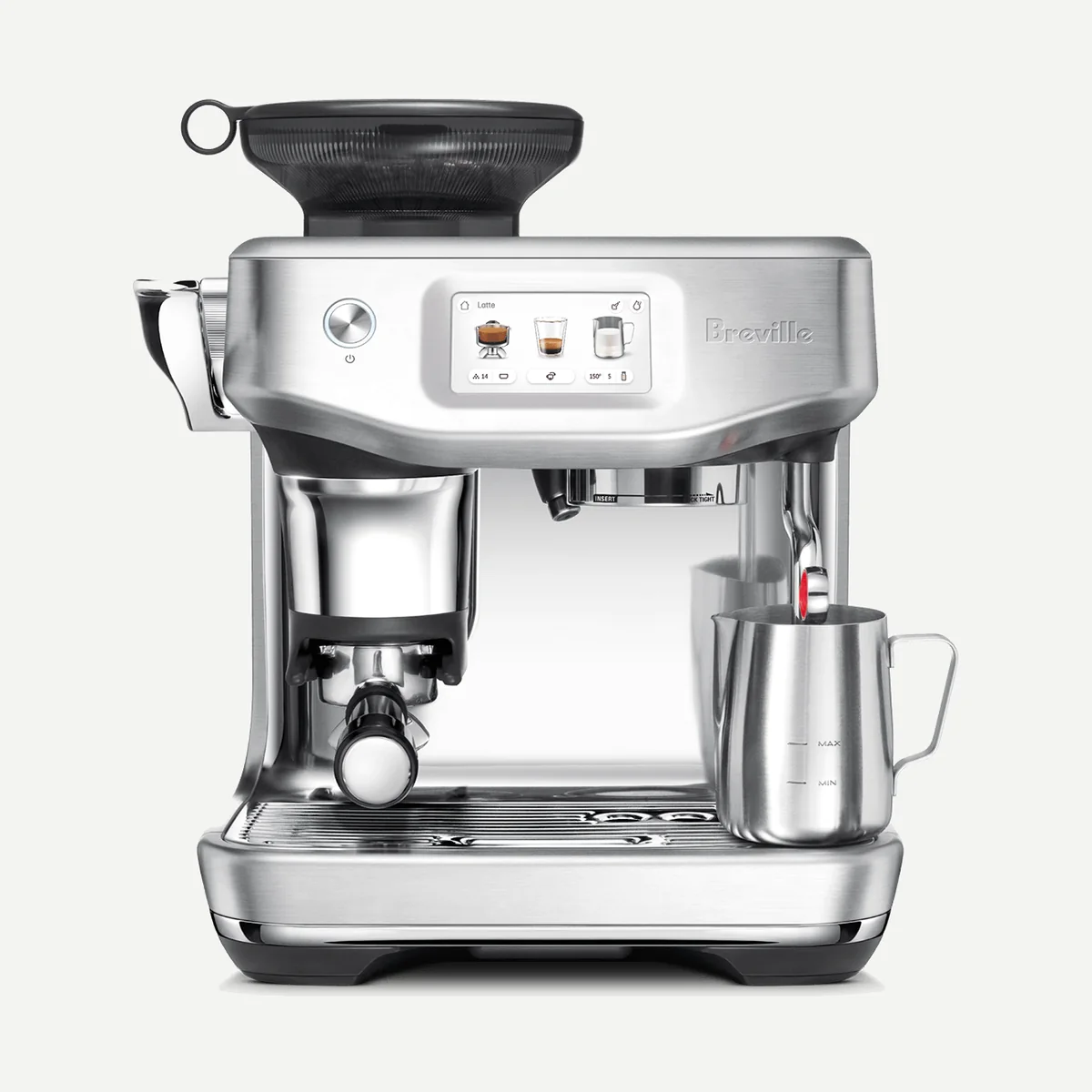
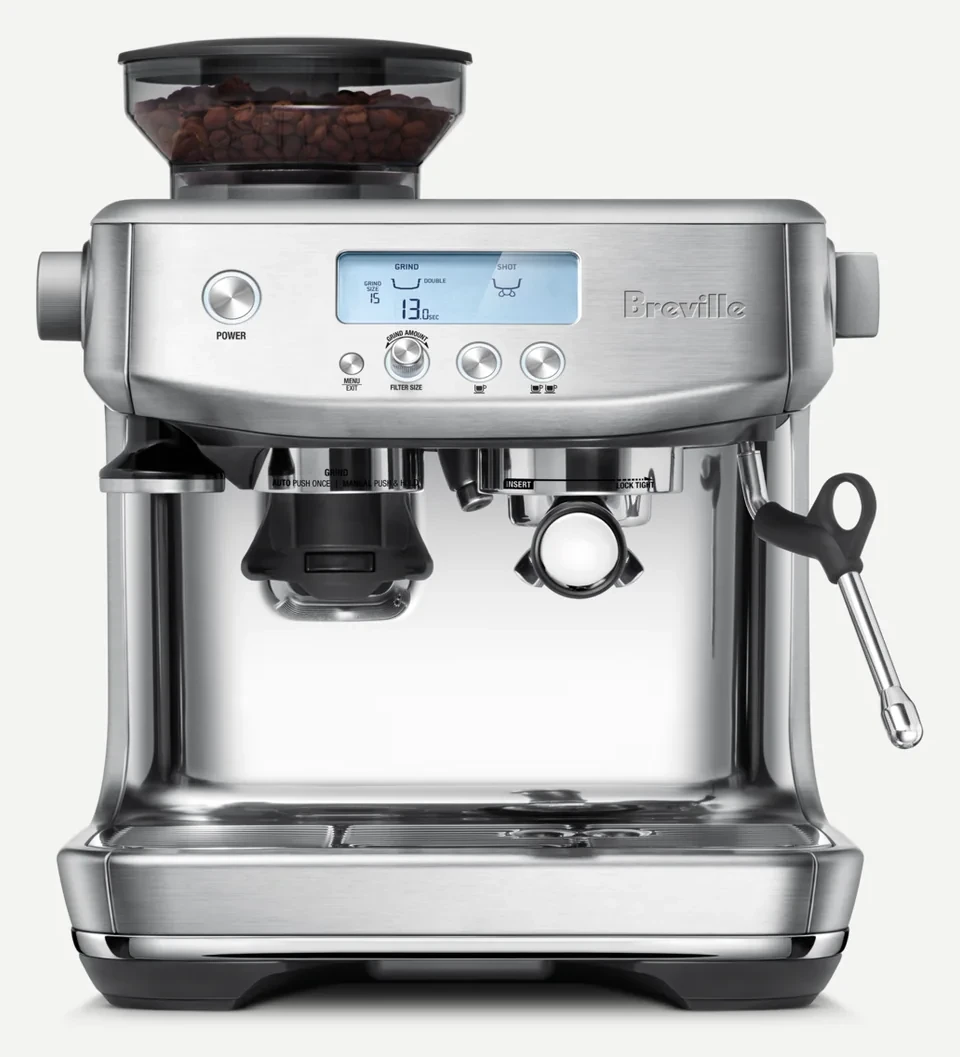
What is the Breville Barista Touch BES880BSS?
An espresso machine that automates the grind and the milk, and leaves the tamp to you.
Breville publishes a 15 bar pump that extracts at 9 bar after a low pressure pre-infusion, a ThermoJet heating system it says reaches extraction temperature in 3 seconds, an integrated grinder with hardened steel conical burrs and 30 settings, a 54mm portafilter, a 67 ounce tank and a half pound bean hopper. The machine weighs 21.8 lb, draws 1680 watts and carries a two year warranty. It costs close to $1,000.
The touchscreen gives it its name. The steam wand is what you are paying for.
What the 30 settings and the 18g dose are for
Grind is the only lever that changes a shot every single time you pull one.
Breville states an ideal dose of 18g into the double basket, which is the same dose a commercial machine uses, and gives 30 grind steps to hit it with. That combination is the reason this machine can make a genuine espresso rather than an approximation: there is enough coffee in the basket for the water to have something to work against, and enough grind resolution to fix a shot that runs too fast or too slow.
What Breville does not automate is the tamp. There is a removable magnetic tamper in the box and the pressure you apply is yours, which is the single step most likely to ruin a shot for a beginner. A machine that grinds and doses but does not tamp is still asking you to learn something, and it is worth knowing that before buying on the strength of the word automatic. What the grind is actually doing to the water is in the grind size guide.
Hands-free milk, in numbers
This is the specification that separates it from every cheaper Breville.
The wand textures milk without you holding the jug, and Breville publishes what it can be set to: 8 levels of texture and any temperature between 104F and 167F. That range matters more than it sounds. 140F is a drinkable flat white, 150F is a typical cafe latte and 167F is the temperature people ask for when they say extra hot, at which point the milk's sweetness has largely gone. Being able to name the number means a household can settle an argument rather than guess at it.
Texture is the other half. A cappuccino wants stiff foam and a flat white wants glossy liquid microfoam, and on a manual wand the difference is where you hold the tip in the first three seconds. Eight steps is enough to make that a setting rather than a skill. Breville also publishes an automatic cleaning function for the wand, which matters because a wand that is not purged and wiped after every drink is the most common way a home machine starts to smell. If the milk going in is oat rather than dairy, the temperature ceiling matters more than the texture setting, for the reasons in why oat milk curdles.
The wand can also be used manually, so the skill is available to anybody who wants it. What the drinks themselves are, and why the milk decides them, is in flat white against cappuccino.
Three seconds, and why heat-up time decides whether a machine gets used
The specification that matters on a Tuesday is not the one that matters on a Sunday.
Traditional boiler machines need several minutes to come to temperature. That is a pleasant ritual at the weekend and a genuine barrier at seven in the morning, and it is the reason expensive machines end up unused next to a kettle. Breville publishes ThermoJet as reaching extraction temperature in 3 seconds, the same heating system as the Barista Pro.
Breville also claims the system uses up to 32% less energy annually than a thermoblock, based on its own benchmark testing as of November 2022. That is the maker's claim and its own test, and it is quoted here as that rather than as a measurement.
Barista Touch vs Philips 4300 LatteGo
Both automate the milk. Only one still asks you to pull a shot.
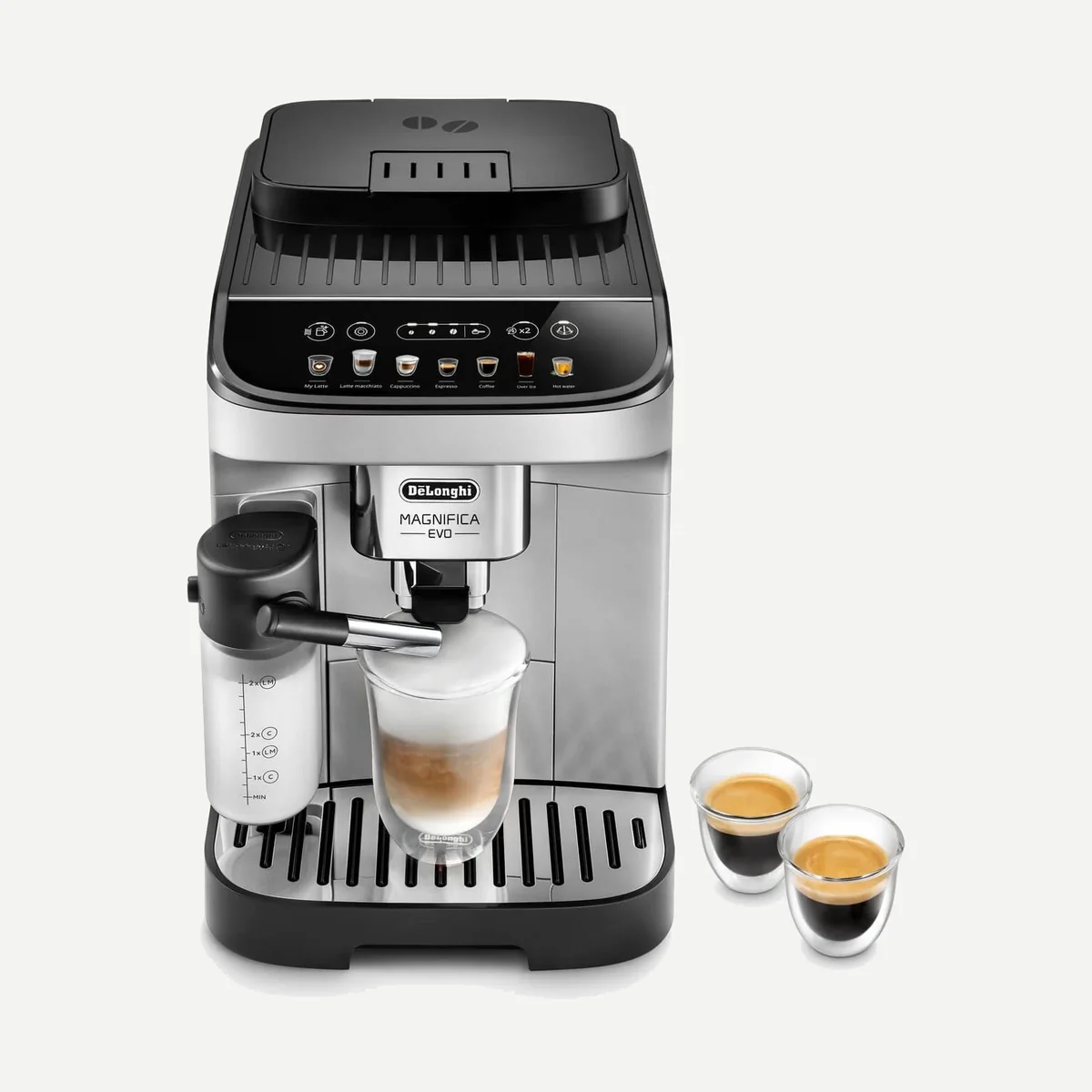
The Philips 4300 LatteGo is a super-automatic at $999.00: you press a button and a drink appears, with the grinding, dosing, tamping and milk all internal. At a dollar less, the Barista Touch keeps the portafilter, so the dose and the tamp stay yours while the milk does not.
That middle position is the entire product, and the choice between them is not about money. If you want a drink with no involvement, the Philips is the more logical purchase and it will be more consistent, because it removes the step this machine leaves in. If you want to make espresso, and you want the 18g dose and the 54mm basket that make it possible, but you do not want to learn to steam milk, nothing else here sits in that gap.
Is the Breville Barista Touch worth it?
It is worth it for the wand and the warranty together, not for the screen.
Two years of cover on a machine containing a pump, a heater, a grinder and a motorised wand is the most reassuring number on this page, and it is twice what Breville gives the Barista Express BES870XL. Add the 3 second heat-up and the milk settings and the specification is coherent: this is a machine built to be used quickly, by more than one person, without anybody becoming the household barista.
What it does not do is make a better shot than its cheaper siblings. The pump, the pre-infusion and the 54mm basket are shared ground across the range, and the grinder differs in settings rather than in kind. You are paying for the milk, the screen and the warranty, and of those three only two are worth money.
Who should buy it (and who should not)
Buy it if
- Your household drinks milk drinks and nobody wants to be the one who makes them.
- You want espresso on a weekday without a warm-up ritual.
- You want to name a milk temperature rather than argue about it.
Skip it if
- You want to learn to steam milk, because you are paying extra to have the interesting part done for you.
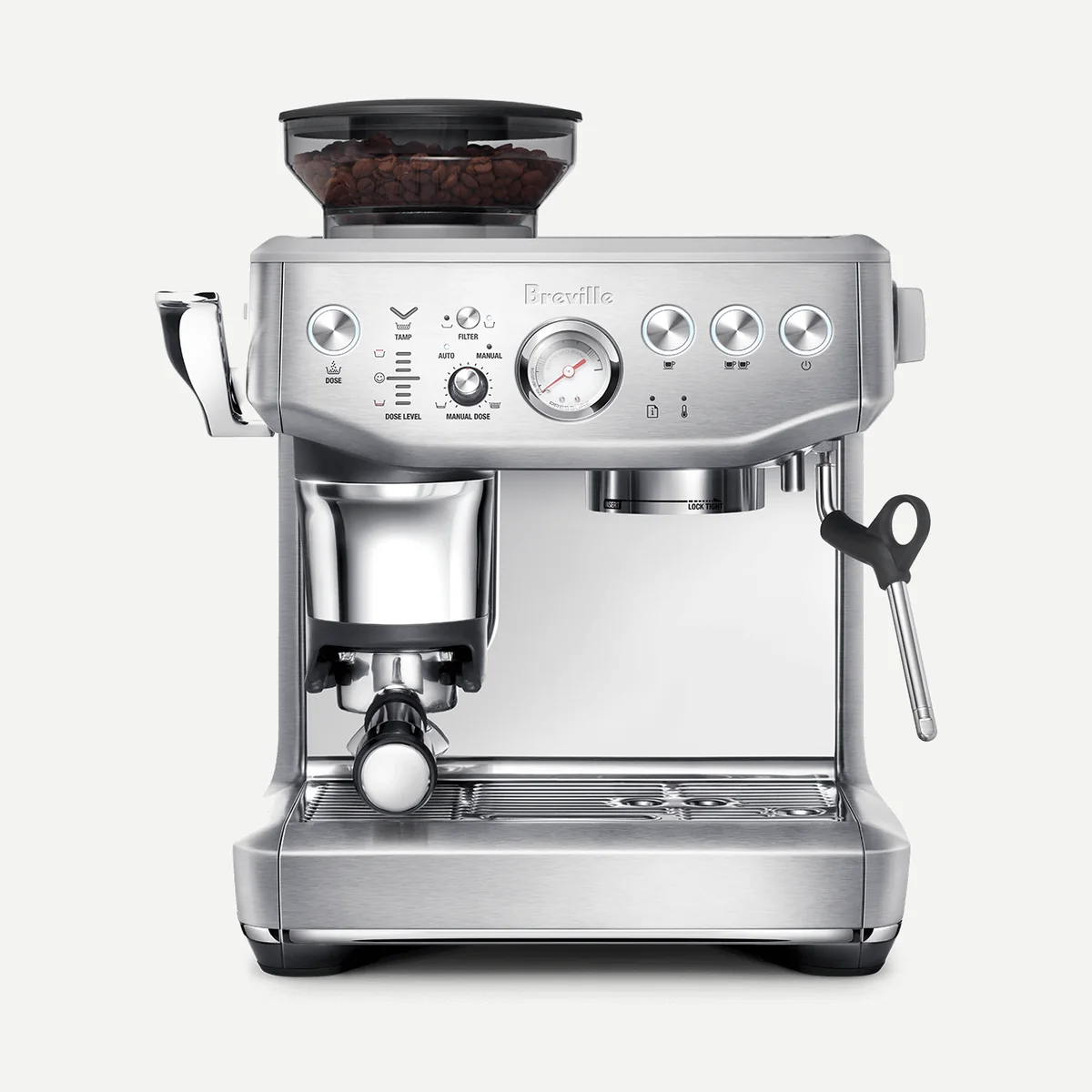
- You already own a grinder; the Infuser gives you the shot electronics without buying a second one.
- You want no involvement at all, in which case a super-automatic is the honest answer.
- Tamping is the step you struggle with; the Barista Touch Impress adds an assisted tamp and a larger hopper.
Frequently Asked Questions
Does the Breville Barista Touch froth milk automatically?
Yes. Breville publishes hands-free texturing with 8 texture levels and a milk temperature you set anywhere between 104F and 167F. It can also be used as a manual wand.
What size portafilter does the Barista Touch use?
54mm, with single and double wall filter baskets in the box, and an ideal dose Breville states as 18g.
How long does the Barista Touch take to heat up?
Breville publishes 3 seconds to extraction temperature, from its ThermoJet heating system.
How many drinks can the Barista Touch save?
Five preset cafe drinks, plus eight you can create, name and save yourself.
What warranty does the Barista Touch have?
Two years, which is double the one year Breville publishes on the Barista Express and the Infuser.