How to Brew Coffee by Weight
Scoops measure volume and coffee is sold by mass, which is why the same scoop gives you a different dose every time you change beans. Weighing fixes it in about ten seconds.
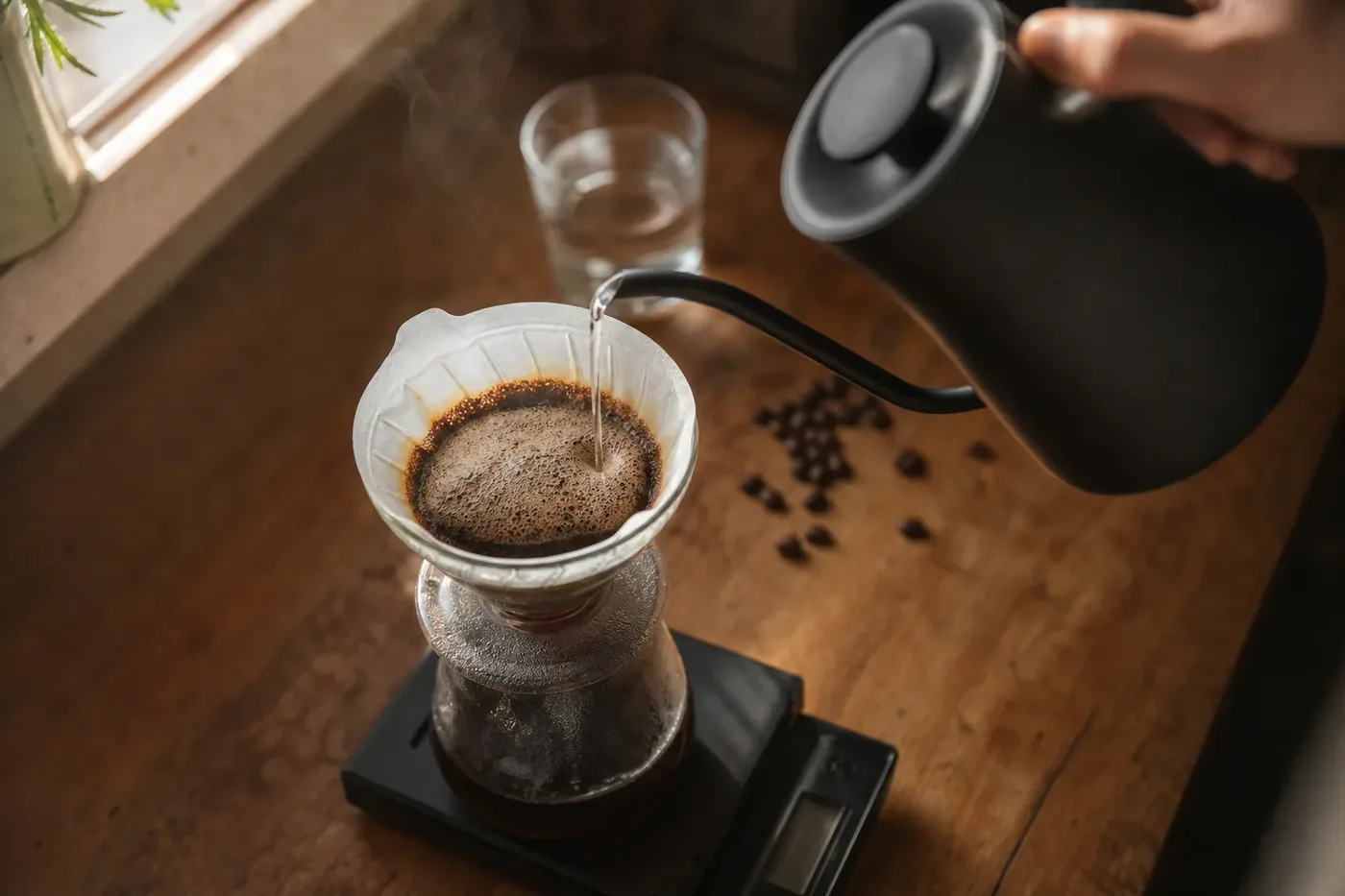
A scoop measures how much space coffee takes up. Every recipe worth following measures how much it weighs. Those two things drift apart constantly, which is why the same scoop of the same coffee makes a different cup next month.
Why coffee by weight beats a scoop
Density changes with almost everything. A dark roast has spent longer in the drum, lost more water and expanded, so it weighs noticeably less per scoop than a light roast. A coarse grind traps more air between the particles than a fine one, so the same scoop holds less coffee. Even the same beans a fortnight later, having given off their carbon dioxide, sit slightly differently.
Across those variables a level scoop can vary by fifteen percent or more. That is larger than the difference between a good recipe and a bad one, which means you can be adjusting your grind to chase a problem your scoop created.
How to brew filter coffee by weight
Put everything on the scale, then tare. Dripper, filter, carafe, all of it. Tare zeroes the display, so the number you see afterwards is only what you have added.
Add coffee to your dose. 22g for a large mug at 1:16, 30g for two. Then tare again, so the display returns to zero and starts counting water rather than the total.
Start the timer and pour to your first target. Twice the coffee weight for the bloom, so 45g for a 22g dose. Millilitres and grams of water are interchangeable, which is the quiet convenience that makes this work at all.
Pour in stages to the final number. 350g for a 22g dose. Watch the scale rather than the kettle: you are pouring to a number, not to a feeling.
Note the finish time. Two and a half to three minutes on a V60, longer on a Kalita or a Chemex. That number is your feedback for the next brew, and it is the reason the timer is on the same device as the weight.
How to weigh espresso: dose and yield
Espresso weighs twice, and the second one matters more.
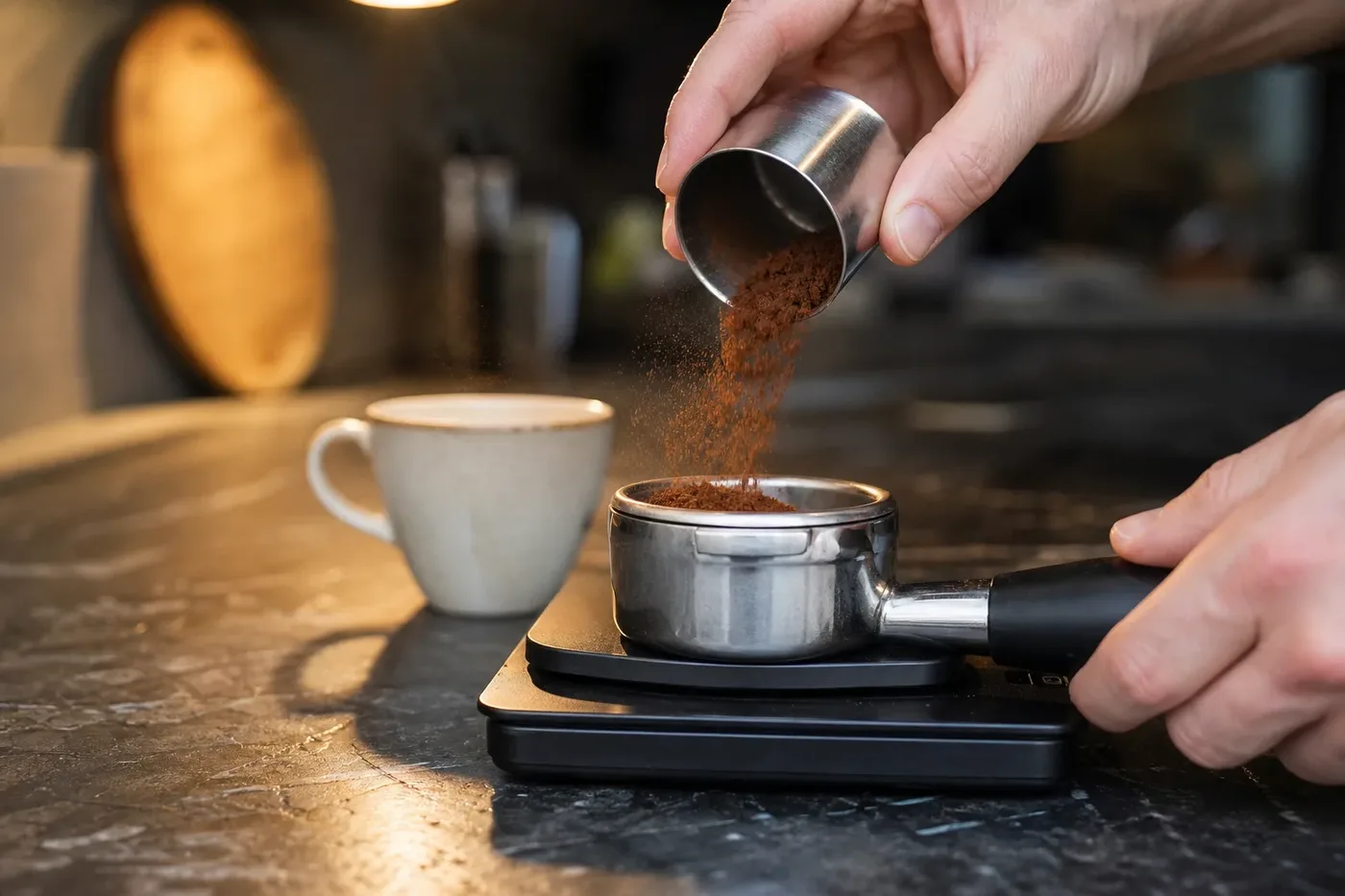
Weigh the dose into the basket. 18g is standard for a double. Whole grams matter here in a way they do not on filter, which is why a scale reading to 0.1g earns its place.
Weigh the shot as it pulls. Put the cup on a scale on the drip tray and stop at your target. 36g out from 18g in is a 1:2 ratio and the usual starting point.
You cannot judge this by eye. A cup filled to the same line can hold 30g or 50g depending on how much crema is sitting on top, and those are different drinks. An espresso scale like the Maestri House S1 Mini is shaped to fit under a portafilter where a brew scale simply will not.
What the timer adds when brewing by weight
Weight tells you what went in. Time tells you what happened to it. Together they locate any problem precisely: same dose, same water, longer time means the grind got finer or the bed clogged.
Scales like the Brewista Smart Scale III and the Hario V60 Drip Scale start the clock when the weight begins moving, so the two numbers are always about the same brew. That sounds like a small thing until you have tried watching a phone timer with wet hands.
Writing down your recipe: dose, water, time
Three numbers is enough: dose, water, time. "22 / 350 / 2:50" on a note in the cupboard tells you everything you need to repeat or adjust a brew.
Without it you are relying on memory of a cup you drank days ago, and memory of taste is unreliable in a way memory of numbers is not. This is the entire reason recipes are shared as ratios rather than as descriptions.
When you can skip brewing coffee by weight
Immersion brewing is forgiving enough that a scoop will not ruin it. French press coffee at roughly the right strength is still good coffee, and cold brew steeping overnight does not care about a gram.
Where it stops being optional is espresso, where a gram is five percent of the dose, and pour over, where the brew is short enough that everything shows. Our guide to scale resolution covers what to look for in the scale itself, and why response speed matters as much as the decimal place.
Brewing by weight is a habit, not gear
The scale is cheap and the discipline is the valuable part. Weigh for a fortnight, keep the three numbers, and you will know your own recipe well enough to notice the day the coffee changes rather than the week after. That is really all this is for.
Brewing coffee by weight FAQ
Why weigh coffee instead of using a scoop?
A scoop measures volume and coffee is sold and brewed by mass, and density changes with roast level, grind size and age. A level scoop can vary by fifteen percent, which is larger than the difference between a good recipe and a bad one, so you end up adjusting the grind to fix a problem the scoop created.
How do you use a coffee scale for pour over?
Put dripper, filter and carafe on the scale and tare. Add your dose, 22g for a large mug, and tare again so the display counts water. Start the timer, pour twice the coffee's weight for the bloom, then pour in stages to your final number and note the finish time.
Do you weigh espresso in or out?
Both, and the shot matters more. Weigh the dose into the basket, 18g for a standard double, then weigh the shot as it pulls and stop at your target, usually 36g for a 1:2 ratio. A cup filled to the same line can hold 30g or 50g depending on crema, so you cannot judge it by eye.
Is water measured in grams or millilitres for coffee?
Either, because they are the same. One millilitre of water weighs one gram, which is what lets you pour water onto a scale and read a recipe written in millilitres. It also means you never need a jug.
What three numbers should I record for a coffee recipe?
Dose, water and time. Something like 22 / 350 / 2:50 tells you everything needed to repeat the brew or work out what to change. Memory of taste is unreliable in a way memory of numbers is not, which is why recipes are shared as ratios.
Do you need to weigh coffee for a French press?
Not really. Immersion brewing is forgiving and a press at roughly the right strength is still good coffee. Weighing becomes hard to skip on espresso, where a gram is five percent of the dose, and on pour over, where the brew is short enough that everything shows.
Reviewed on this site
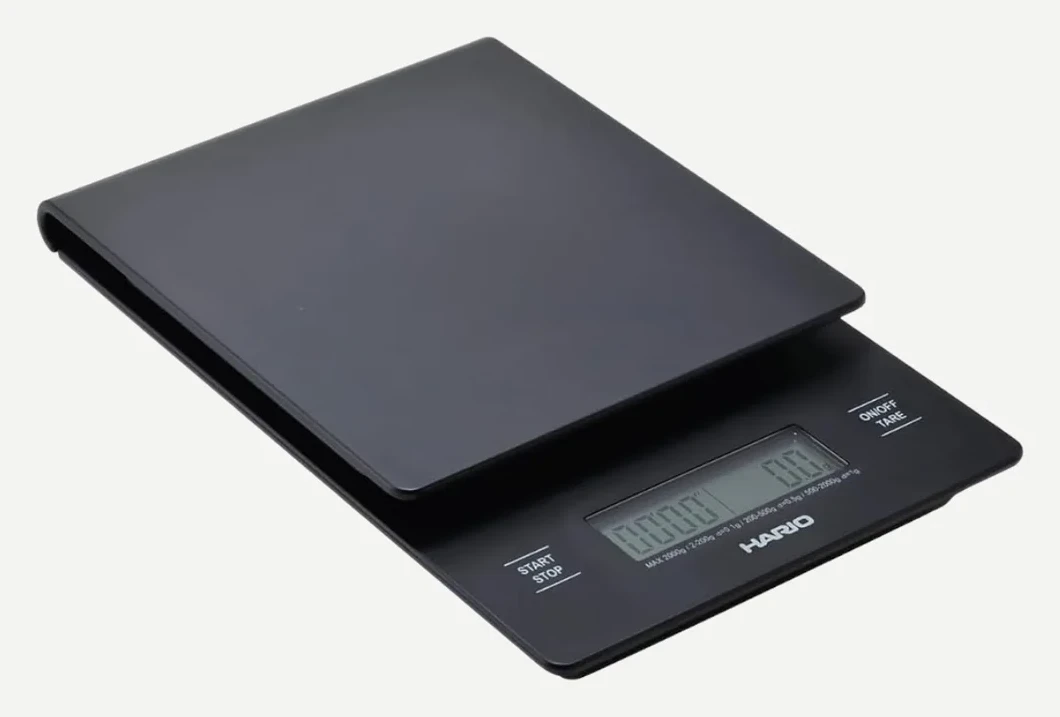 Hario V60 Drip ScaleThe scale Hario built to sit under a V60 and its server
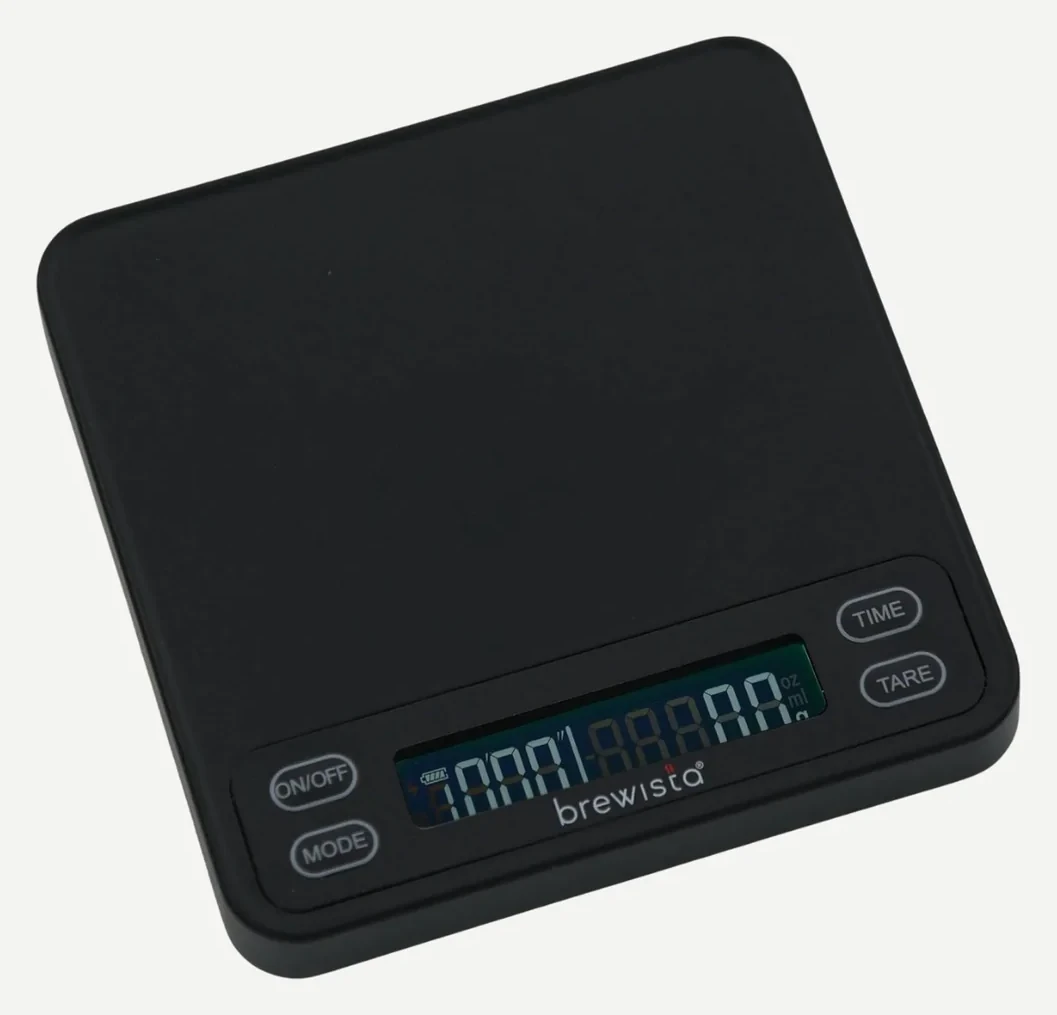 Brewista Smart Coffee Scale IIIFive brewing modes from a specialty brand, with separate espresso profiles
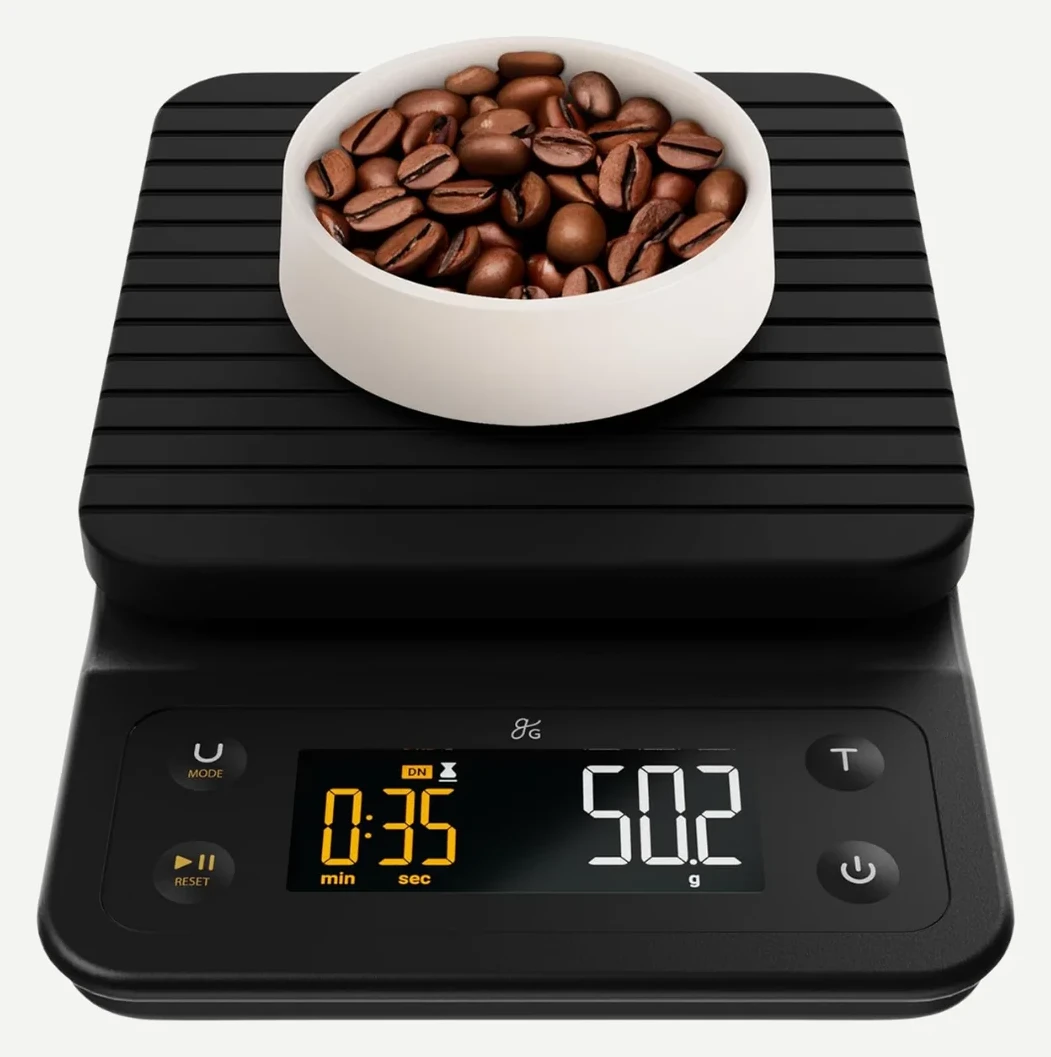 Greater Goods Coffee Scale with TimerA large platform with a dishwasher-safe silicone cover, for a messy counter
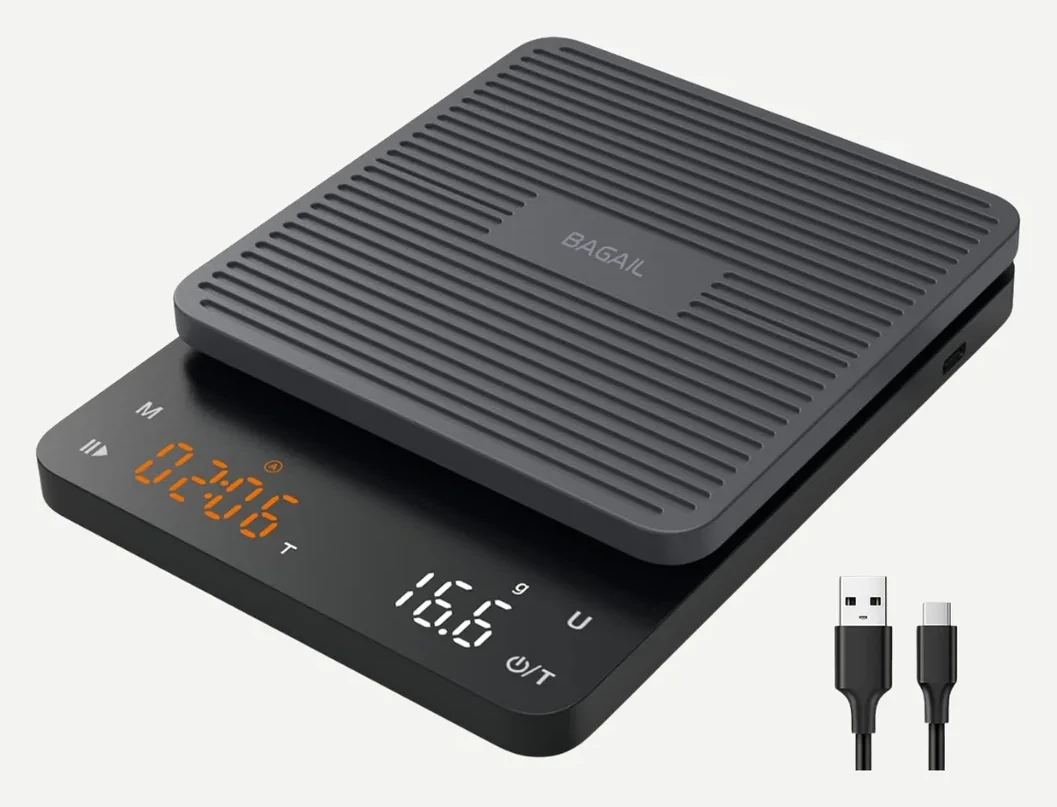 BAGAIL Coffee Scale with TimerA 3kg scale with a removable silicone pad, at the budget end without feeling like it
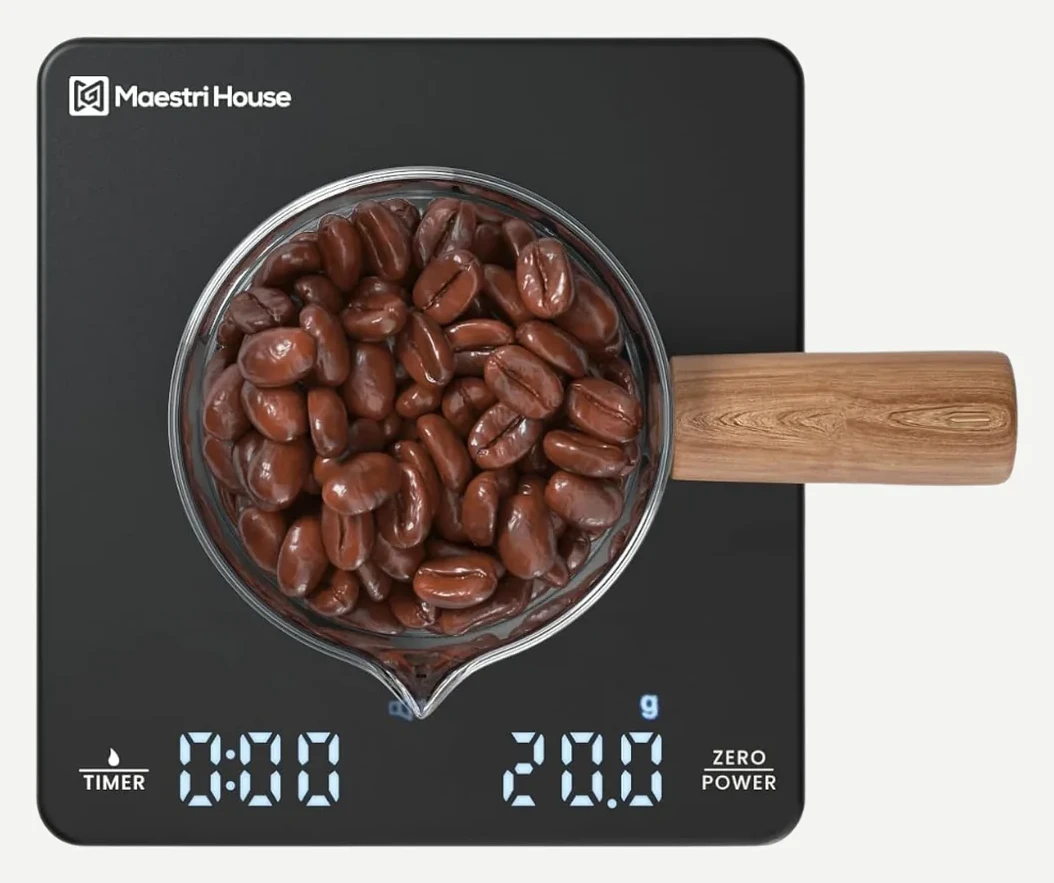 Maestri House S1 Mini Espresso ScaleThe smallest scale here, for a drip tray with almost no room