Why a Coffee Scale Needs to Read to 0.1g
A kitchen scale rounds to the nearest gram and starts weighing late. Both of those quietly move your recipe, and neither shows up as an obvious mistake.
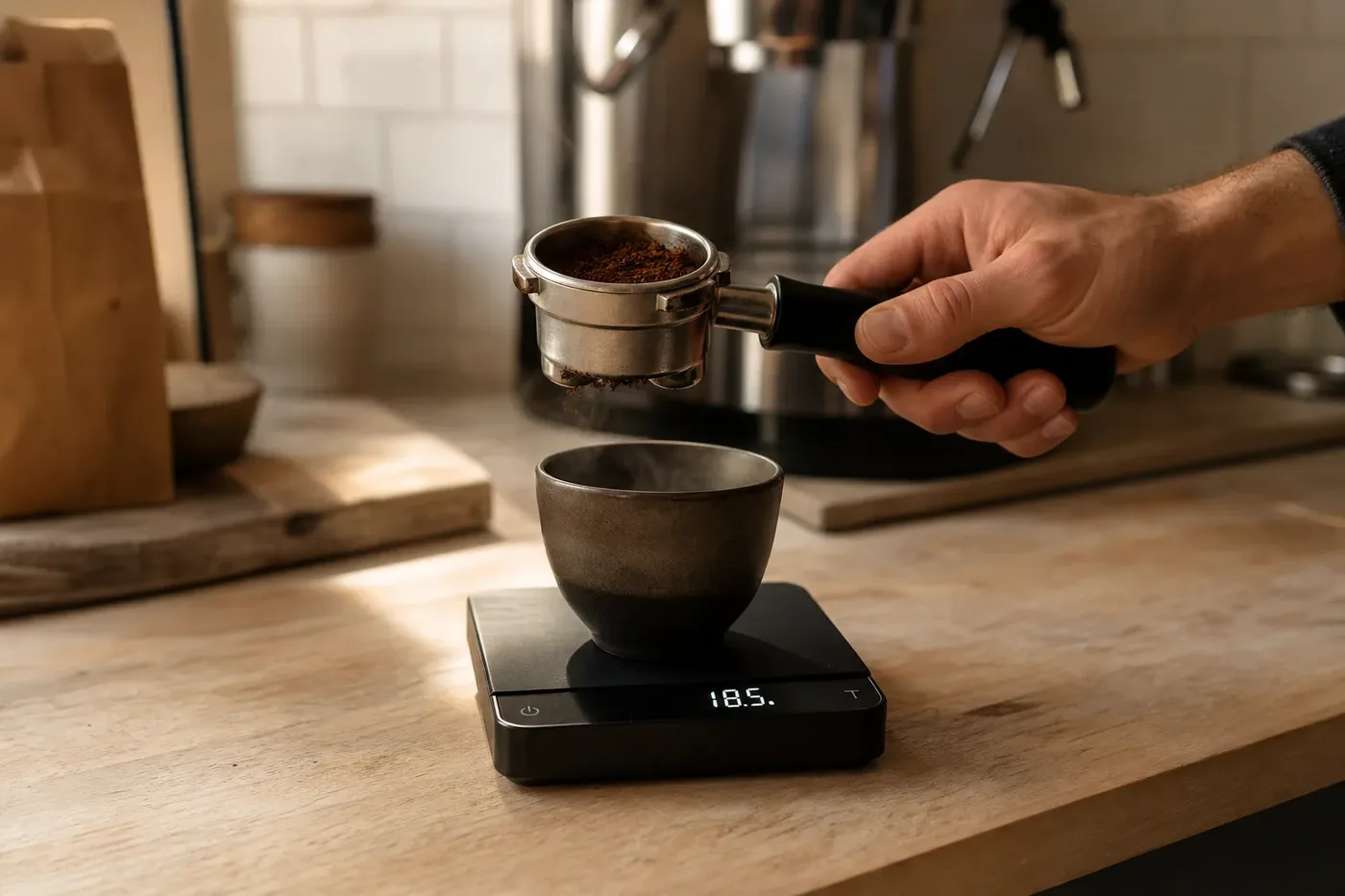
Most kitchen scales read to the nearest gram. That sounds precise enough for coffee until you look at what a gram is worth: on an 18g espresso dose it is more than five percent, and five percent moves a shot from balanced to sour.
This is the whole argument for a coffee scale, and it is narrower and more convincing than the marketing around them suggests.
Coffee scale resolution: what 0.1g buys
A scale reading whole grams does not just round, it rounds at a threshold. Anything from 17.5 to 18.4 displays as 18. Two doses both reading 18 can be almost a gram apart, and you will taste that on espresso and blame the grinder.
On filter it matters less. A gram on a 30g dose for a litre is about three percent and largely disappears into a big brew. This is why the honest answer to "do I need 0.1g" is: for espresso yes, for filter it is a nicety.
Our rating guide for scales weights accuracy and resolution heavily for exactly this reason, and it says which figures we can read off a specification and which nobody publishes.
Coffee scale response time
The second difference is speed. A kitchen scale is designed to settle on a stable weight, so it deliberately damps the reading: put a bowl on it and it takes a second or two to decide. That is correct behaviour for baking and useless for brewing.
When you are pouring water into a dripper, you need the number to keep up with the stream. A slow scale is always telling you what happened a second ago, so you overshoot every pour. A dedicated coffee scale updates several times a second, and that responsiveness is the difference most people actually feel, more than the decimal place.
Why the timer belongs on the same device
Brewing has two numbers that only mean something together: how much water went in and how long it has been there. Reading them off two devices means looking away from the pour, and a phone timer means a wet phone.
Every scale in our scale reviews has a timer, and some run it automatically: the weight starts moving, the clock starts. The Brewista Smart Scale III and the Hario V60 Drip Scale are both built around that pairing.
Do you need a water resistant coffee scale?
A scale lives directly beneath a brewer full of hot water. It will get wet, not as an accident but as a matter of routine, and drips find the seams around the buttons.
Ratings here are worth reading carefully. IPX7 means submersible to a metre; IP67 adds dust protection. Many scales claim "water resistant" with no rating at all, which is a marketing phrase rather than a standard. That is exactly the kind of unverifiable claim our rating guide flags rather than credits.
Coffee scale for espresso: a different shape
If the scale goes on a drip tray it has to be small, flat and heat-tolerant, and the surface area matters more than the capacity. The Maestri House S1 Mini is built to that brief: it fits under a portafilter where a normal brew scale simply does not.
Some go further and calculate flow rate in grams per second, which tells you whether the shot is running fast or slow while it is still running rather than afterwards.
Why brew ratios need a coffee scale
Every recipe you will read is a ratio: 1:15, 1:16, 1:17, coffee to water by weight. Those numbers are the common language of brewing and they are useless without something to weigh with.
Volume will not substitute, because coffee's density changes constantly. A scoop of light roast weighs noticeably more than the same scoop of dark roast, since darker beans have lost more moisture and expanded. A scoop of coarse grind holds less coffee than a scoop of fine. Two people using the same scoop and the same recipe can be brewing 15 percent apart.
Water is the same problem in reverse. A millilitre of water weighs a gram, which makes weighing it trivial and pouring it by eye a guess: mug sizes vary enormously and nobody fills to the brim.
Weigh the shot as well as the dose
On espresso the scale earns its place twice. You weigh the dose going into the basket, and you weigh the shot coming out, because the ratio between them is what defines the drink. An 18g dose producing 36g of espresso is a 1:2 ratio; the same dose producing 50g is a different drink entirely, and you cannot tell them apart by looking at the cup.
This is why espresso scales sit on the drip tray, and why some report flow rate in grams per second while the shot runs. Watching the rate tells you the shot is running fast several seconds before the volume does, which is early enough to learn something.
Coffee scale calibration and flat surfaces
Scales drift, and they are affected by what they stand on. A scale on a soft mat or an uneven counter reads inconsistently, and the usual symptom is a dose that seems to change by half a gram between brews for no reason.
Most scales ship with or accept a calibration weight, and running that once when the readings look wrong takes a minute. It is worth doing before concluding that your grinder has developed a fault.
What to look for in a coffee scale listing
Read the resolution figure and check it applies across the whole range, not just at the bottom. Some scales advertise 0.1g and switch to 1g increments above a few hundred grams, which is exactly where a full brew sits.
Check the auto-off timer too. A scale that shuts down after sixty seconds is useless for a four-minute press or a twelve-hour cold brew, and it is a specific, common annoyance that no marketing copy will mention.
Coffee scale features you can skip
Capacity above two kilos is irrelevant, since nobody brews that much. Bluetooth apps are pleasant and almost nobody keeps using them. A rechargeable battery is genuinely nicer than hunting for cells, but it is a convenience, not a reason to choose one scale over another.
The three things that matter are resolution, response speed and surviving water. Everything else on a scale listing is decoration.
Do you need a coffee scale at all?
If you brew by eye and enjoy your coffee, you do not need anything. But if you are trying to make the same cup twice, or trying to work out what a grind change did, a scale is what turns guessing into adjusting. Without a fixed dose there is no way to know whether the cup changed because of the grind or because of the scoop.
Coffee scale FAQ
Do I really need a coffee scale?
For espresso, effectively yes: a whole gram on an 18g dose is over five percent and will move the shot. For filter you can brew happily by eye. The real case for one is repeatability. Without a fixed dose you cannot tell whether a change in the cup came from your grind adjustment or from the scoop, so you end up chasing the wrong variable.
Can I use a kitchen scale for coffee?
You can, with two limitations. Most read to the nearest gram, so two doses showing 18 can be nearly a gram apart. And they deliberately damp the reading to settle on a stable weight, so they lag behind a pour, which makes you overshoot. For French press or a drip machine that is fine; for pour over and espresso it is frustrating.
What does 0.1g resolution actually change?
It removes the rounding band. A whole-gram scale shows everything from 17.5 to 18.4 as 18, so a dose you believe is identical can vary by almost a gram. On espresso that is enough to shift a shot from balanced to sour, and the usual reaction is to blame the grinder instead.
What does IPX7 mean on a coffee scale?
It means the scale survived submersion in a metre of water for thirty minutes in testing. IP67 means the same plus dust protection. A scale that just says water resistant with no rating is making a marketing claim rather than meeting a standard, which matters because a scale sits under a brewer and gets wet routinely.
Is an espresso scale different from a brew scale?
Physically, yes. An espresso scale has to fit on a drip tray under a portafilter, so it is smaller, flatter and more heat-tolerant, and some calculate flow rate in grams per second while the shot runs. A brew scale has a larger platform to hold a dripper and carafe. Either will weigh coffee; only one will fit where you need it.
Reviewed on this site
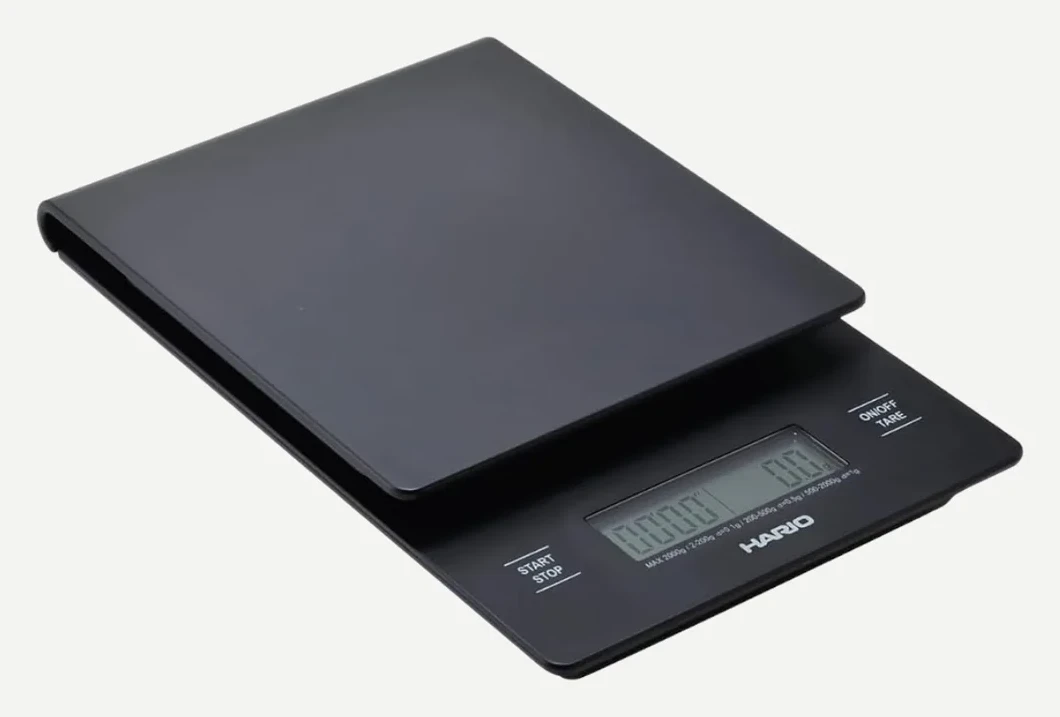 Hario V60 Drip ScaleThe scale Hario built to sit under a V60 and its server
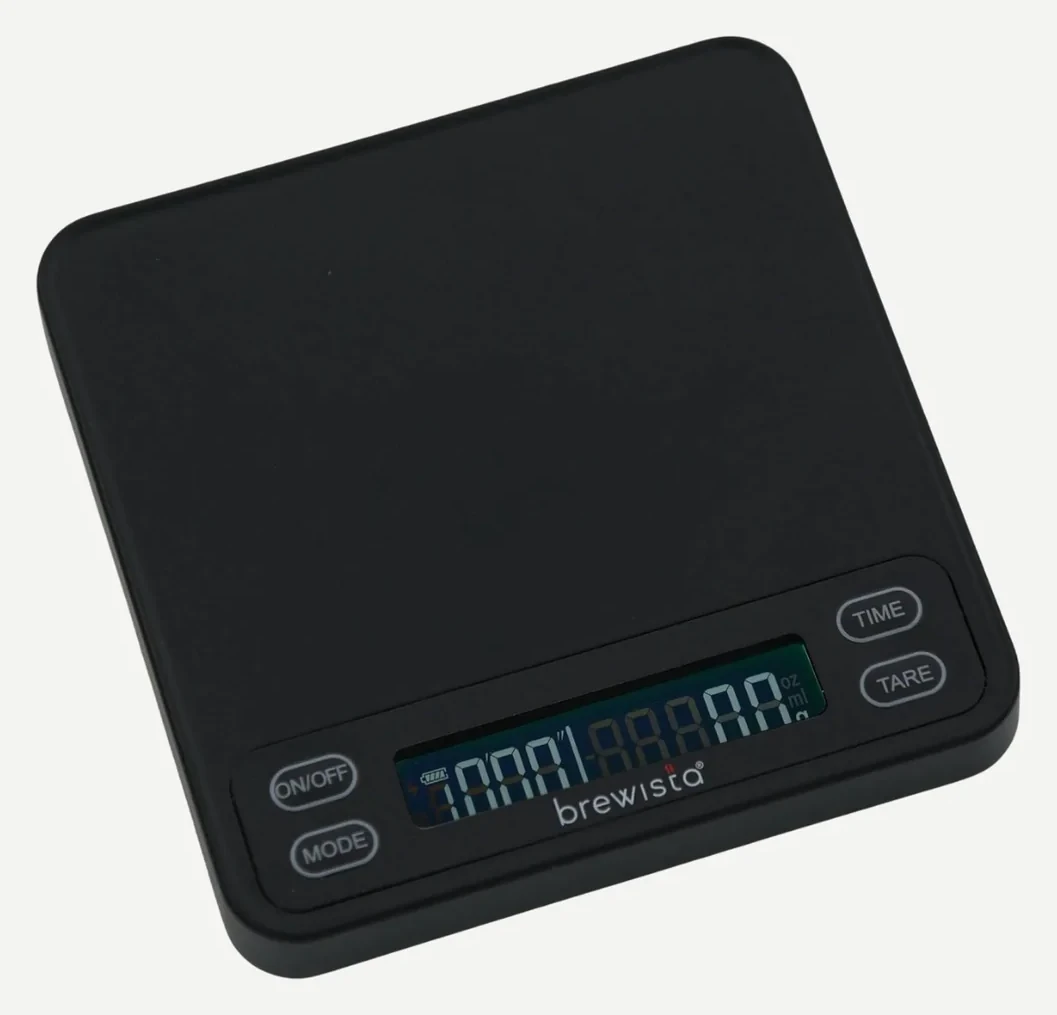 Brewista Smart Coffee Scale IIIFive brewing modes from a specialty brand, with separate espresso profiles
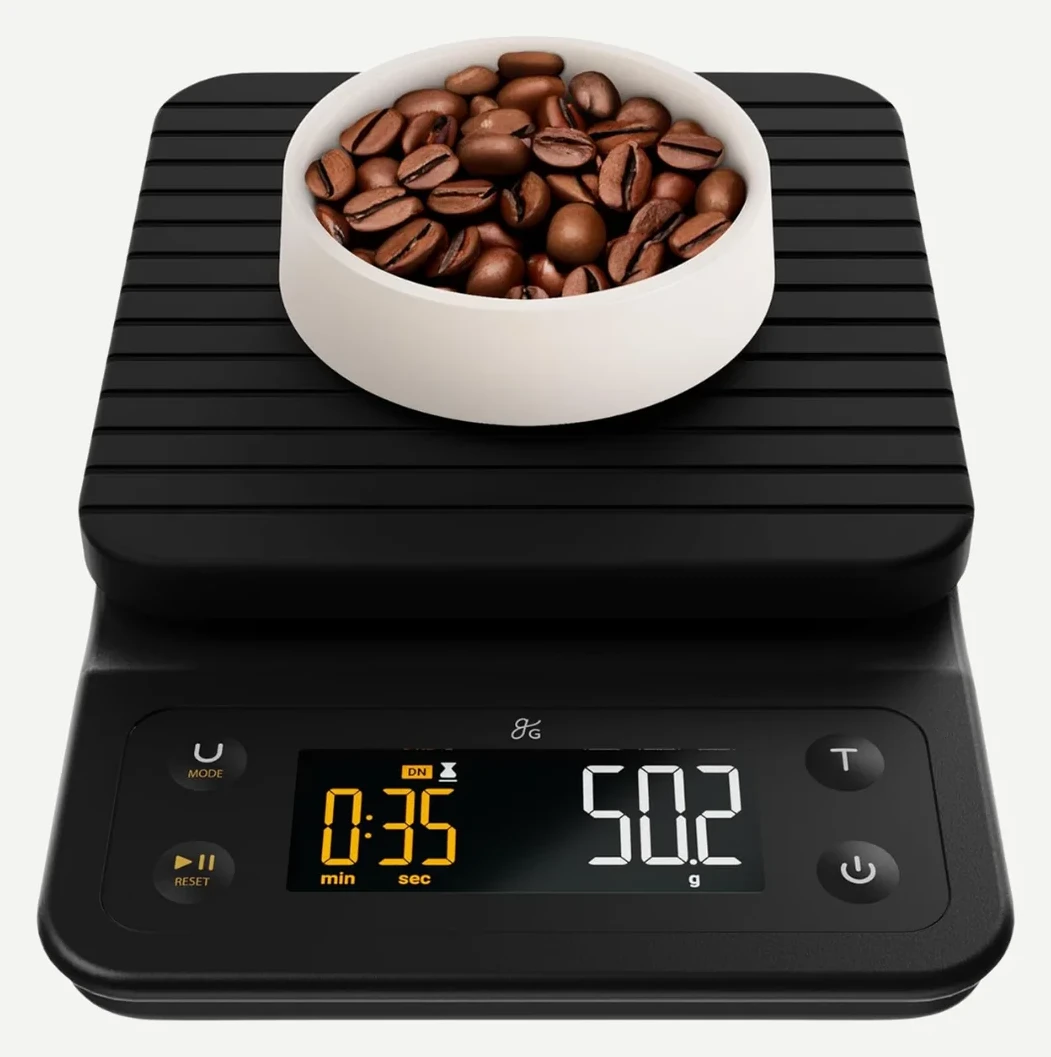 Greater Goods Coffee Scale with TimerA large platform with a dishwasher-safe silicone cover, for a messy counter
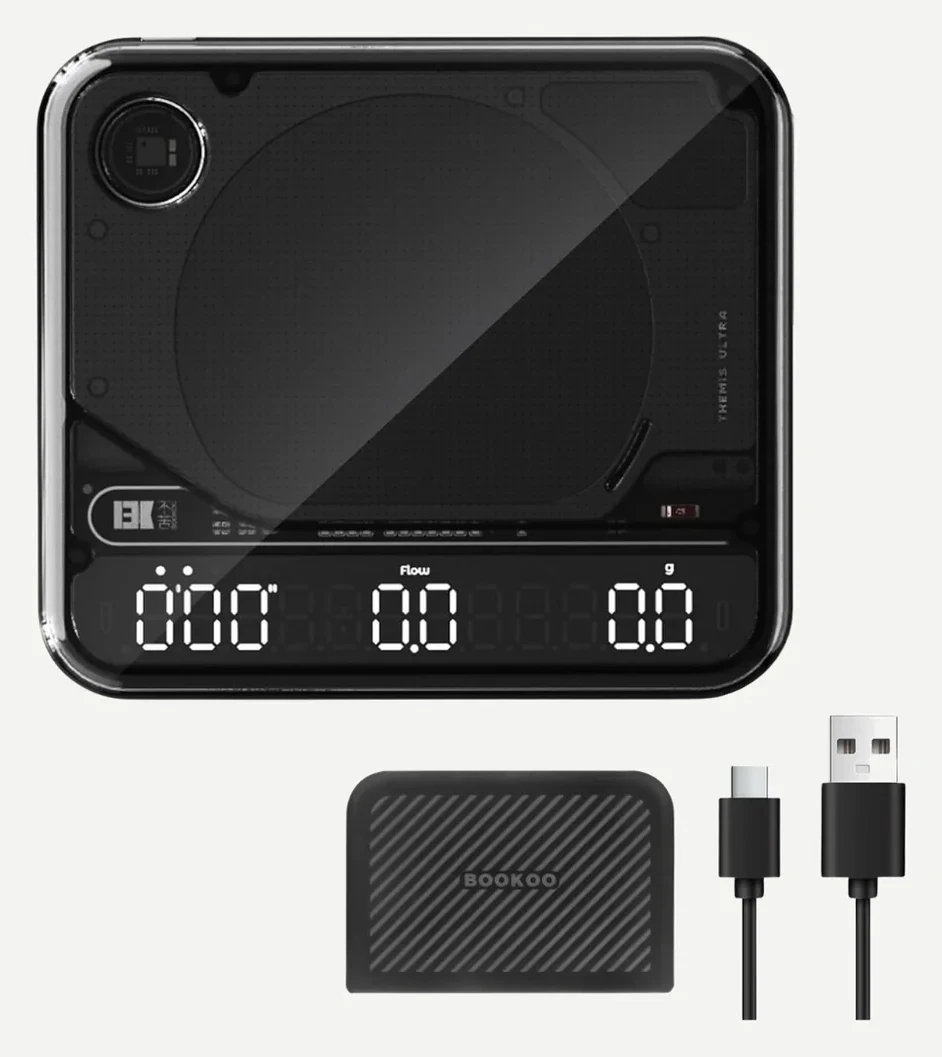 BOOKOO Themis Ultra Coffee ScaleThe only scale here that publishes a response time and talks to a phone
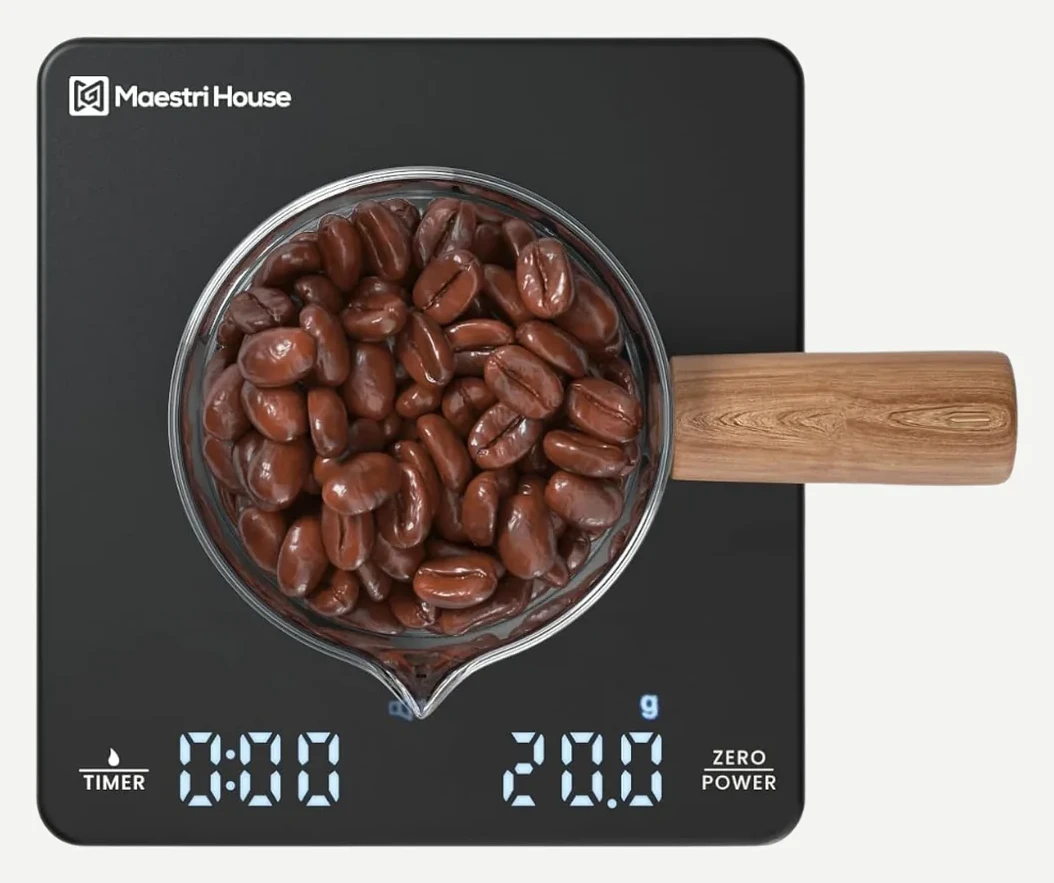 Maestri House S1 Mini Espresso ScaleThe smallest scale here, for a drip tray with almost no room