




Cleaning a Bean-to-Cup Machine Without the Guesswork
The brew group, the milk system and the descale. Which of the three the maker will actually help you with.
A bean-to-cup machine makes a wet puck of grounds every cup and pushes milk through a pipe every latte. Neither of those cleans itself, and the maintenance is the part buyers underweight and then live with for years.
There are only three jobs. They run on different clocks and one of them decides whether you will still be using the machine in five years.
The bean-to-cup brew group: what to check before you buy
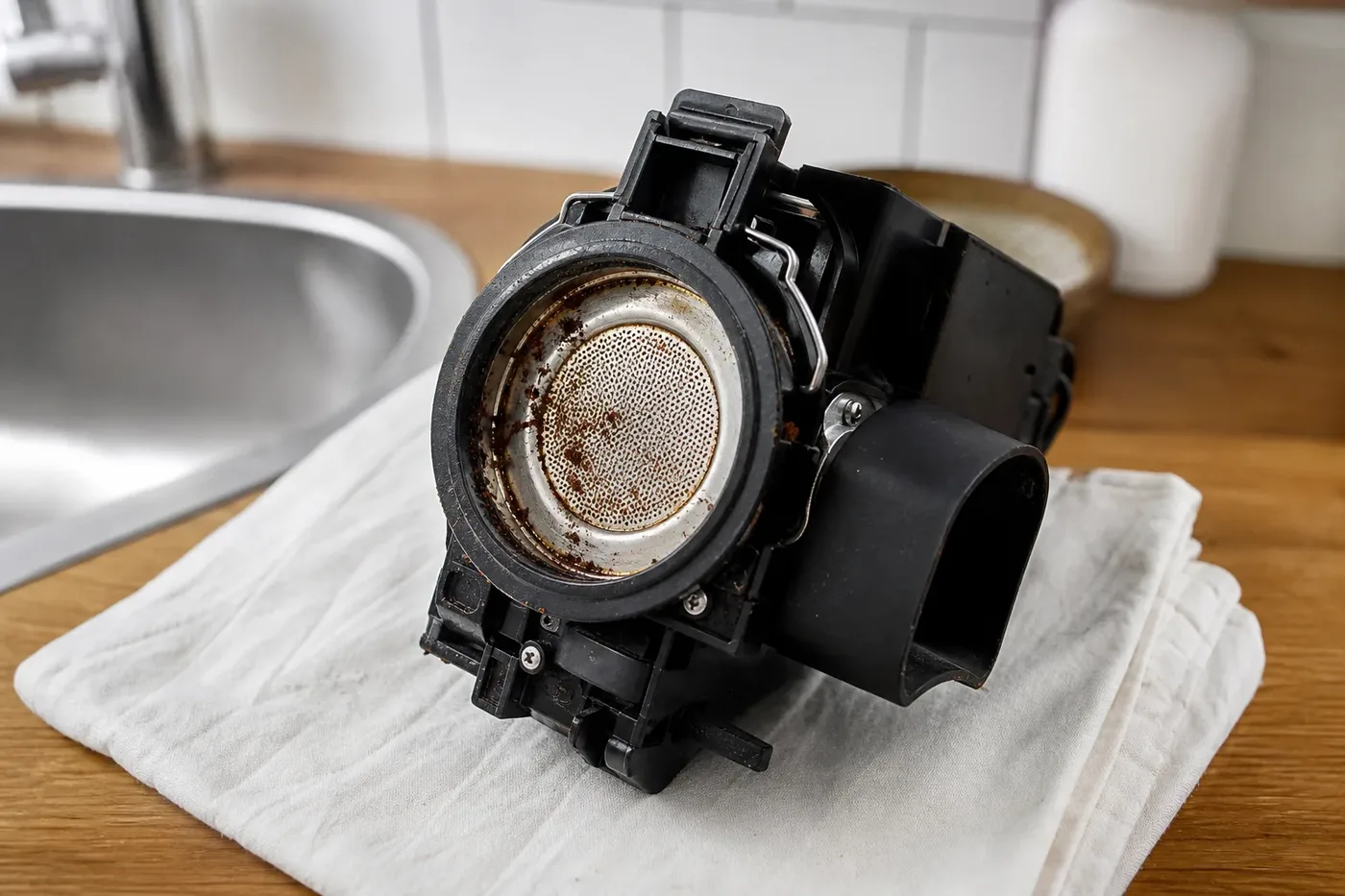
The brew group is the part that holds the coffee while water passes through it. On some machines it lifts out in one piece: you press a catch, pull it free, rinse it under a warm tap and slide it back. On others it is sealed inside and has to be cleaned in place with tablets and cycles, and eventually by somebody you pay.
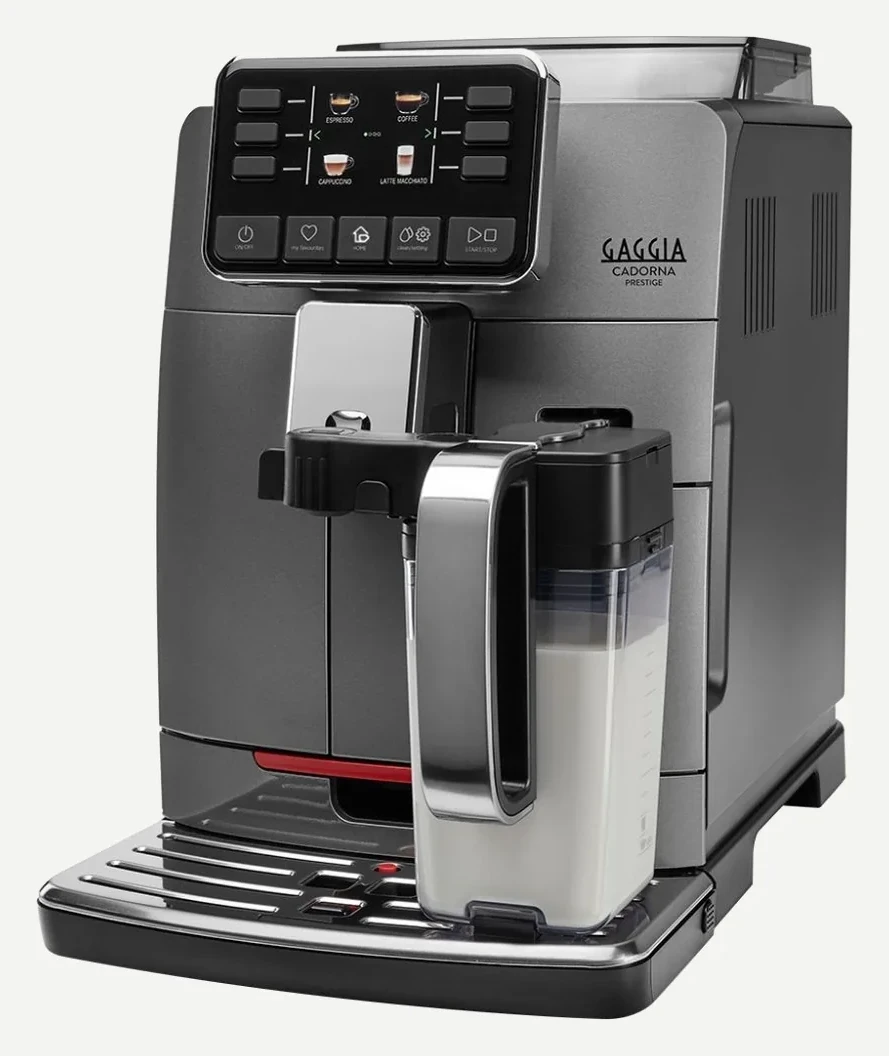
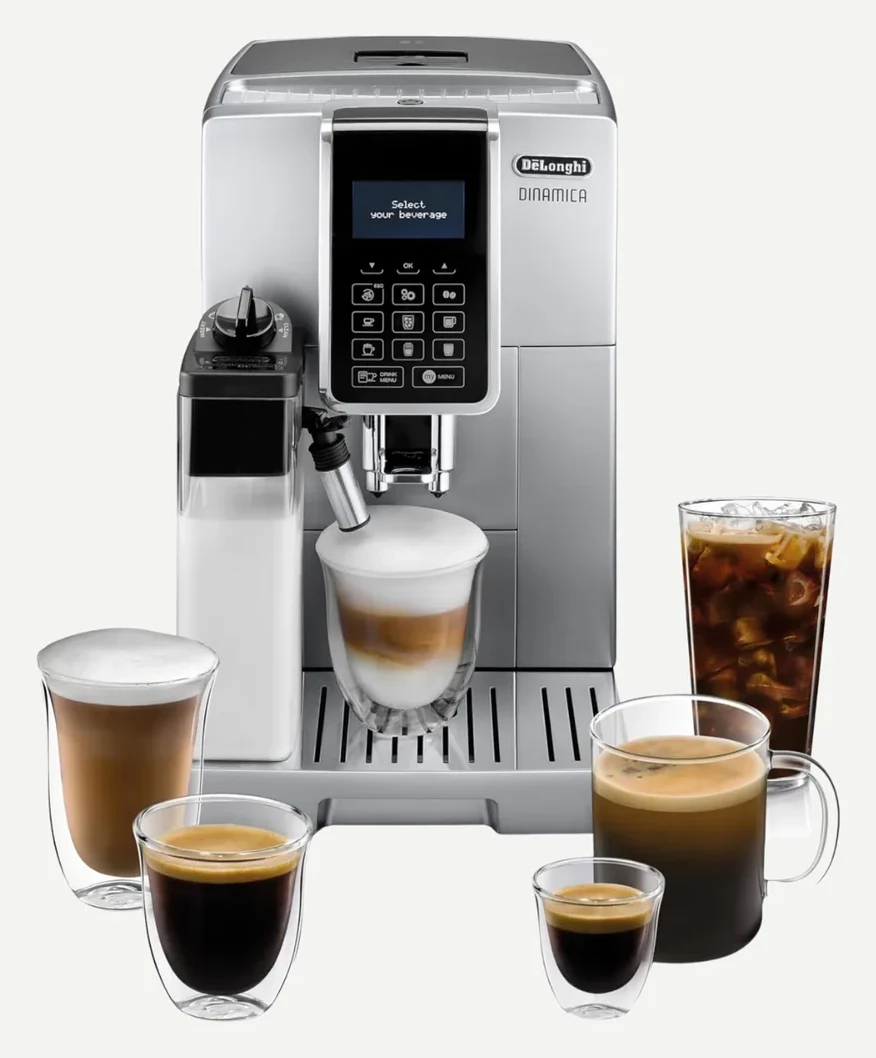
This is worth four points on its own in our scoring, because the difference is a minute a week against a service bill. The Gaggia Cadorna Prestige and the De'Longhi Dinamica both publish a removable group. Several makers say nothing at all about it, and an unanswered cleaning question is a cost you find out about in month three.
No detergent, and no dishwasher. Warm water and a shake dry. Anything else leaves residue in a part your coffee runs through.
How to clean a bean-to-cup machine's milk system
Milk in a warm pipe is a problem within hours. Most machines with an automatic milk system run a steam rinse when you finish, and that rinse handles the daily job. It does not handle the weekly one, which is taking the carafe apart and washing the pieces.
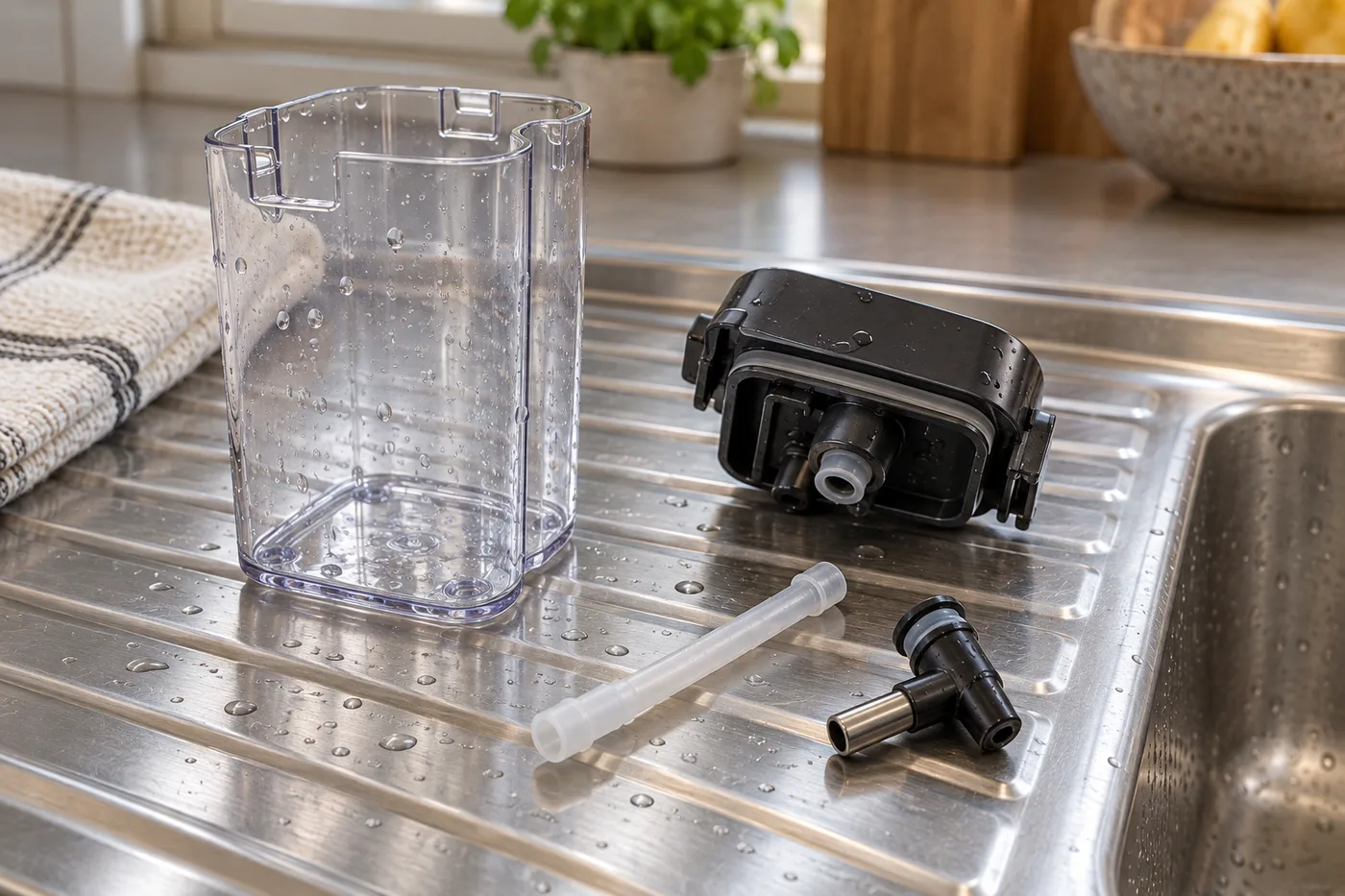
The design that solves this best is the one with fewest parts. A two-part system that comes apart into two pieces and goes in the dishwasher asks less of you than a carafe with tubes and valves. If you drink milk drinks daily, that difference will matter more than the number of recipes on the display.
A carafe you can lift off and put in the fridge between drinks is the other good answer, because milk that never sat warm needs no rescuing.
How to descale a bean-to-cup machine
Every machine that heats water builds scale, and how fast depends on your water rather than your machine. Scale narrows the pipes and coats the heating element, so the machine brews cooler, then slower, then not at all.
Most bean-to-cup machines count the cycles and tell you when to descale. That indicator is worth looking for, because the alternative is remembering, and nobody remembers. Use the maker's solution or a descaler made for coffee machines, run the cycle the manual describes, and do not skip the rinse afterwards.
Filtered water in the tank slows the whole process down. It does not remove the job.
A weekly bean-to-cup machine cleaning routine
Empty the puck bin and the drip tray when the machine asks. Rinse the brew group under the tap once a week if it comes out. Take the milk system apart and wash it once a week if you use it. Descale when the light comes on. Wipe the hopper with a dry cloth when you change beans, because coffee oils go rancid and the hopper is where they collect.
That is fifteen minutes a week. The machines that ask for less are the ones that answer the brew group question in their specification, which is why it is worth reading before you buy rather than after.
How hard water changes your bean-to-cup descaling schedule
Scale comes from dissolved minerals, so hard water scales a machine several times faster than soft. Two identical machines in two houses can need descaling at completely different intervals, which is why the maker cannot tell you a date and the machine counts cycles instead.
A filter in the tank slows it down and does not stop it. Bottled water is not automatically better, because some bottled waters are high in exactly the minerals that cause the problem. If you already know your water is hard, expect the light sooner and do not treat it as a fault.
Three bean-to-cup machine problems and what they mean
Coffee running through fast and tasting thin generally means the grind has drifted coarse or the burrs need cleaning. Coffee running slow or stopping generally means scale or a brew group that has not been rinsed in a while. A machine reporting an empty hopper while full of beans is almost always oily beans clumping in the chute rather than a broken sensor, which is covered in our piece on choosing beans for these machines.
None of those three is a repair. All of them get read as one, and machines get replaced over them.
Bean-to-cup machine cleaning FAQ
How often should you clean a bean-to-cup machine?
The milk system needs a rinse after every session with milk, and most machines run one automatically. The brew group wants a rinse under the tap weekly if it comes out. Descaling is driven by your water hardness and the machine usually tells you.
What happens if you never descale?
Scale builds inside the boiler and the pipes, the machine brews cooler and slower, and eventually it stops. It is the single most common reason an otherwise healthy machine is written off, and it is entirely preventable.
Can you put the brew group in the dishwasher?
No. Rinse it under warm water and let it dry. Detergent leaves residue in a part that hot water passes through on its way to your cup, and it can perish the seals.
Is a removable brew group worth paying for?
It decides whether cleaning is a rinse or a service booking, so yes. Six of the fourteen machines we list, from four makers, publish one. Where a maker does not answer the question, we score nothing for it rather than assuming the answer is no.
Do milk systems need cleaning every day?
Every session, not every day. Milk left in a pipe overnight is the fastest way to give a machine a smell you cannot remove. Machines with a carafe usually let you take it off and put it in the fridge between drinks, which solves the problem more neatly than any cleaning cycle.