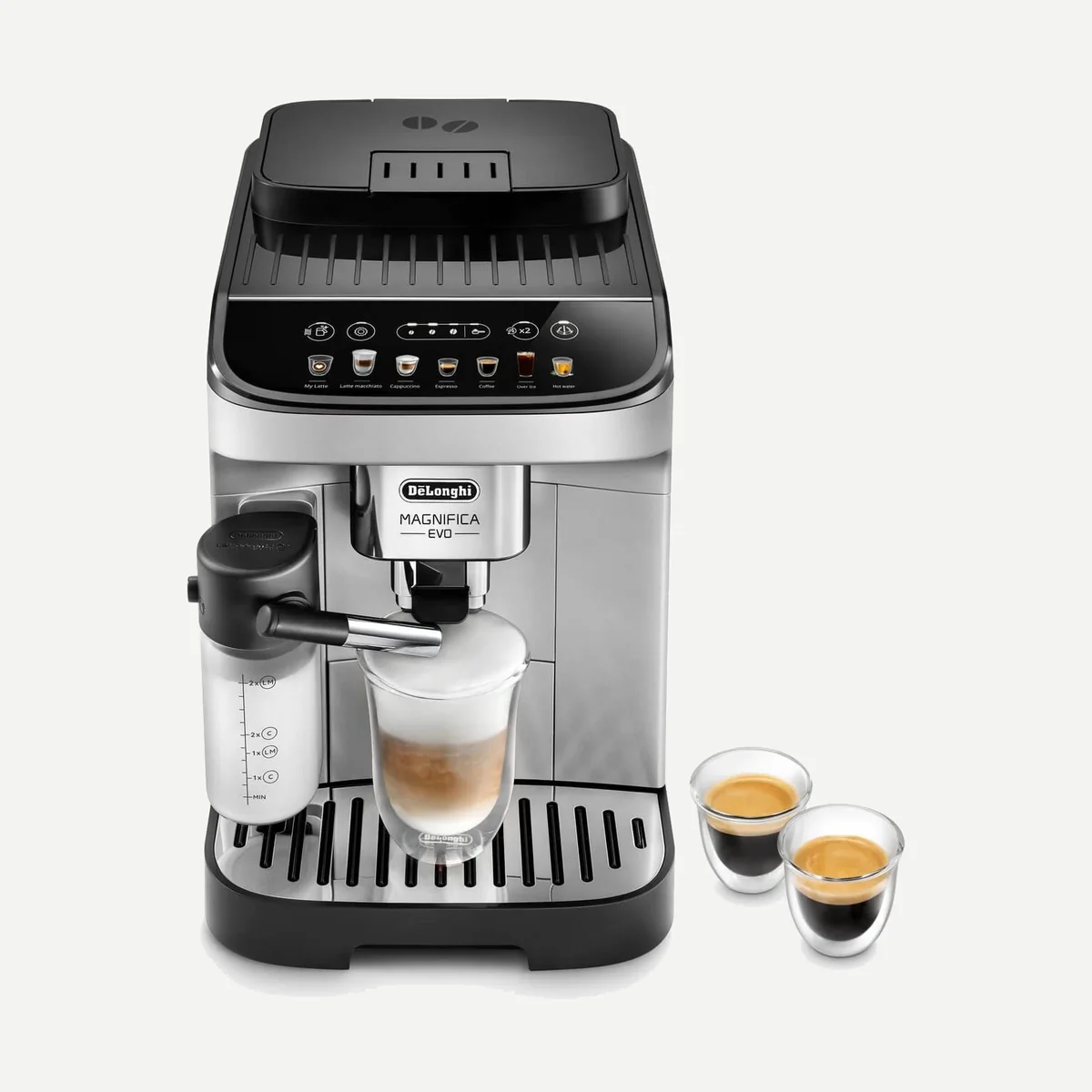
What is the Gaggia Cadorna Prestige?
The Cadorna Prestige is Gaggia's fully automatic bean-to-cup machine, grinding, brewing and frothing in a single Italian-made unit priced at $1,049.
Gaggia is an Italian espresso brand with a long commercial and domestic history. The Cadorna Prestige sits toward the top of their home superautomatic lineup, combining a ceramic adjustable grinder with ten settings, a pre-infusion system, and an integrated milk carafe that handles frothing automatically.
The body is black ABS with a spray-painted anthracite front and a stainless steel boiler. At 9.6 kg and 260 x 440 mm on the counter, it is a full-size appliance. The machine is not plumbable, so it runs from a 1.5-litre removable water tank.
Gaggia Cadorna Prestige grinder and extraction: what reaches the cup
The Cadorna Prestige includes pre-infusion and a ceramic grinder with ten settings, which are the two published variables most relevant to shot quality.
Pre-infusion works by pausing between the initial hot water shower and the main brew cycle, giving the puck time to swell and saturate evenly before full pressure is applied. This reduces channeling risk without any input from the user, which matters in a fully automatic machine.
The grinder is ceramic with ten adjustable settings. Ceramic burrs are durable and generate less heat than steel alternatives during grinding. Ten settings gives meaningful range for dialing in to different beans, though the machine manages dose and tamp without manual control.
- Pre-infusion is a documented feature, not marketing language: a timed pause separates the initial water shower from the full brew phase.
- The ceramic grinder with ten settings allows adjustment for different roast levels and bean densities, which affects extraction directly.
- No bottomless portafilter option means the user cannot visually inspect extraction for channeling or uneven flow.
- Pump pressure is 15 bar, which is standard for superautomatics, though the machine controls actual brew pressure internally.
What you can brew with it
The Cadorna Prestige brews espresso-based drinks and milk drinks automatically, but it is not designed for manual brewing methods or bottomless extraction work.
The machine covers the full standard superautomatic menu: espresso, lungo, and milk-based drinks using the integrated carafe. The carafe froths milk twice and removes bubbles automatically, which is designed to produce consistent texture without the user steaming by hand.
It does not support manual milk texturing, and there is no steam wand for latte art or precise foam control. Buyers who want to develop milk technique or pull naked shots will find the hardware does not accommodate that kind of work.
- Espresso and lungo are the core brew formats, managed automatically from bean to cup.
- Milk drinks are handled by the integrated carafe, which automates frothing and includes a cleaning cycle.
- Manual milk steaming is not possible, so fine control over foam texture and temperature is not available.
- The machine is suited to consistent daily output rather than experimental or variable brewing.
Living with it, day to day
Daily use centres on refilling a 1.5-litre tank, emptying the drip tray, and running the carafe through its automatic cleaning cycle after milk drinks.
The 1.5-litre water tank is smaller than some rivals at this price. A household pulling four or more drinks a day will refill it daily. The machine is not plumbable, so that rhythm is fixed. The drip tray is stainless steel and ABS, and needs regular emptying.
The integrated milk carafe has an automatic cleaning cycle, which reduces the effort of keeping the milk circuit hygienic. Descaling interval depends on water hardness and use frequency. The brew unit is internal and requires periodic removal and rinsing, which is standard for superautomatics in this class.
- The 1.5-litre tank requires daily refilling in a multi-drink household, with no plumbing option to change that routine.
- The milk carafe runs an automatic cleaning cycle after milk use, which limits residue buildup in the frothing circuit.
- The internal brew unit needs periodic removal and manual rinsing to maintain hygiene and extraction quality.
- The drip tray uses stainless steel and ABS construction and needs emptying before it overflows, which is common to all non-plumbed superautomatics.
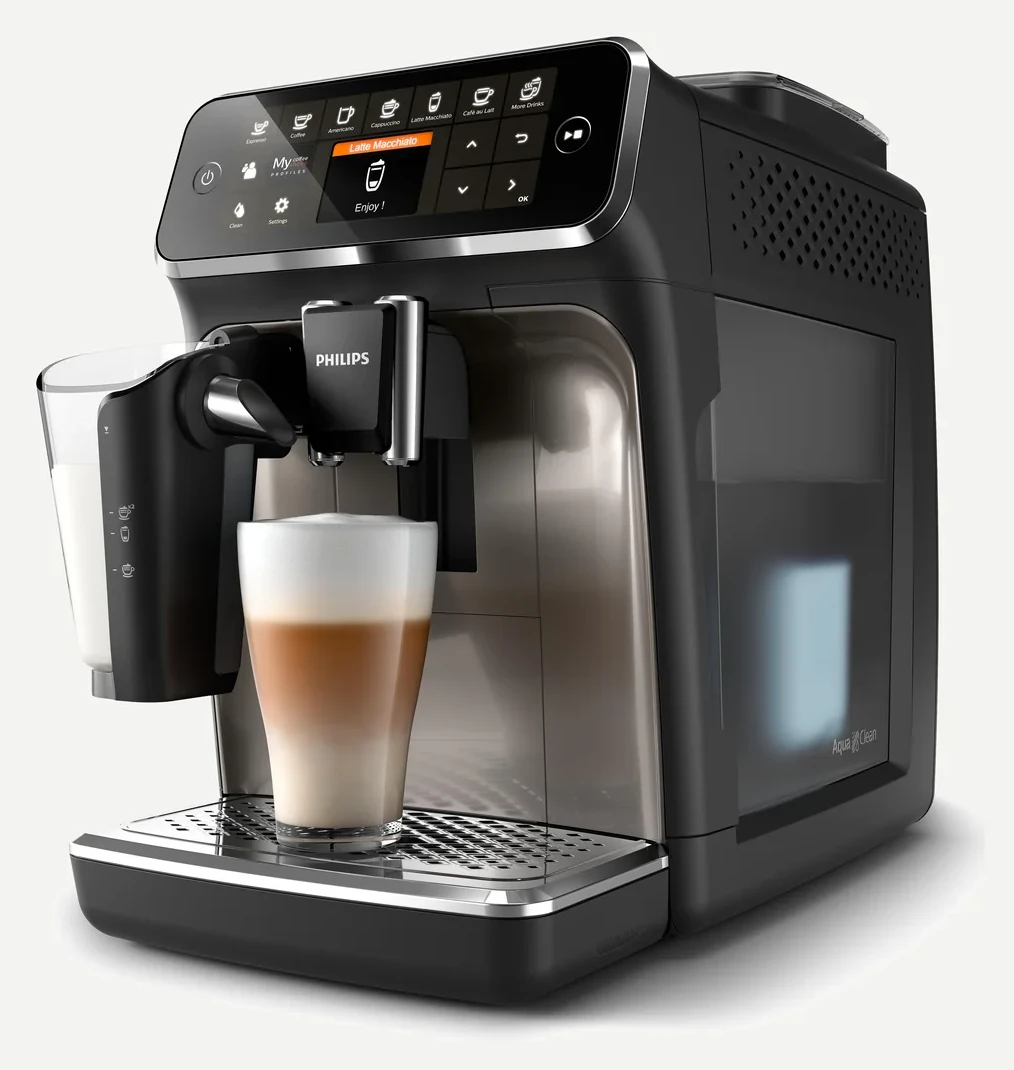
Gaggia Cadorna Prestige vs Philips 4300 LatteGo
The Cadorna Prestige and the Philips 4300 LatteGo are both fully automatic bean-to-cup machines at similar prices, with overlapping features and a few meaningful differences.
The Cadorna Prestige is priced at $1,049 against the LatteGo at $999. The Cadorna is made in Italy and weighs 9.6 kg, while the LatteGo is made in Romania and comes in at 8 kg. The Cadorna carries a one-year warranty. The LatteGo carries a two-year warranty, which is a concrete advantage at this spend level.
The LatteGo has twelve grind settings against ten on the Cadorna, and its 1.8-litre tank holds 300 ml more water, reducing refill frequency. The Cadorna's milk carafe froths twice and strips bubbles. The LatteGo's LatteGo system is two-part and described as dishwasher-safe, cleaning in under ten seconds, and compatible with plant-based milk.
- The LatteGo's two-year warranty gives buyers more coverage than the Cadorna's single year at a comparable price.
- The LatteGo's 1.8-litre tank means fewer refills per day than the Cadorna's 1.5-litre capacity.
- The Cadorna is made in Italy, which some buyers factor into a purchase at this price tier.
- The LatteGo milk system is dishwasher-safe and plant-milk compatible, two specifics the Cadorna's carafe listing does not match.
Is the Gaggia Cadorna Prestige worth it?
At $1,049, the Cadorna Prestige delivers Italian manufacture, pre-infusion, and a ceramic grinder, but the one-year warranty and smaller tank are real trade-offs against close rivals.
The features are genuine: pre-infusion, ten-setting ceramic grinding, and automatic milk frothing cover the core requirements of a home superautomatic. Italian manufacture is a point of difference that carries weight for some buyers. The machine is not cutting corners on the basics.
However, the Philips 4300 LatteGo costs $50 less, carries a two-year warranty, holds more water, and offers more grind settings. For a buyer who prioritises convenience and coverage over provenance, the LatteGo is a harder offer to set aside. The Cadorna makes sense if Italian origin matters or the anthracite finish fits the kitchen.
Who should buy it (and who should not)
The Cadorna Prestige suits buyers who want a fully automatic Italian-made espresso machine and do not need manual steaming or a large water reserve.
It fits someone who wants to go from beans to a finished milk drink at the press of a button, without developing any manual technique. The automatic frothing and pre-infusion handle the variables. Italian manufacture is a real differentiator for buyers who care about origin.
It is less well suited to households with high daily volume, given the 1.5-litre tank. Anyone planning to steam milk manually, pull naked shots, or extend their warranty protection past one year will find better-matched options at a similar price.
Buy it if
- You want a fully automatic machine made in Italy and that origin matters to your buying decision.
- You brew one to three drinks a day and are comfortable refilling a smaller water tank regularly.
- Automated frothing with no milk technique required is the right fit for your daily routine.
Skip it if
- You want a two-year warranty from a machine at this price, which closer rivals provide.
- Your household pulls enough drinks daily that a 1.5-litre tank will interrupt the morning too often.
- Manual steam control or visual shot inspection are part of how you want to use the machine.
Frequently Asked Questions
Is the Gaggia Cadorna Prestige good for espresso?
It includes pre-infusion, a ceramic grinder with ten settings, and a 15-bar pump, which are the published features most relevant to espresso quality. Pre-infusion in particular reduces channeling by saturating the puck before full pressure. The machine manages the process automatically, so extraction consistency depends on the hardware rather than the user's technique.
What size are the Cadorna Prestige burrs?
Gaggia describes the grinder as a 100% ceramic adjustable grinder with ten settings. Ceramic burrs run cooler than steel and hold an edge longer, which is why they turn up on machines meant to grind fresh for every cup. The grinder is ceramic rather than steel, which generates less heat during grinding and is durable over time, but a specific burr diameter is not something we have confirmed.
How loud is the Cadorna Prestige?
The grinder is the loud part of any bean-to-cup machine, and it runs for a few seconds per cup rather than continuously. Ceramic burr grinders are generally quieter than steel burr grinders, and superautomatics vary considerably by model and grind setting. Without a published noise figure, a direct comparison to other machines on that measure is not possible from the available data.
Gaggia Cadorna Prestige vs Philips 4300 LatteGo which is better?
The Cadorna costs $50 more and is made in Italy, with pre-infusion and a one-year warranty. The LatteGo costs $999, carries a two-year warranty, has a larger 1.8-litre tank, twelve grind settings, and a milk system described as dishwasher-safe and plant-milk compatible. For coverage and convenience, the LatteGo has a stronger specification at lower cost. The Cadorna wins on provenance.
Does the Cadorna Prestige have a steam wand?
No. The Cadorna Prestige uses an integrated milk carafe rather than a manual steam wand. The carafe froths milk automatically, runs a double frothing cycle, and strips bubbles. It also has an automatic cleaning cycle. Manual milk texturing and latte art are not supported by this configuration.
How often do you need to descale the Cadorna Prestige?
Descaling frequency in any superautomatic depends on local water hardness and daily usage volume. The machine will typically prompt the user when descaling is due. Using filtered or softened water extends the interval between cycles. A specific published interval for the Cadorna Prestige is not something we have confirmed from the available specification.