
Espresso Channeling: What It Is and How to Stop It
Water is lazy. If there is an easy path through the coffee it will take it, and the shot will taste sour and bitter at the same time.
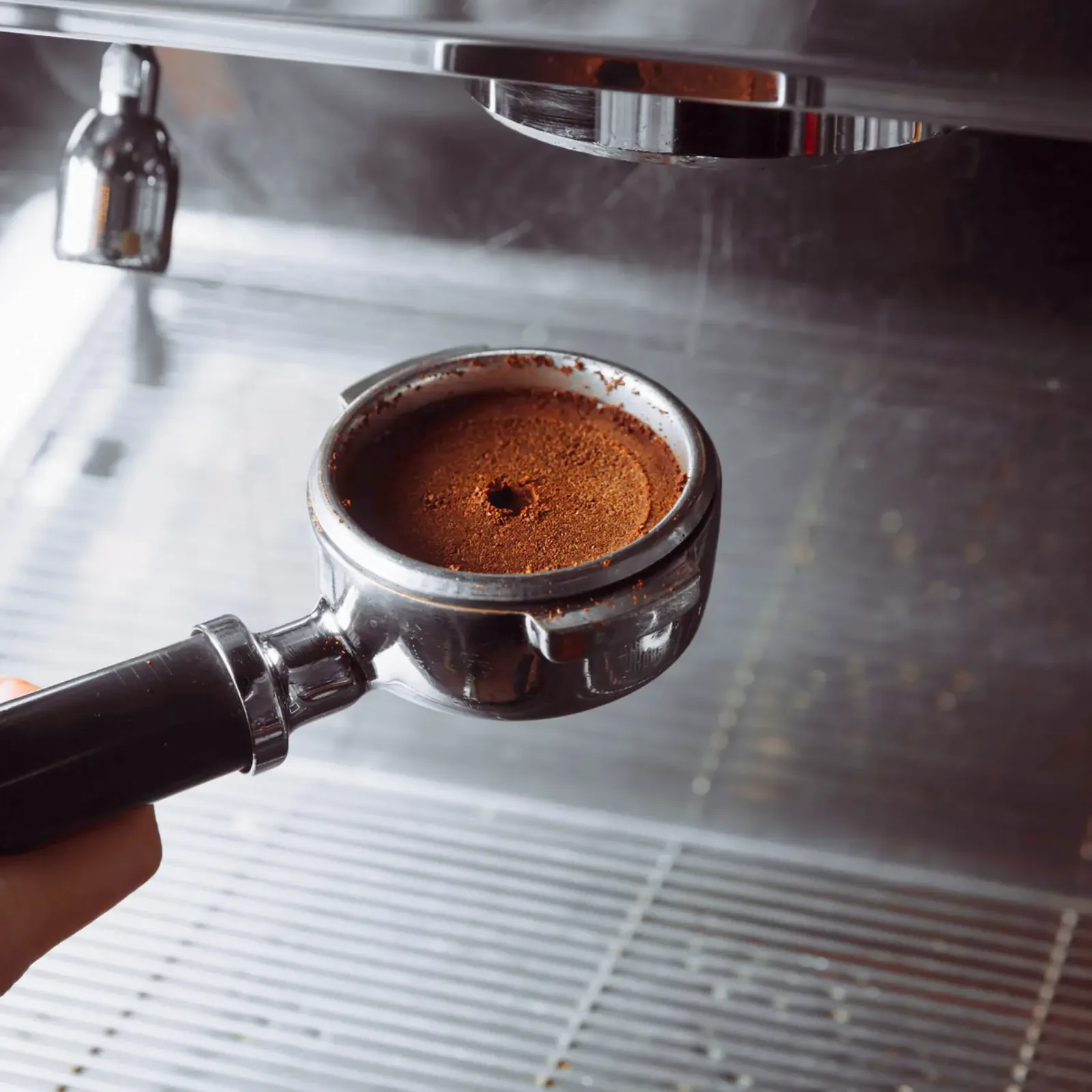
Channeling is when the water in an espresso machine finds an easy path through the packed coffee and rushes down it, instead of passing evenly through all of it. Part of the coffee gives up too little flavour and part gives up too much, which is why the shot tastes sour and bitter at once, and why changing the grind alone never fixes it.
What is channeling in espresso?
Nine bars of pressure is looking for a way out. If one part of the bed is less dense than the rest, more water goes there. More water erodes it further, so it becomes even less dense, and within a couple of seconds you have a channel.
The coffee along that channel gets flooded and over-extracts. The coffee everywhere else barely gets wet and under-extracts. Both end up in the cup.
How to spot channeling in a shot
- In the shot. Uneven streams, spurting, or coffee arriving from one side of the basket first. A shot that suddenly runs pale and fast.
- In the timing. The shot finishes early against your usual grind setting, because the water has found a shortcut.
- In the puck. Knock it out and look. Pits, craters, or a hole you can see through are channels. A good puck is flat, even and holds together.
- In the taste. Sour and bitter at once. This is the reliable one, because the visual signs are not always obvious.
How to stop channeling, in order of impact
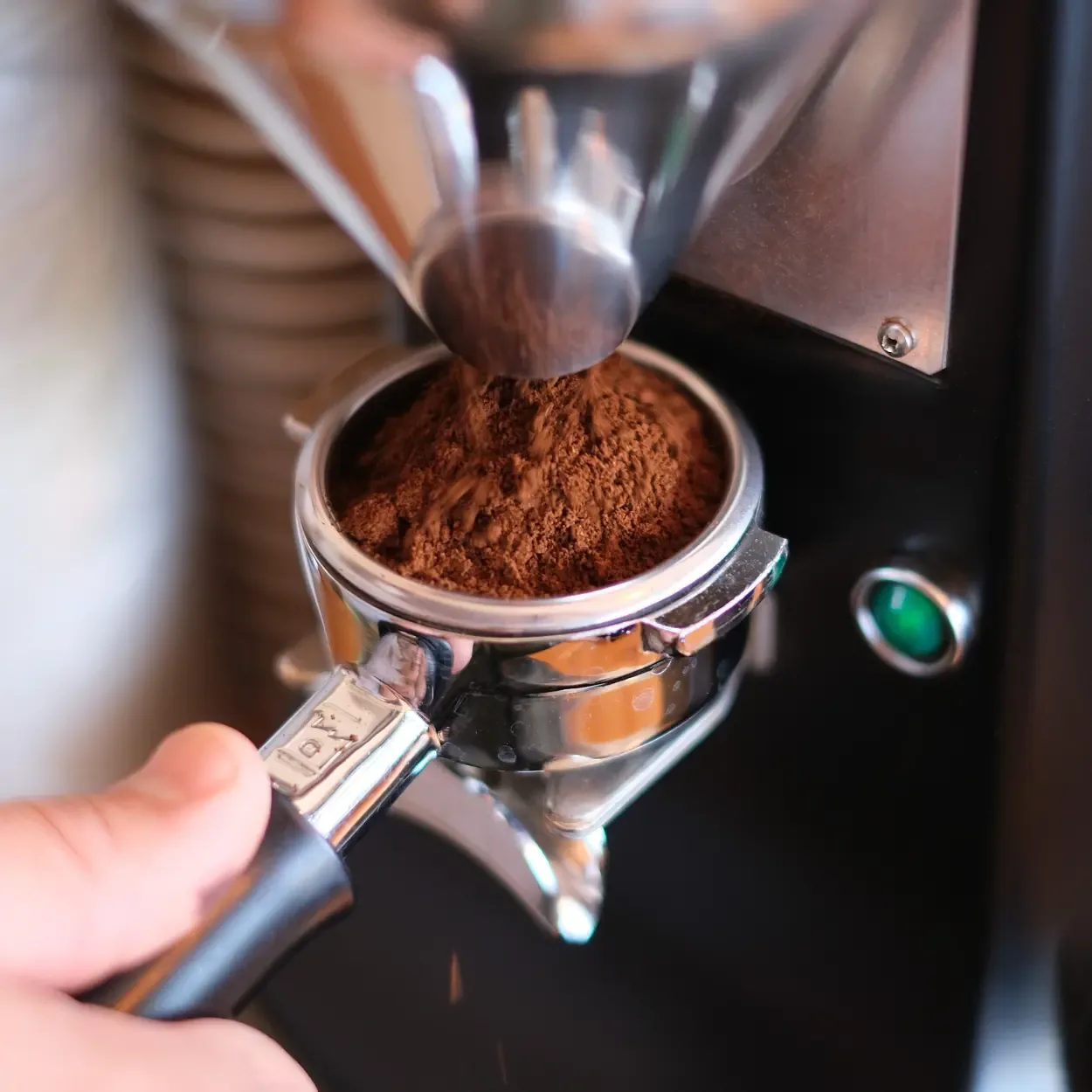
- Distribute before you tamp. Grounds fall into the basket in clumps and mounds. Stirring them with fine needles, which is what WDT means, breaks the clumps and levels the bed. This is the biggest single improvement and the tool costs almost nothing.
- Tamp level, not hard. A tilted tamp guarantees a thin side and a thick side. Once the tamp is firm and flat, additional force does very little.
- Get the dose right. Too little coffee leaves headroom for the puck to move under pressure. Too much and the shower screen compresses the bed unevenly when you lock in.
- Fix the grinder. A grinder that clumps, or that produces a wide spread of particle sizes, builds the density differences that channeling needs. This is the expensive fix and often the real one.
- Do not thump the portafilter. Tapping to settle grounds after tamping can crack the puck, which is a channel by another name.
What does not stop channeling
Grinding finer. It is the instinctive response to a fast shot and it makes channeling worse, because a denser bed increases the pressure differential that drives water into the weak spot.
Tamping harder, for the reason above. And blaming the beans, which are almost never the cause: stale coffee changes the flow rate but does not create the localised density differences a channel needs.
The order to work through espresso channeling
Distribute properly first, because it is free and it is usually the answer. Then check your dose is consistent to within a few tenths of a gram, which needs a scale. Then look at the tamp being level. Only after all three would we look at the espresso grinder or the machine, and by then you will know whether the problem moved.
Does pre-infusion help with channeling?
Pre-infusion wets the puck at low pressure for a few seconds before the pump comes up to full force. Many machines do it automatically and some let you control it.
It works because a dry puck is brittle. Water hitting it at nine bars fractures it, and a fracture is a channel. Wetting it gently first lets the bed swell and settle into the basket, so when full pressure arrives it meets something uniform and slightly compliant.
On a machine without the feature, a few seconds of manual pause at the start of the shot achieves much of the same thing if the design allows it.
Baskets and puck screens
The basket is easy to overlook and is genuinely variable. Cheap baskets have unevenly spaced or unevenly sized holes, which creates preferred flow paths before the coffee is even involved. A precision basket is an inexpensive upgrade with a measurable effect.
A puck screen, a thin metal disc laid on top of the coffee, spreads the incoming water across the whole surface rather than letting it arrive as jets from the shower screen. It also keeps the group head cleaner.
Neither substitutes for distributing properly, and both are worth having once you are weighing your dose to a repeatable figure, which is the point brewing by weight earns its keep.
Espresso channeling FAQ
How do I know if my espresso is channeling?
The shot runs unevenly, often spurting or streaming from one side, and it finishes faster than it should. The taste is the giveaway: sour and bitter at the same time, which is under and over-extraction in one cup.
Does tamping harder stop channeling?
No, and it is the most common wrong fix. Beyond a firm, level tamp, extra force changes almost nothing. Channeling is caused by uneven distribution before the tamp, and pressing harder on an uneven bed just compacts it unevenly.
What is WDT?
Weiss Distribution Technique: stirring the dry grounds in the basket with fine needles before pressing them flat (tamping), to break up clumps. It is the single most effective anti-channeling step and the tool costs very little.
Can the grinder cause channeling?
Yes. Grinders that produce clumps, or that vary in grind size within one dose, create the density differences channeling exploits. A grinder upgrade fixes more channeling than any technique change.