What Is a Piccolo Latte?
An Australian invention: a single shot in a small latte glass, designed so baristas could taste their own espresso all day without drinking a litre of milk.
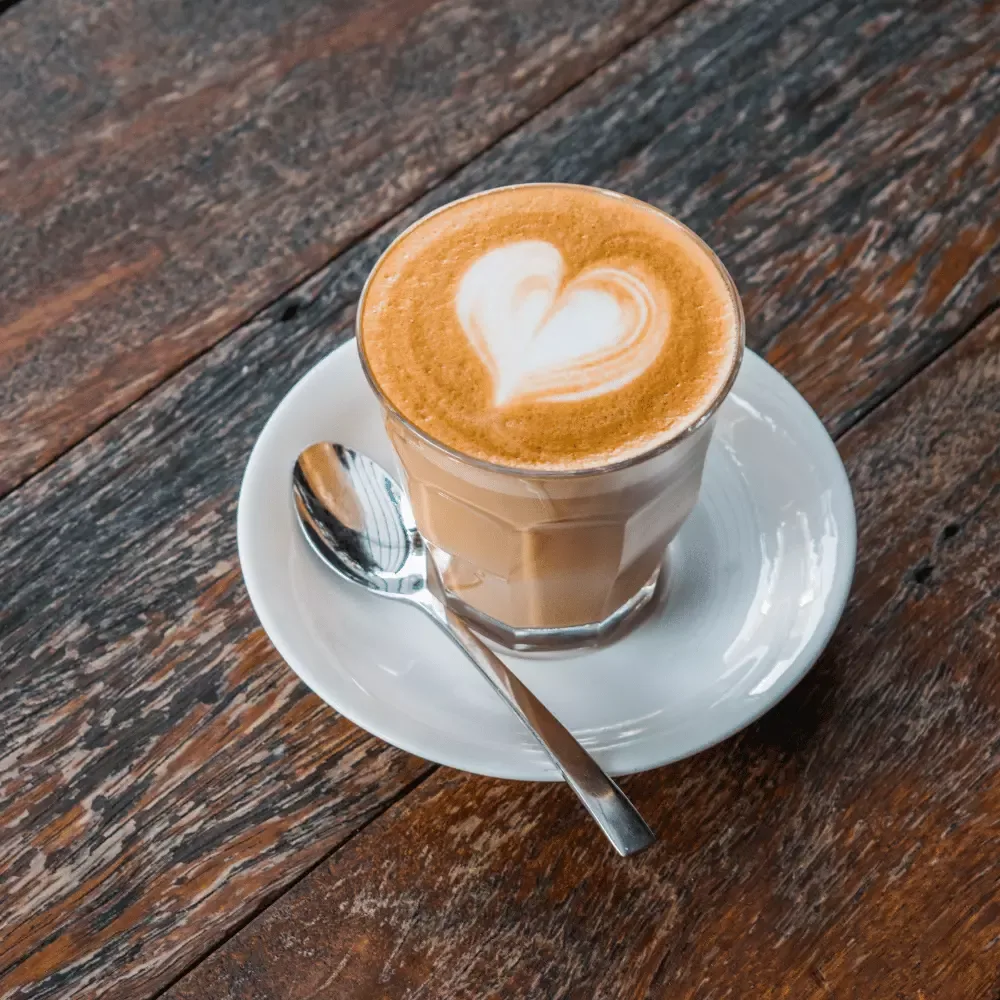
A piccolo latte is a single shot of espresso topped with steamed milk in a glass of about 90 to 100 ml. It is a latte scaled down, and it exists for a specific and rather practical reason.
Where the piccolo latte comes from
Australian cafe culture, and Sydney in particular. The story usually told is that baristas needed to taste their espresso repeatedly across a shift to check the grind was still right, and that doing so as full lattes was not workable. A small glass with a single shot solved it, customers noticed, and it went on the menu.
Whether or not that origin is exact, it explains the drink's proportions perfectly: enough milk to be pleasant, little enough that you can have several.
What is in a piccolo latte
- One espresso shot, around 30 ml. A ristretto in some cafes.
- Steamed milk to fill a 90 to 100 ml glass.
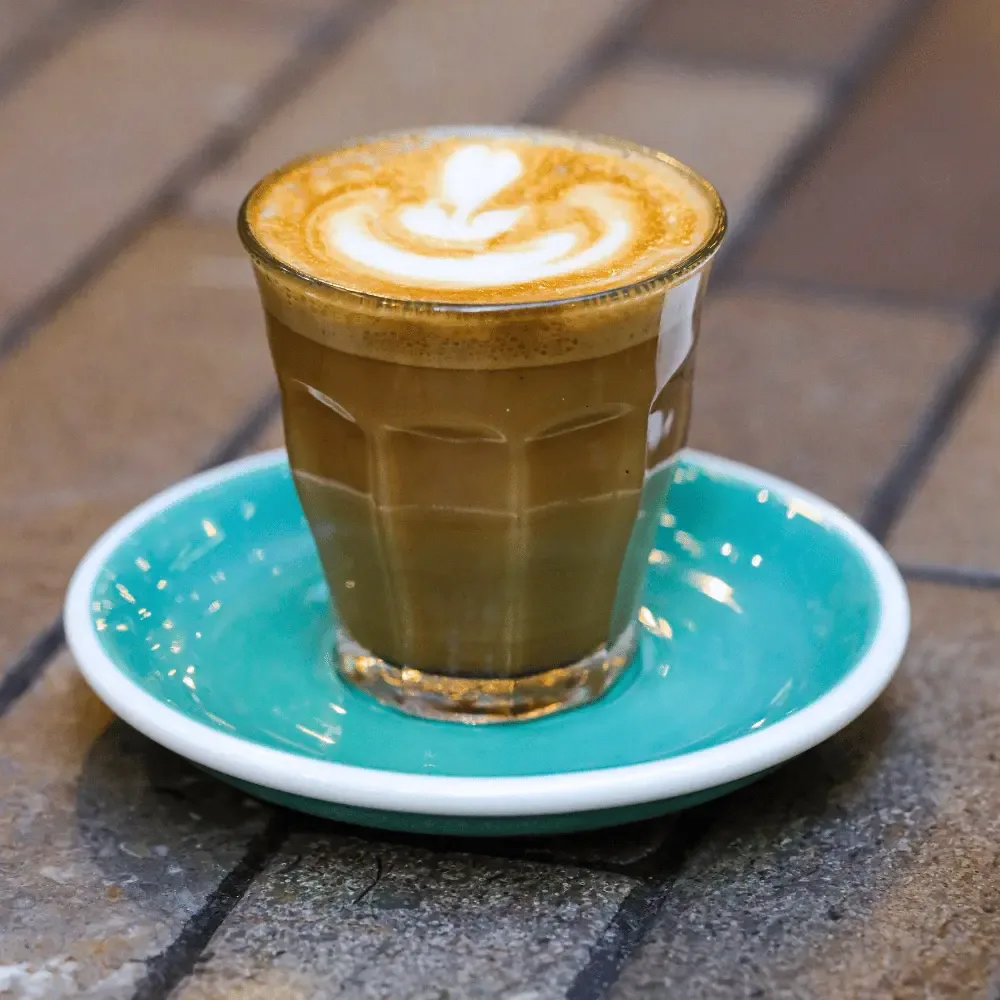
- A thin layer of microfoam, usually with a small poured pattern.
Unlike a cortado, the milk here is properly textured. The piccolo is a latte in miniature and it is meant to look like one.
Piccolo vs cortado vs macchiato
These three are ordered interchangeably by people who want "a small milky coffee" and they are not the same drink.
- Macchiato. A shot with a spoonful of foam. Essentially espresso.
- Cortado. Double shot, equal milk, minimal foam. The most coffee-forward of the three.
- Piccolo. Single shot, more milk by proportion, textured foam. The mildest.
So a cortado tastes stronger than a piccolo despite being a similar size, because it has twice the coffee and the same milk.
How to make a piccolo latte at home
The difficulty is steaming a very small quantity of milk well. Below about 100 ml there is not enough volume for the whirlpool that creates microfoam, and most home espresso machines have a steam wand designed for a jug several times that size.
The workaround baristas use is to steam a larger jug properly and pour off what they need. It wastes milk, and it is the only reliable way to get the texture right at this volume.
Who a piccolo latte is for
Anyone who wants to taste the coffee rather than the milk but finds a cortado slightly too sharp. It is also the most sensible order in a cafe whose coffee you have not tried: it is small, it is quick, and if the espresso is bad there is not enough milk to hide it.
That last point is the drink's real utility, and it is the reason it was invented.
How to order a piccolo outside Australia
Outside Australia and New Zealand the name is unreliable. Plenty of good cafes have never listed it, and some will make you a small latte instead, which is not the same drink because the ratio changes with the glass.
The order that works anywhere is the build rather than the name: a single shot in the smallest glass you have, topped with textured milk. Any competent barista understands that immediately, and it avoids the situation where the word is recognised but means something local.
Watch for the ristretto question too. Some cafes pull a ristretto rather than a full single, which makes the drink sweeter and rounder. Neither is incorrect, and it is worth knowing which one you were given before you decide the cafe cannot make a piccolo.
How much caffeine is in a piccolo latte?
One single shot, so roughly 60 to 80 mg depending on the bean and the dose. That is about half a cortado, which uses a double, and less than a mug of filter coffee.
This is the quiet reason the drink suits the afternoon. You get the ritual and the taste of a proper espresso drink at a fraction of the caffeine load, which is a better trade than decaf for most people.
Why a piccolo is served in a glass
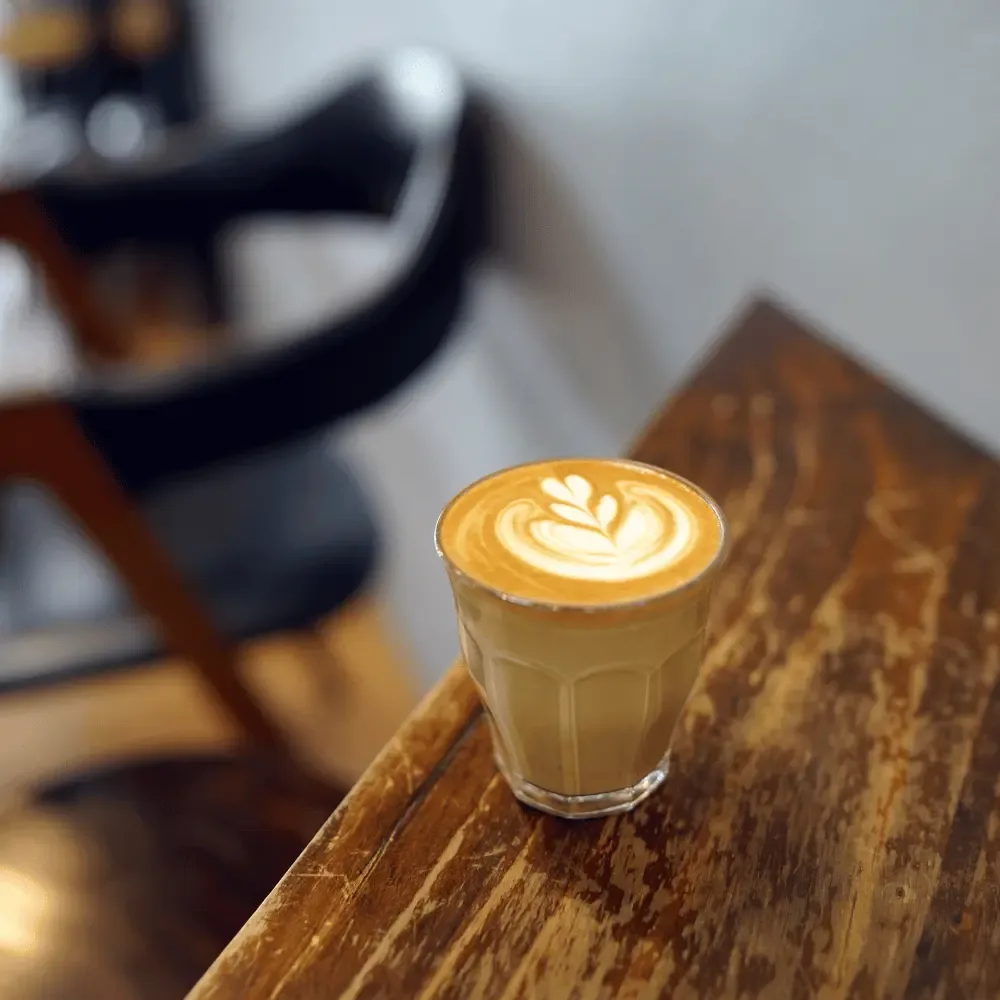
A piccolo is served in a small tumbler, usually a 90ml glass rather than a cup, and the glass is part of the drink. It shows the layers and the pour, and it lets the barista tell at a glance which of the small milk drinks is on the tray. A cafe that serves it in a demitasse has usually made the drink correctly and simply chosen a different vessel.
Which milk to use for a piccolo
Whole milk is the easiest to texture in small amounts, because its fat and protein hold the foam together. Barista versions of oat milk work well too. Thin plant milks and skimmed milk turn stiff and dry at this volume, and in a drink this small the foam is a large share of every sip, so the difference is easy to taste. Milk alternatives in coffee compares the options.
Choosing espresso for a piccolo latte
There is not much milk to soften the shot, so the coffee shows. A medium roast with sweetness, caramel or chocolate suits it best. A very bright, acidic light roast can taste sour in a piccolo in a way it would not in a large latte, where more milk rounds it off. If a cafe's piccolo tastes sharp, try it on their other beans before deciding the barista is at fault.
Piccolo vs flat white
The two come from the same cafe culture and are easy to mix up. A flat white is larger, around 150 to 180ml, and usually built on a double shot, so it carries more coffee and more milk. The piccolo has half the coffee in a smaller glass, and it is the milder of the two. If you want the flavour of a flat white with less caffeine, the piccolo is the order.
Piccolo latte FAQ
What is in a piccolo latte?
A single espresso shot topped with steamed milk in a small glass of about 90 to 100 ml. It is a latte scaled down rather than a different drink.
Piccolo or cortado, what is the difference?
A cortado is about one part espresso to one part milk. A piccolo carries proportionally more milk in a similar glass, because it is built on a single shot rather than a double. The piccolo is milkier and lighter.
Where did the piccolo come from?
Australian cafe culture, principally Sydney. It is attributed to baristas wanting to taste their espresso repeatedly through a shift without the milk volume of a full latte.
Is a piccolo the same as a mini latte?
In practice, close. The distinction cafes hold to is that a piccolo is a single shot in a fixed small glass, whereas a small latte is often the same drink as a large one in a smaller cup, sometimes still with a double shot.