What is the Kingrinder K6?
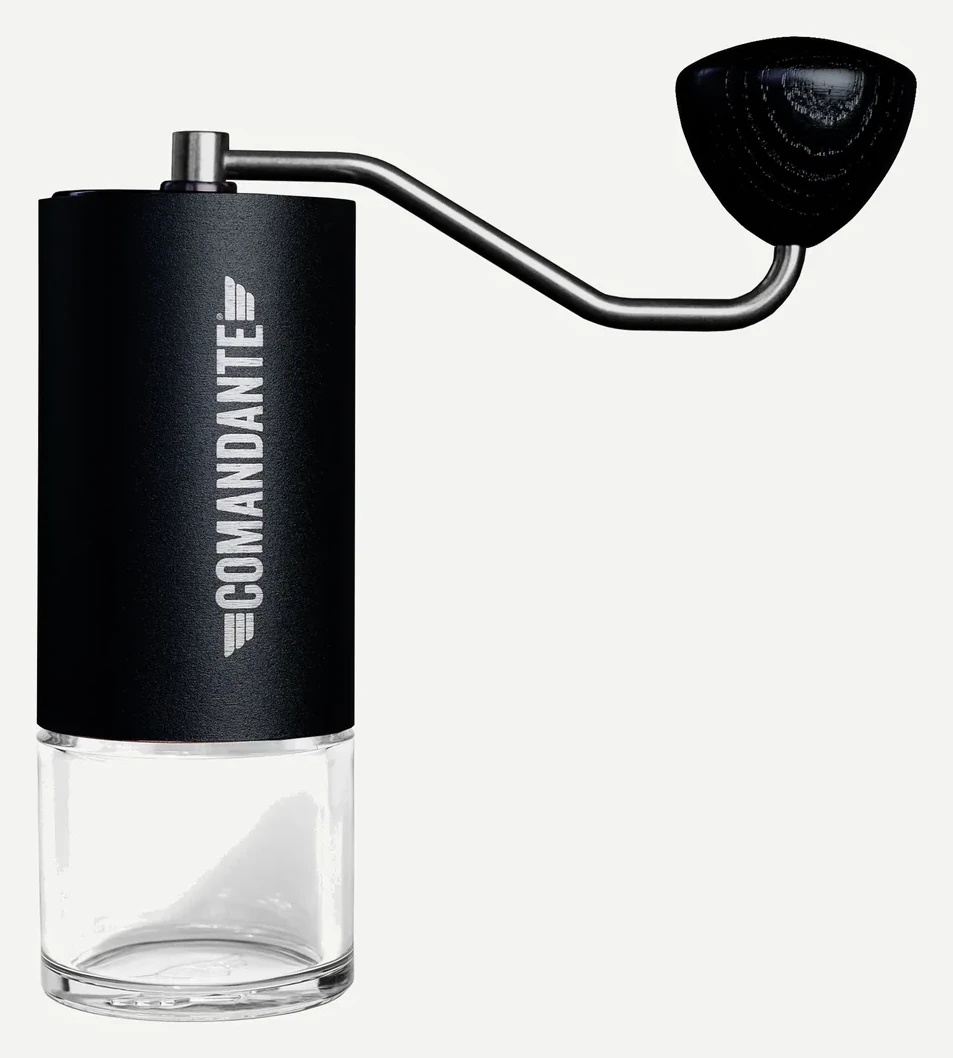
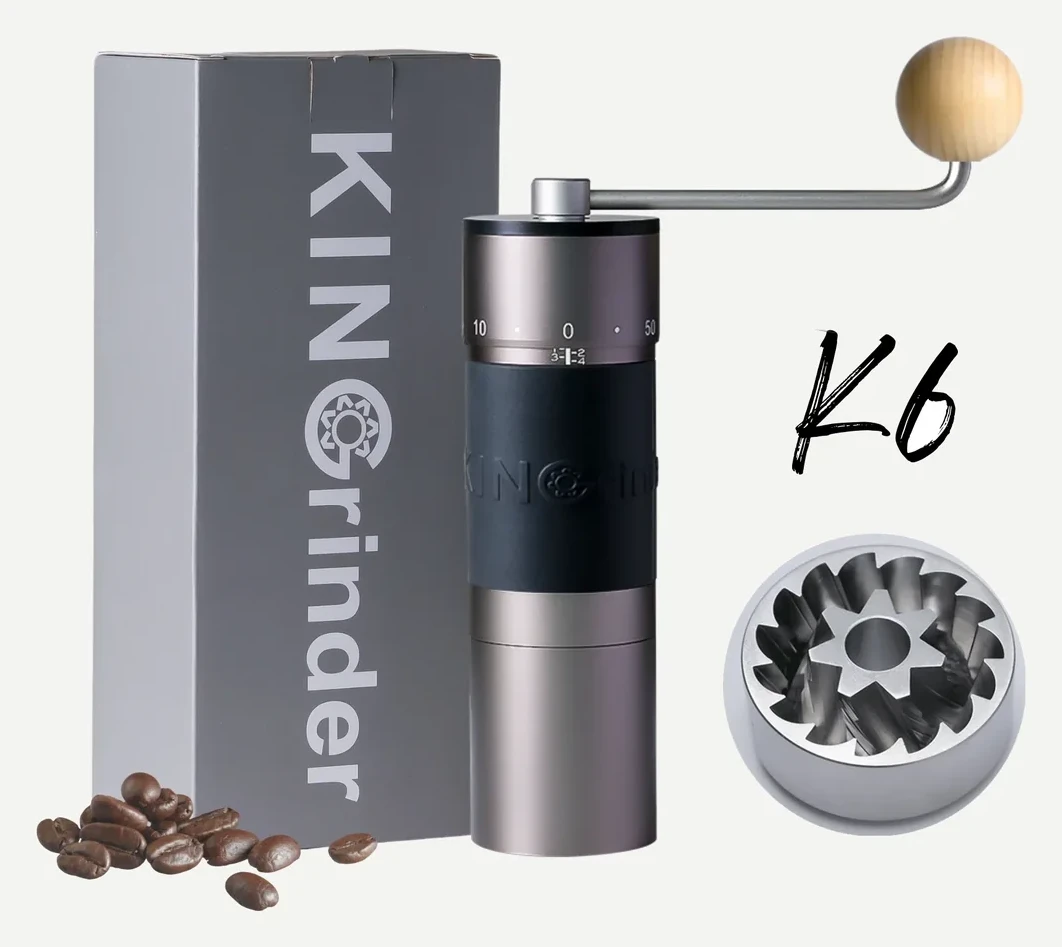
The K6 is a $126 manual, single dose coffee grinder with a 48 mm stainless steel burr and stepped adjustment.
Its aluminum body houses a heptagonal burr, while the adjustment system offers 60 clicks per round. The grinder is specified for both espresso and French press, giving it a broad stated brewing range without requiring an electric drive.
The hopper accepts 30 g to 35 g per dose. There is no built in scale or timer, so weighing and timing require separate equipment. A cleaning brush is included for routine upkeep.
Kingrinder K6 grind consistency: how even is it?
The K6 has a credible hardware basis for consistency, but burr specifications cannot prove how evenly it grinds coffee in practice.
The grinding mechanism combines a 48 mm diameter with stainless steel construction and a heptagonal design. These are concrete details for comparing its burr system, but they do not include particle distribution measurements or results from controlled grinding tests.
Its stepped adjustment can help users return to recorded click positions. That repeatability supports a structured dialing process, although the 60 clicks per round describe adjustment resolution rather than the uniformity of the coffee produced.
- The grinding mechanism uses a 48 mm stainless steel heptagonal burr.
- Stepped adjustment lets users record a click position and return to it later.
- Sixty clicks per round describe adjustment resolution, not measured particle uniformity.
- Burr dimensions and materials alone cannot establish grind distribution under controlled conditions without testing.
What you can brew with it
The K6 is specified for espresso and French press, with 60 stepped clicks per round for moving between grind settings.
Its stated capability covers the fine and coarse ends represented by espresso and French press. Buyers who alternate between those methods can use one grinder, while the stepped mechanism provides numbered movement that can be recorded for later use.
The 60 click specification describes movement around one adjustment round rather than a total setting count. For buyers, the clearest supported use is switching between the two named methods and recording the chosen click positions for later reference.
- Espresso capability places fine grinding within its stated adjustment range.
- French press capability places coarse grinding within its stated adjustment range.
- Sixty clicks per round provide stepped rather than continuous adjustment.
- Buyers can record click positions when switching between the two named methods.
Living with it, day to day
Day to day use centers on grinding by hand or by drill, separate weighing and timing, single dose loading, and taking the grinder apart to brush it out.
The hopper holds 30 g to 35 g, so each batch is loaded as a single dose. Because no scale or timer is built in, users need separate tools if they want to measure coffee weight and brewing time.
A brush is included for cleaning loose grounds from the grinder. Routine care therefore has a dedicated tool, while the aluminum body and manual drive keep ownership tasks centered on loading, grinding, and brushing each single dose.
- Measure each dose separately because the grinder has no built in scale.
- Track brewing time with another device because no timer is included.
- Load no more than the stated 30 g to 35 g hopper capacity.
- Use the included brush to clear loose grounds during routine cleaning.
Kingrinder K6 vs Baratza Encore ZCG485BLK
The K6 documents click based adjustment and an aluminum body, while the Skerton Pro costs less and holds substantially more coffee.
Both are manual grinders stated to handle espresso and French press, and neither includes a scale or timer. The K6 costs $126, uses a 48 mm stainless steel heptagonal burr, and provides stepped adjustment with 60 clicks per round.
The Skerton Pro costs $58.50, uses a ceramic conical burr, and has a 100 g hopper. Its body combines plastic, glass, and stainless steel. Choose the K6 for documented click based adjustment, or the Hario for lower cost and greater capacity.
- K6 wins on documented adjustment detail with 60 stepped clicks per round.
- Skerton Pro wins on price at $58.50 compared with the K6 at $126.
- Skerton Pro holds 100 g, while the K6 is limited to 30 g to 35 g.
- Both support espresso and French press, so neither wins on the two stated brew methods.
Is the Kingrinder K6 worth it?
The K6 is worth $126 for buyers prioritizing documented stepped adjustment and single dose grinding, but not for shoppers seeking maximum capacity or automation.
The price buys a 48 mm stainless steel heptagonal burr, an aluminum body, 60 clicks per adjustment round, and stated compatibility with espresso and French press. It remains entirely manual, with no integrated scale or timer.
Against the $58.50 Skerton Pro, the extra $67.50 brings documented click based adjustment and a different burr and body specification, but reduces hopper capacity from 100 g to 30 g or 35 g. That trade suits measured single doses rather than larger batches.
Who should buy it (and who should not)
The K6 suits manual brewers who value recorded grind settings and single doses, while automation seekers and larger batch users should look elsewhere.
It fits buyers who move between espresso and French press and want stepped adjustment with 60 clicks per round. The 30 g to 35 g hopper also aligns with people who weigh and load one dose at a time.
It is a weaker match for anyone wanting powered grinding, an integrated scale, or a timer. Buyers needing a larger hopper should also note that the Skerton Pro holds 100 g and costs $58.50 rather than $126.
Buy it if
- You switch between espresso and French press and want recorded click positions.
- You normally grind single doses of 30 g to 35 g.
- You prefer a manual grinder with an aluminum body and stainless steel burr.
Skip it if
- You need powered grinding, automatic timing, or integrated weighing.
- You routinely need more than 35 g of hopper capacity.
- You prioritize the lowest price over documented stepped adjustment.
Frequently Asked Questions
Is the Kingrinder K6 good for espresso?
The K6 is specified as capable of grinding for espresso. Its adjustment is stepped, with 60 clicks per round, which allows users to record and revisit settings. That makes it a candidate for buyers who want a manual espresso grinder, although the burr and adjustment specifications alone cannot guarantee a particular result in the cup.
What size are the Kingrinder K6 burrs?
The K6 uses a 48 mm burr. It is described as a stainless steel heptagonal burr, giving buyers three concrete details for comparison: diameter, material, and geometry. Those specifications identify the grinding mechanism, but they should not be treated as measurements of grind uniformity, speed, or cup quality without separate test results.
How many clicks does the Kingrinder K6 have?
The adjustment system provides 60 clicks per round and uses a stepped mechanism. That lets users count movement and record positions when changing between brewing methods. The stated figure is per round, so it should not be read as a total setting count. Espresso and French press are both included in its stated capability.
Is the Kingrinder K6 good for French press?
French press is included in the K6's stated grind capability, alongside espresso. Its stepped system provides 60 clicks per round for moving through settings and returning to a recorded position. That gives coarse brewing a clear place in its specified range, although those adjustment and burr details alone cannot guarantee a particular result in the cup.
How much coffee does the Kingrinder K6 hold?
The K6 hopper holds 30 g to 35 g of coffee and is intended for single dose use. That capacity covers one measured batch within the stated limit. Buyers who need more room can compare it with the Skerton Pro's 100 g hopper, though the Hario uses different burr and body materials.
Does the Kingrinder K6 have a scale or timer?
No. The K6 has neither a built in scale nor a timer. Users who want measured doses and timed brewing therefore need separate equipment for those jobs. Grinding is also manual rather than electric, and the hopper holds 30 g to 35 g for single dose use. A brush is included for cleaning.