How Much Coffee You Need a Month, and How Often to Have It Delivered
Turn cups a day into grams a month, then into a bag size and a delivery cadence that keeps the coffee fresh.
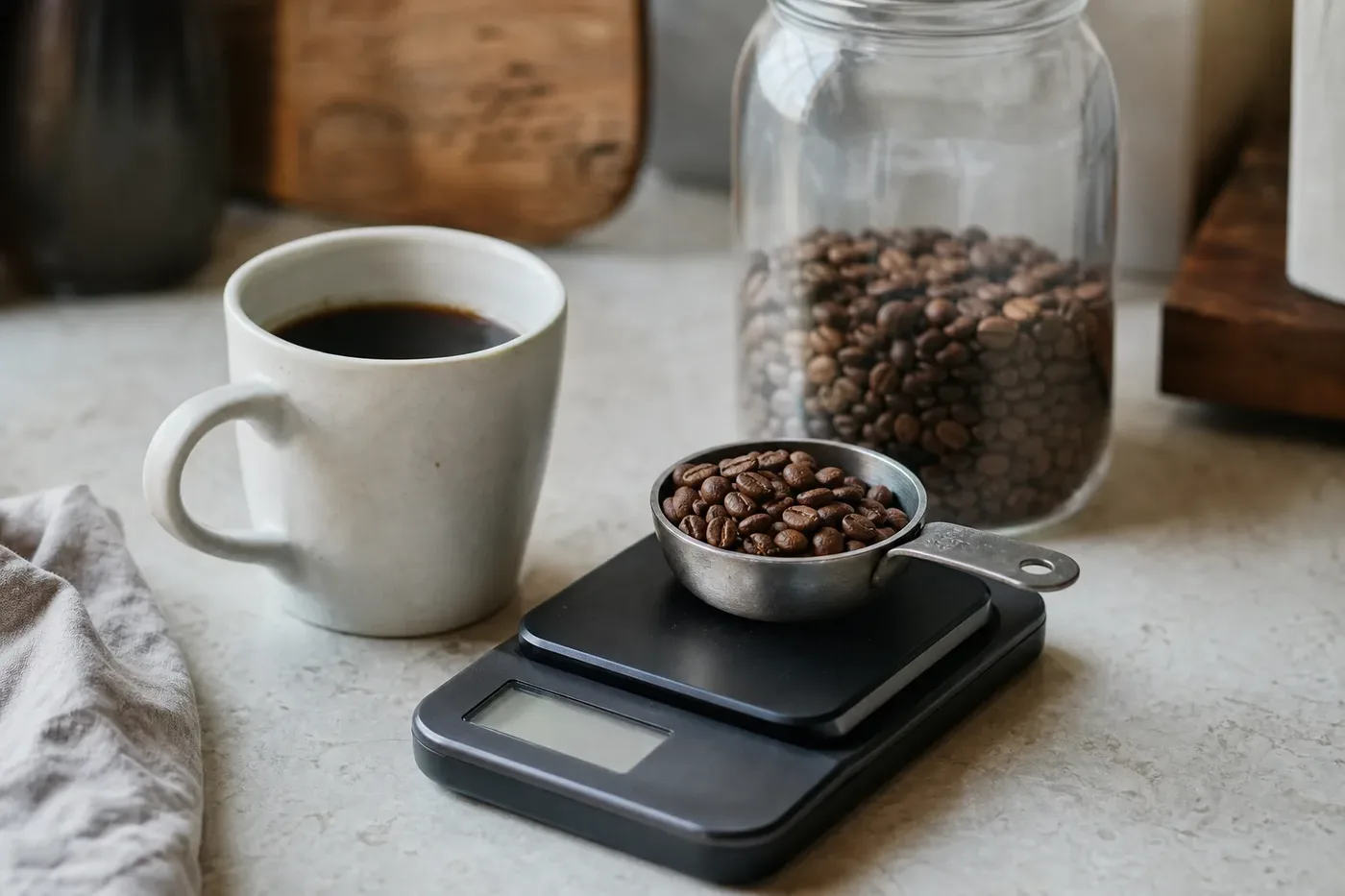
The most useful number to know before setting up a coffee subscription is not a price. It is how many grams of coffee your household gets through in a month. Get it right and every bag is used while it is fresh. Get it wrong and you end up with bags stacking up or a week without coffee, which are the two reasons people cancel subscriptions they otherwise like.
How much coffee per cup, in grams
The Specialty Coffee Association's golden cup standard is 55 g of coffee to a litre of water. It is a reference point rather than a rule, but it is the one most brewing advice is built on, so we use it here. For a 240 ml mug of filter coffee that is about 13 g.
Espresso is different. A double shot usually takes 16 to 20 g of coffee for a drink a fraction of the size, so if your household drinks lattes rather than mugs of filter, work from 18 g a drink instead.
How many mugs each bag size makes
At 13 g a mug, the bag sizes the subscriptions we track send work out like this:
- 227 g, Volcanica's bag: about 17 mugs
- 250 g, Origin's bag: about 19 mugs
- 310 g, Trade's bag: about 23 mugs
- 340 g, the most common size: about 26 mugs
- 454 g, Peet's one pound bag: about 34 mugs
For espresso at 18 g a double, a 340 g bag gives about 19 drinks. That gap between filter and espresso drinkers is larger than most people expect.
How much coffee per month from cups a day
Multiply your daily cups by the grams per cup and by 30. One person drinking two mugs of filter a day uses about 800 g a month. A couple each drinking two uses about 1.6 kg. A household making four double espressos a day uses about 2.2 kg.
Write that monthly figure down. It is the number every other decision on this page is built on.
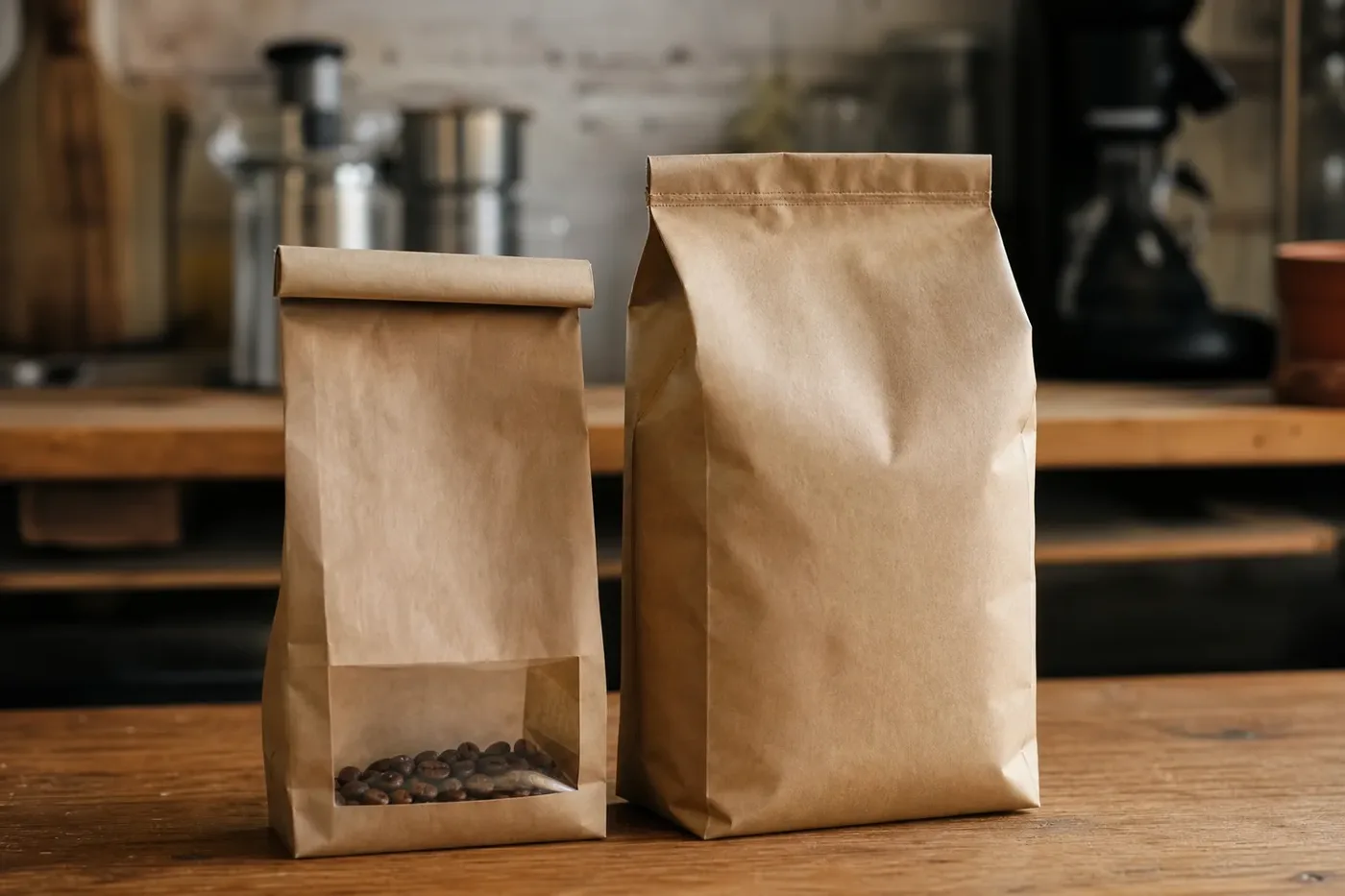
How often to order, based on how much coffee you use
Divide the bag size by your daily use to see how many days one bag lasts. Two mugs a day from a 340 g bag lasts about 13 days, so the matching cadence is every two weeks. The same drinker on Peet's one pound bags lasts about 17 days, which is closer to every three weeks than two.
Then check the service offers that interval. Most do, but the choice varies a lot. The Stumptown Coffee Club is the most flexible we list, every 1, 2, 3, 4, 5, 6 or 8 weeks. Atlas offers only two or four weeks, Black Rifle 14, 21, 30 or 60 days, and the Volcanica Coffee Club ships monthly. Our guide to how coffee subscriptions work goes through cadence and skipping together.
Why smaller, more frequent bags keep beans fresher
Whole beans are at their best for the first two to four weeks after roasting. A bag that lasts you a fortnight is drunk entirely inside that window. A bag that lasts six weeks is not, however well you store it, and our page on how to store coffee beans explains what air, light and heat do to it in the meantime.
So when the arithmetic lands between two options, choose the shorter interval or the smaller bag. The Peet's subscription is the cheapest per kilo we track, at $43.98, but its one pound bag suits a household that gets through it in three weeks, not one person who takes six.
How much coffee to order when your usage changes
Nobody drinks the same amount every month. Holidays, guests and a new brewer all move the figure. This is what the skip and reschedule buttons are for, and every service we list lets you cancel from your own account without a commitment beyond one delivery.
If you find yourself skipping every third delivery, lengthen the interval instead. If you run out a few days before each bag arrives, shorten it by a week. Two or three months of that and the cadence settles, which is when a subscription starts doing its job without you noticing it.
How much coffee per month: two households worked through
One person, two mugs of filter coffee a day. At around 18 grams a mug that is 36 grams a day, roughly 1.1 kilos a month. That is three 12 oz bags, or one 2 lb bag and one 12 oz bag. A delivery every ten days keeps the coffee fresh; one big bag a month does not.
Two people, one espresso based drink each a day, plus weekend filter. A double shot uses 18 grams, so weekdays are 36 grams a day and weekends add perhaps 60 grams more. That comes to about 1.2 kilos a month, similar to the first household, but split across an espresso coffee and a filter coffee, which usually means two different bags on two cadences.
These are starting points. After the first month, look at how many grams are left when the next bag arrives and adjust. A kitchen scale makes this take seconds, and good storage covers a bag that arrives before the last one is finished.
How much coffee per month FAQ
How many cups of coffee are in a 12 oz bag?
About 26 mugs of 240 ml, at the Specialty Coffee Association's golden cup ratio of 55 g of coffee per litre of water. Brew stronger or weaker and the count moves: at 60 g a litre it is about 24, at 50 g a litre about 28.
How much coffee does one person drink in a month?
Two mugs a day at the standard ratio uses about 13 g each, so roughly 800 g a month. That is a little over two 340 g bags, or close to two one pound bags.
How long does a bag of coffee stay fresh after opening?
Whole beans are at their best for roughly two to four weeks after roasting and hold up reasonably well for a while after that if they are kept airtight and out of the light. Ground coffee goes stale much faster, in days rather than weeks.
Should I get a bigger bag or more frequent deliveries?
More frequent smaller bags, if the service allows it. Every bag is freshest the day it arrives, so two 340 g bags a fortnight apart beat one 680 g bag that you are still drinking a month later.
How much coffee for espresso?
A double shot usually takes 16 to 20 g, so an espresso drinker uses more per drink than a filter drinker. Two doubles a day is around 1.1 kg a month, which is worth knowing before choosing a cadence.
Reviewed on this site
 Peet's Coffee SubscriptionThe cheapest coffee per kilo of any subscription here, priced honestly by the pound
 Volcanica Coffee ClubA flat monthly rate for three or six coffees, with shipping and oat milk included
 Stumptown Coffee ClubThe widest choice of delivery intervals of any subscription here, from weekly to every eight weeks