Sumiyaki Coffee and Kopi Joss: The Two Charcoal Coffees
One is coffee roasted over charcoal in Japan. The other is a glass of coffee with a burning coal dropped into it in Indonesia. They share a word and nothing else.
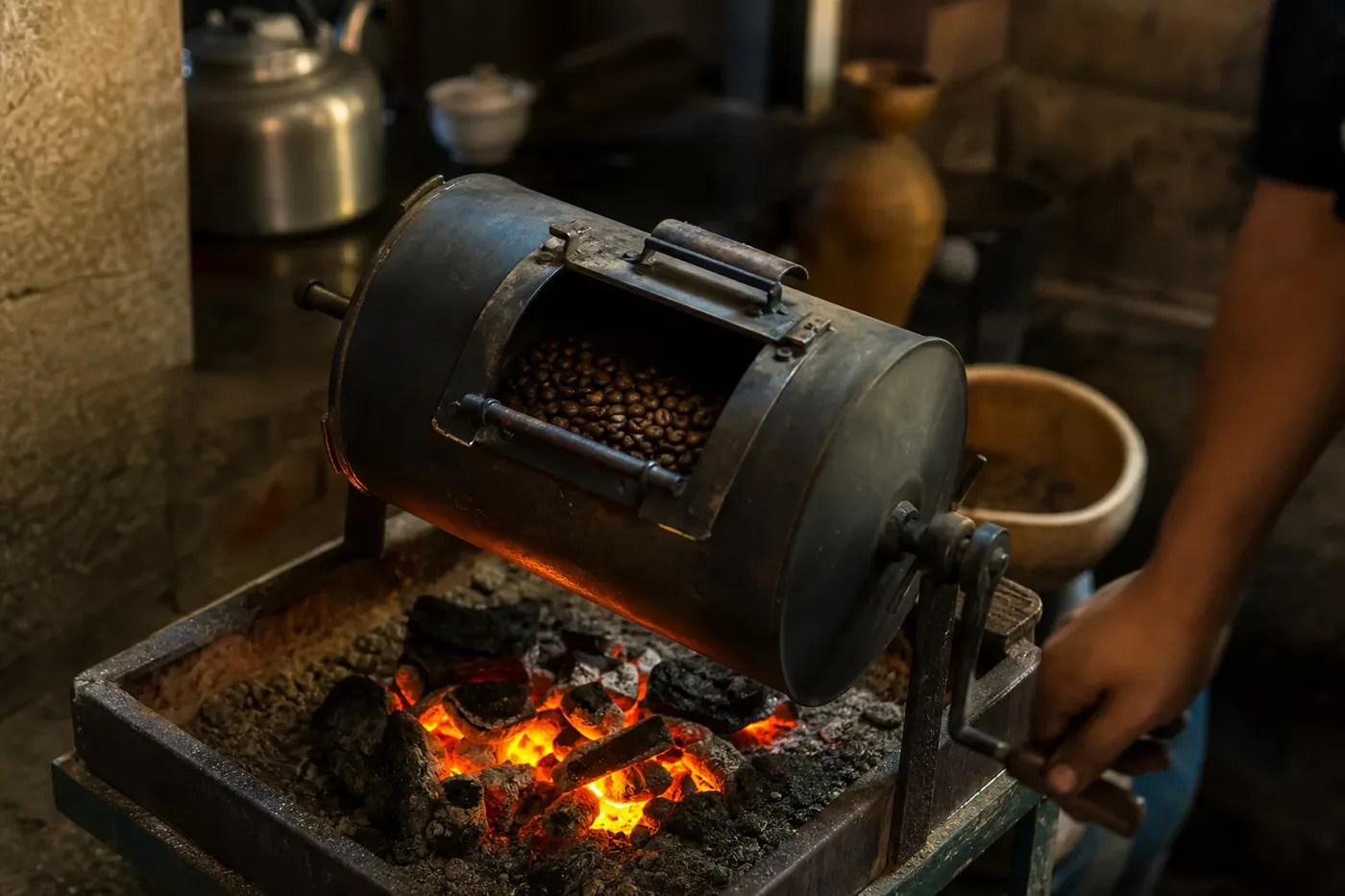
Two very different drinks get filed under charcoal coffee. Sumiyaki is Japanese coffee roasted over charcoal rather than gas. Kopi joss is an Indonesian street drink in which a glowing lump of charcoal is dropped straight into a glass of coffee. The first is a roasting method you can buy in a bag; the second is a performance you watch at a stall.
Sumiyaki: roasting coffee over charcoal
Sumi means charcoal and yaki means grilled or roasted. In sumiyaki coffee the beans are roasted using charcoal as the heat source, a practice associated with Japanese roasters and the traditional coffee houses known as kissaten, where it has been part of the style for decades.
Charcoal produces a strong, steady radiant heat. Roasters who use it say that heat develops the bean more evenly, and the usual description of the result is deep and sweet, with low acidity and a long finish. You will also read that charcoal roasts a bean from the inside out, which is marketing rather than physics: all roasting heats the outside of the bean first.
What sumiyaki coffee tastes like
Most sumiyaki coffee is roasted dark, in keeping with the Japanese kissaten tradition, so it tastes of that roast level as much as the charcoal: bittersweet, chocolatey and heavy. It is not normally smoky in the way barbecued food is, because the beans are in a drum rather than in the smoke. If a bag tastes strongly of smoke, that is a defect rather than the style.
It suits slow manual brewing, including the flannel drip that many kissaten use, and it makes excellent iced coffee. Our dark roast coffees page covers the wider band it belongs to.
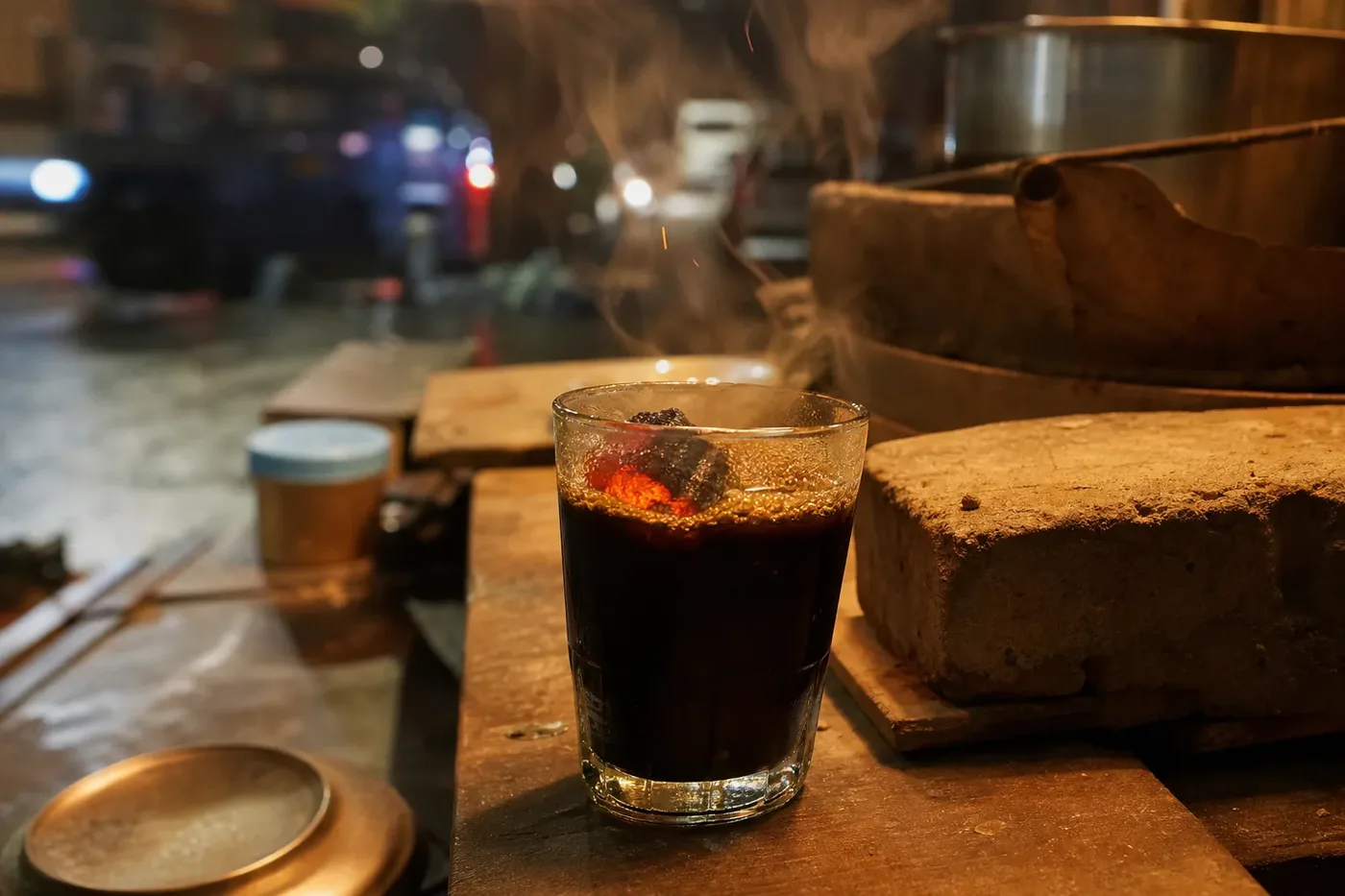
Kopi joss: coffee with a coal in the glass
Kopi joss comes from Yogyakarta on the island of Java, where it is sold at the simple street stalls called angkringan, most famously in the streets near the city's main railway station. It is credited locally to a stall owner who began serving it decades ago.
The drink is a glass of strong, sweet coffee made with grounds left in the glass. Just before serving, a glowing piece of charcoal is lifted from the fire with tongs and dropped in. It hisses and bubbles loudly, and the name is usually said to imitate that sound. The coal is left in the glass while you drink around it, not swallowed.
Does the charcoal in kopi joss do anything?
Sellers and regulars often say the coal reduces the coffee's acidity or makes it gentler on the stomach. There is no good evidence for either claim, and a single piece of hot charcoal in a glass for a few minutes is not a treatment for anything. What it clearly does is add a faint smoky, toasted note and a great deal of theatre.
Kopi joss is also unrelated to the black lattes made with activated charcoal powder that appear on cafe menus, which are a colouring trend rather than a traditional drink.
What coffee is used in kopi joss?
The base is close to kopi tubruk, Indonesia's everyday coffee: finely ground coffee, often robusta, stirred straight into hot water with sugar and left to settle. As with Turkish coffee, you let the grounds sink and stop before the bottom of the glass.
How to try sumiyaki and kopi joss
Sumiyaki is easy to buy from Japanese roasters and some importers, and brews like any other dark roast. A slow pour over at a medium grind shows it well, and so does the Japanese way of making iced coffee: brewing hot, at double strength, straight onto ice, which keeps the sweetness that cold brew can flatten. Kopi joss is best had where it was invented. At home, the charcoal step is not worth copying: lump charcoal is not made to be dropped into a drink, and the smoky note is the smallest part of the appeal.
Sumiyaki FAQ
What is sumiyaki coffee?
Japanese coffee roasted over charcoal instead of gas. It is usually roasted dark and tastes deep, sweet and low in acidity rather than smoky.
What is kopi joss?
An Indonesian coffee from Yogyakarta: a glass of strong, sweet coffee with a glowing piece of charcoal dropped into it just before serving.
Does charcoal reduce acidity in coffee?
There is no good evidence that the coal in kopi joss reduces acidity or helps digestion. It adds a slight toasted note and a lot of theatre.
Does sumiyaki coffee taste smoky?
Not normally. The beans roast in a drum rather than in the smoke, so it tastes of a dark roast. A strongly smoky bag suggests a defect.