
Why Is Coffee Called a Cup of Joe?
The Navy story everybody repeats does not survive the dates. Here is what the evidence actually supports.
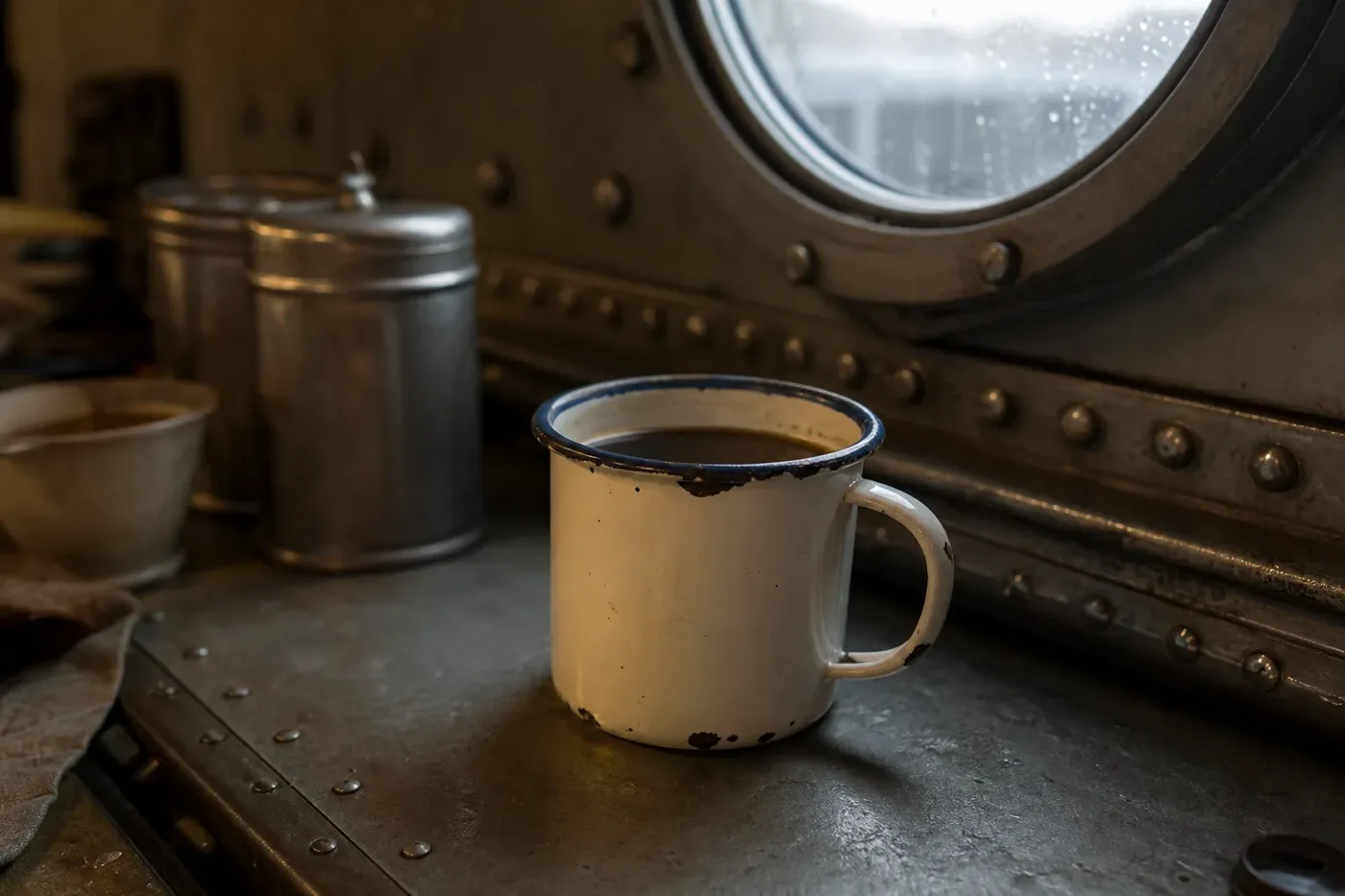
The popular answer is that a US Navy secretary banned alcohol at sea and sailors took their revenge by naming coffee after him. It is a good story, it is repeated everywhere, and the dates do not support it.
The story everyone tells
Josephus Daniels became Secretary of the Navy in 1913 and issued General Order 99 on 1 June 1914, which banned alcohol aboard ship. The tale says the strongest drink left was coffee, so the fleet started calling it a cup of joe after him.
Two things are wrong with it. The first is what the order actually did: it ended the officers' wine mess, which had existed since 1893. Enlisted sailors had had no spirit ration since 1862, so for most of the Navy nothing changed in 1914.
The second is timing, and it is the one that settles it. Snopes dates the phrase's entry into English to 1930, sixteen years after the order, and rates the Daniels story false. Britannica calls it a popular but questionable theory and rejects it on the same grounds.
What the record does show
- 1927. Britannica cites the Danville Bee, a Virginia newspaper, using "joe" and noting it as US Navy slang for coffee. That is the earliest printed use either source names.
- 1931. The Navy's own Reserve Officer's Manual, by Robert P. Erdman, lists: "Jamoke, Java, Joe. Coffee. Derived from the words Java and Mocha, where originally the best coffee came from."
- 1931. A compilation of American slang from the same year also lists joe for coffee, again as a possible contraction of jamoke.
- 1957. A Pennsylvania paper records old-timers ordering a "blond Joe", meaning coffee with cream, by then an ageing piece of slang.
The explanation that fits
Jamoke was a blend of Java and Mocha, the two regions that supplied the coffee everyone knew, and the manual above puts jamoke, java and joe on one line as words for the same thing. Shortening jamoke to joe is the kind of thing slang does constantly, and both Snopes and Britannica treat it as the strongest candidate.
There is supporting evidence from the Navy's own historians. The Naval History and Heritage Command's caption for a 1944 wartime drawing describes a crewman sipping "the ubiquitous Navy 'jamoke'", using the longer word, not joe, in exactly the service the myth is set in.
The Navy did use it, just later
None of this means the phrase is not naval. It plainly was: the 1927 newspaper calls it Navy slang, the 1931 manual is a Navy manual, and the US Naval Institute's magazine carries a first-person account from a sailor aboard the USS Nashville in December 1944 using "a cuppa joe" as ordinary shipboard speech.
What the record does not show is a link back to 1914. The word is attested in the Navy more than a decade after the order, in sources that explain it as a contraction of jamoke and never mention Daniels at all.
The other theories
Two more circulate and neither has much behind it. One is that joe meant an ordinary fellow, so a cup of joe was the common man's drink; joe is attested in that sense from 1846, but nothing connects it to coffee before the 1920s. The other credits Joe Martinson, a New York coffee merchant, and the company is said to have trademarked the phrase, though Britannica could not find such a trademark in the USPTO database.
What is left is a Navy word, but not the Navy story: a piece of service slang for coffee that grew out of the names of two ports, printed first in the late 1920s, and nothing to do with anyone's drink being taken away.
Other American nicknames for coffee
Joe is one of several. Java comes from the Indonesian island that supplied much of the coffee drunk in the West in the eighteenth and nineteenth centuries, and it is the oldest of the common nicknames. Mud describes strong, cheap coffee and turns up in diner and military slang. Brew is simply coffee as something brewed, like beer. Rocket fuel and go juice are newer and mostly jokes. Of them all, joe is the one most tied to ordinary, everyday coffee: a cup of joe is never a single origin pour over.
What a cup of joe means now
Today the phrase means plain, regular coffee, usually drip, usually black or with milk, the kind poured at a diner counter or brewed at home first thing. It is affectionate rather than precise, and nobody ordering a cup of joe expects a latte. If you want to make the classic version at home, a drip machine and a medium roast is all it takes; our guide to what drip coffee is covers the method, and our drip coffee maker reviews compare the machines.
Common questions
Is the cup of joe Navy story true?
No. Snopes rates it false and Britannica calls it questionable. The phrase is not attested in print until 1927 to 1930, well after the 1914 order, and that order mainly ended the officers' wine mess rather than changing what most sailors drank.
What does jamoke mean?
A blend of Java and Mocha, the two regions that supplied most of the coffee people knew. The Navy's 1931 Reserve Officer's Manual lists jamoke, java and joe together as words for coffee.
When was cup of joe first printed?
The earliest printed use these sources name is 1927, in the Danville Bee, which recorded joe as US Navy slang for coffee. Snopes dates the phrase's arrival in English to 1930.
Was cup of joe named after Joe Martinson?
There is no evidence for it. Britannica records the claim, including that his company is said to have trademarked the phrase, but could not confirm any such trademark.