











The Story of Kaldi and the Dancing Goats
Coffee's origin myth is charming, universally repeated, and first written down about nine hundred years after it supposedly happened.
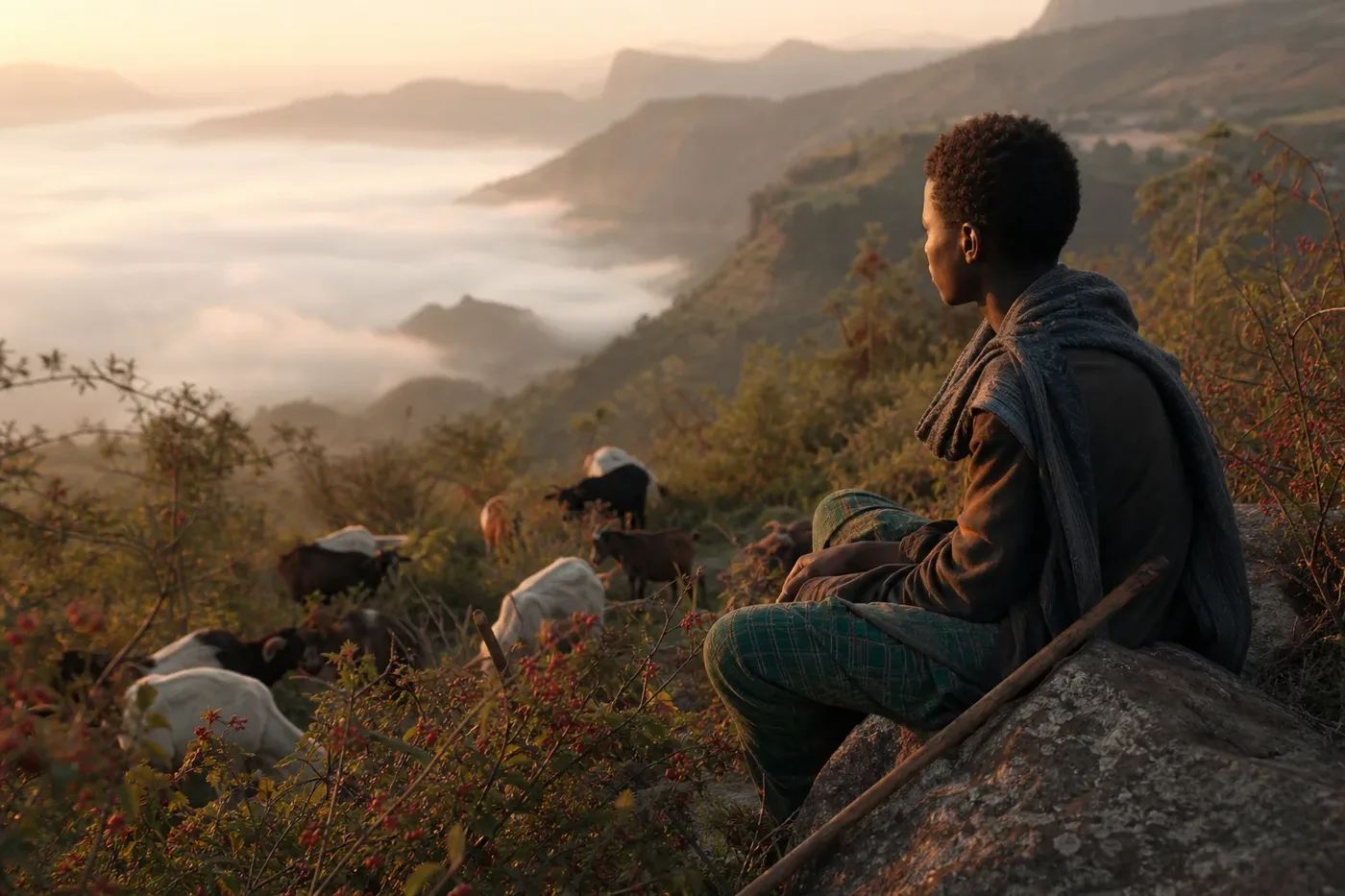
The story is that a goat herder called Kaldi, somewhere in Ethiopia, noticed his goats leaping about after eating the red cherries of a shrub. He tried them, felt the same lift, and took them to a monastery. It appears on café walls, packaging and the first page of most coffee books. It is also, as history, very weak.
The story of Kaldi and the dancing goats
Kaldi observes the goats. He eats the cherries himself. He brings them to a local monastery, where a disapproving monk throws them on the fire. The roasting smell fills the room, the embers are raked out, the beans are ground and dissolved in water, and coffee exists.
Every element of that has a job. It explains discovery, roasting and brewing in one sequence, which is exactly what a good origin myth is built to do.
Where the Kaldi story comes from
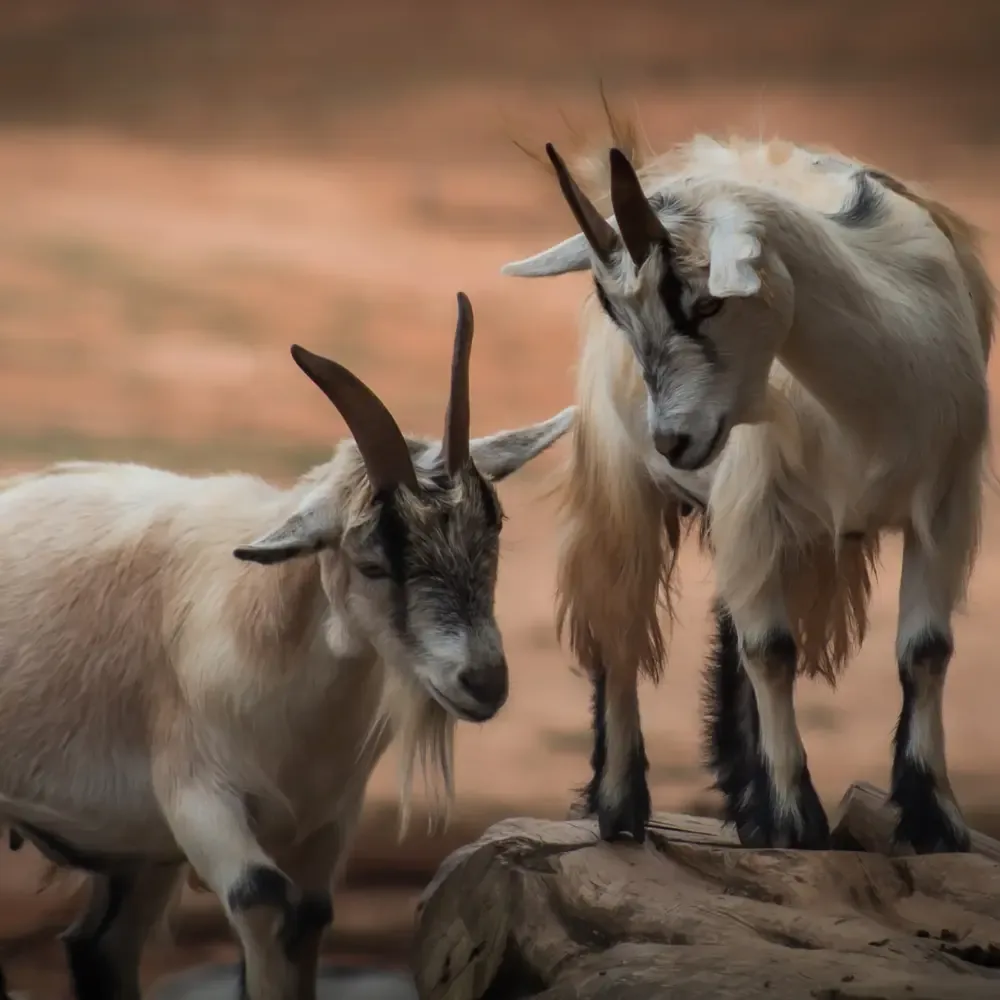
The earliest known written version is from 1671, in a Latin treatise by Antoine Faustus Nairon, a Maronite scholar in Rome.
By that date coffee had been cultivated in Yemen for well over two centuries, traded through Mocha, drunk across the Ottoman world, and was already established in European coffeehouses. The story was written down long after coffee was ordinary.
That is the historian's objection in one line: this is not a record of a discovery, it is an explanation composed after the fact, in a different language, in a different country, by someone with no access to the events.
Was Kaldi real? What is actually known
Coffea arabica is indigenous to southwestern Ethiopia, where it still grows wild in forest understory. That much is botanically settled and is why Ethiopia holds most of the species' genetic diversity.
Documented cultivation begins in Yemen, around the fifteenth century. Sufi monasteries there used coffee to stay alert through night prayers, which is the first well-attested use, and from Yemen it spread through the Islamic world and then to Europe.
How the plant crossed from Ethiopia to Yemen is not firmly established. Trade across the Red Sea is the obvious answer and the details are lost.

Why the Kaldi legend survives anyway
Because its outline is true even though its particulars are invented. Coffee does grow wild in Ethiopia. Animals do eat the cherries. The fruit is stimulating, and someone somewhere did notice, long before anyone wrote anything down.
A myth that gets the shape right and the details wrong is a reasonable thing to keep telling, as long as it is told as a myth. The real history is in Ethiopia itself, where the coffee ceremony is the oldest continuous coffee tradition anywhere, and it needs no goats.
Sheikh Omar: the other coffee legend
Kaldi is not the only origin story, and the rival one is better attested as a story even if it is no more historical.
Sheikh Omar, a Sufi holy man, is exiled from Mocha to the desert. Starving, he boils the bitter berries of a nearby shrub and drinks the liquid, which revives him. He shares it with others, cures the sick, and is welcomed home as a saint.
Notice what it does differently. The Kaldi version explains the plant, and this one explains the brew, with the boiling as the miracle. It is also set in Yemen, where cultivation is actually documented, rather than in Ethiopia, where the plant genuinely comes from. Between them the two legends cover the whole route, which is a strong hint that both were composed to fill a gap.
Where the word coffee came from
Coffee travelled through languages in step with the drink. Arabic qahwa became Ottoman Turkish kahve, which became Italian caffe and Dutch koffie, and English took coffee from there in the late sixteenth century.
The often-repeated idea that the word derives from Kaffa, the Ethiopian region, is tidy and not supported. The Arabic term is older than European contact with that name, and the path through Turkish is well documented at every step.
What Kaffa does have is the plant itself, growing wild, which is the one part of the whole story nobody disputes. The cherries Kaldi's goats supposedly ate are real, and they still grow there.
Kaldi FAQ
Who was Kaldi?
A goat herder in the legend of coffee's discovery, said to have noticed his goats becoming energetic after eating the red cherries of a certain shrub. There is no evidence he existed.
Is the Kaldi story true?
Almost certainly not as told. It first appears in writing in 1671, in a Latin text by Antoine Faustus Nairon, centuries after coffee was already being cultivated and traded.
Where did coffee actually come from?
Coffea arabica originates in the forests of southwestern Ethiopia. Documented cultivation and trade begin in Yemen around the fifteenth century, where Sufi monasteries used it to stay awake during night prayers.
Why is the legend still repeated?
Because it is a good story that explains something real. Coffee does grow wild in Ethiopia, animals do eat the cherries, and the fruit is stimulating. The myth is wrong in its particulars and right in its outline.