What Is a Doppio Espresso?
Two shots pulled as one, in a bigger basket. It is the default in most cafes now, and the reason has more to do with the grinder than with strength.
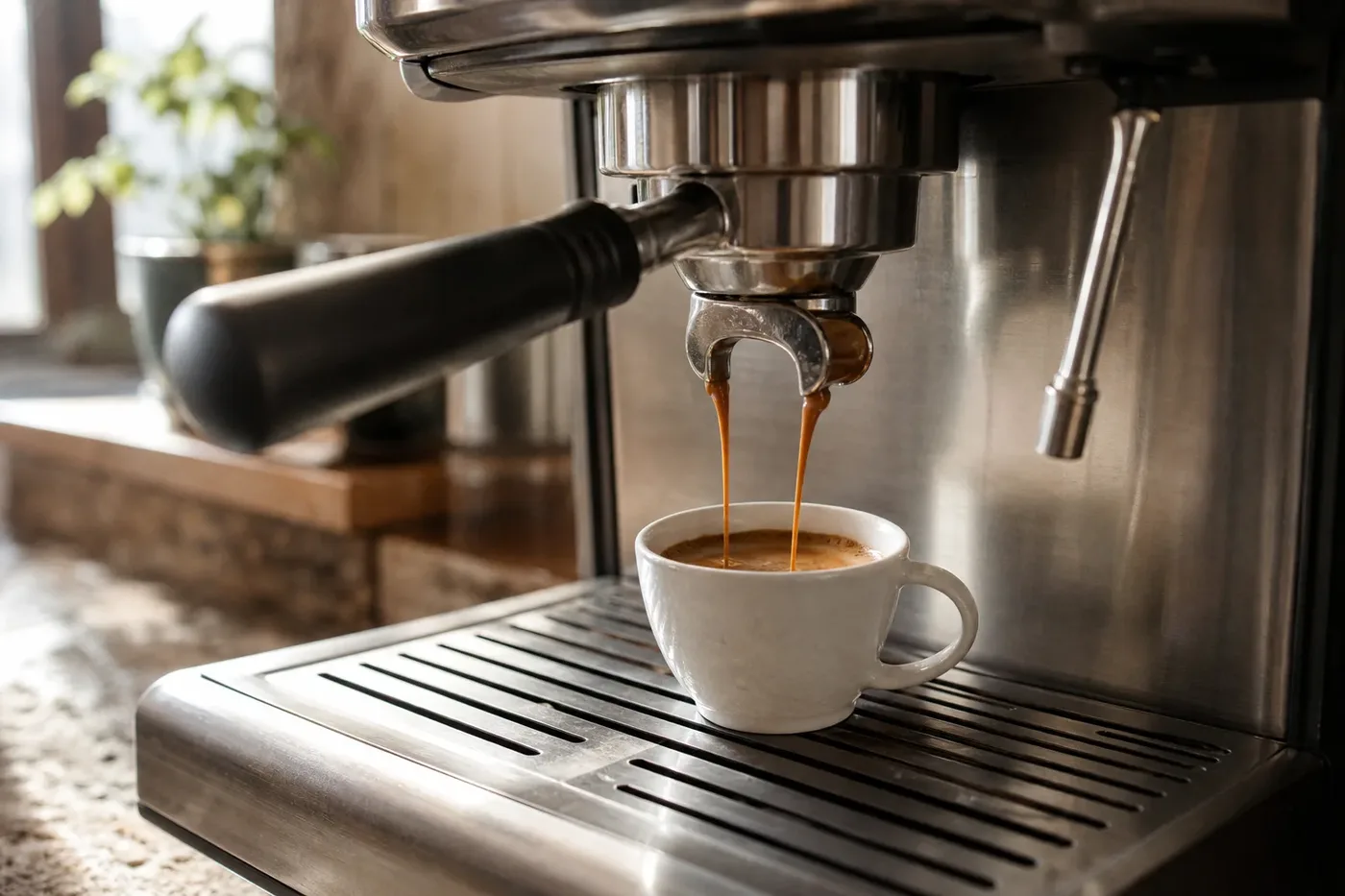
A doppio is a double espresso: roughly 14 to 18 grams of coffee in one larger basket, pulled as a single shot into one cup, giving about 60ml. Doppio is simply Italian for double.
The part people get wrong is thinking it means two separate espressos poured into the same cup. It does not. It is one extraction through one bed of coffee, using a basket built to hold twice the dose. That distinction is the whole reason it tastes different from two singles.
Why almost every cafe pulls a doppio by default
Order an espresso in most coffee shops and what arrives is half a doppio, or a doppio in a small cup. The reason is technical rather than commercial: a single basket holds 7 to 9 grams in a very shallow bed, and a shallow bed is far harder to extract evenly. Water finds the path of least resistance and races through one part of it, which is called channelling and is the commonest fault in espresso. A deeper bed resists more evenly and is far more forgiving.
Espresso channelling covers what goes wrong and how to see it. The short version is that a barista who pulls doubles all day gets consistent shots, and one who switches between baskets is re-dialling constantly.
Doppio, lungo and ristretto are ratios, not cup sizes
These three words describe how much water passed through the coffee, not how big the drink is. A ristretto stops the shot early, so less water has passed through the same dose: more concentrated, sweeter, less bitter, because the bitter compounds come out later in the extraction. A lungo runs longer, pulling more water through and taking more of those later compounds with it, which is why a lungo tastes thinner and more bitter rather than simply weaker.
A doppio is the standard ratio at double the dose. You can pull a doppio ristretto or a doppio lungo, and cafes do: many flat whites are built on a doppio ristretto precisely because the concentration survives the milk.
How much caffeine is in a doppio?
A doppio holds roughly twice the caffeine of a single, which puts it around 120 to 150mg depending on the beans and the dose. That is comparable to a large filter coffee, which surprises people who assume espresso is the strongest thing on the menu. Espresso is concentrated, not large, and caffeine tracks the amount of coffee used rather than how intense the cup tastes. How much caffeine is in coffee has the figures per brewing method.
How to make a doppio at home
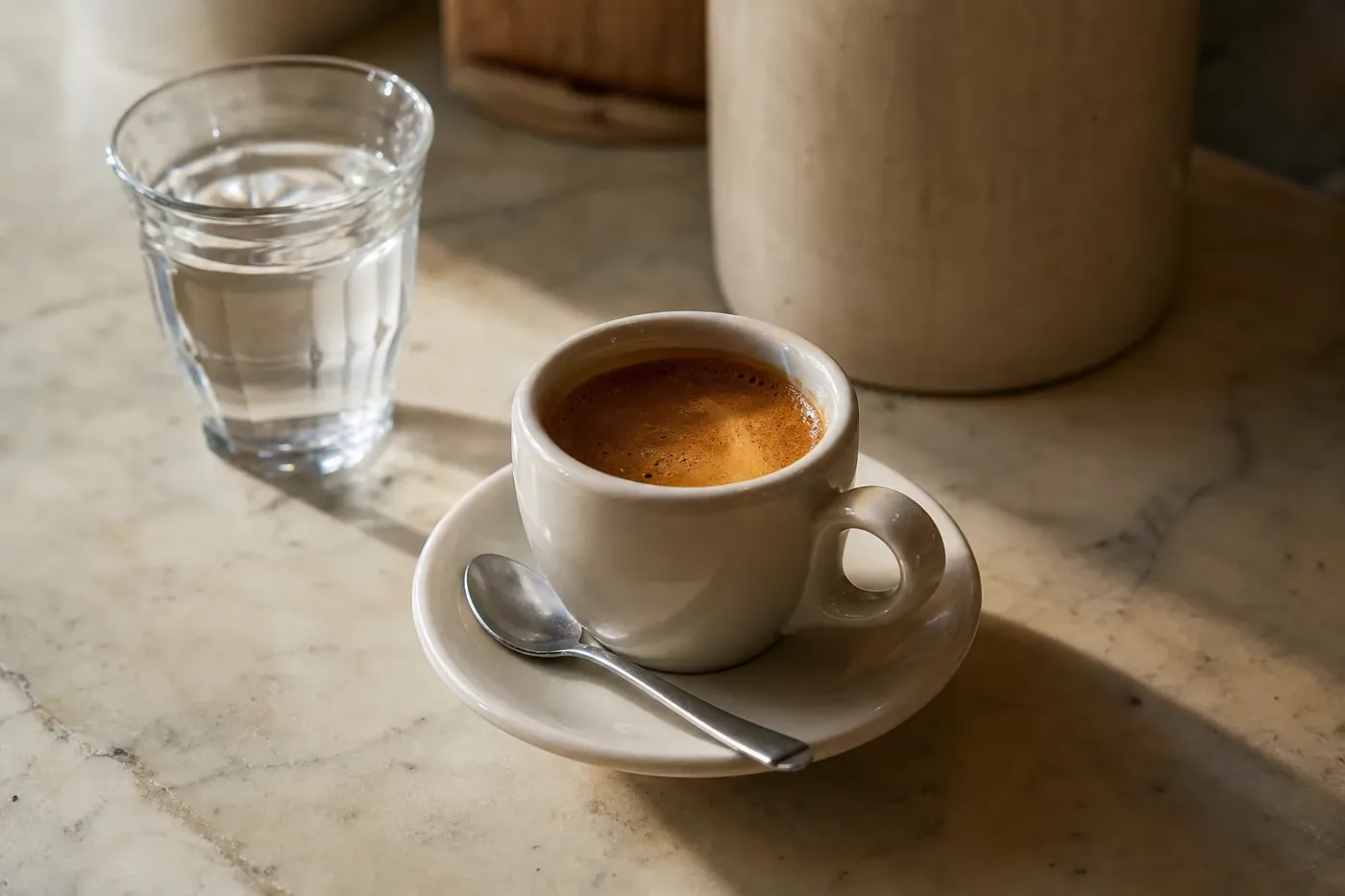
You need a double basket, a dose weighed rather than scooped, and a grinder that adjusts finely enough to hit a target time. Aim for roughly 18 grams in and 36 grams out in 25 to 30 seconds, then adjust the grind rather than the dose: too fast means grind finer, too slow means grind coarser. Change one thing at a time.
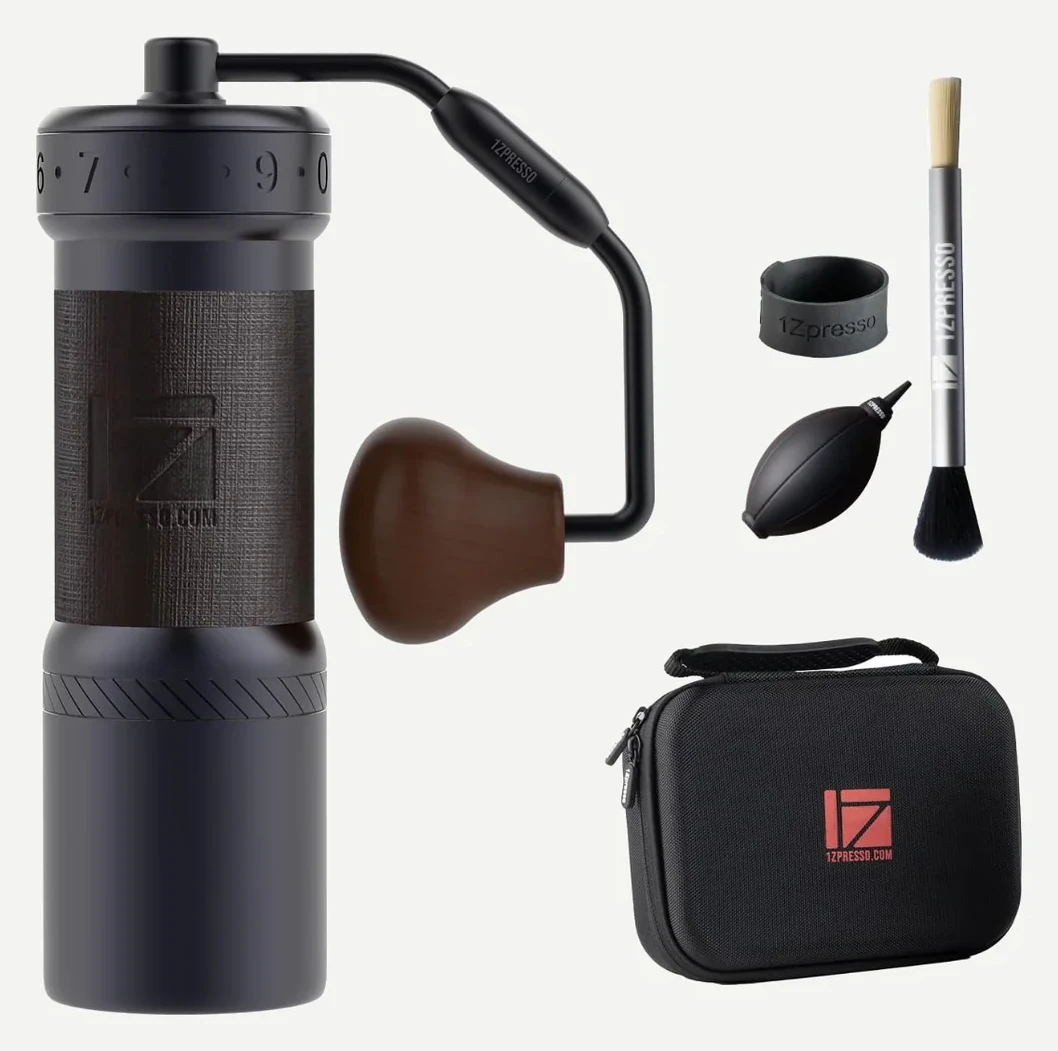
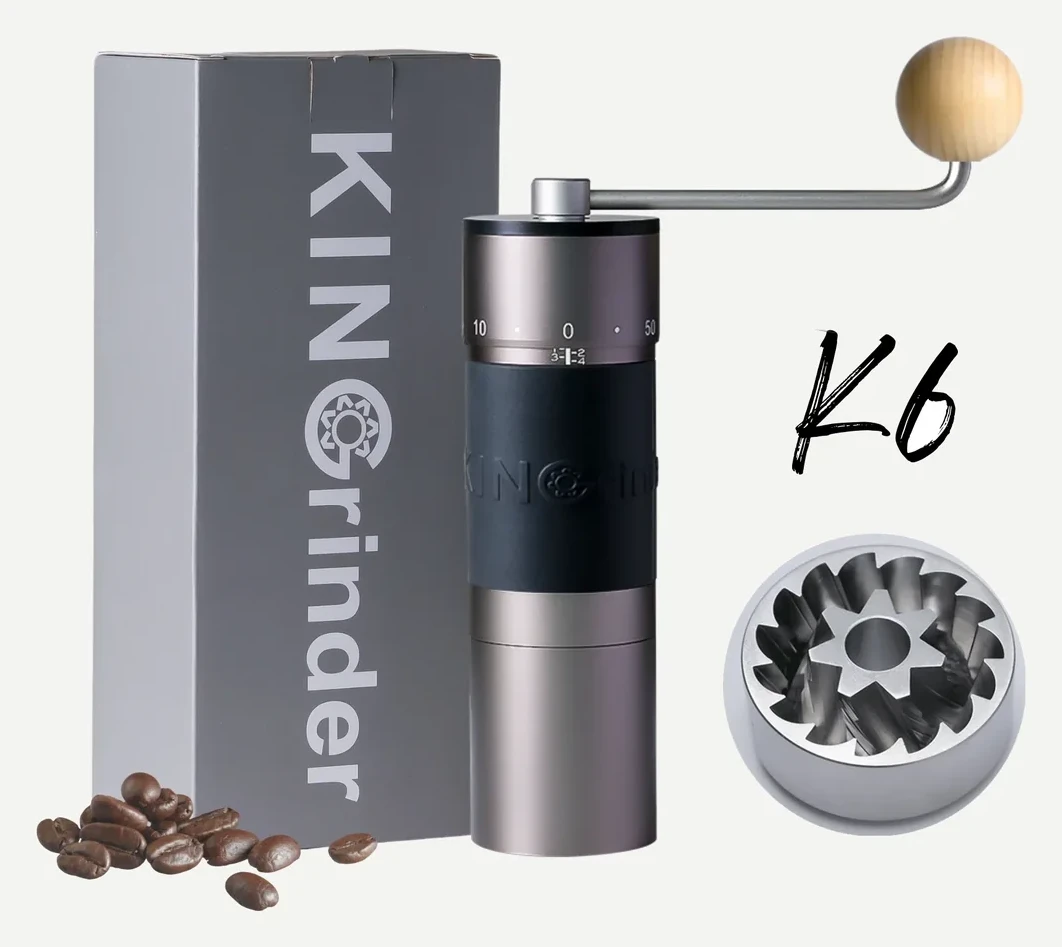
The grinder does more of this work than the machine does, which is the least popular true thing in coffee. Grinders that can do espresso explains what separates one that can hold a setting from one that cannot, and espresso machines is the other half of the setup.
How to order a doppio
Ask for a doppio and you will get a double espresso in an espresso cup. Ask for a double espresso and you will get the same thing. If you want it in a larger cup with room to drink it slowly, ask for it in a cappuccino cup, which most baristas will do without comment. If you want it longer, ask for a lungo rather than asking for it topped up with water, because that is an entirely different drink once water gets involved.
The basket, and the number stamped on it
A double basket is made for a dose, and precision baskets print it on the side: 18, 20 or 22 grams. Put in less and the puck sits low, leaving a gap under the shower screen that fills with water and turns the top of the bed to mud. Put in more and the coffee presses against the screen when the handle locks, which dents the puck and makes the shot run unevenly. Within a gram of the rating is the target.
The shape matters too. Home machines often come with pressurised baskets that have a single exit hole and forgive a coarse grind by building pressure artificially. A plain, unpressurised basket is what a cafe uses, and it is the one that shows you what your grinder is actually doing. If your shots taste thin and sour whatever you change, under-extracted espresso walks through the causes.
Should you stir a doppio before you drink it?
A doppio does not taste the same from top to bottom. The crema on top is the most bitter part of the cup, the body underneath it the sweetest, and the thin liquid at the bottom came out of the puck last. Drink it unstirred and the first sip is mostly crema. A quick stir with a spoon, which Italian bars do without thinking, mixes the three into the taste the shot was dialled in for.
How much milk a doppio can carry
Most milk drinks in a cafe are built on a doppio, and the size of the cup decides how much of the coffee you still taste. In a 150 to 180ml flat white it is the main flavour. In a cappuccino it shares the cup evenly with the milk. In a 350ml latte it becomes a background note, which is why some cafes put a third shot in their large sizes. If a big latte tastes of warm milk and little else, the cup is too large for two shots.
Doppio FAQ
Is a doppio the same as a double espresso?
Yes. Doppio is Italian for double. What it specifically means is two shots' worth of coffee in one larger basket, pulled as a single extraction, rather than two separate single shots poured into the same cup.
How much caffeine is in a doppio?
Roughly 120 to 150mg, depending on the beans and the dose. That is about twice a single espresso and comparable to a large filter coffee, because caffeine tracks how much coffee was used rather than how concentrated the drink tastes.
What is the difference between a doppio and a lungo?
The amount of water pulled through the same coffee. A doppio is a standard ratio at a double dose. A lungo runs longer, taking more of the later and more bitter compounds with it, so it tastes thinner and sharper rather than simply weaker.