Coffee Slang: A Glossary of Cafe and Barista Terms
The words on a cafe menu and the words baristas use behind it are two different vocabularies. Here is what both of them mean.
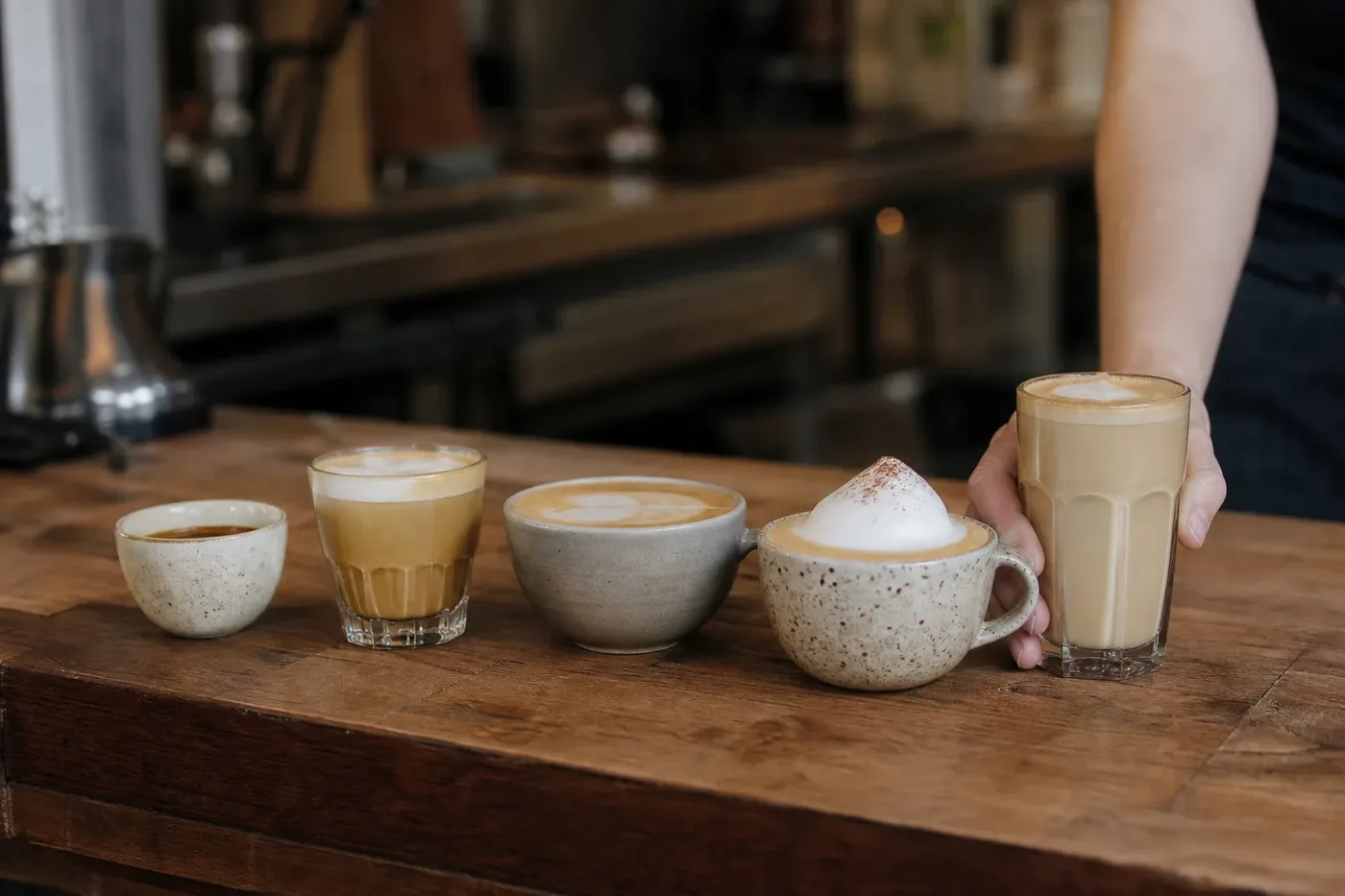
Coffee has three overlapping vocabularies: the drinks on the menu, the shorthand baristas use with each other, and the language on a bag of beans. Most confusion comes from mixing them up.
Coffee terms: drinks by how much milk they contain
The menu makes far more sense read as a scale rather than a list. From least milk to most: espresso, then a macchiato, which is an espresso marked with a spot of foam; then a piccolo; then a cortado, roughly equal parts; then a flat white and a cappuccino; then a latte, which is mostly milk.
Sitting outside that scale are the ones lengthened with water rather than milk: an americano, a long black, and a red eye, which is filter coffee with a shot dropped into it.
Ristretto, doppio and lungo: ratio, not size
A doppio is a double shot. A ristretto is a shot stopped early, so less water passed through the same coffee, making it sweeter and more concentrated. A lungo is the reverse: more water through the same coffee, which brings out the later and more bitter compounds, so it tastes thinner and sharper rather than simply milder. All three can be ordered at any cup size, which is why a "double ristretto" is not a contradiction.
Barista terms: what baristas say to each other
Dialling in is adjusting the grinder until the shot runs to a target time. The puck is the compressed disc of coffee in the basket, and tamping is the act of compressing it. Channelling is water finding a crack and racing through instead of extracting evenly, which is the commonest fault in espresso. Crema is the foam on top of a shot, which tells you less about quality than people assume. Purging is running water or grounds through to clear stale residue.
Microfoam is properly textured milk with bubbles too small to see, and it is what makes latte art possible. A split shot is one doppio divided between two drinks. Pulling a shot is simply making one, left over from lever machines where you physically pulled a handle.
Coffee terms on a bag of beans
Single origin means the coffee comes from one place and was not blended, which is a traceability claim rather than a quality one. Washed and natural describe how the fruit was removed from the bean, and they change the taste more than the country does. Cupping is the standardised tasting method the trade uses to score coffee. Third wave is the movement that treats coffee as an agricultural product with a named origin rather than a commodity, and it has a reasonably precise meaning.
Specialty nominally means scoring 80 or above on a hundred point scale, and in practice is unenforced and often decorative.
Coffee slang that changes meaning by country
A "regular coffee" is filter with milk and sugar in much of the United States, black in most of Europe, and in Australia an instruction nobody recognises. A "white coffee" is coffee with milk in Britain and a completely different product in Malaysia, where it refers to beans roasted in margarine. An americano and a long black are the same ingredients poured in opposite orders, and only one hemisphere considers the difference worth naming.
Cup sizes travel worst of all. A cappuccino in Italy is small and finished before mid-morning; a cappuccino in an American chain is twelve ounces and sold all day. None of this is anyone being wrong, but it is why menus confuse people who have ordered confidently somewhere else.
Coffee terms that mean nothing
Gourmet, premium and barista blend have no definitions and no bodies behind them. Arabica does mean something, but it covers the large majority of coffee sold, so advertising it is closer to advertising that bread contains flour. Strength numbers on supermarket packs are the roaster's own scale and are not comparable between brands.
Two coffee terms people mix up constantly
Latte means milk in Italian, so ordering "a latte" in Italy gets you a glass of milk. And espresso has no x in it, which matters less than the internet suggests but is the fastest way to spot a menu written by somebody who does not drink it.
Coffee slang FAQ
What is the difference between a ristretto and a lungo?
How much water passed through the same amount of coffee. A ristretto stops early, so it is more concentrated and sweeter. A lungo runs longer and picks up the later, more bitter compounds, so it tastes thinner and sharper rather than milder.
What does dialling in mean?
Adjusting the grinder until a shot runs to a target time and weight. It is done by changing the grind rather than the dose, and it has to be redone whenever the beans change, which is why cafes buy the same coffee consistently.
Does crema mean the coffee is good?
Less than people assume. Crema is carbon dioxide from recently roasted coffee held in an emulsion, so it mostly tells you the beans are fresh and roasted on the darker side. Pressurised baskets can manufacture it from coffee that would produce none.