
Dallah Coffee Pot: The Arabic Coffee Pot and How It Is Used
A long curved spout, a hinged lid and a shape recognisable across the Arab world. It is a brewing vessel and a symbol of hospitality, in that order of importance to nobody.
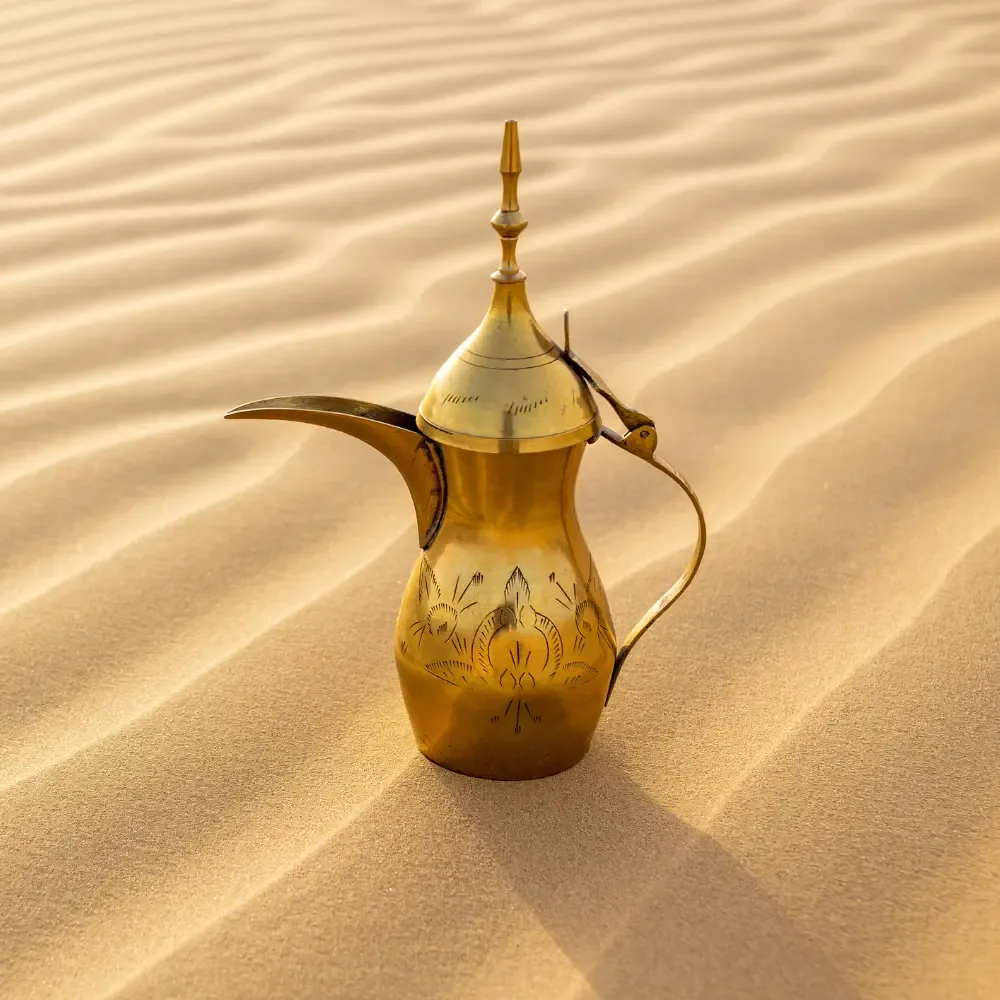
The dallah is the pot Arabic coffee is served from, and its silhouette is recognisable enough across the Arab world to appear on currency, roundabouts and national emblems. It is also a well-solved engineering problem, which is the part usually left out.
How the dallah's shape filters Arabic coffee
Qahwa is brewed with the grounds loose and no paper or mesh anywhere. Serving it clear is therefore a design problem, and the dallah solves it three ways at once.
- A wide base gives the grounds a large flat area to settle into, away from where the spout draws.
- A narrow waist above it keeps settled grounds from being stirred back up when the pot is lifted or tilted.
- A long curved spout with a narrow opening at its base draws from the clear liquid above the sediment, and the constriction acts as a coarse filter in its own right.
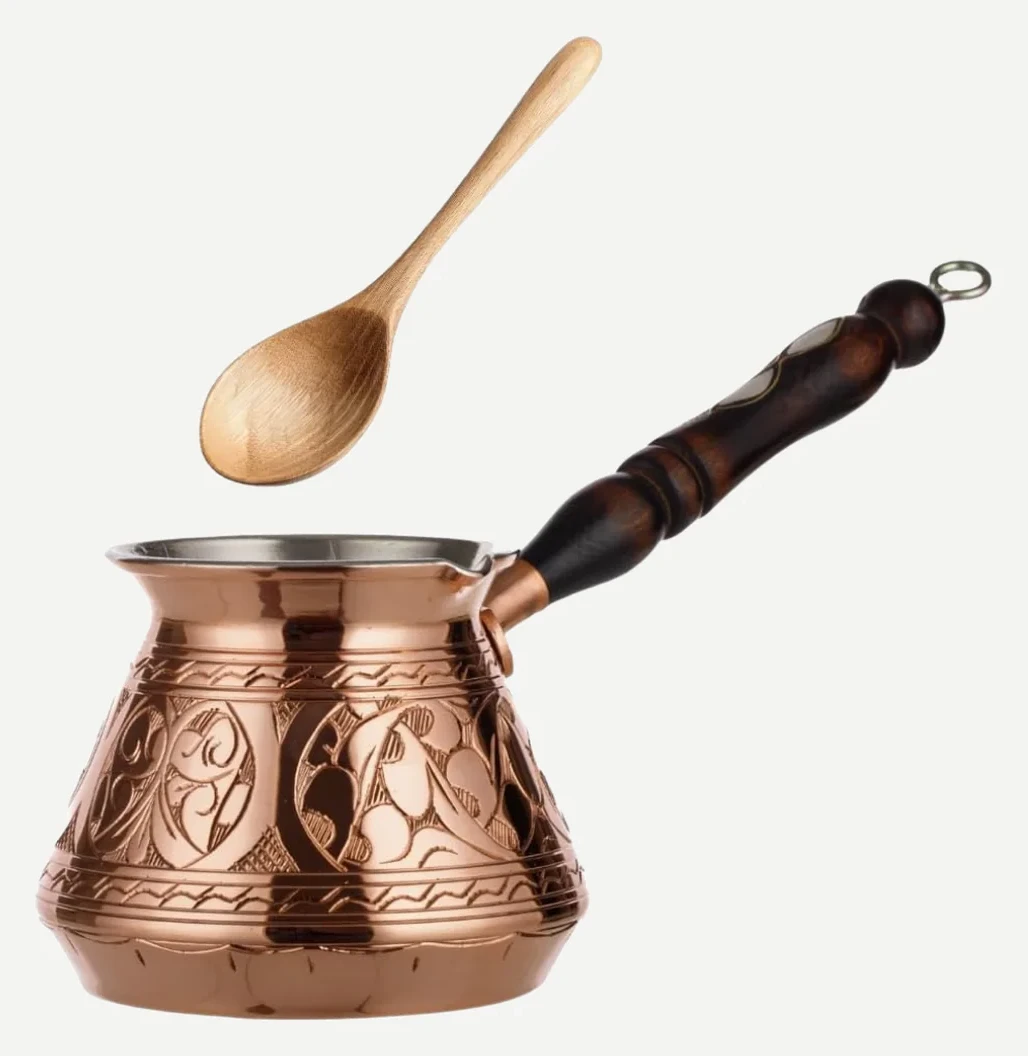
The Ethiopian jebena solves the same problem with a different geometry, and the cezve does not solve it at all, because Turkish coffee is meant to carry its grounds into the cup.
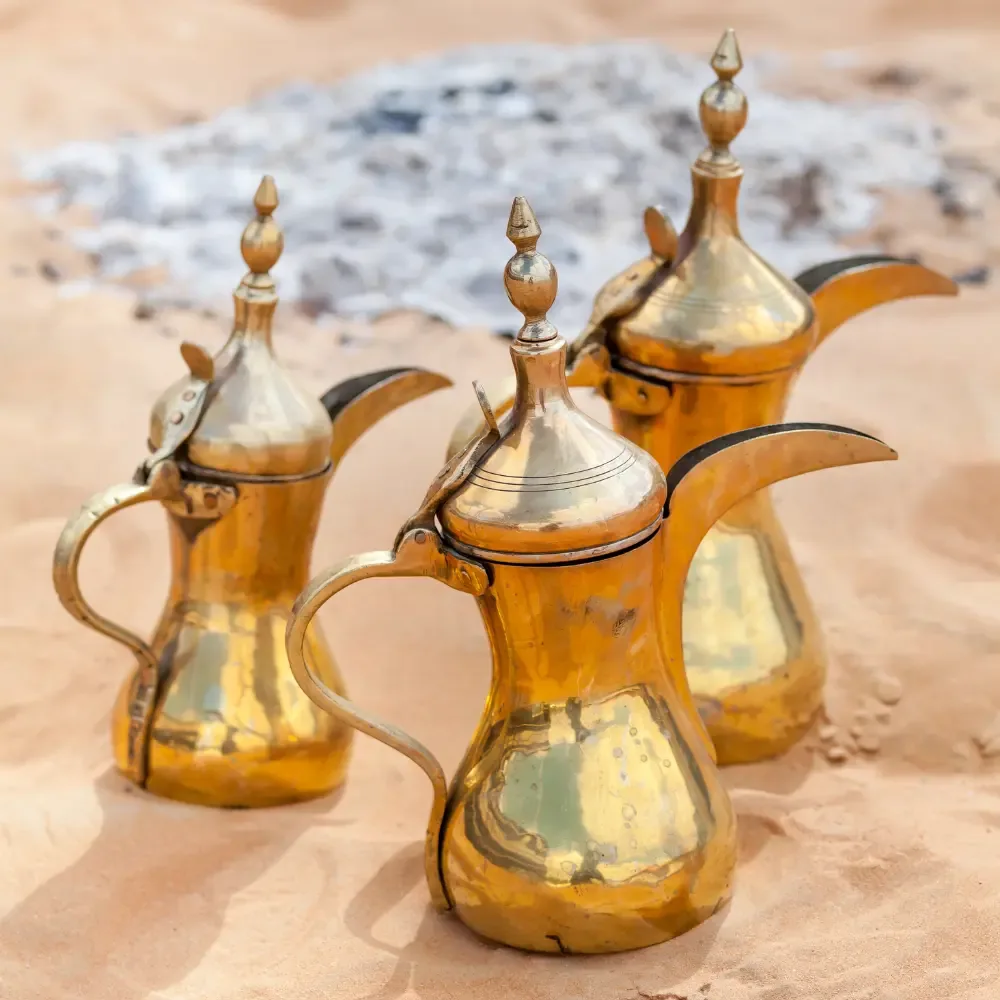
Parts of a dallah coffee pot
A hinged domed lid, often finished with a finial. A tall handle set opposite the spout for pouring at a height. Traditionally hammered brass or copper, frequently tinned inside, and in ceremonial examples decorated with engraving or set with stones.
Sizes run from a single-person pot to vessels holding several litres for a majlis. Many households keep more than one: a working pot and a display pot, and they are not the same object.
Regional dallah styles
The basic form is shared and the details are local. Gulf dallahs tend to be taller with a more pronounced spout curve. The Saudi Qassim style is particularly distinctive and widely copied. Levantine versions are often plainer.
Modern households frequently brew in a saucepan and serve from a dallah, or use a vacuum-flask dallah that keeps coffee hot for hours. That is not a decline of tradition so much as the object doing the job it was always for, which is serving rather than boiling.
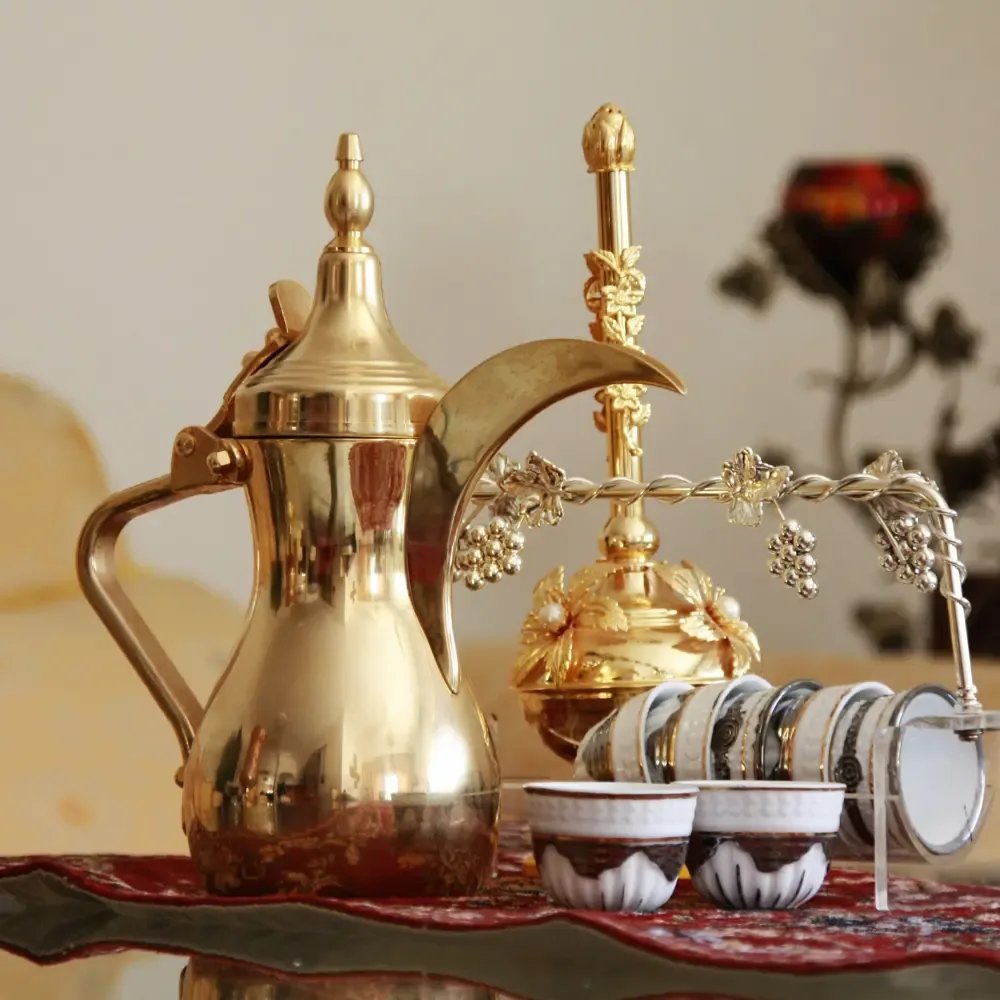
Why the dallah appears on currency
Because hospitality is not a soft value in these cultures, and the dallah is its concrete symbol. Offering coffee to a guest is close to obligatory, refusing it is close to an insult, and the pot is the instrument of the exchange.
So it turns up on coins and banknotes, as sculpture on roundabouts, in tourism branding and in national emblems. Very few kitchen implements anywhere carry that weight, and the one comparison that comes close is the samovar.
How to buy a dallah
Decide first whether you want to use it or look at it, because the two markets barely overlap. A working dallah should be tinned or stainless inside, sized to how many people you actually serve, and comfortable to pour with a full pot. Decorative brass pieces are often untinned, which is fine on a shelf and wrong for coffee.
How to pour from a dallah
There is a form to it, and it reads as competence rather than ceremony.
The pot is held in the right hand and the stack of finjan cups in the left. Cups are poured one at a time, from a height of several inches, which cools the coffee slightly on the way down and makes an audible stream that announces the service.
Fill no more than a third to a half. An overfull cup is a genuine error: it is too hot to hold without a handle, it cannot be shaken to signal enough, and it suggests the server does not intend to return. The small pour is what keeps the round going.
How to care for a brass or copper dallah
- Check the lining before brewing in one. Untinned copper and brass react with hot acidic liquid. If the inside is bare metal, serve from it and brew elsewhere.
- Wash by hand, warm water, no abrasives. A dishwasher will strip tin lining and dull the exterior in a single cycle.
- Dry immediately. Water spots on brass turn into pitting given enough time.
- Polish rarely. Every polish removes a little metal, and the patina an older pot carries is generally considered part of it rather than a fault.
A tinned pot needs retinning eventually, which is ordinary maintenance in the places these are made and hard to arrange elsewhere. Factor it in before buying an antique to actually use.
Dallah coffee pot FAQ
What is a dallah?
The traditional Arabic coffee pot: a wide base, a narrow waist, a hinged domed lid and a long curved spout, usually in brass or copper. It is used to brew and serve qahwa.
What is the spout shaped like that for?
It draws from above the settled grounds and it has a narrow internal filter at its base, so the coffee pours clear without the grounds coming with it.
Is a dallah the same as a cezve?
No. A cezve is a small open pot for brewing one to four cups, with the grounds served in the cup. A dallah is larger, lidded, and designed to serve many people from clear poured coffee.
Why is the dallah on Arab currency?
Because it stands for hospitality, which is central to the cultures that use it. It appears on coins and notes, on public sculpture, and in national iconography across the Gulf.