






Kiva Han and the First Coffee House
Constantinople, 1475. What opened there was not a shop that sold coffee but a new kind of public room, and the authorities noticed.
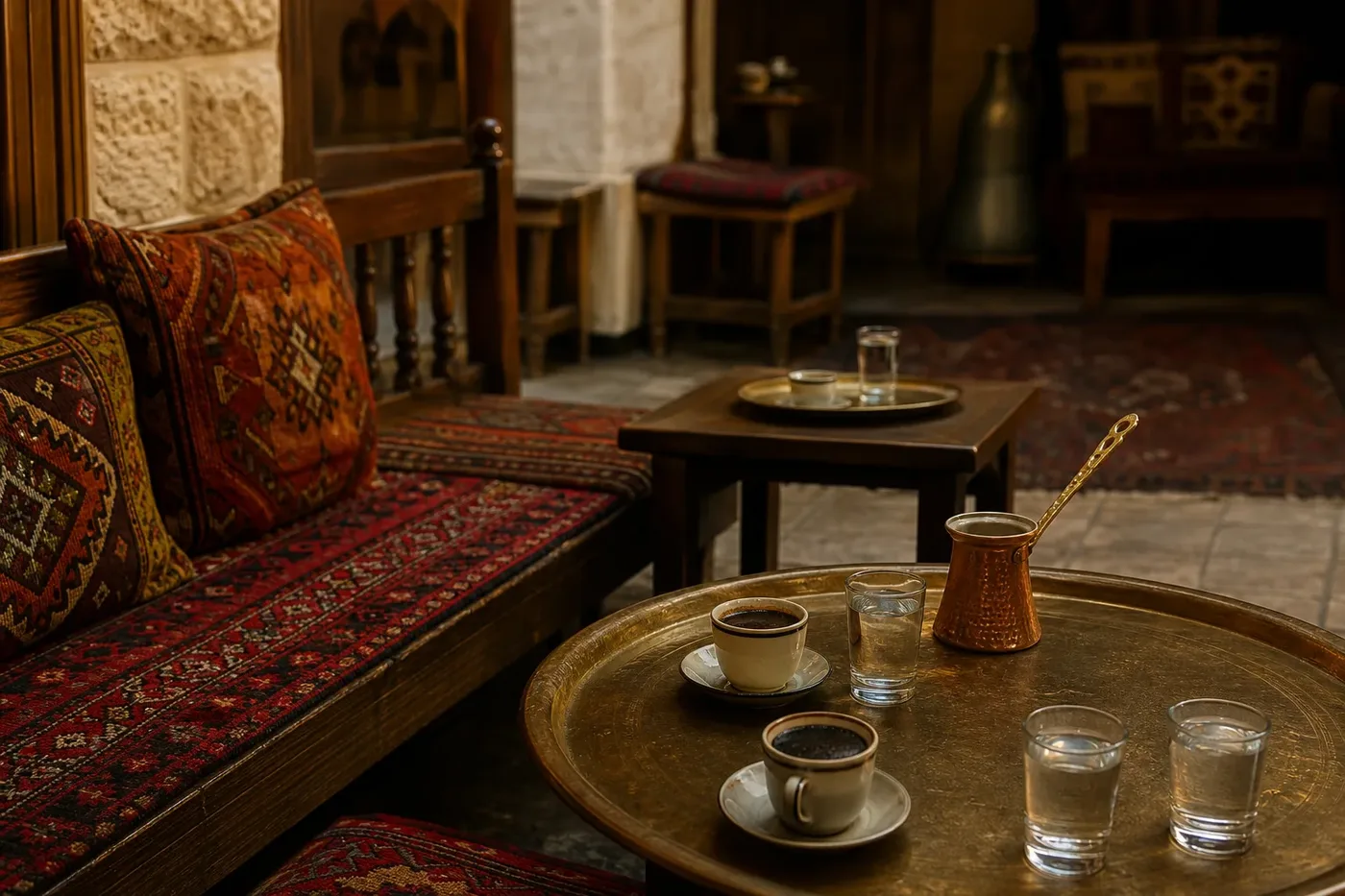
Kiva Han is the name usually given to the first coffee house, opened in Constantinople in 1475. The date and the name are repeated everywhere and documented thinly, but what is not in doubt is that the institution appeared in the Ottoman world in that century and that nothing quite like it had existed before.
What was new about the first coffee house
Not selling coffee. Coffee had been drunk in Yemen for a century by then, mostly in Sufi religious contexts where it was used to stay awake through night prayers, and it reached the Ottoman capital through that world. The Ethiopian ceremony is older still and belongs to the home.
What was new was a public room, open to men of any class, where the reason to be there was conversation rather than worship, trade or drinking alcohol. There was no equivalent. Ottoman coffeehouses became known as mekteb-i irfan, schools of the wise, which was partly a compliment and partly the reason they kept getting closed.
Why Ottoman authorities kept banning coffee houses
A room where anyone can sit for hours over a cheap drink, hear news and discuss it, is a political object whether or not anyone intends it to be. Ottoman authorities banned coffeehouses repeatedly across the sixteenth and seventeenth centuries, and the stated objections shifted around between religious argument and public order, which is usually a sign the real objection was the latter.
Murad IV's prohibition in the 1630s was the most severe and was enforced with real violence. It failed, as all of them did. The pattern repeats later in Mecca in 1511, in England under Charles II in 1675, and in Sweden in the eighteenth century, and the coffeehouse outlasted every attempt.
What was served in the first coffee house
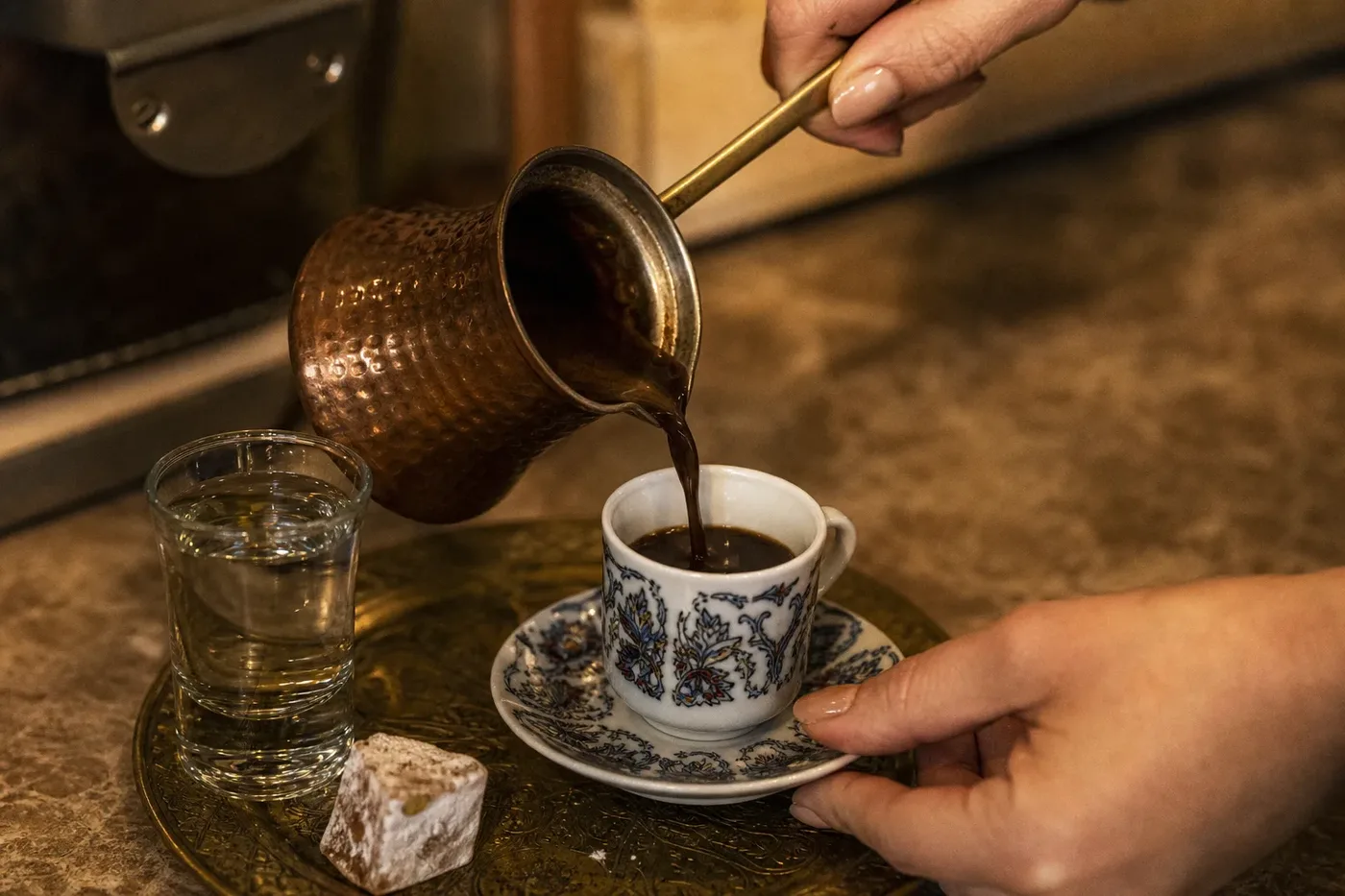
Coffee ground to a powder, boiled with water in a small pot and poured unfiltered, grounds and all, to settle in the cup. That is still how Turkish coffee is made and it is the oldest brewing method still in everyday use anywhere. Sugar came later, and the degree of sweetness is still specified when ordering rather than added afterwards.
Several traditions descend from that same pot and are worth not confusing: Greek coffee and Armenian soorj among them.
What the first coffee house was like inside
Low seating, cushions and rugs rather than tables and chairs, and long occupancy: an afternoon rather than a transaction. Backgammon and chess were played, poetry was recited, and professional storytellers worked the rooms. Music happened. News arrived with travellers and was repeated and argued over, which in a city without newspapers made the coffeehouse the fastest information network available.
Coffee was cheap and there was no expectation that you kept buying it, which is the economic fact underneath everything else about the institution. A place that lets people stay for hours on one small purchase produces a different kind of conversation from one that does not.
How coffee houses traveled from Constantinople to Europe
Through Venice by trade, then across Europe within about a century: Oxford in the 1650s, London shortly after, where coffeehouses were called penny universities because a penny bought entry and the conversation. Lloyd's of London began as a coffee house; so did more than one stock exchange. The institution carried its function with it rather than only its drink.
How reliable is the Kiva Han story?
Much of coffee's early history is like this: traceable in outline, unreliable in detail, and repeated so confidently that the repetition becomes the source. The story of Kaldi and the dancing goats is the clearest case, a tale first written down centuries after the events it describes.
Kiva Han is better attested than that and still not firm. The honest position is that the Ottoman coffeehouse is a fifteenth century invention, that Constantinople is where it took its recognisable shape, and that a single founding shop with a name and a date is a tidier story than the evidence supports.
Kiva Han FAQ
What was the first coffee house?
Kiva Han in Constantinople, usually dated to 1475, is the name most often given. The documentation is thin and a single founding shop is a tidier story than the evidence supports, but the Ottoman coffeehouse as an institution clearly appears in that century.
Why were coffee houses banned?
Because a room where anyone can sit for hours over a cheap drink and discuss the news is a political object whether or not anyone means it to be. Ottoman authorities banned them repeatedly, and so did Mecca in 1511, England in 1675 and Sweden in the eighteenth century. Every ban failed.
What coffee was served in the first coffee houses?
Coffee ground to a powder and boiled in a small pot, poured unfiltered so the grounds settle in the cup. That is still how Turkish coffee is made, and it is the oldest brewing method still in everyday use.