Americano vs Latte: Water or Milk
Same espresso, two different things added to it. Which you want depends on whether you are trying to lengthen the coffee or soften it.
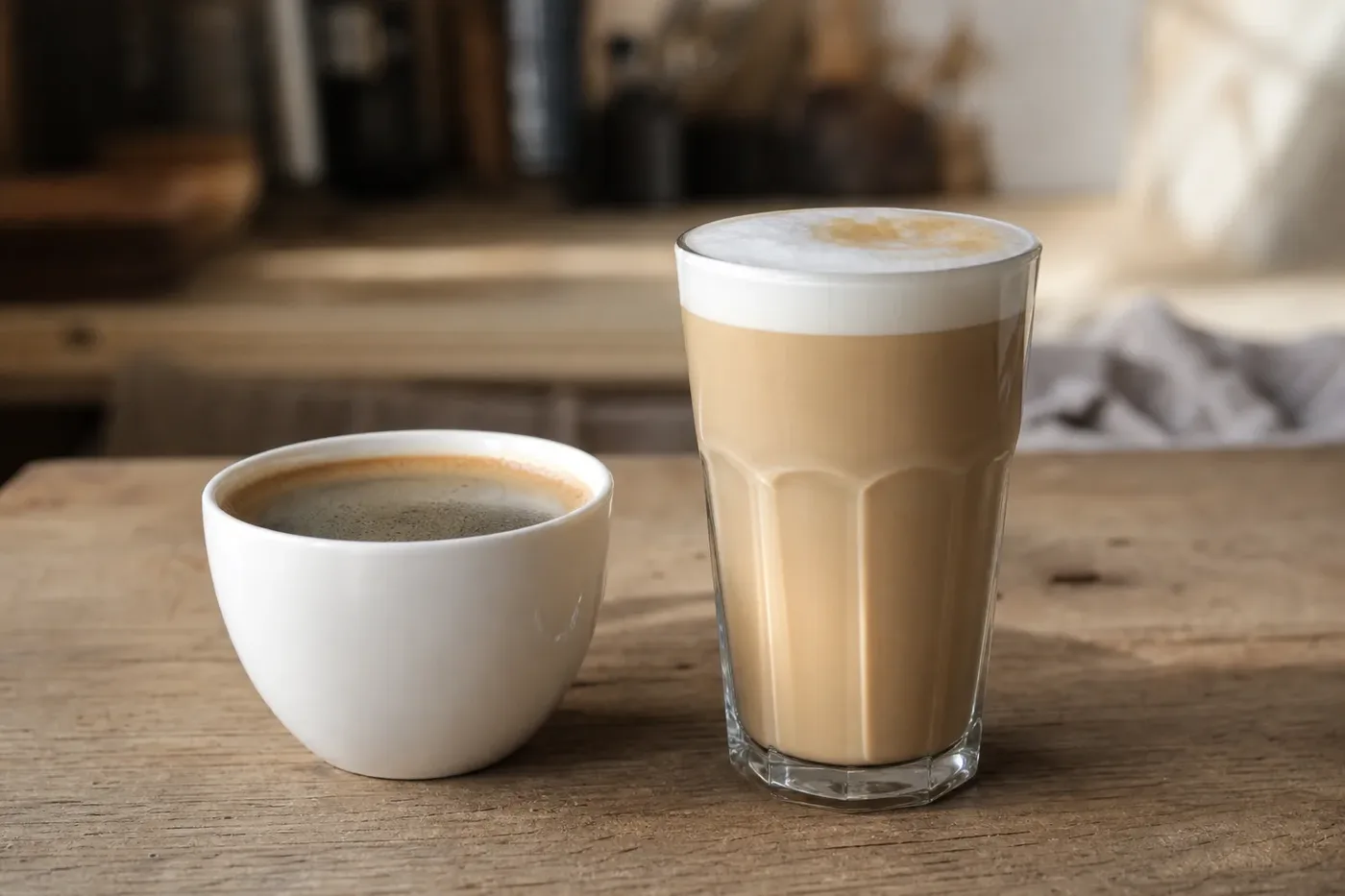
Both start with the same shot. An americano adds hot water, a latte adds steamed milk. That one substitution changes the strength, the texture, the calorie count and what the coffee tastes of, which is why they end up feeling like unrelated drinks.
| Americano | Latte | |
|---|---|---|
| Espresso | 1 or 2 shots | 1 or 2 shots |
| Milk | None | Steamed, about 200ml, barely aerated |
| Foam | None; the shot's crema sits on top | A thin layer, under 1cm |
| Also in it | Hot water, one to four times the volume of the shot | Nothing |
| Served in | Whatever the water makes it, commonly 120 to 240ml | 240ml in many independent cafes, over 400ml at large chains |
| Vessel | Cup or mug | Large cup or glass |
| Caffeine | 60 to 75mg for a single, about twice that for a double, whatever the water | 60 to 75mg a shot, so 60 to 150mg |
| The ratio that defines it | Water added after extraction, which is what separates it from a long shot | The same shot as a flat white in a cup twice the size |
| Where it comes from | Told as American soldiers in wartime Italy diluting espresso; repeated far more often than it is documented | Italian in name, popularised at its current size in the United States |
Ranges, not averages: cafes pour these differently, and a figure pretending to be exact would be worse than the range. Figures from our americano page and our latte page.
How an americano keeps the espresso flavor
Adding hot water dilutes the concentration but changes nothing else. Whatever the espresso tasted of, the americano tastes of, quieter. If the shot was bitter, you get a longer bitter drink. If it was sweet and balanced, you get a long sweet drink that is genuinely pleasant to sit with.
That makes it the honest choice: there is nowhere to hide a bad shot. It is also the closest espresso equivalent to filter coffee, though it is not the same thing, because the extraction that produced it was short and pressurised rather than long and gravity-fed.
How a latte softens the espresso
Milk does three things at once. It dilutes, it adds fat and sugar which coats the tongue, and lactose reads as sweetness. The result is that a latte is forgiving: a slightly over-extracted, slightly bitter shot largely disappears into it, which is precisely why milk drinks dominate high street menus.
It also means the coffee has to fight to be noticed. A typical latte is around three parts milk to one of coffee, so delicate flavours simply vanish. That is not a flaw, it is the point of the drink, but it is the reason a carefully sourced light roast is wasted in one.
Long black vs americano: what is the difference?
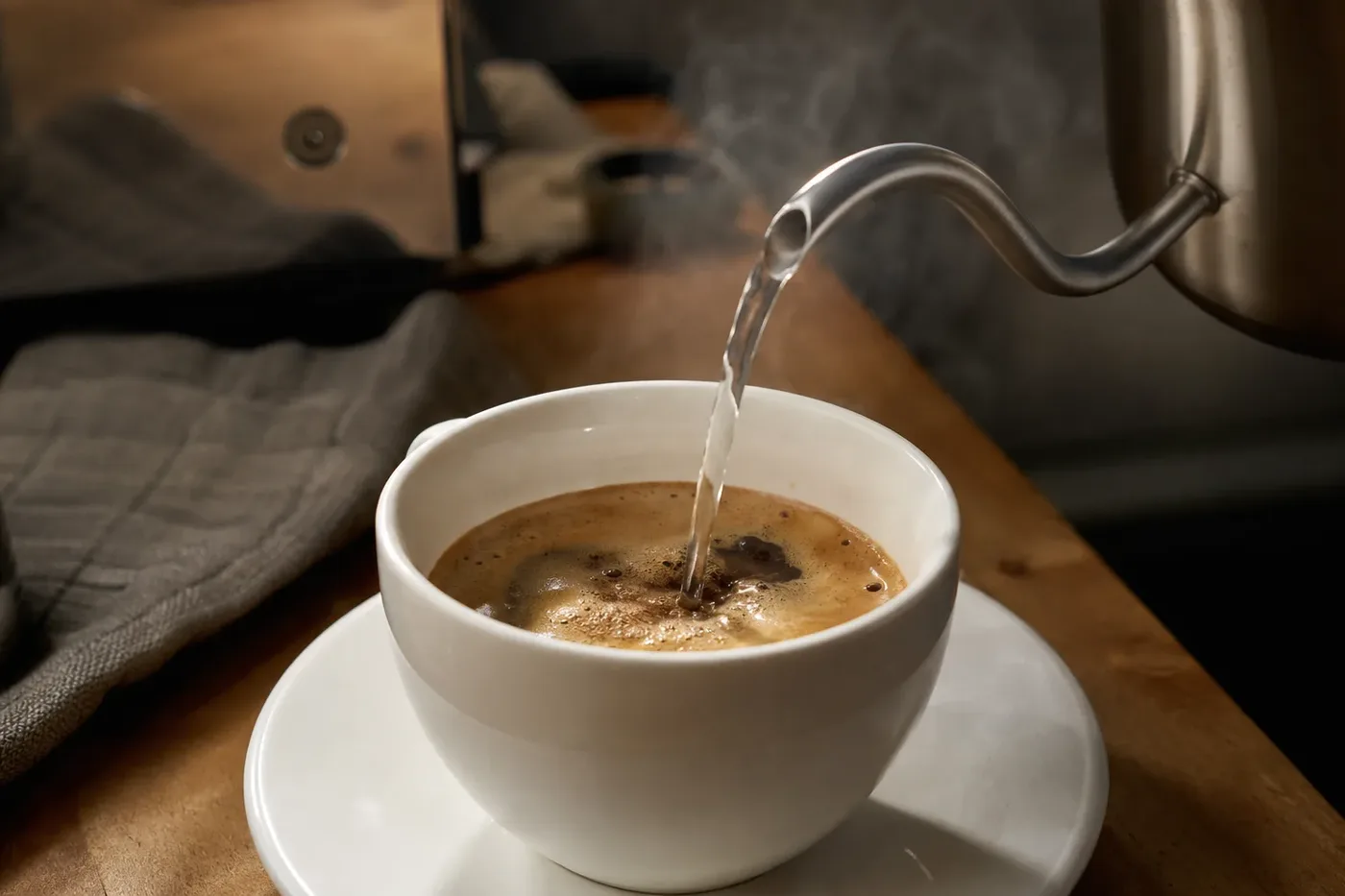
The difference is the order. An americano is espresso poured into or topped with hot water. A long black is espresso poured over water already in the cup, which preserves the crema layer on top. It is a small thing that Australians and New Zealanders care about and most other places do not, and the long black is generally the better drink of the two for it.
Americano vs latte: where the names come from
The popular story is that American soldiers in Italy during the Second World War added hot water to espresso to make something closer to the coffee they drank at home. It is a popular story rather than a documented one, but it has stuck because it describes the drink well: an American-sized cup made from Italian coffee.
Latte is simply the Italian for milk, shortened from caffe e latte. Ask for a latte in Italy and you may well be handed a glass of milk. The drink under that name in the rest of the world, espresso in a large cup of steamed milk, took its present size in the United States.
Americano vs latte caffeine and calories
Caffeine is essentially identical, because both are built on the same one or two shots. Neither water nor milk adds any, and the perception that a latte is weaker is about taste rather than stimulant. Our guide to caffeine in coffee covers the comparison across brewing methods.
Calories are where they separate completely. An americano is effectively zero. A latte made with whole milk is a few hundred, which over a daily habit is a real number, and syrups take it considerably higher.
Americano or latte: which should you order?
If the cafe roasts carefully and you want to taste the coffee, an americano. If you want something comforting, longer-lasting or you are unsure about the quality of the shot, a latte. If you want the coffee to lead but still want milk, the answer is neither: it is a flat white or a Spanish-style cortado, both of which keep the ratio much tighter.
Iced americano vs iced latte
An iced americano survives the transition well: espresso, cold water, ice, and the dilution from melting is the same dilution you wanted anyway. An iced latte is harder, because cold milk cannot be textured, so the drink becomes espresso and milk over ice. That is pleasant, and it is a different thing from the hot version rather than a cold copy of it.
This is also where the quality of the shot stops hiding. Cold mutes sweetness and emphasises bitterness, so a shot that was acceptable hot can be unpleasant iced. If your iced coffee tastes harsh, the espresso is the place to look.
Americano vs latte at home
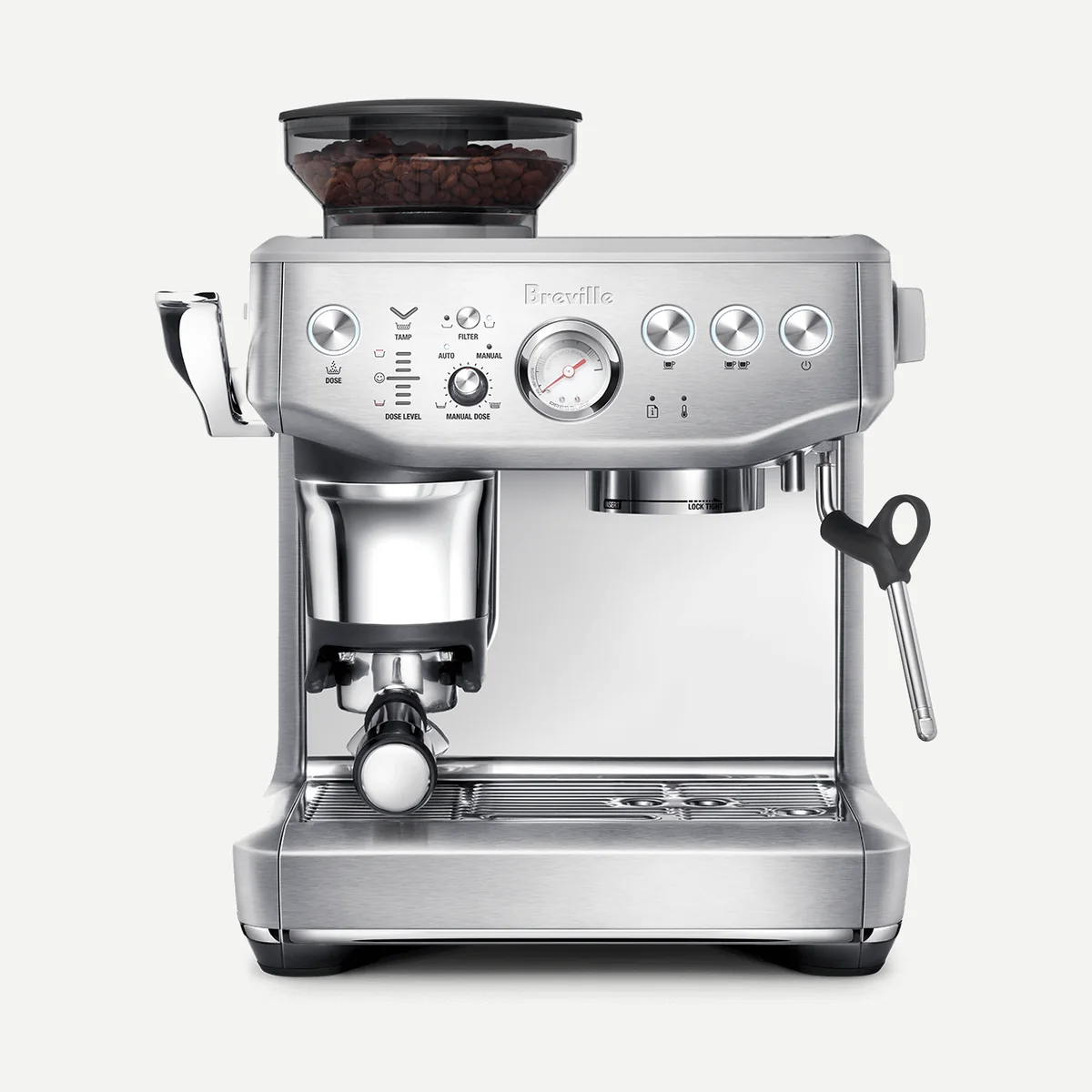
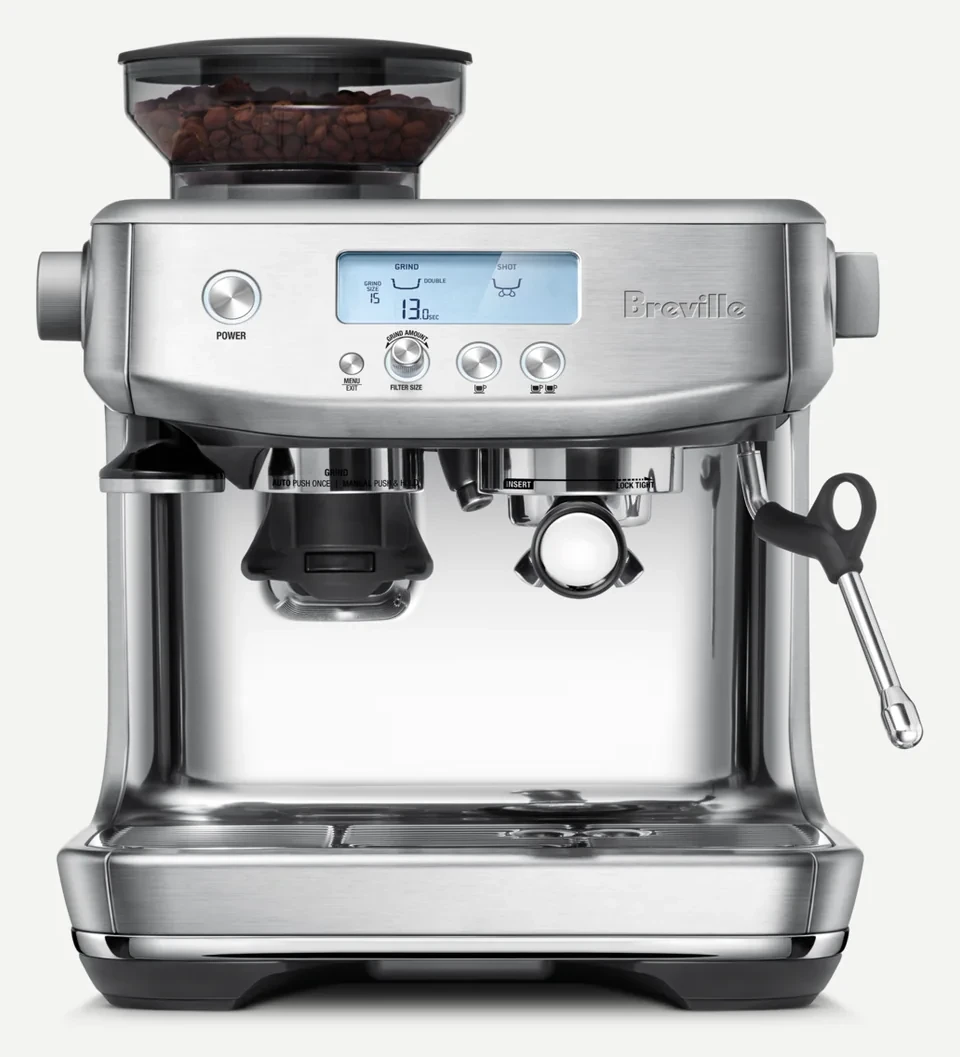
An americano needs nothing but the machine and a kettle, which makes it the sensible default for a home setup without a good steam wand. Texturing milk well is a real skill and inexpensive machines often lack the steam pressure to do it, so a home latte frequently ends up as hot milk with a bubble cap. Our microfoam guide explains what you are aiming for, and our espresso machine guide covers what to look for in a wand.
Americano vs latte FAQ
Does an americano have more caffeine than a latte?
No. Both are built on the same one or two espresso shots, and neither water nor milk adds caffeine. A latte tastes weaker because milk softens and sweetens the coffee, not because there is less of it.
Is an americano the same as filter coffee?
Not quite. It is the closest espresso equivalent, but the extraction behind it was short and under pressure rather than long and gravity-fed, so the body and the flavour profile differ even at the same strength.
What is the difference between an americano and a long black?
The order of pouring. An americano is espresso topped with hot water; a long black is espresso poured over water already in the cup, which keeps the crema intact on top. The long black is generally the better of the two.