What Is a Café au Lait?
Brewed coffee and hot milk in roughly equal parts. The thing that makes it distinct is the one most recipes get wrong: there is no espresso in it.

A café au lait is brewed coffee and hot milk, roughly half and half. It is French, it predates espresso machines in the home by a long way, and the coffee in it comes from a press or a drip pot rather than from an espresso machine.
That single fact separates it from almost every drink it gets confused with. A latte is espresso and steamed milk. A café con leche is espresso and scalded milk. A café au lait is neither, and a recipe that starts "pull two shots" is describing a different drink.
Why café au lait uses brewed coffee, not espresso
Espresso is concentrated, so a latte can be three quarters milk and still taste of coffee. Brewed coffee is not, so a café au lait uses roughly equal parts and still comes out gentle. That is the point of it: it is a soft, long, comforting drink rather than a coffee delivery mechanism, which is why it is traditionally breakfast and traditionally drunk from a bowl you can hold in both hands.
It also means the coffee has to be strong enough to survive. A weak pot makes a disappointing café au lait, and the traditional fix is to brew a touch heavier than you would for drinking black.
Café au lait milk: heated, not foamed
There is no microfoam and no foam cap. The milk is heated until steaming and poured in, and in the traditional method the coffee and the milk are poured into the bowl simultaneously from two jugs. No steam wand is needed, which is part of why the drink survives: it has always been something you can make in a kitchen with a pan.
Café au lait vs latte, café con leche and flat white
Against a latte: latte is espresso, foamed milk, and usually three parts milk to one of coffee. Against a café con leche: espresso again, Spanish rather than French, and the milk is scalded which gives a slightly cooked sweetness. Against a flat white: a different universe, since that drink is built on texture and this one deliberately has none.
Against plain coffee with milk: honestly, mostly proportion and intent. A splash of cold milk in a mug is not a café au lait. Equal parts hot milk in a bowl is.
How to make café au lait properly
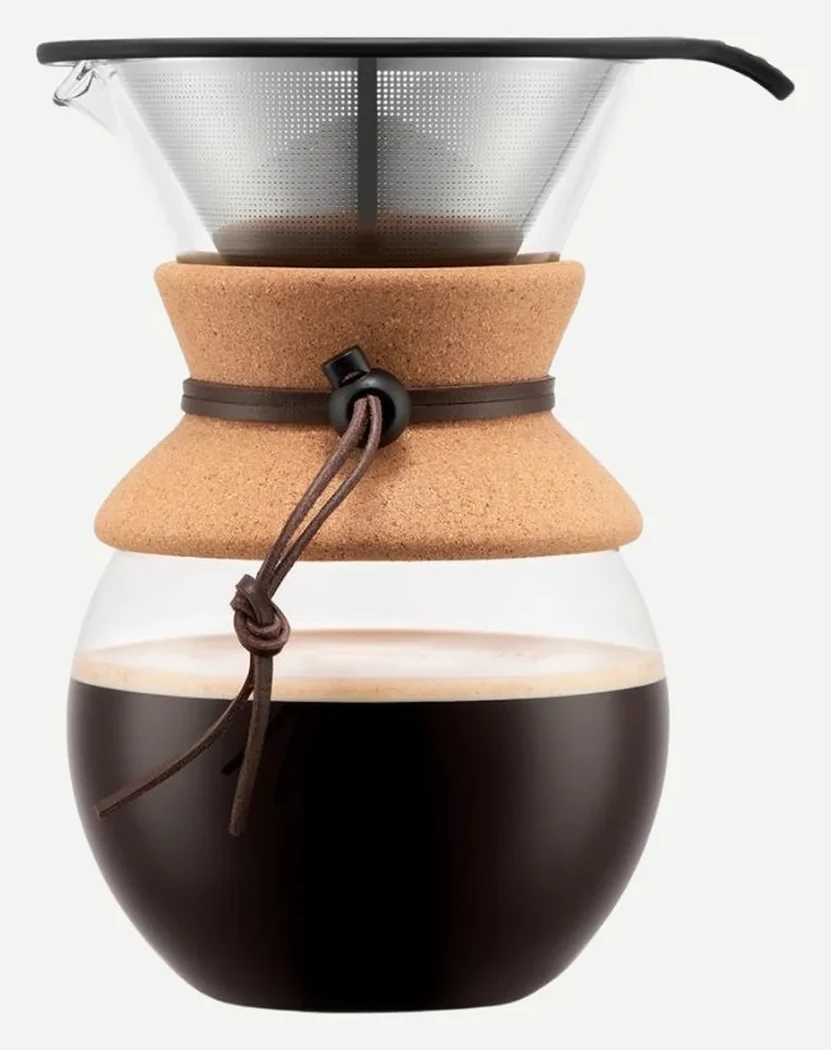
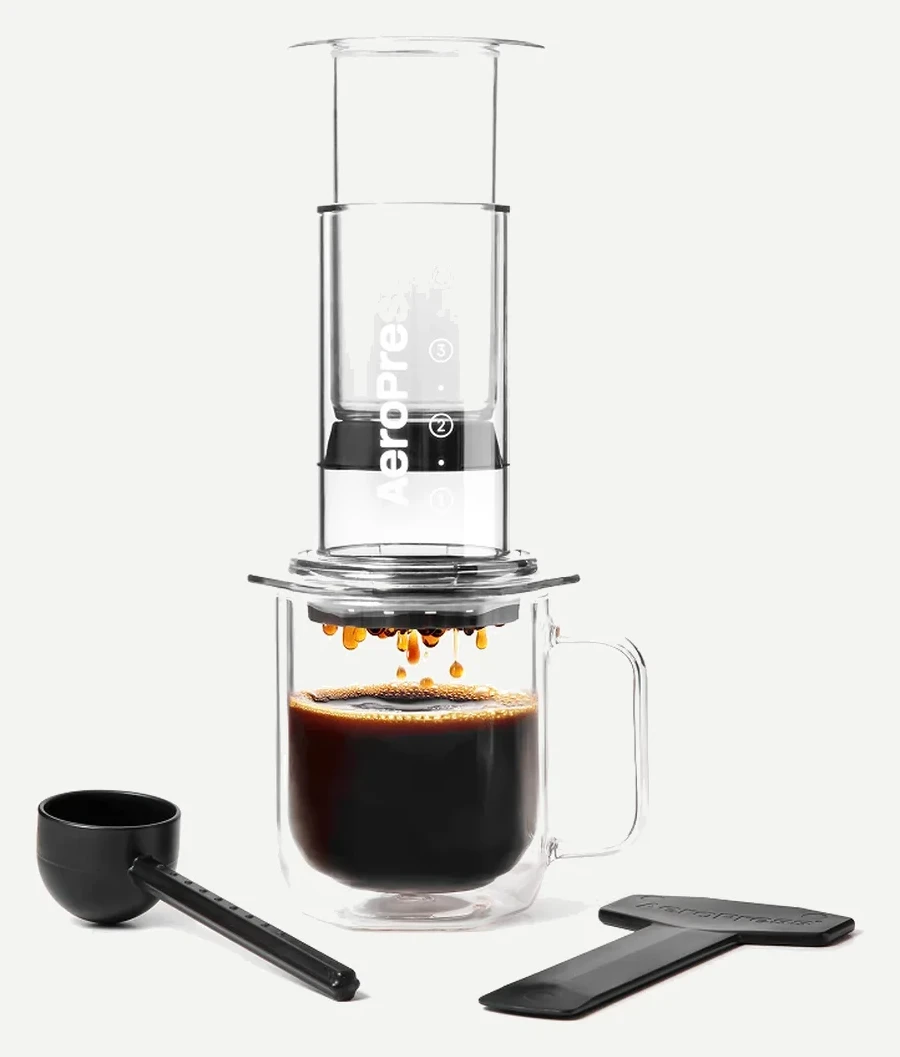
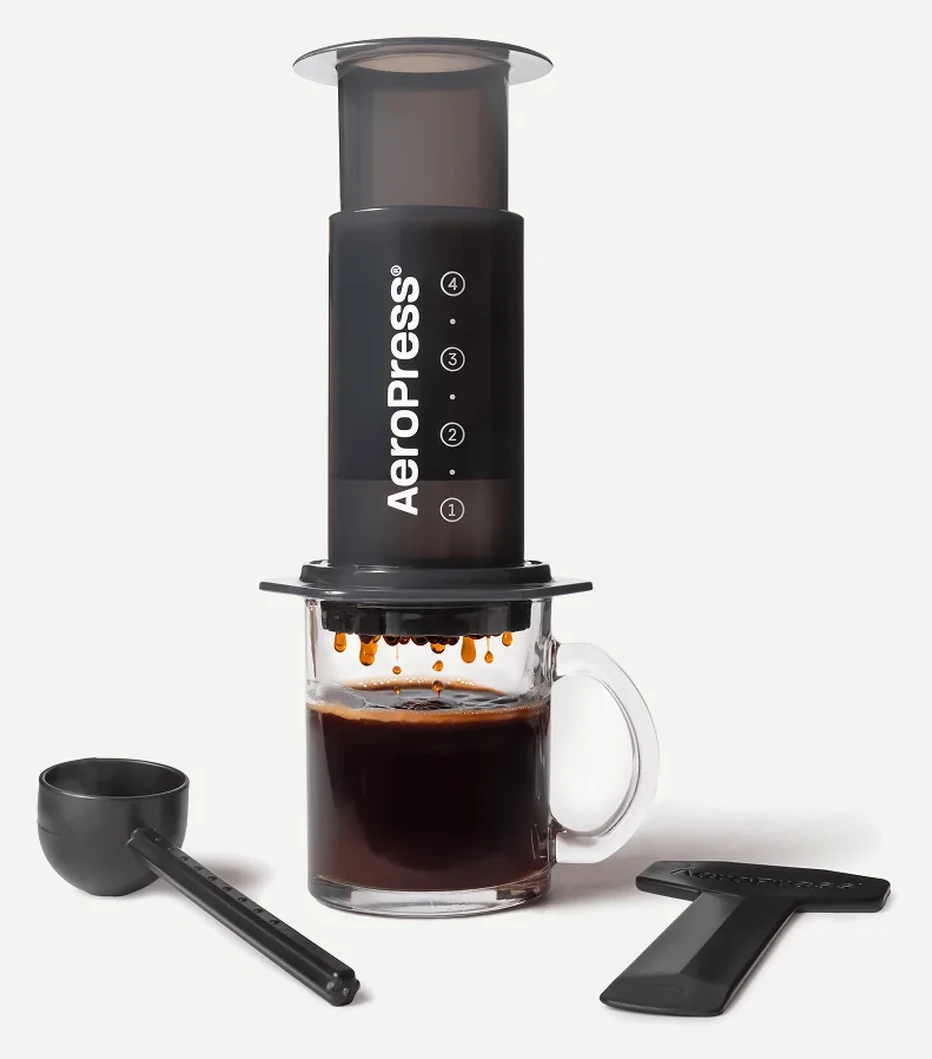
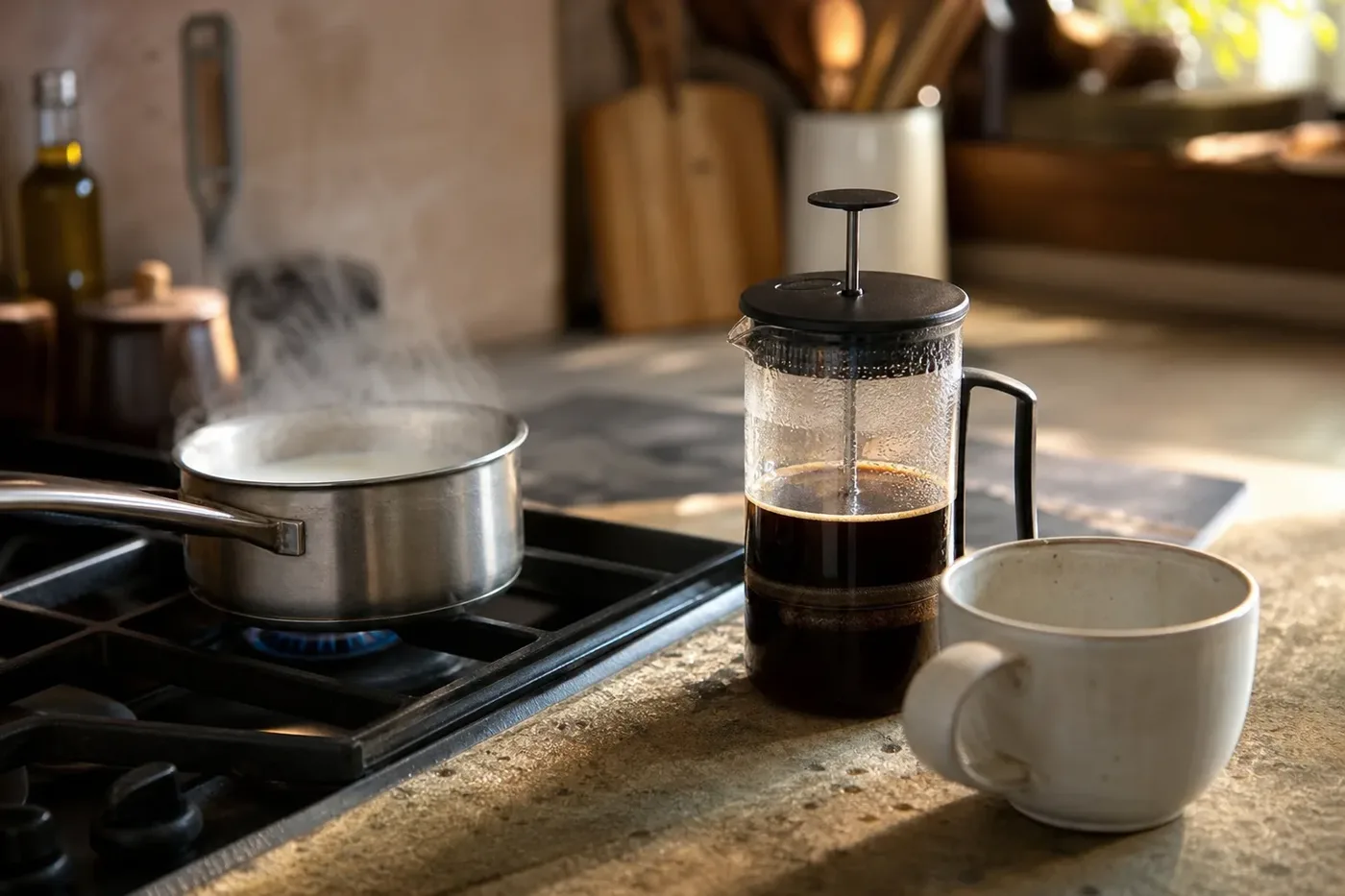
Brew a strong pot. A French press brewer is the traditional and the best choice, because the metal filter lets oils through and gives the body that stands up to milk; a filter coffee machine works and gives a cleaner, lighter result. How to use a French press properly covers the ratio, and for this drink use slightly more coffee than usual.
Heat whole milk until it steams, do not boil it, and pour the two together in equal measure. Sugar is normal and not a crime.
New Orleans café au lait and why it has chicory
New Orleans cafe au lait is made with coffee blended with roasted chicory root, and it is not a gimmick. Chicory was added in France during nineteenth century coffee shortages and travelled to Louisiana with French settlers, where it stayed after the shortages ended because people had come to prefer it. It adds body and a woody, slightly bitter sweetness that stands up unusually well to milk.
If you have had cafe au lait in New Orleans and found it different from the French version, that is why. Both are correct.
Best coffee for café au lait
Something with body and low acidity, because acidity and milk fight. A medium-dark roast is the natural fit, and a French or Italian style darker roast is the traditional one: this is a drink built around chicory-era French coffee, and it takes a heavier roast without complaint. A delicate light roast is wasted here.
Why café au lait is served in a bowl
At home in France a cafe au lait is traditionally drunk from a bowl, a bol, which is wide, has no handle and is held in both hands. The shape is practical. Bread or a croissant gets dunked in it, which a cup does not allow, and the wide surface cools the drink enough to drink it at the table. A large mug is the usual substitute. A small cup is the wrong one, because the drink is meant to be long.
How to order a café au lait
In a French cafe the counter drink is usually a cafe creme, espresso with steamed milk, which is closer to a latte than to this. Cafe au lait is mostly a home drink in France. In the United States the name appears on plenty of menus and usually means brewed coffee with steamed milk, which is close to the original. The same idea is sold as a caffe misto at some chains.
How much caffeine is in a café au lait?
Half the cup is brewed coffee, so a 240ml cafe au lait holds roughly 50 to 90mg of caffeine depending on how strong the pot is. That is less than a mug of black filter coffee the same size, simply because milk takes up half the volume. The figures for other drinks are in how much caffeine is in coffee.
Dairy-free café au lait
Oat milk is the closest substitute. It heats without splitting and has enough body to stand in for whole milk. Soy works as well but can curdle in hot, acidic coffee; pouring the milk in first and the coffee after it helps, and why plant milk curdles explains what is happening.
Café au lait FAQ
Is a café au lait the same as a latte?
No. A latte is espresso with steamed, foamed milk, usually about three parts milk to one of coffee. A cafe au lait is brewed coffee with hot milk in roughly equal parts, with no foam and no espresso machine involved.
What coffee do you use for a café au lait?
Brewed coffee, traditionally from a French press, made a little stronger than you would drink it black so it stands up to an equal volume of milk. A medium-dark roast with body and low acidity suits it best.
What is the difference between café au lait and café con leche?
The coffee base and the milk. Cafe au lait is French, uses brewed coffee and heated milk. Cafe con leche is Spanish, uses espresso and milk heated until it almost boils, which gives it a slightly cooked sweetness.