What is the Alessi Pulcina?
The one moka pot that attacks the method's actual flaw rather than its looks.
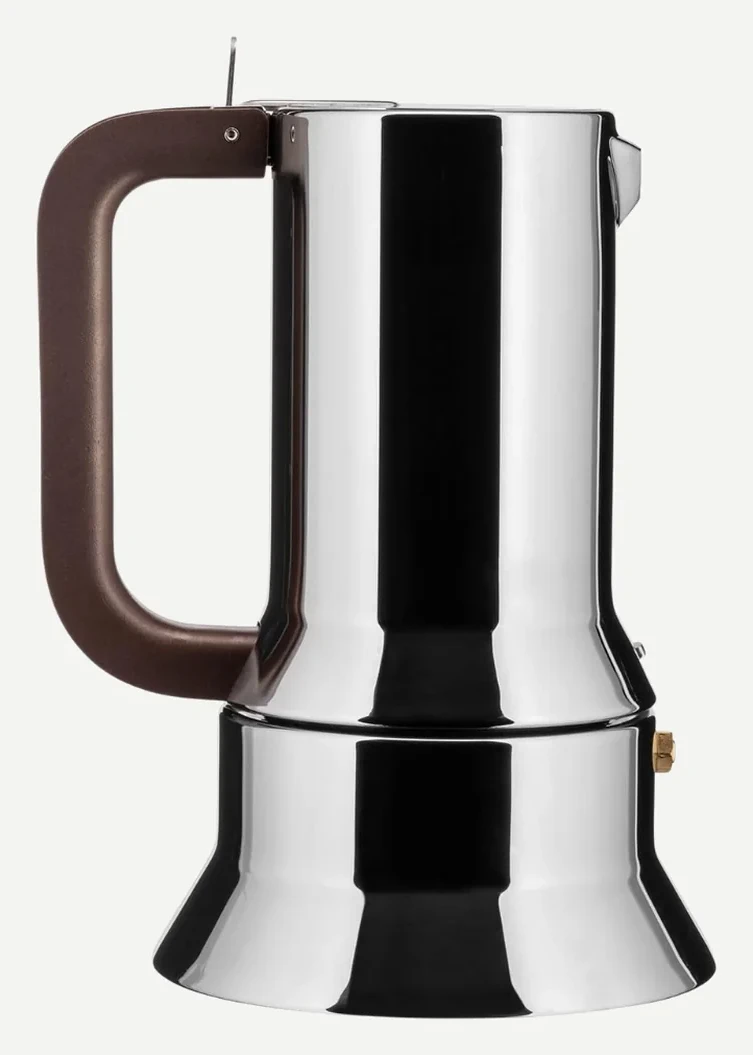
Alessi publishes a specially designed boiler applying technology developed by illycaffe that stops dispensing the espresso at the right time before the coffee gets a bitter aftertaste, low-pressure pre-infusion that gradually increases water pressure to expand the grounds for even extraction and thick crema, cast aluminium construction with a thermoplastic handle and knob, gas hob compatibility, and Michele De Lucchi as designer. It is 3 cups and stands 8 inches.
The problem it is built to solve
The last of a moka brew is the worst of it, and everybody drinks it anyway.
A moka pot pushes water up through the coffee under steam pressure. As the water in the base runs low, what comes through stops being water and becomes steam, which blasts through the already-spent grounds and drags out the harsh, bitter compounds. That is the gurgling at the end, and it is why the standard advice is to pull the pot off the heat the second it starts.
Almost nobody does this reliably, because it needs you standing there. The Pulcina's boiler is shaped so the flow cuts off before that phase begins, which means the bitter ending never reaches the cup whether you were paying attention or not.
That is a genuine piece of engineering rather than styling, and it is the only example of it in this category. Every other pot here, including the 9090, relies on you.
Pre-infusion, and why crema on a moka pot is unusual
Wetting the grounds gently before the pressure builds is what an espresso machine does first.
Dry coffee hit suddenly with pressurised water channels: the water finds the easiest path and races through it, leaving the rest of the bed barely touched. Pre-infusion wets the bed at low pressure so it swells and settles evenly, then the real pressure follows.
Alessi credits this for even extraction and thick crema. Moka pots run at roughly one to two bars against an espresso machine's nine, so the crema will not be an espresso's, and it is worth being clear about that. The evenness is the part that matters and it is real.
Alessi Pulcina vs Bialetti Brikka
Two pots that modify the standard moka, and they modify opposite ends of it.
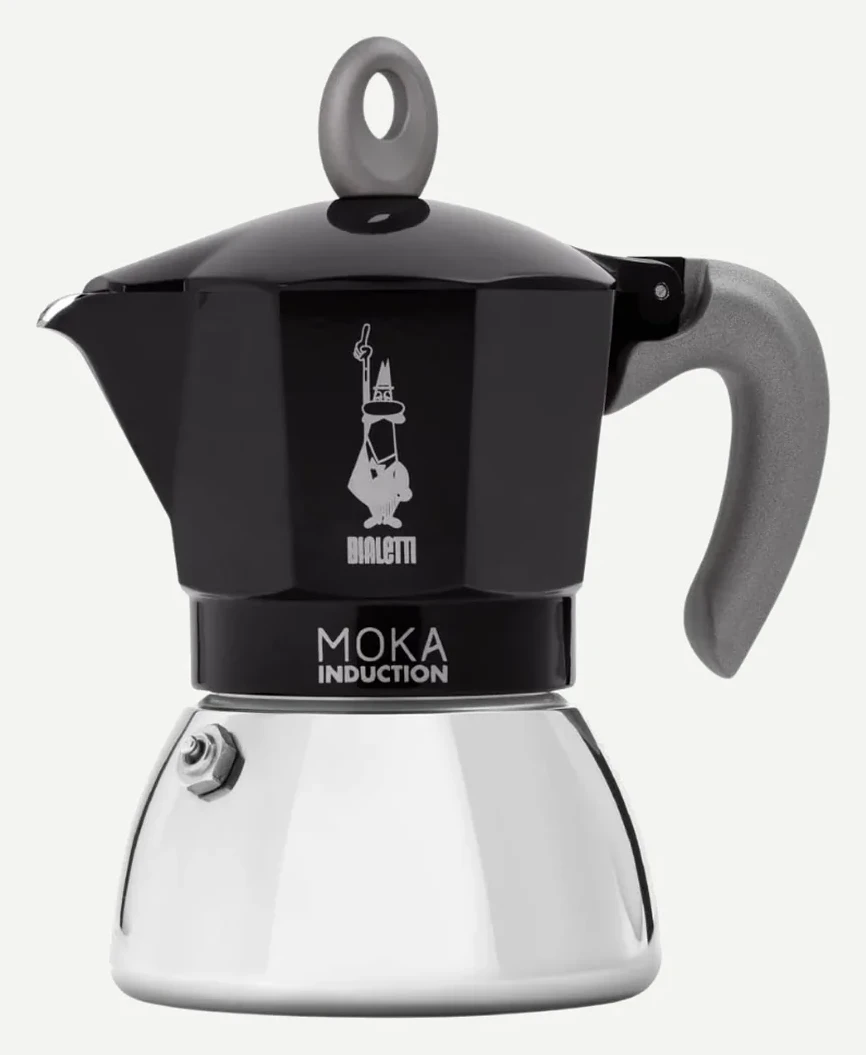
The Bialetti Brikka adds a weighted valve that holds pressure back until it is higher, so the coffee bursts out with a foam layer. It is aiming at crema.
The Pulcina is aiming at the ending, stopping the brew before the steam phase. If you want the thickest head on a moka coffee, the Brikka. If your complaint is that moka tastes burnt, this is the pot that addresses it directly.
Is the Alessi Pulcina worth it?
Worth it if bitterness is the reason you stopped using your moka pot.
It is expensive for a three cup aluminium pot, and the price is design plus the illycaffe boiler. If you already brew carefully and pull the pot off in time, you are paying for something you were doing yourself.
Alessi publishes no induction compatibility on this listing, which for a cast aluminium pot almost certainly means no, and no gasket material, no warranty term and no weight. At 3 cups it is a pot for one or two people.
Who should buy it (and who should not)
Buy it if you like the idea of moka coffee more than you like the taste you get.
It suits somebody who brews distracted, in a morning rush, and has decided moka is harsh. It is also the pot to give somebody who has never made one.
Do not buy it for an induction hob without checking, and do not buy it for more than two people. And if the ritual of watching the pot is the part you enjoy, this removes the reason for it.
Frequently Asked Questions
What does the Pulcina's boiler do?
It stops the flow before the steam phase at the end of the brew, which is where the bitter taste in moka coffee comes from.
Does it really make crema?
Alessi credits its pre-infusion with a thicker crema. A moka pot runs at one to two bars against an espresso machine's nine, so it will not match a real shot.
Who designed it?
Michele De Lucchi, using technology developed with illycaffe.
Does it work on induction?
Alessi lists gas compatibility on this listing and does not claim induction. Cast aluminium is not magnetic.
How big is 3 cups?
Three small Italian cups, which is one or two mugs' worth of strong coffee.