What is the Bialetti Brikka?
A moka pot with a weighted valve on top, and the valve is the entire product.
Bialetti publishes aluminium construction, a 100ml capacity rated at two espresso shots, a claim to be the only stovetop espresso maker delivering intense crema-rich coffee, suitability for gas, electric and propane camping stoves, and the need for a separately sold adaptor plate on induction. It is made in Europe.
How a moka pot makes crema, and why it normally cannot
Crema needs pressure, and a normal moka pot has almost none.
Espresso crema is carbon dioxide forced into solution under pressure and then released as the coffee leaves the machine. Real espresso runs at around nine bars. A standard moka pot runs at roughly one and a half, which is enough to push water through a bed but nowhere near enough to emulsify anything.
The Brikka adds a weighted valve on the outlet. Pressure builds under it until it lifts, so the coffee is held back and then released in a burst rather than trickling out from the start. That pressure differential is what produces the foam.
It is not espresso crema and Bialetti's own word is crema-rich rather than espresso. What it is is noticeably more body and a genuine head on a moka pot, which nothing else on this list does.
Two shots, and why the Brikka is small
100ml is the whole pot, and that is a design constraint rather than a limitation.
The valve only works if the pressure builds fast enough to lift it before the coffee is over-extracted. A larger boiler takes longer to reach that point, which is why the Brikka comes in small sizes and why buying one to serve four people is the wrong instinct.
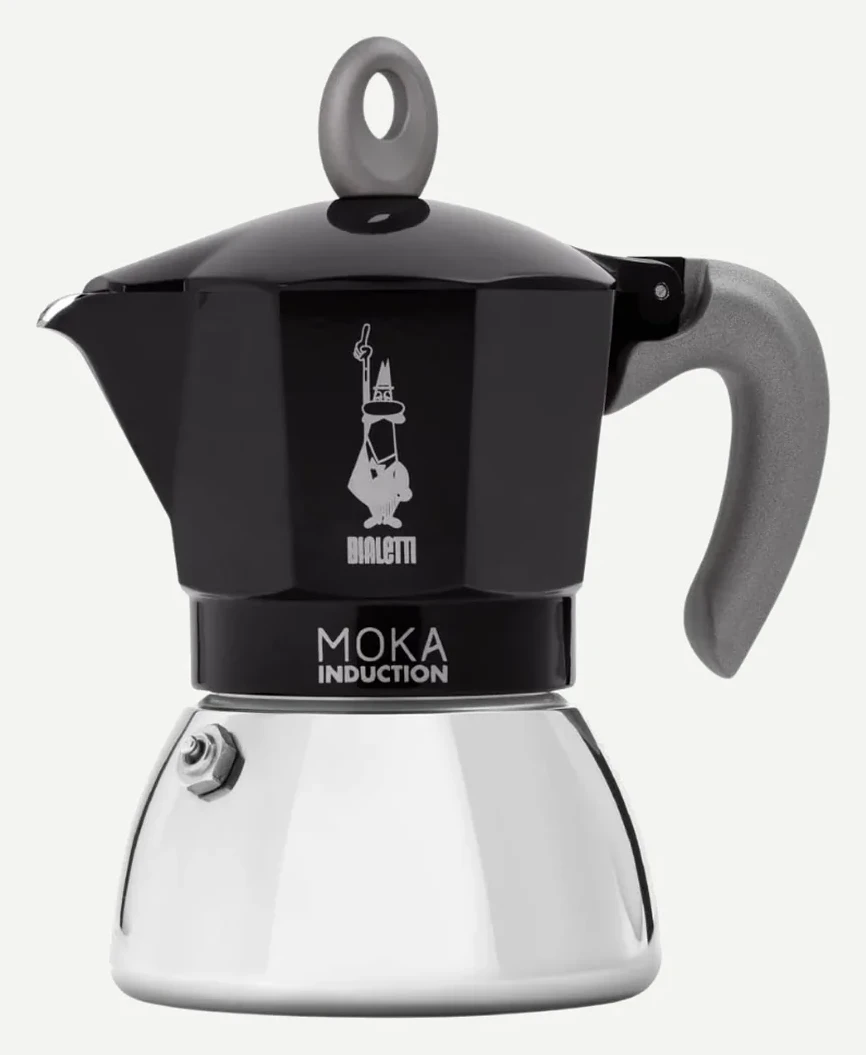
If you want volume, a six-cup Moka Induction or any of the larger pots here will give you it without the crema.
The induction problem, stated plainly
It does not work on induction, and the adaptor is sold separately.
The Brikka is aluminium throughout, and aluminium is non-ferrous, so an induction hob cannot heat it. Bialetti says so on the listing and points at its own adaptor plate.
An adaptor works, and it also slows the temperature response, which matters more here than on an ordinary moka pot because the Brikka depends on pressure building at a particular rate. If your hob is induction, the honest answer is that this is the wrong pot and the Cuisinox Roma or the Moka Induction are the right ones.
Is the Brikka worth it?
Worth it for the crema, and only for the crema.
It costs more than a Moka Express and makes less coffee. What you get is the one thing no other moka pot offers, and for somebody who moved from espresso to moka and misses the head on the cup, that is the whole argument.
Bialetti publishes no warranty term, no gasket material and no safety valve on this listing, which is a thin sheet for a pressurised vessel. The valve is also the part that needs keeping clean; a blocked one turns the Brikka into an ordinary moka pot without telling you.
Who should buy it (and who should not)
Buy it if you drink one or two strong coffees a day on gas or electric.
It suits an espresso drinker without an espresso machine, and campers, since propane stoves are explicitly named. Two shots is one strong cup or the base for a small milk drink.
Do not buy it for induction without accepting the adaptor. Do not buy it to serve guests. And if you like the clean, tea-like moka cup, the valve gives you the opposite of that.
Frequently Asked Questions
Does the Brikka really make crema?
It makes a genuine foam head, produced by a weighted valve that holds pressure back and then releases it. Bialetti's own word is crema-rich rather than espresso, and that is the fair description.
Will the Brikka work on induction?
Not on its own. It is aluminium, which is non-ferrous, and Bialetti sells an adaptor plate separately for induction hobs.
How much coffee does it make?
100ml, which Bialetti rates at two espresso shots.
Why is the Brikka only sold in small sizes?
The valve needs pressure to build quickly enough to lift before the coffee over-extracts, and a larger boiler takes too long to get there.