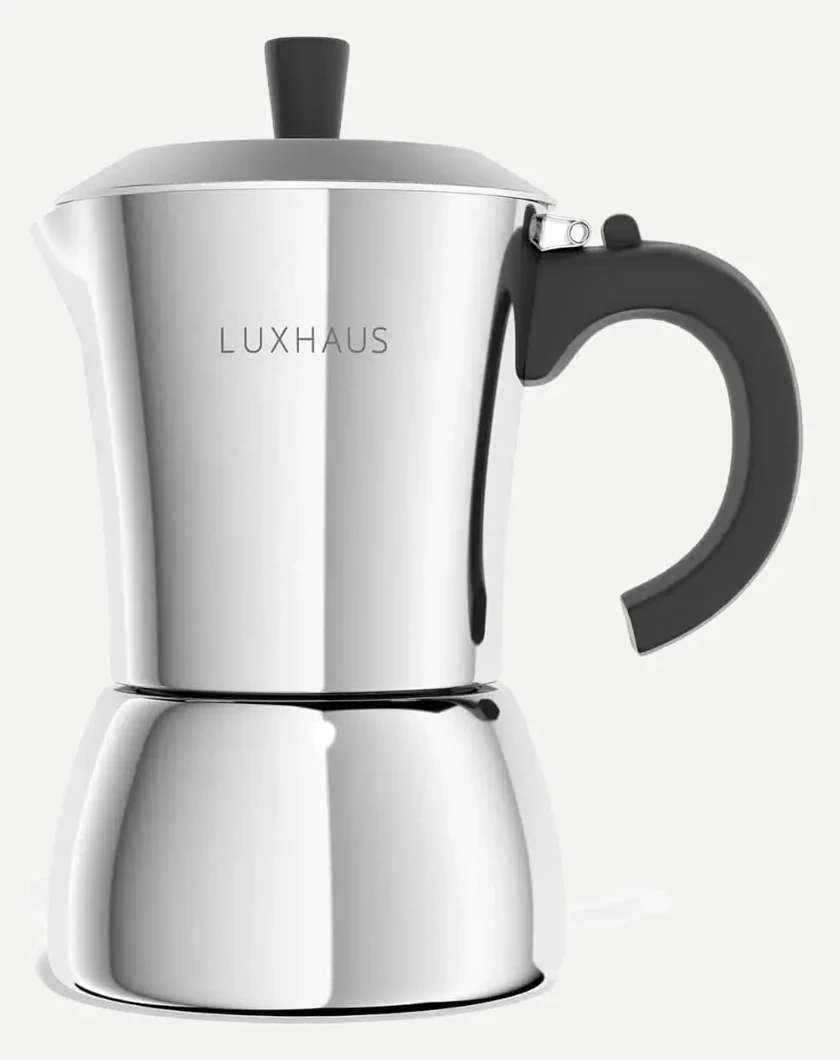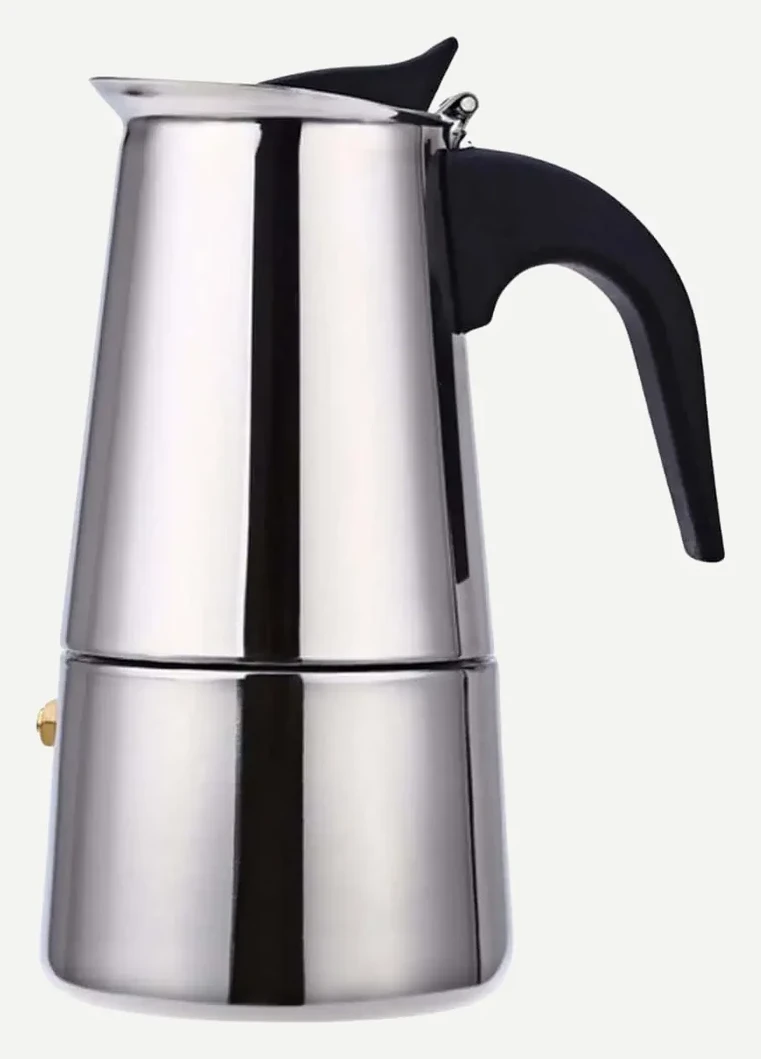
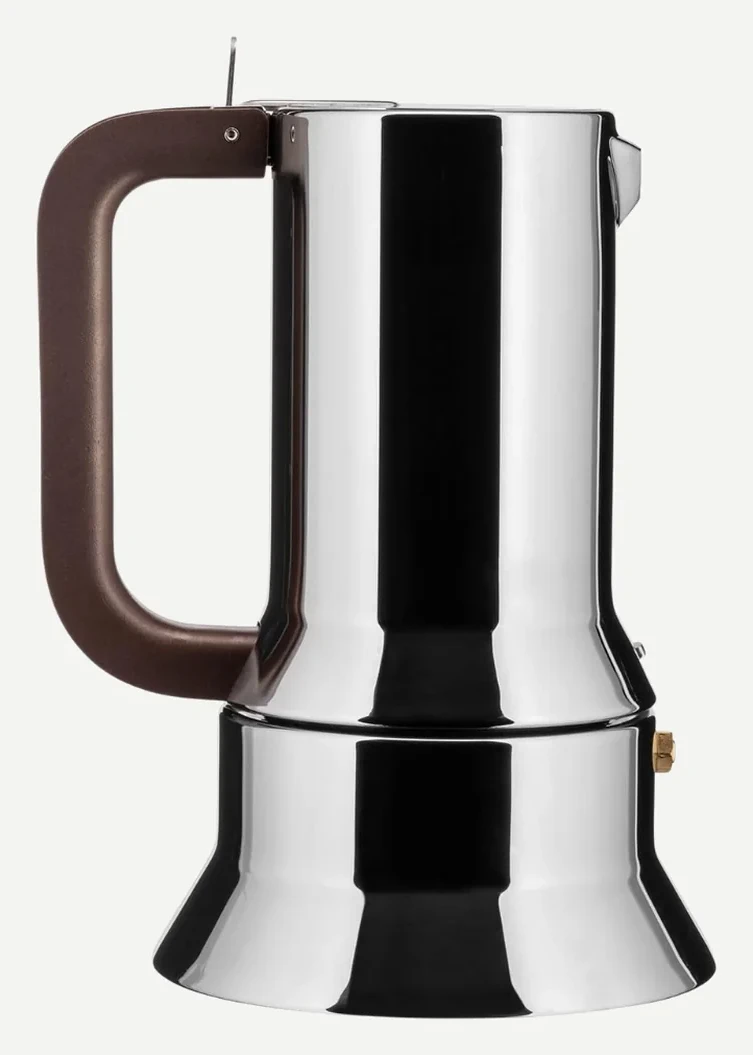
What is the Alessi 9090?
The moka pot that got into design museums, and it is still a working brewer.
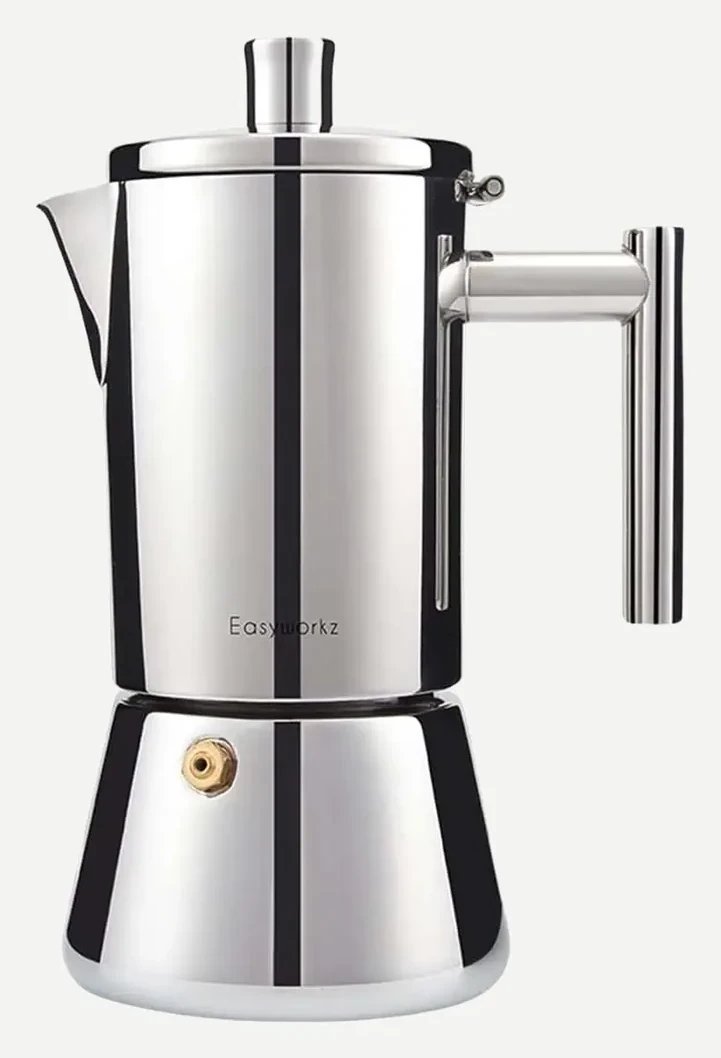
Alessi publishes 18/10 mirror-polished stainless steel construction, a magnetic bottom stated as suitable for induction hobs, a 300ml capacity published as 10.1 fl oz, sizes of 1, 3, 6 and 10 cups, and Richard Sapper as the designer. It measures 4.92 inches across and 8.07 inches tall.
What Sapper actually changed
Alessi quotes him directly: he wanted to give it features that others do not have.
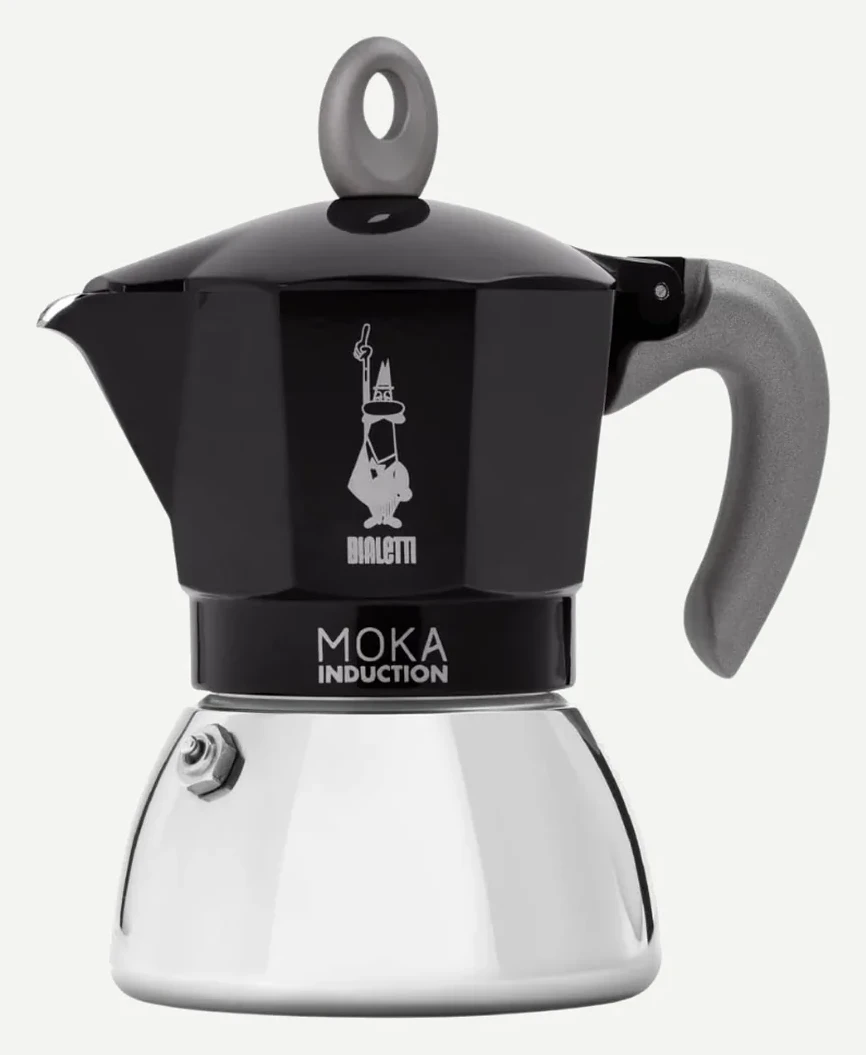
A Bialetti Moka Express is aluminium, octagonal, and screwed together in two halves that you tighten by twisting the whole pot. It is a brilliant object and it has two everyday annoyances: the aluminium reacts and stains over years, and the join is fiddly to open with wet hands.
The 9090 answers both. Stainless steel does not react with coffee or corrode, so the pot looks the same in year twenty. The join uses a lever mechanism rather than a plain screw thread, which is the part people notice daily and nobody photographs.
The third thing is the base. Steel is ferrous and aluminium is not, so this works on an induction hob and a classic Bialetti does not without a converter plate. In a modern kitchen that is not a design detail, it is whether the pot works at all.
Steel changes the coffee, not just the object
It heats more slowly and holds temperature better, which suits the way moka works.
Moka coffee is made by pressure from steam pushing water up through the grounds. Heat too hard and the water arrives fast and hot, extracting harshly and giving the burnt taste people blame on the coffee. The traditional advice is a low flame and a pot taken off the heat the moment it starts to gurgle.
Steel has more thermal mass than thin aluminium, so it climbs more gently and is more forgiving of a hob left slightly too high. It also stays hot after you take it off, so decant rather than leaving it on the stove.
Alessi 9090 vs Cuisinox Roma
Two stainless induction-capable pots, and the split is price against design.
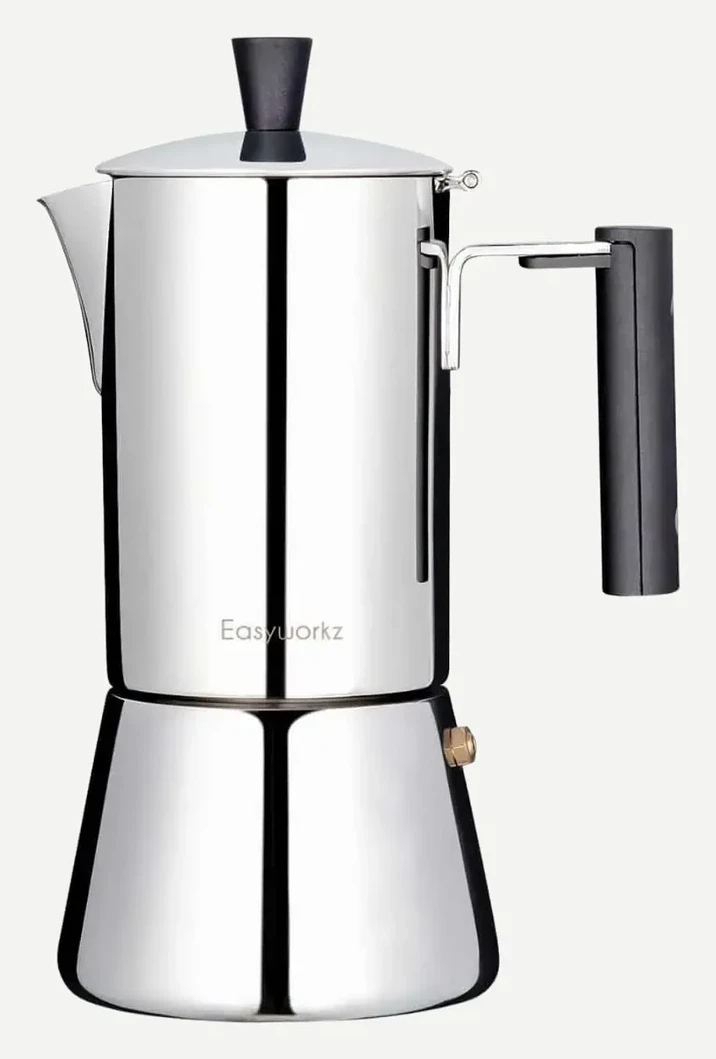
The Cuisinox Roma is stainless, induction capable, and costs a fraction as much. On the coffee alone there is very little in it.
The 9090 buys the Sapper design, the lever join and a mirror finish that stays. That is a legitimate thing to buy and it is not a coffee argument, which is worth saying plainly rather than dressing up.
Is the Alessi 9090 worth it?
Worth it if you want an object. On brewing alone, no.
It is one of the most expensive moka pots made and it brews the same drink as a pot costing a tenth as much. What you get is materials that outlast aluminium, induction compatibility, and a design that has been in production since 1979.
Alessi publishes no gasket material, no warranty term, no weight and no dishwasher guidance on this listing. Gaskets are a wear part on every moka pot, so check availability for the size you buy before committing.
Who should buy it (and who should not)
Buy it for an induction kitchen where the pot lives on the hob and gets looked at.
It suits somebody replacing a stained aluminium pot, cooking on induction, and willing to pay for something that will still look right in a decade.
Do not buy it expecting better coffee than a Moka Express, because it is the same method. And do not buy it if you want the anti-bitter engineering, which is what the Pulcina is for.
Frequently Asked Questions
Does the Alessi 9090 work on induction?
Yes. It has a magnetic bottom and Alessi states it is suitable for induction hobs, which most aluminium moka pots are not.
Who designed it?
Richard Sapper, in 1979.
How much coffee does the 6 cup make?
300ml, about 10 fl oz, in six small Italian cups rather than six mugs.
Is stainless better than aluminium for a moka pot?
It does not react or stain, works on induction, and heats more gently. The coffee itself is the same method.
What sizes does it come in?
1, 3, 6 and 10 cups.