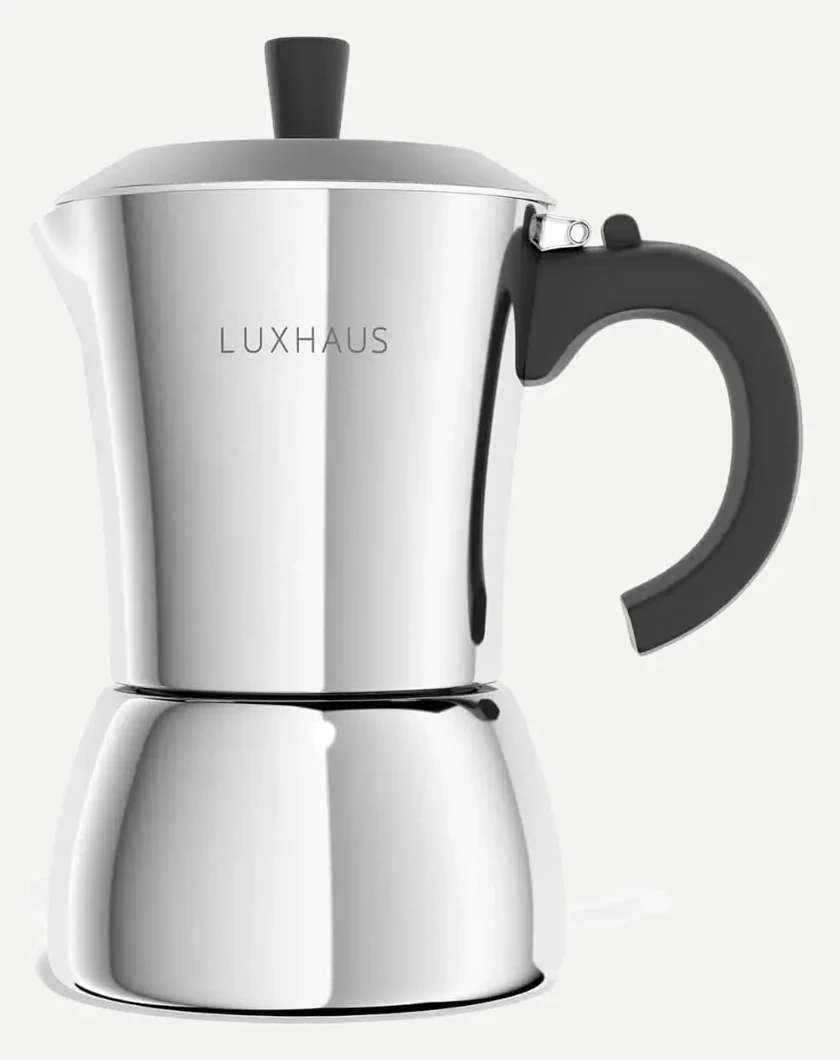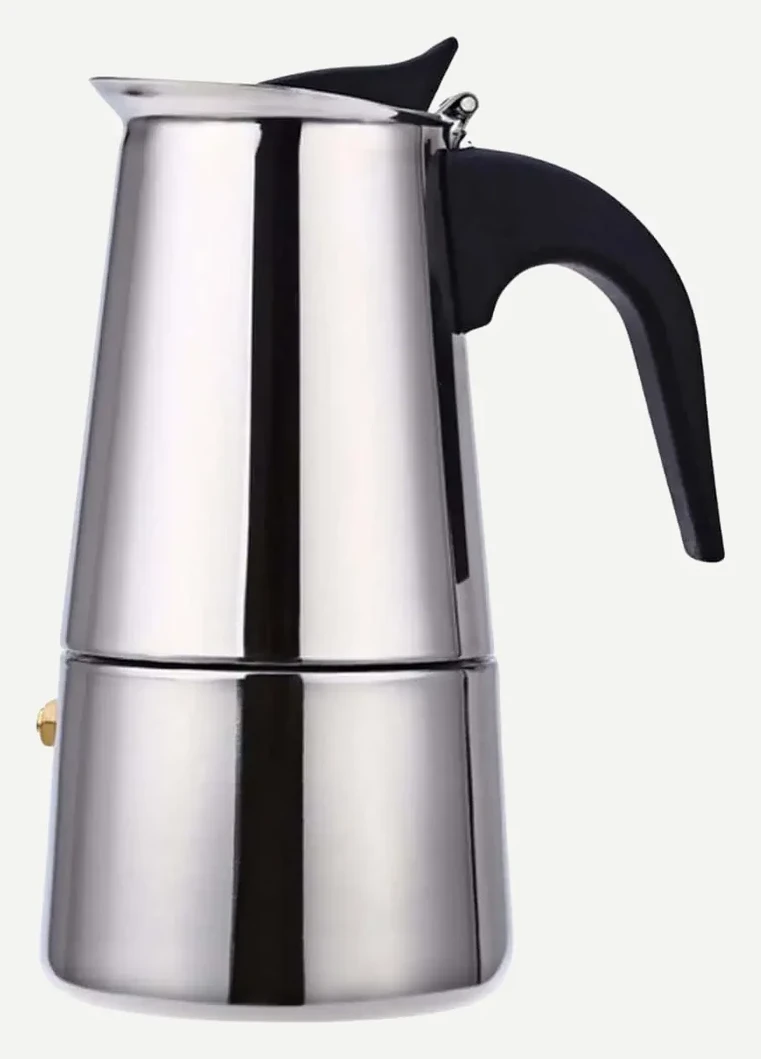
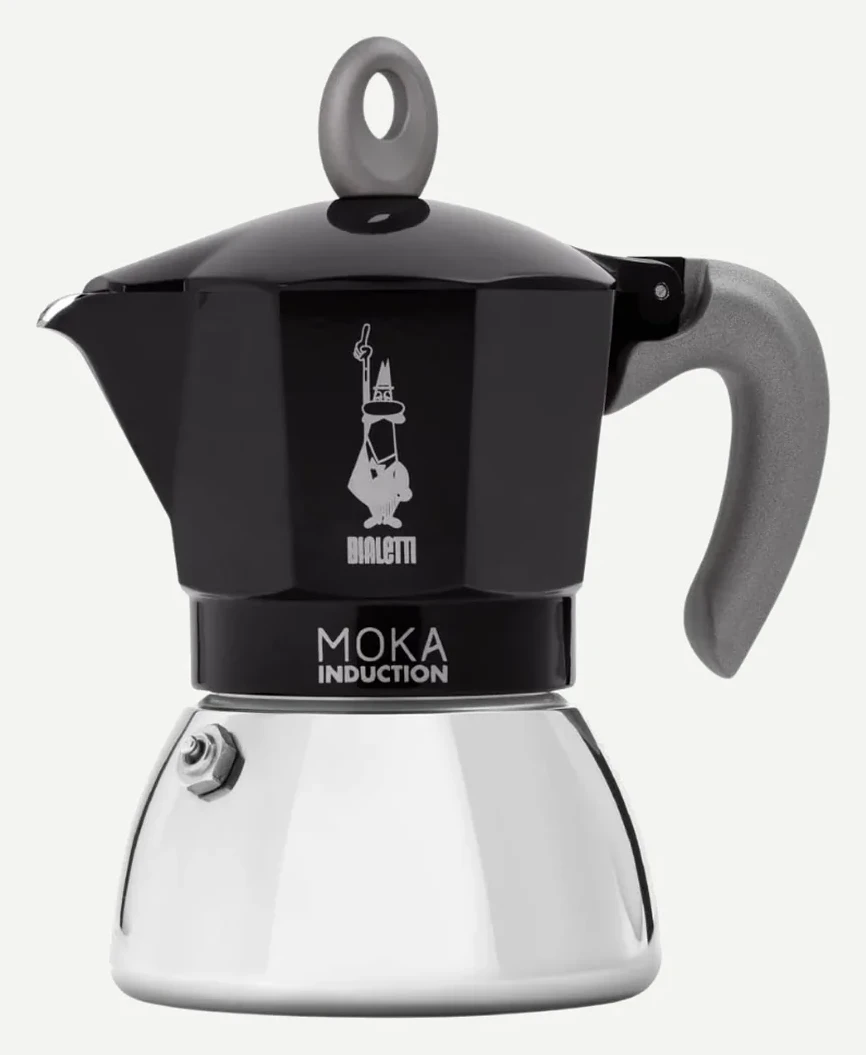
What is the Bialetti Moka Induction?
The Moka Express with the one change that makes it work on a modern hob.
Bialetti publishes an aluminium upper chamber, the same material as the classic Moka Express, on a stainless steel boiler; a 280ml capacity rated at six espresso cups; suitability for all hob types including induction; manufacture in Europe; and the instruction to fill the boiler up to the safety valve.
Why a moka pot cannot normally do induction
Aluminium is non-ferrous, and induction needs iron.
An induction hob works by inducing an electrical current in the base of the pan, which then heats itself. That only happens in a ferrous metal. Aluminium is not ferrous, so a classic Moka Express sits on an induction hob and nothing at all happens.
That is why induction kitchens have been buying adaptor plates, which work but add a slab of steel between the flame and the pot and blunt the control that makes a moka pot good. Bialetti's answer is to make the boiler, the half that touches the hob, out of stainless steel and keep aluminium where it always was.
Aluminium in the upper chamber matters because it is what the classic pot is made of, and moka drinkers are conservative about that for good reason: the metal is part of how the pot behaves and how the coffee tastes to people who grew up with it.
Six cups, in the Italian sense
280ml across six cups is about 47ml each, and that is correct.
Moka pots are sized in espresso cups, not mugs. Six cups is roughly a small jug for a table rather than six mugs of coffee, and it is the size most Italian households own.
It is worth knowing before ordering, because a six-cup moka pot bought expecting six mugs is a disappointment that gets blamed on the pot. Our Moka and Stovetop listings all use the maker's own cup figures for exactly that reason.
Moka Induction vs Bialetti Moka Express
Same coffee, and one of them works on your hob.
The Moka Express is the original and the cheaper of the two, in aluminium throughout. On gas it is the reference and there is no reason to spend more.
The Induction costs more and is the only choice if your hob is induction. If you are not sure, put a magnet on the hob-side of any pot you own: if it sticks, induction will heat it.
Is the Moka Induction worth it?
Worth it if you have induction. Pointless if you have gas.
It is priced above the Moka Express by a real margin, and the entire premium is the stainless boiler. On gas that buys you nothing at all.
Against generic induction-capable moka pots it costs more again, and what that buys is Bialetti's manufacture in Europe and the gasket and filter plate being available for decades. Bialetti publishes no warranty term on this listing.
Who should buy it (and who should not)
Buy it if your hob is induction and you want the real thing.
It suits a modern kitchen, and anybody who has been using an adaptor plate and disliked the lag it introduces. Six espresso cups is the right size for a household rather than an individual.
Do not buy it for a gas hob, where the Moka Express does the same job for less. And note the upper chamber is still aluminium, so it is a hand-wash pot like every other moka.
Frequently Asked Questions
Does the Bialetti Moka Induction really work on induction?
Yes. The boiler, which is the part touching the hob, is stainless steel rather than aluminium, and stainless is ferrous enough for an induction field to act on.
How many cups is six cups?
280ml in total, so about 47ml per espresso cup. It is a jug for a table, not six mugs.
Is it the same as a Moka Express?
The upper chamber is the same aluminium. The boiler is stainless steel, which is the whole difference and the whole reason for the price.
Can I put it in the dishwasher?
No. Aluminium moka pots are hand-wash items, and the aluminium upper chamber here is no exception.