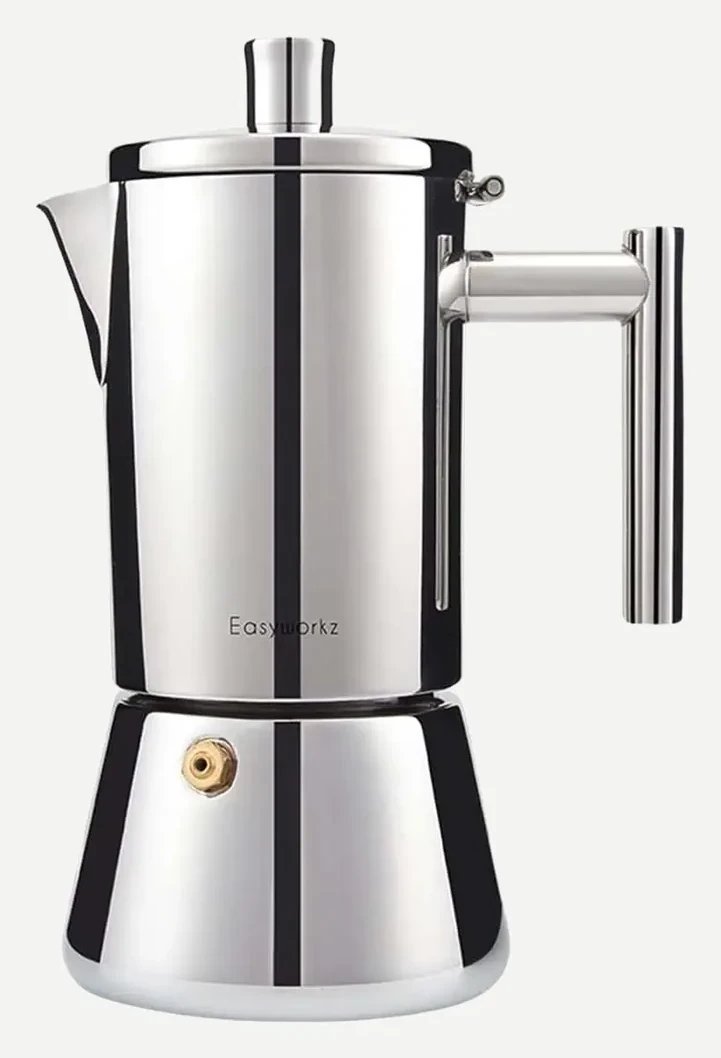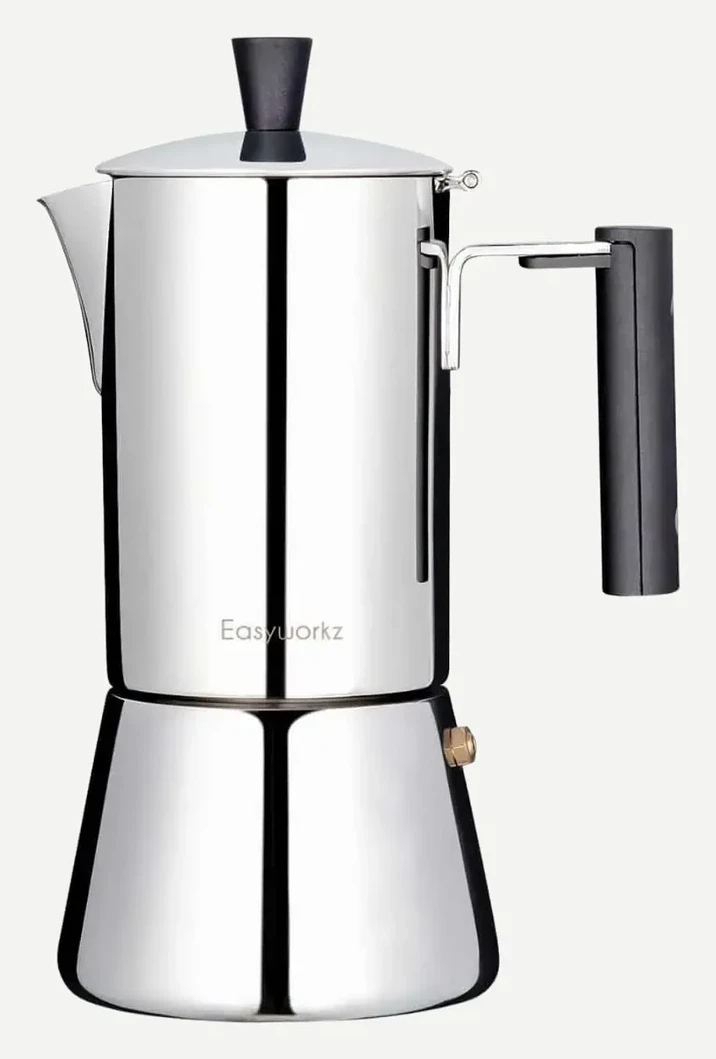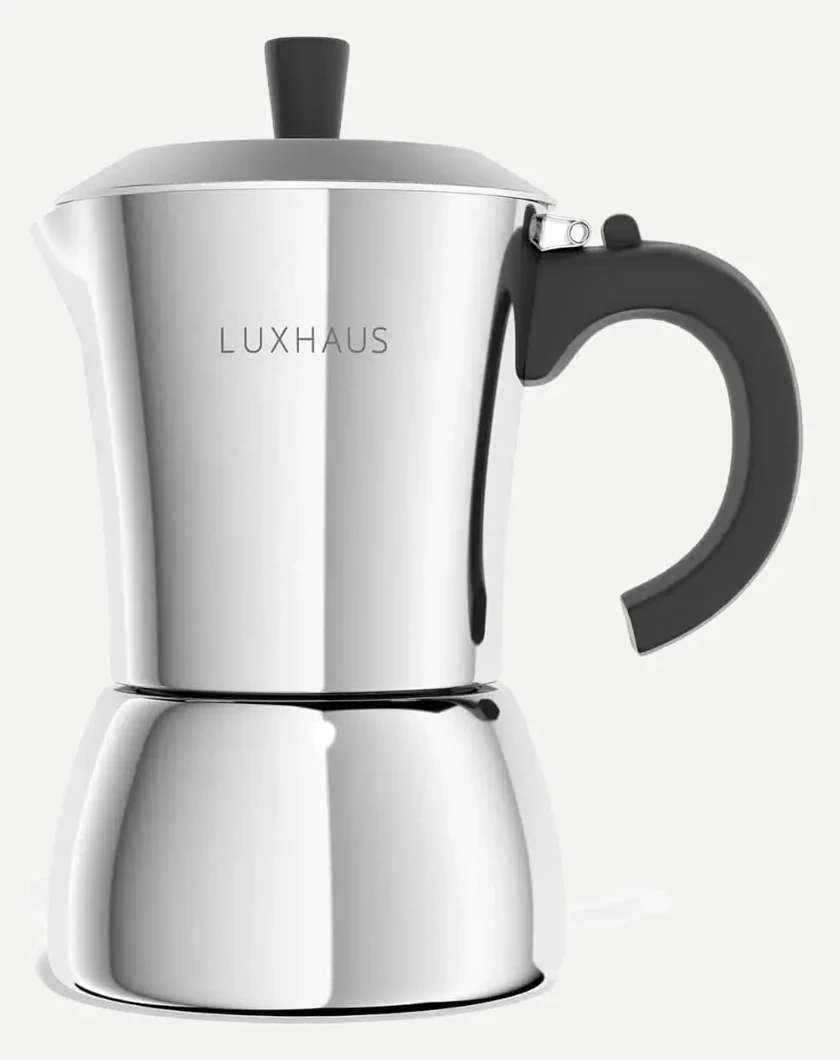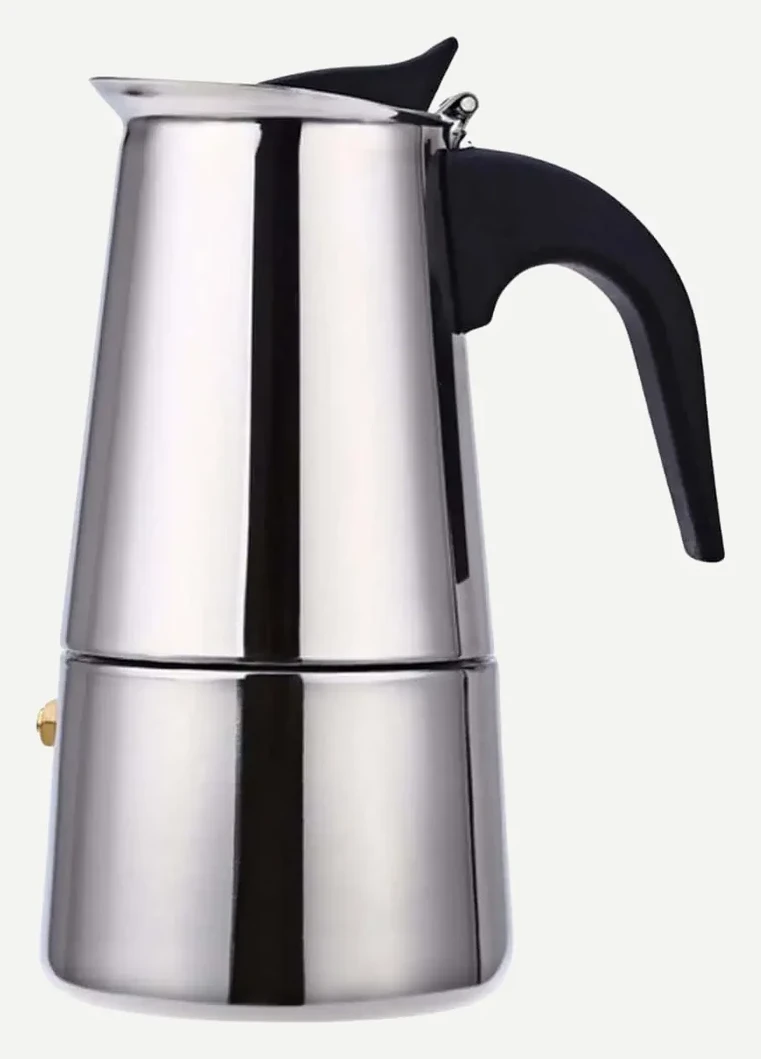
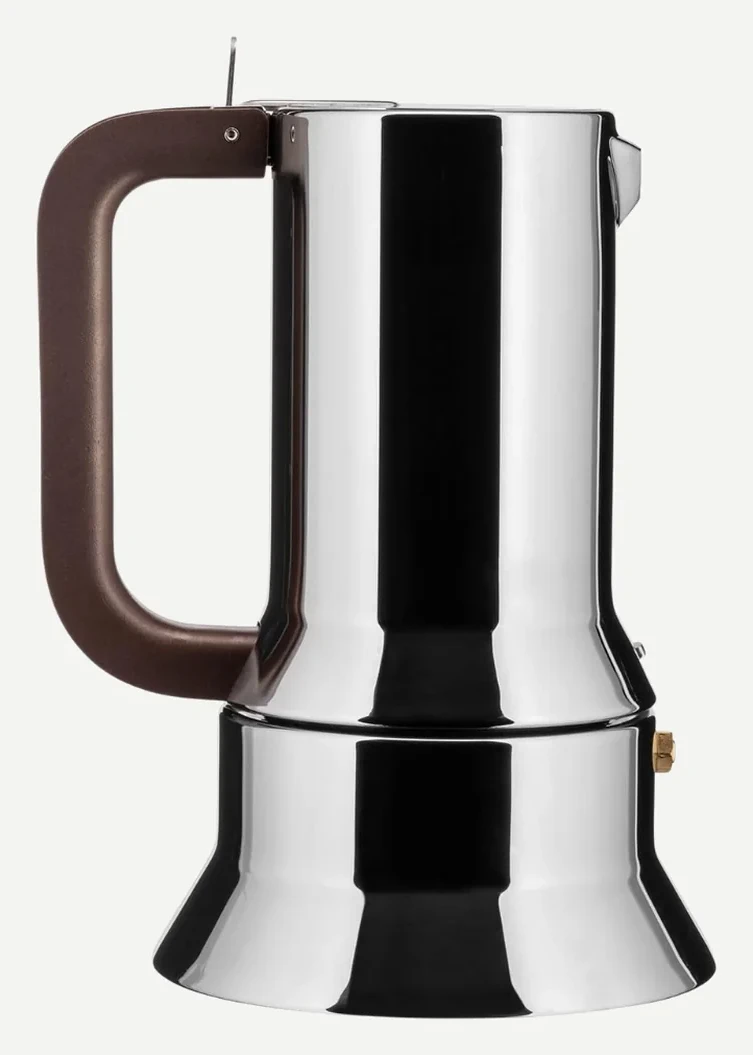
What is the Cuisinox Roma?
A moka pot made entirely of the metal most moka pots avoid.
Cuisinox publishes 18/10 stainless steel construction described as heat resistant and non-reactive, a four-cup capacity, compatibility with gas, electric and induction hobs, easy cleaning, and dimensions of 89 by 89 by 178mm.
Stainless against aluminium, honestly
Two real advantages and one real disadvantage, and the disadvantage is heat.
Aluminium is reactive. Over years it develops a patina inside that many moka drinkers consider seasoning and others consider a problem, and it will pit if washed with detergent or put in a dishwasher. Stainless does neither: it stays inert, takes soap, and will not corrode.
Stainless is also ferrous, which is why this works on induction where a classic aluminium pot cannot.
What it gives up is conductivity. Aluminium moves heat about three times better than stainless, so an aluminium pot heats faster and more evenly across its base. A stainless moka pot wants a lower flame and a little more patience, and on a burner that is too wide it will scorch a ring. That is not a fault; it is a property to cook around.
Non-reactive, and why that phrase is on the listing
Coffee is acidic, and aluminium is not indifferent to acid.
Cuisinox publishes the pot as non-reactive, which is a real distinction rather than marketing. Whether trace aluminium matters is a question this site is not going to answer, and the honest position is that a stainless pot removes it from consideration entirely.
For most people the practical version of that is simpler: a stainless pot can be scrubbed and a stainless pot can be left wet, and an aluminium one really cannot.
Cuisinox Roma vs Bialetti Moka Induction
Both work on induction, and they get there differently.
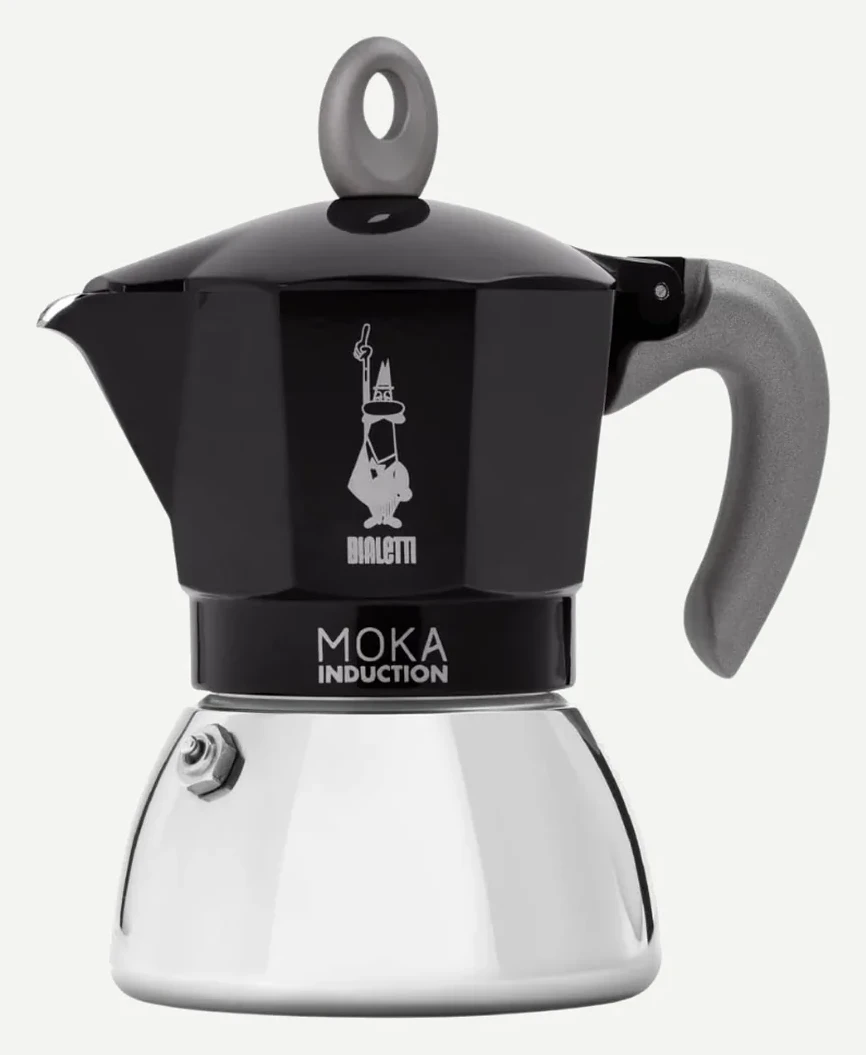
The Bialetti Moka Induction keeps the traditional aluminium upper chamber and makes only the boiler stainless, which preserves the classic behaviour and the classic look. It holds six cups to this pot's four.
The Cuisinox is stainless throughout, so it is dishwasher-friendly in a way no Bialetti is, and it is a heavier, more solid object. If tradition matters, the Bialetti. If longevity and cleaning matter, this.
Is the Cuisinox Roma worth it?
Worth it as a buy-once pot, and it is priced that way.
It costs well above the aluminium field and what that buys is a pot that will not corrode, pit or react, on any hob you are likely to own. Cuisinox has a long reputation for exactly this kind of stainless cookware.
What is not published on this listing is a warranty term, a safety valve, a gasket material or whether replacement gaskets are sold. Gaskets are the part of a moka pot that actually wears out, so their absence from the page is the gap worth noting.
Who should buy it (and who should not)
Buy it if you want one moka pot for the next twenty years.
It suits induction kitchens, anybody who has corroded an aluminium pot, and people who want to wash a moka pot properly rather than rinse it. Four cups is right for one or two drinkers.
Do not buy it if you want the fastest, most even heat, which is aluminium's and always will be. And if you are new to moka brewing, learn on a cheap Moka Express first, because the technique transfers and the mistakes are cheaper.
Frequently Asked Questions
Does the Cuisinox Roma work on induction?
Yes. Cuisinox publishes gas, electric and induction compatibility, which stainless steel allows and aluminium does not.
Is stainless better than aluminium for a moka pot?
It is more durable, non-reactive and dishwasher-friendly. Aluminium conducts heat about three times better, so it heats faster and more evenly. Neither is simply better.
How many cups does it make?
Four, in espresso cups rather than mugs.
Are replacement gaskets available?
Cuisinox does not publish that on this listing, so we have not recorded it. Gaskets are the part that wears out, so it is worth checking before buying.