What is the Jura E8 (NAC)?
A bean-to-cup machine that makes seventeen drinks at one touch and cleans its own milk system.
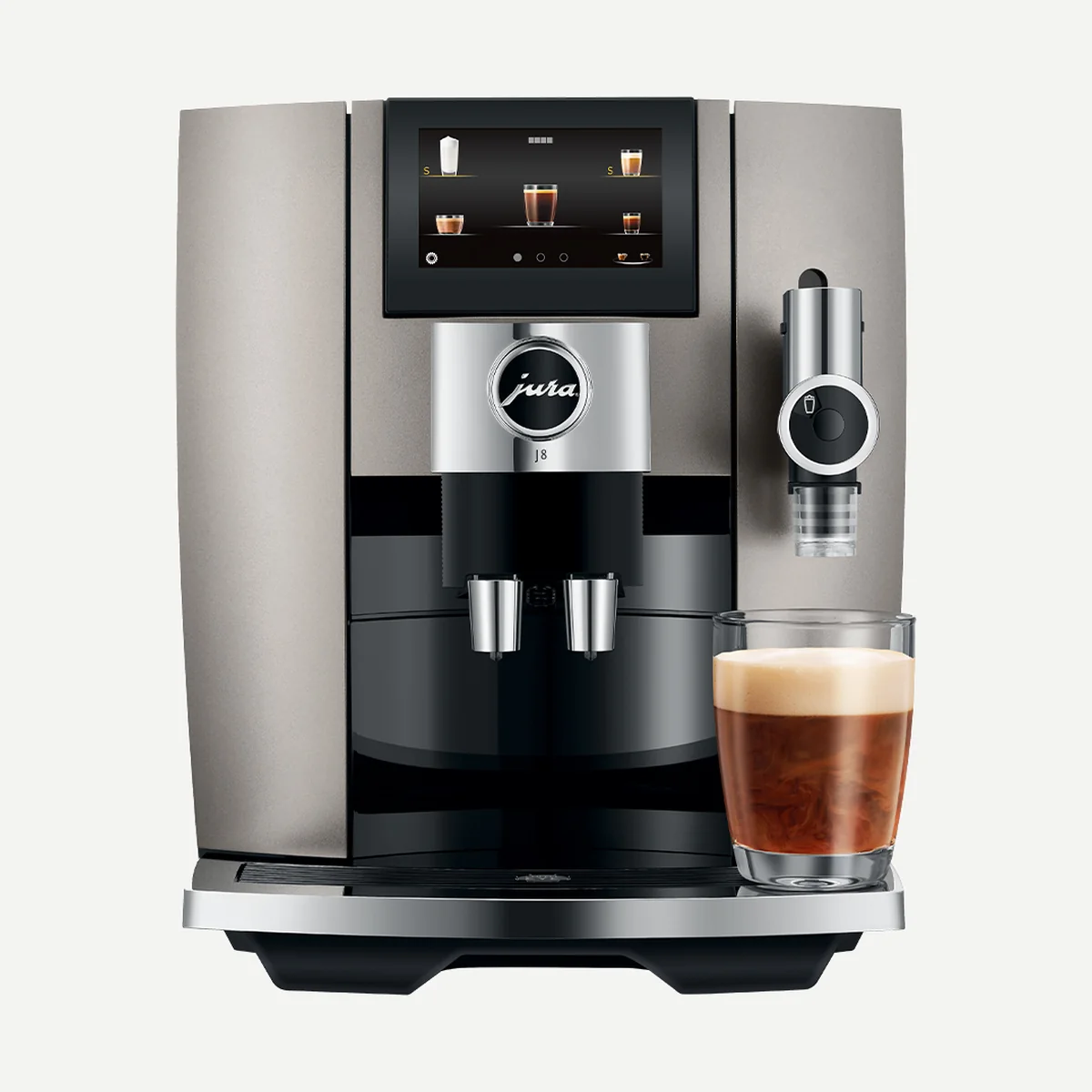
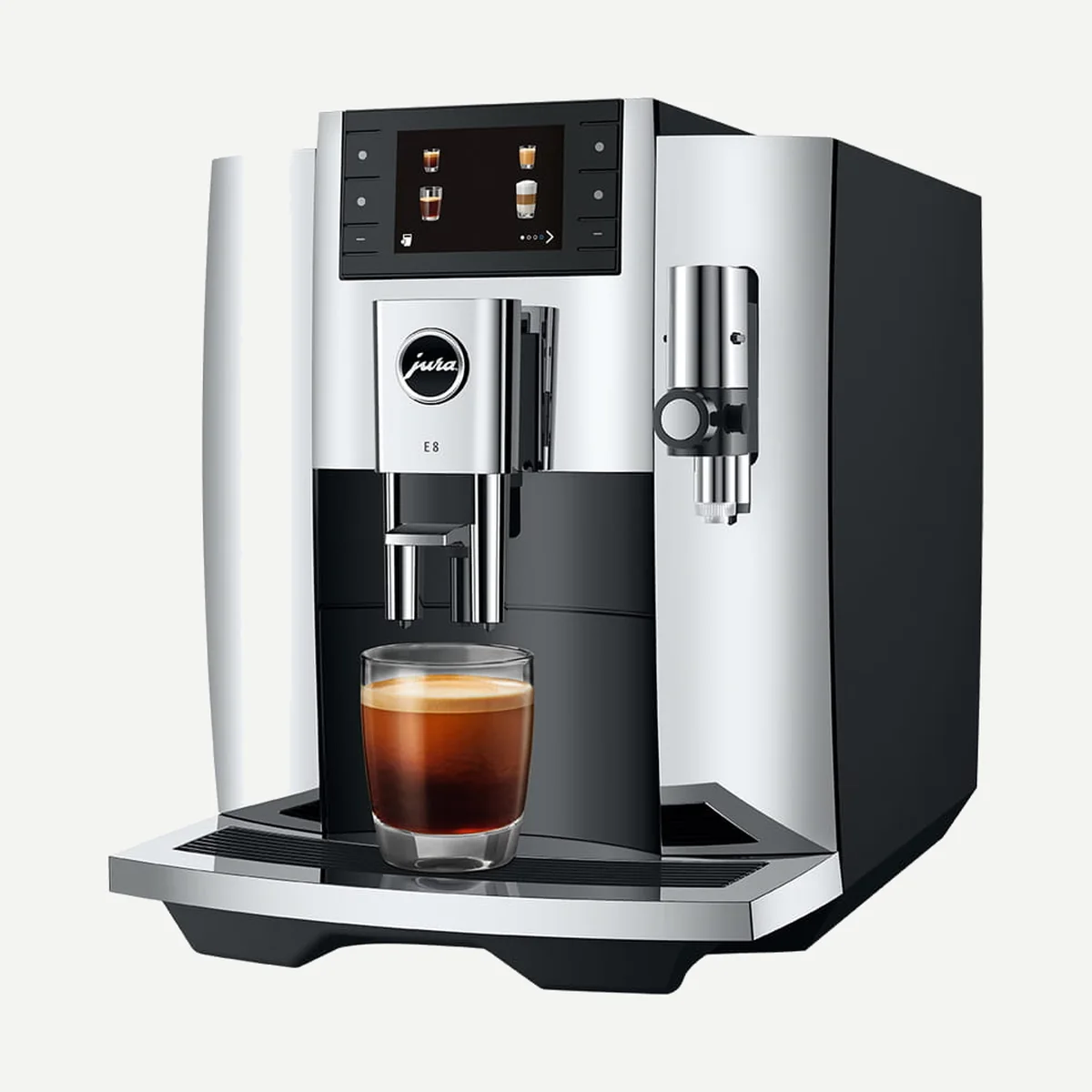
The Jura E8 grinds beans, brews and froths milk automatically. Jura lists 17 specialities for this version, including 2 x espresso, 2 x coffee, americano, lungo, espresso doppio, cortado, cappuccino, flat white and latte macchiato, several of them with an extra-shot option. It uses Jura's P.A.G.2 grinder, a 15 bar pump and an interchangeable HP3 / CX3 milk spout, and it is made in Portugal.
Jura has updated the E8 several times, and different listings show different drink counts. This review covers the NAC version with 17 specialities on Jura's US site. It is based on what Jura and an authorised dealer publish, not a hands-on test.
The drinks and the milk system
The appeal of the E8 is range without effort. Choosing a flat white or a latte macchiato is one button, and 10 strength levels let you make any of them stronger or milder without touching the grind. Two espressos or two coffees can be made at once, which matters in the morning.
Milk is drawn through the spout and frothed automatically, and the milk system is cleaned at a touch. That last point is more important than it sounds: milk residue left in a bean-to-cup machine is the main reason they end up tasting stale, and a machine that makes cleaning a single button press is one that gets cleaned. How different milks behave when frothed is covered in milk alternatives in coffee.
The grinder and the brew
The P.A.G.2 grinder offers 7 grind levels, and an authorised dealer describes the burrs as conical stainless steel. Seven steps is a modest range compared with a standalone grinder, but a bean-to-cup machine is designed to be set once and left alone, and the strength setting does most of the day-to-day adjustment.
The powder chute is a small feature with a practical use: you can make a single decaf or try a different coffee with pre-ground beans while your usual beans stay in the hopper.
Living with it
- Capacity. A 280 g bean container and a 1.9 l water tank. Fine for one or two people; a larger household will refill often.
- Cup clearance. 65 to 111 mm under the spout. Measure your tallest glasses before buying.
- Water. The CLEARYL Smart+ filter carries an RFID chip, so the machine knows when to ask for a new one, and integrated rinsing, cleaning and descaling programmes handle the rest.
- Size. 280 x 351 x 446 mm and 10 kg, a solid but not unusual footprint for the category.
- Power. 1450 W.
What it costs to run
The purchase price is not the whole cost of a bean-to-cup machine. The E8 is built around consumables: CLEARYL Smart+ water filters that the machine asks you to replace when their capacity is used, and the cleaning products its cleaning, descaling and milk system programmes are designed to run with. None of these is unusual for the category, and using them is what keeps a machine like this working well for years, but they are an ongoing expense to budget alongside beans and milk. Skipping them to save money is the most common way a bean-to-cup machine ends up making worse coffee and needing a repair.
Jura E8 vs Philips 4300 LatteGo
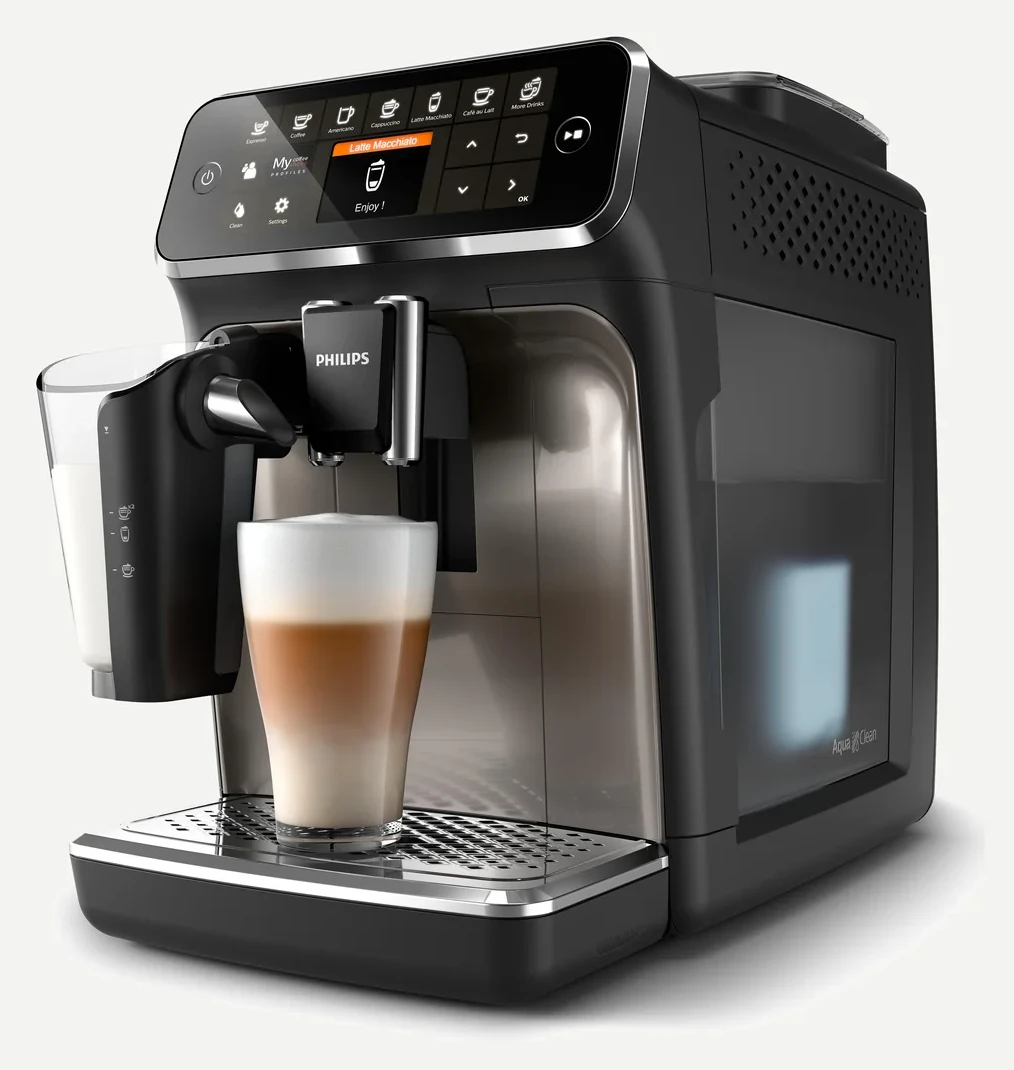
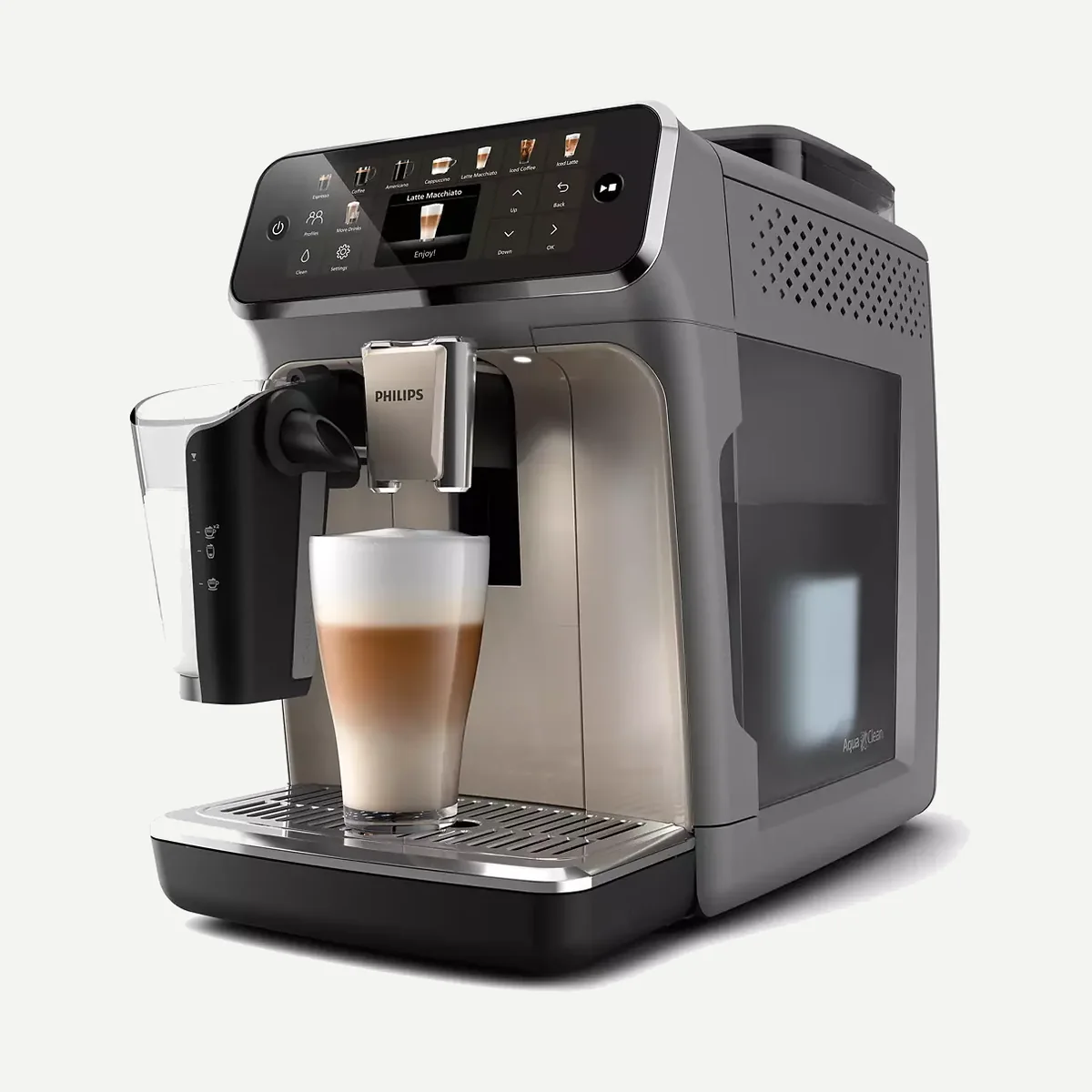
The Philips 4300 LatteGo is the machine most E8 shoppers should look at first, at $999 on this site and one of the best-scoring bean-to-cup machines we cover. It also makes espresso and milk drinks automatically, using a simple milk carafe with no tubes that rinses under the tap.
The E8 offers more specialities, finer strength control, the RFID water filter, the powder chute and Jura's build. Whether that is worth roughly $1,600 more depends on how much of the menu you will use. If you drink the same two drinks every day, the Philips does that for far less. If a household of different tastes will use the whole range, the E8's extra control starts to earn its price. For comparison, the Jura E4 gives you Jura's grinder and build without any milk system at all.
Is the Jura E8 worth it?
At $2,599.00 the E8 is expensive for what the specification sheet lists, and it would be hard to justify on features alone against cheaper bean-to-cup machines. What the premium buys is Jura's system: the automatic milk cleaning, the smart water filter and a machine designed to be used for years with minimal attention.
It is worth it for a household that wants a wide range of drinks, values low-effort cleaning and is willing to pay for a machine made in Portugal. It is poor value for someone who mainly drinks black coffee or one milk drink, where the Jura E4 or the Philips 4300 LatteGo cover the need for much less.
Who should buy the Jura E8 (and who should not)
Buy it if
- Several people with different tastes will use the full drink menu.
- You want milk drinks without ever cleaning a steam wand or carafe by hand.
- You want a decaf option without switching beans.
Skip it if
- You drink one or two drinks and want the best value; look at the Philips 4300 LatteGo, or the JURA E6 for the cheapest JURA that still makes milk drinks.
- Your latte glasses are taller than 111 mm.
- You want Cold Brew and Light Brew drinks at one touch, which the Jura Z10 adds.
- You want to control espresso by hand, where a machine like the Breville Oracle Jet or a semi-automatic suits better.
Frequently Asked Questions
Does the Jura E8 have a milk frother?
Yes. It froths milk automatically through an interchangeable HP3 / CX3 milk spout, and cleans the milk system at one touch.
How many drinks can the Jura E8 make?
The NAC version on Jura's US site lists 17 specialities. Other E8 generations list different numbers, so check the model you are buying.
Can you use pre-ground coffee in the Jura E8?
Yes. It has a powder chute for ground coffee, which is useful for decaf.
What is the cup clearance on the Jura E8?
65 to 111 mm, according to Jura.
Where is the Jura E8 made?
Jura states it is made in Portugal.