What is the JavaPresse Manual Coffee Grinder?
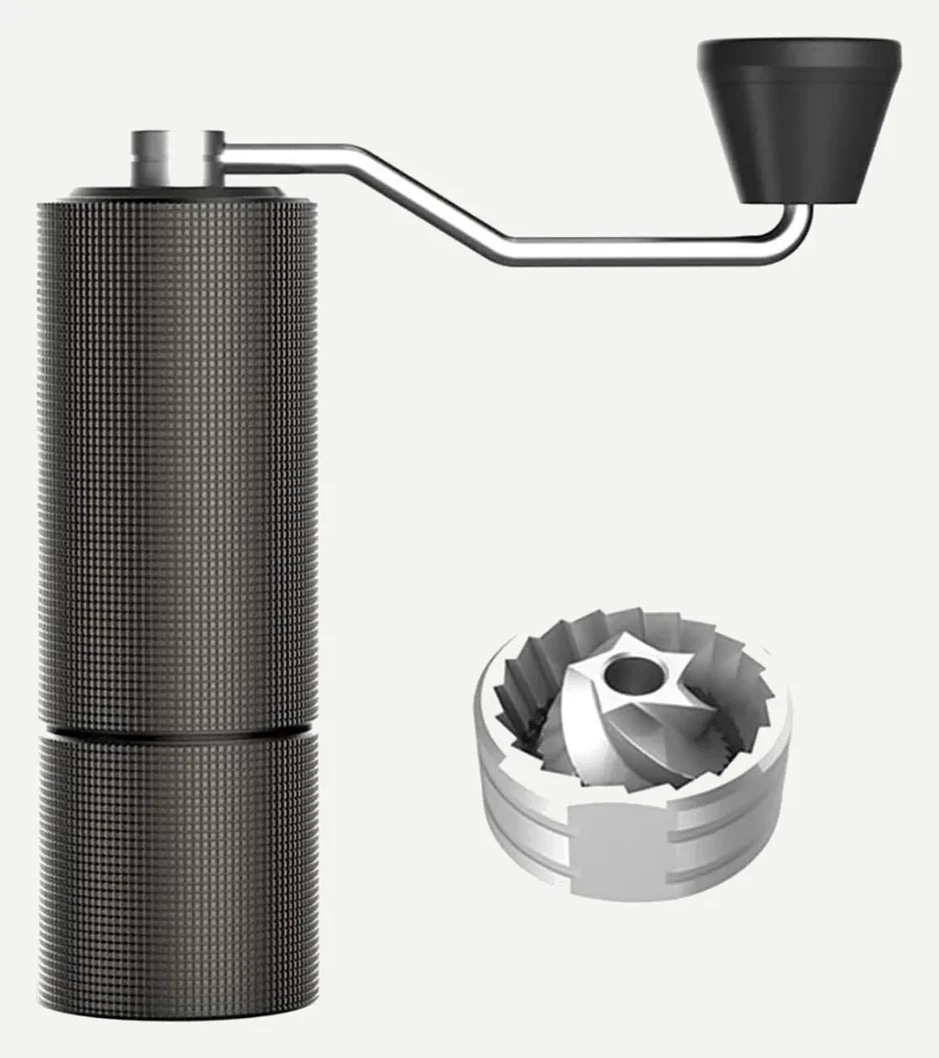
The JavaPresse is a $39.99 manual coffee grinder with conical ceramic burrs, more than 15 settings, and a stainless steel body.
Its grind range is specified for both espresso and French press, giving buyers two clearly identified endpoints. The drive is entirely manual, so it does not use a motor and does not depend on electrical power for operation.
The grinder has a listed weight of 0.29 kg and comes with six months of warranty coverage. Its combination of manual drive, ceramic burrs, stainless steel construction, and a sub $40 price defines its position in the category.
JavaPresse Manual Coffee Grinder grind consistency: how even is it?
The grind consistency case rests on conical ceramic burrs, but the construction specification does not establish how even the resulting particles are.
Conical geometry and ceramic material identify the burr system rather than leaving the grinding mechanism ambiguous. Those are useful construction facts for buyers comparing grinders, but they do not quantify particle distribution at any setting.
Conical geometry and ceramic material do not measure consistency for espresso or French press grinds. Buyers can judge the burr type and material directly, while conclusions about fines, boulders, or repeatability would require evidence beyond those construction details.
- The grinding mechanism uses conical burrs rather than an unspecified cutting system.
- Ceramic is the stated burr material, while stainless steel refers to the body.
- No particle distribution measurements support a stronger claim about grind uniformity.
- Espresso and French press capability describe range, not consistency at either endpoint.
What you can brew with it
The JavaPresse is specified to grind for espresso and French press, with more than 15 settings spanning those stated brewing endpoints.
The stated adjustment range reaches fine enough for espresso and coarse enough for French press. More than 15 settings provide multiple positions between those endpoints, which is enough to move between filter and press without landing between two usable grinds.
That range makes it relevant to buyers who alternate between the two named brewing methods. It does not establish results for other methods, and it offers no detail about step size or how settings correspond to particular recipes.
- Espresso is explicitly included in the grinder's stated capability.
- French press is explicitly included at the coarse end of the stated range.
- More than 15 settings provide adjustment between the two named endpoints.
- Other brewing methods are not needed to establish its documented espresso and French press range.
Living with it, day to day
Daily use is fully manual, with hand grinding for every dose and stainless steel construction as the main detail relevant to mess.
There is no motor, timer, or powered dosing stage in the stated workflow. Buyers supply all grinding effort manually, which removes dependence on an outlet but also rules out automatic operation for repeated daily doses.
The stainless steel body is the only specified factor connected with static cling. It would be unsafe to infer low retention, limited mess, or simple cleaning from that material alone, so buyers should base expectations on the manual workflow rather than assumed cleanup performance.
- Inspect the burr area for retained grounds rather than assuming the stainless steel body prevents retention.
- Use a cleaning method compatible with ceramic burrs and a stainless steel body.
- Address static related mess as it appears because body material does not establish its severity.
- Include the manual drive components when checking the grinder's routine condition during upkeep.
JavaPresse Manual Coffee Grinder vs Hario Skerton Pro Ceramic Coffee Mill
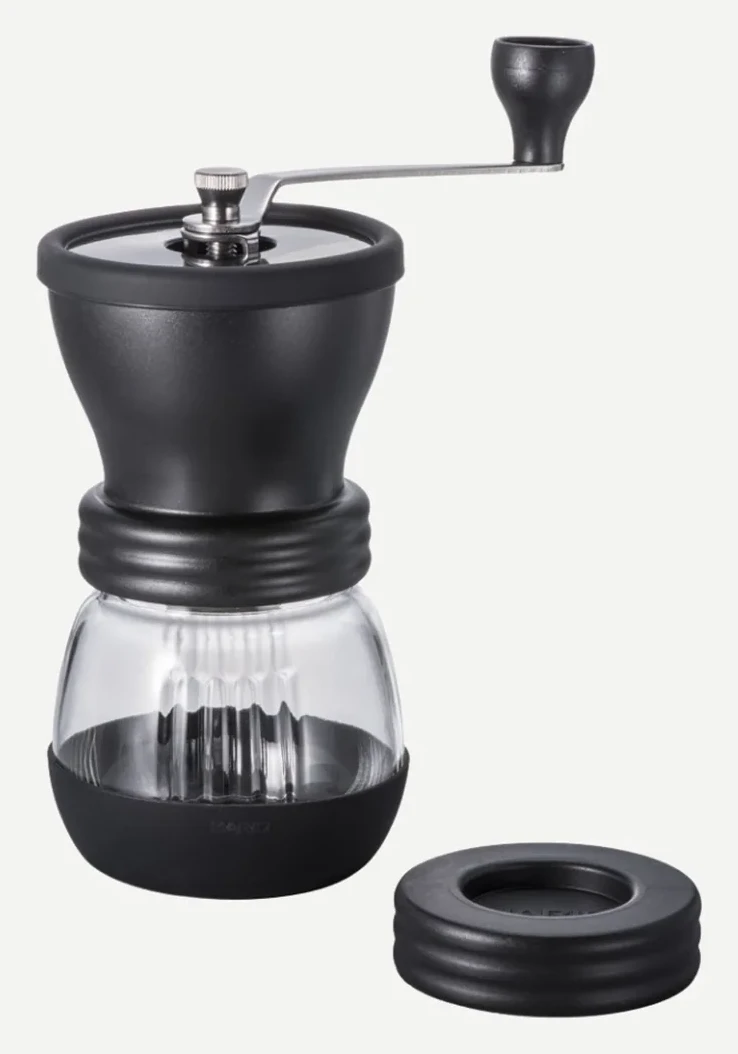
The JavaPresse costs less and weighs less, while Hario lists a 100 gram hopper and a broader set of included components.
Both are manual grinders with conical ceramic burrs, and both are specified for espresso and French press. JavaPresse is listed at $39.99 and 0.29 kg, compared with Hario at $51 and 0.649 kg, giving JavaPresse clear price and weight advantages.
Hario provides a documented 100 gram hopper, dimensions, manufacturing locations, and an accessory list covering its detachable stainless steel handle, glass bowl, hopper lid, and non slip cover. Choose JavaPresse for the lower price and listed weight, or Hario when documented capacity and included components matter more.
- JavaPresse wins on listed price, costing $39.99 compared with Hario at $51.
- JavaPresse wins on listed weight at 0.29 kg versus Hario at 0.649 kg.
- Hario wins on documented capacity with its specified 100 gram hopper.
- Hario includes a glass bowl, hopper lid, non slip cover, and detachable stainless steel handle.
Is the JavaPresse Manual Coffee Grinder worth it?
The JavaPresse is worth considering at $39.99 for manual grinding across espresso and French press, provided six month warranty coverage is acceptable.
The price buys conical ceramic burrs, more than 15 grind settings, a stainless steel body, and stated capability at both fine and coarse brewing endpoints. Those specifications form a coherent package for buyers seeking one manual grinder for espresso and French press.
It also costs $11.01 less than the $51 Hario and carries a lower listed weight. Hario counters with a documented 100 gram hopper and more extensive component details. JavaPresse is the better value choice when lower upfront cost matters, documented capacity matters less, and six month coverage is acceptable.
Who should buy it (and who should not)
The JavaPresse suits buyers wanting a lower priced manual grinder for espresso and French press, but not those prioritizing automation or lengthy warranty coverage.
It fits a buyer comfortable grinding every dose manually and choosing among more than 15 settings. The stated espresso and French press endpoints make particular sense for someone who regularly switches between fine and coarse grinding.
It is less suitable for anyone seeking a motorized workflow, a timer, or documented speed. The six month warranty also limits its appeal for buyers who place heavy weight on long coverage, while consistency expectations should remain tied to the stated burr construction rather than assumed results.
Buy it if
- You want one manual grinder specified for both espresso and French press.
- You prefer a $39.99 option with conical ceramic burrs and stainless steel construction.
- You are comfortable providing the effort for every grinding session.
Skip it if
- You need powered grinding, timed dosing, or an automatic daily workflow.
- You want warranty coverage longer than the stated six months.
- You require measured consistency or grinding speed data before buying.
Frequently Asked Questions
Is the JavaPresse Manual Coffee Grinder good for espresso?
It is explicitly specified as capable of holding an espresso grind, and its range includes more than 15 settings. That supports espresso as an intended use. However, burr construction and setting count do not establish particle consistency, dialing precision, or cup results, so the specification supports capability rather than a claim about espresso performance.
What size are the JavaPresse Manual Coffee Grinder burrs?
The burrs are conical and ceramic, but there is no supported diameter to quote. Those facts identify the burr design and construction without establishing a size in millimeters. Buyers should not infer burr dimensions from the grinder's 0.29 kg listed weight, stainless steel body, grind range, or suitability for espresso and French press.
Can the JavaPresse grinder make French press coffee?
Yes. The grinder is explicitly specified as coarse enough for French press, and it offers more than 15 grind settings across its range. That confirms French press capability as a stated endpoint. It does not provide a recommended setting number, recipe, or measured consistency result, so dialing in remains dependent on the coffee and brewing approach used.
How many settings does the JavaPresse grinder have?
It has more than 15 grind settings. The stated range reaches espresso at the fine end and French press at the coarse end, giving buyers multiple adjustment positions between those uses. The exact total beyond 15 and the size of each adjustment step are not specified, so the count should not be treated as a measure of dialing precision.
Is the JavaPresse grinder quiet?
The stated claim says it eliminates over 90% of the noise produced by electric grinders. Its drive is manual, with no motor involved. That supports a favorable noise comparison with electric models, but no measured sound level is provided. Buyers can rely on the comparative claim without assuming a particular decibel figure or silent operation.
Is the JavaPresse grinder worth the price?
At $39.99, it combines manual drive, conical ceramic burrs, more than 15 settings, a stainless steel body, and stated espresso and French press capability. It also costs less than the $51 Hario comparison. The value case is strongest for buyers prioritizing price and range, while the six month warranty remains an important limitation.