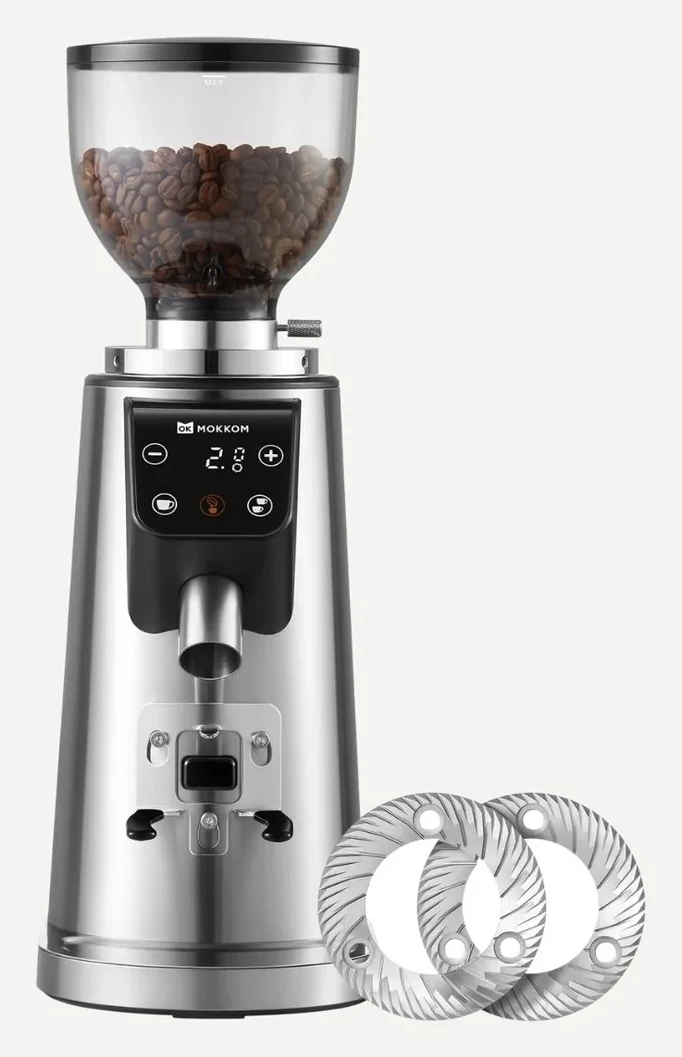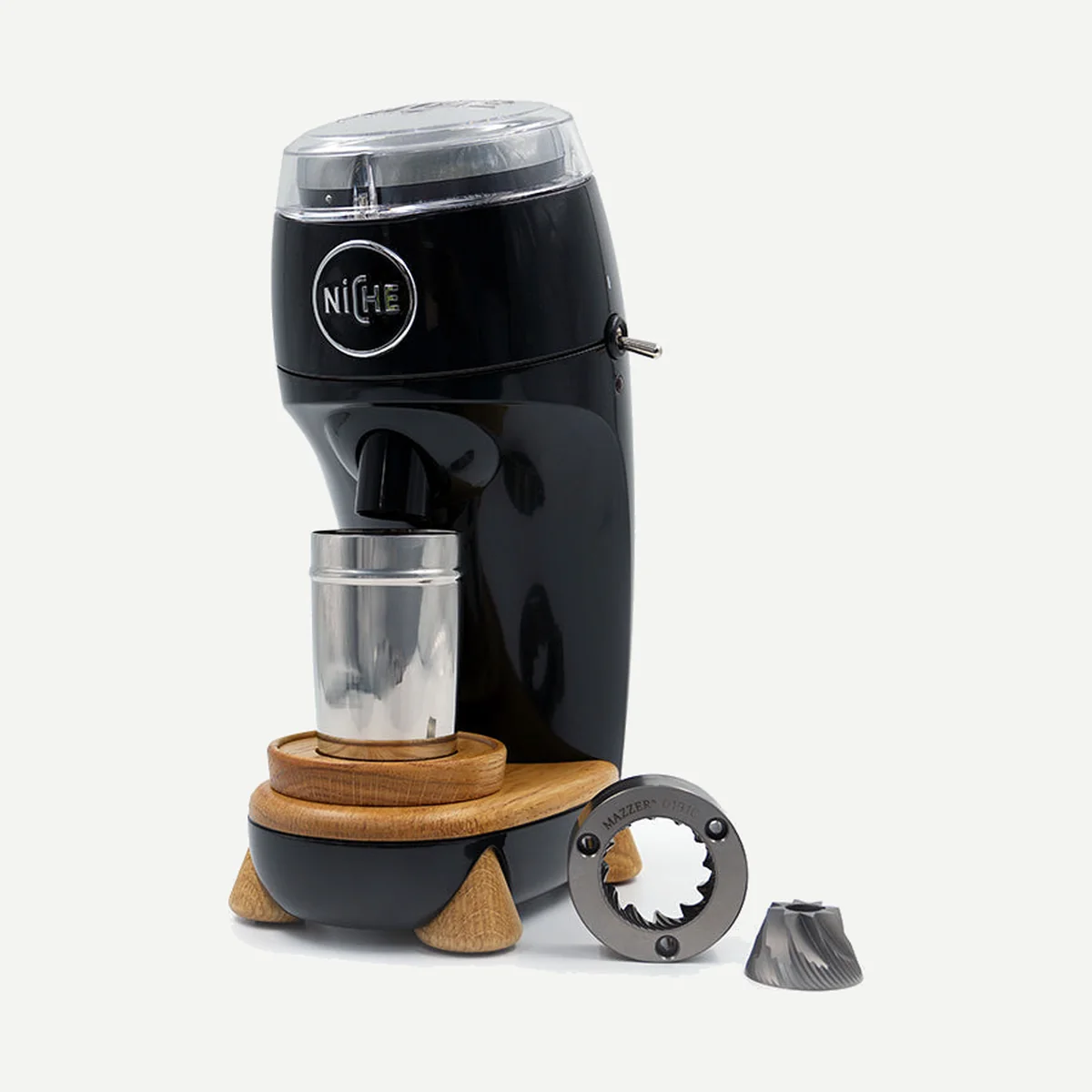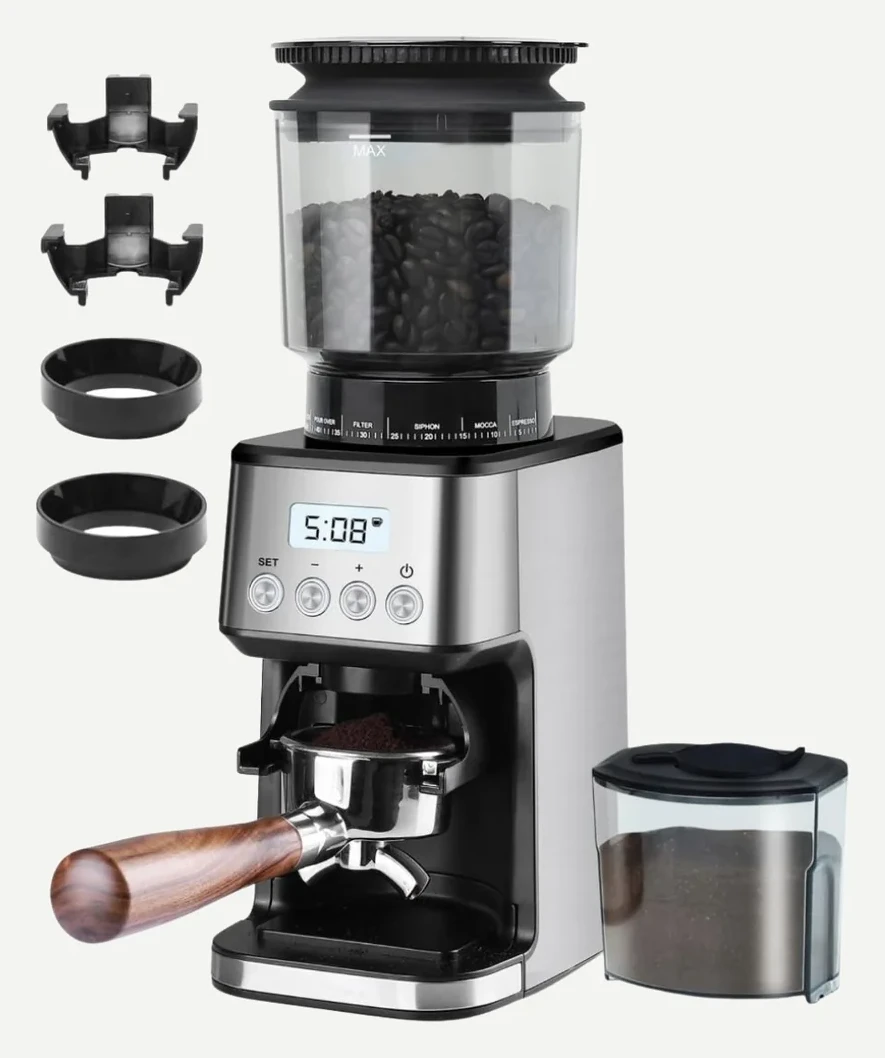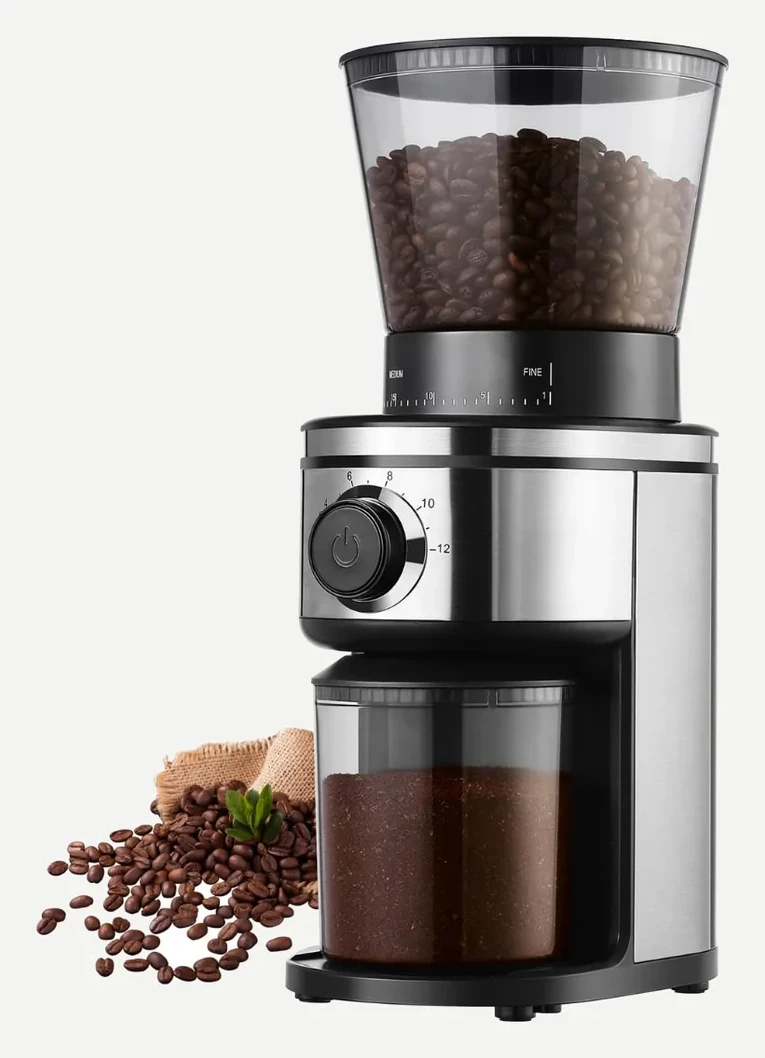
What is the DF64 Gen 2?
A grinder designed around grinding one dose at a time and keeping none of it.
DF64 publishes true zero retention at under 0.1 gram even without a bellow, a plasma generator, an ioniser, in the exit chute to eliminate static, an integrated anti-popcorn disc that stops beans jumping and speeds up grinding, stepless adjustment on a chrome-wrapped dial with a metal indicator, a 20 gram hopper without the bellow or 50 grams with it, a painted body, whose metal the maker does not name and a 58mm transparent dosing cup. It measures 10 by 5.2 by 12 inches.
What single dosing means and why people want it
You weigh out exactly what you are about to brew and grind that, instead of filling a hopper.
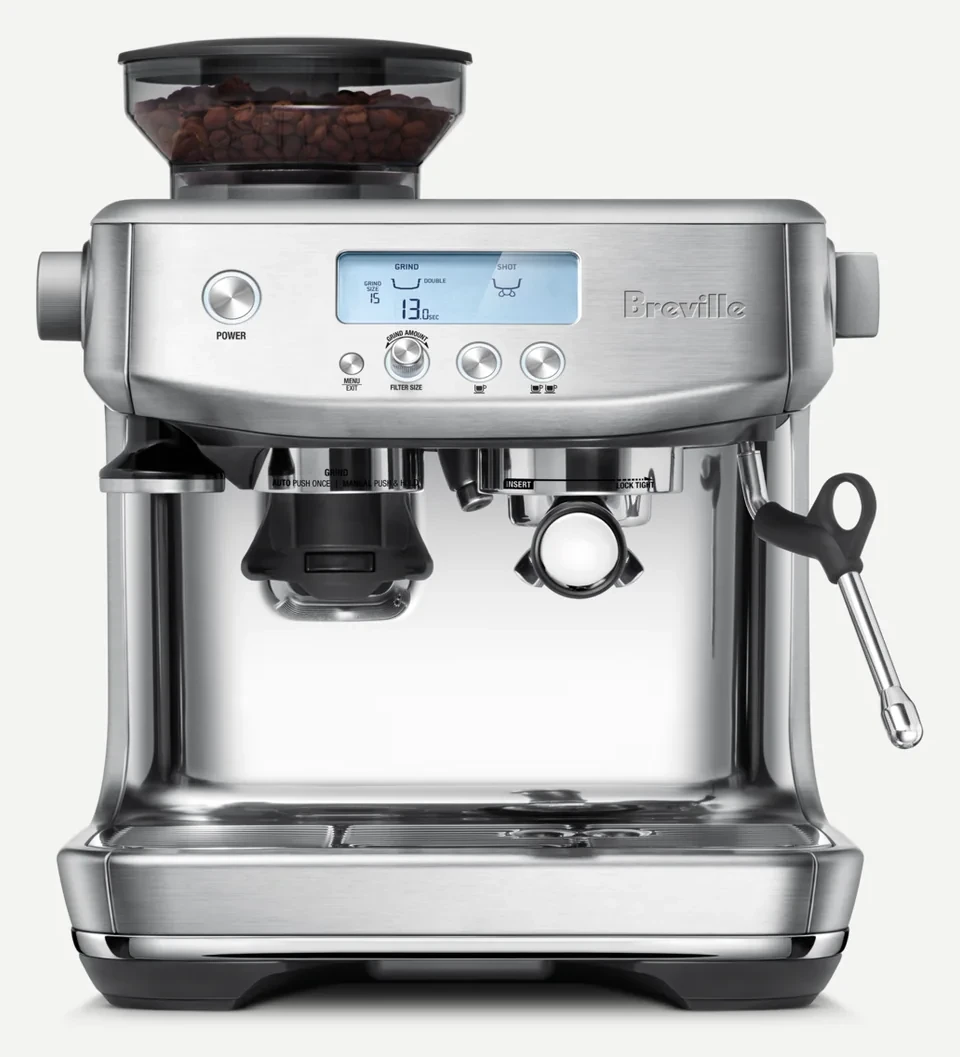
A conventional grinder like the Breville Dose Control Pro holds 340g of beans in a hopper above the burrs. That is convenient, and it means your beans sit exposed to air and light for as long as they take to use, and you cannot switch coffees without emptying the hopper.
Single dosing means beans stay sealed in their bag until the moment they are used, and you can grind a different coffee every cup. The cost is a few seconds of weighing each time, and it is the workflow most people who care about coffee eventually move to.
It only works if the grinder gives back what you put in, which is where retention comes in.
Retention is the specification that makes or breaks single dosing
Grounds left inside the machine are yesterday's coffee in today's cup.
Every grinder holds some ground coffee in its burr chamber and chute. On a conventional grinder that hardly matters, because the hopper is full of the same beans and it evens out.
On a single-dose grinder it matters enormously. Put in 18g, get out 16g, and you have lost 2g of today's coffee and gained 2g of whatever you ground last, which is stale and possibly a different bean entirely. It also ruins the weighing that single dosing exists for.
Under 0.1 gram is effectively nothing, and DF64 publishes it as achieved even without a bellow, which is the puffer people fit to blow the last grounds through. That is the strongest claim on this listing and the reason to buy the grinder.
The plasma generator, which sounds absurd and is not
Static is the reason grounds cling inside a grinder and spray across a counter.
Grinding creates friction, friction creates static charge, and charged coffee particles stick to plastic and metal and to each other. It is why grounds jump out of a dosing cup and why a chute holds onto them.
An ioniser floods the exit path with charged air particles that neutralise the charge on the coffee. It is the same principle as an anti-static bar in a printing press, and it is a genuinely engineered answer where the usual home fix is spraying the beans with a few drops of water.
The anti-popcorn disc addresses the other single-dose problem: with only 18g in the hopper, beans bounce around on top of the burrs instead of feeding down, which is slow and inconsistent. A disc holds them against the burrs.
DF64 Gen 2 vs Baratza Sette 270Wi
Two espresso grinders, and they solve different halves of the workflow.
The Baratza Sette 270Wi has a built-in scale and grinds by weight, which automates dosing. It is the better machine for someone who wants the grinder to do the measuring.
The DF64 does not weigh anything and instead makes sure nothing is lost, which is the other route to the same goal. It is also stepless, where the Sette is stepped, giving finer espresso adjustment. Baratza publishes a warranty and a support network; DF64 publishes neither on this listing, and it carries 40 reviews.
Is the DF64 Gen 2 worth it?
Worth it for espresso and single dosing. Overkill for filter alone.
Sub-0.1g retention, stepless adjustment and static control is the specification serious espresso people ask for, and it is normally found much further up the price range.
DF64 publishes no burr size, no burr material, no burr type, no motor power, no warranty term and no country of manufacture on this listing, which is a lot of blanks on a grinder. The 20g working hopper also means it is single dosing whether you wanted that or not.
Who should buy it (and who should not)
Buy it if you pull espresso and change beans often.
It suits somebody with a semi-automatic espresso machine, a scale and several bags of coffee open at once.
Do not buy it if you want to fill a hopper and forget it. Do not buy it for French press alone, where the precision is wasted. And note how little of its specification is published.
Frequently Asked Questions
What is single dosing?
Weighing out exactly the beans you are about to brew rather than filling a hopper, so beans stay sealed and you can change coffee every cup.
Why does retention matter?
Grounds left in the machine come out in your next brew. On a single-dose grinder that means stale coffee, possibly a different bean, and a dose that no longer matches what you weighed.
What does the plasma generator do?
Neutralises the static charge grinding creates, so grounds do not cling inside the chute or spray out of the cup.
What is the anti-popcorn disc for?
With only a small dose in the hopper, beans bounce instead of feeding into the burrs. The disc holds them down.
How much does the hopper hold?
20g without the bellow, 50g with it. This is a single-dose grinder.