

Ethiopian Coffee: The Regions and What They Taste Like
The birthplace of arabica, and still the most distinctive coffee anywhere. Four regions, thousands of varieties nobody has catalogued.
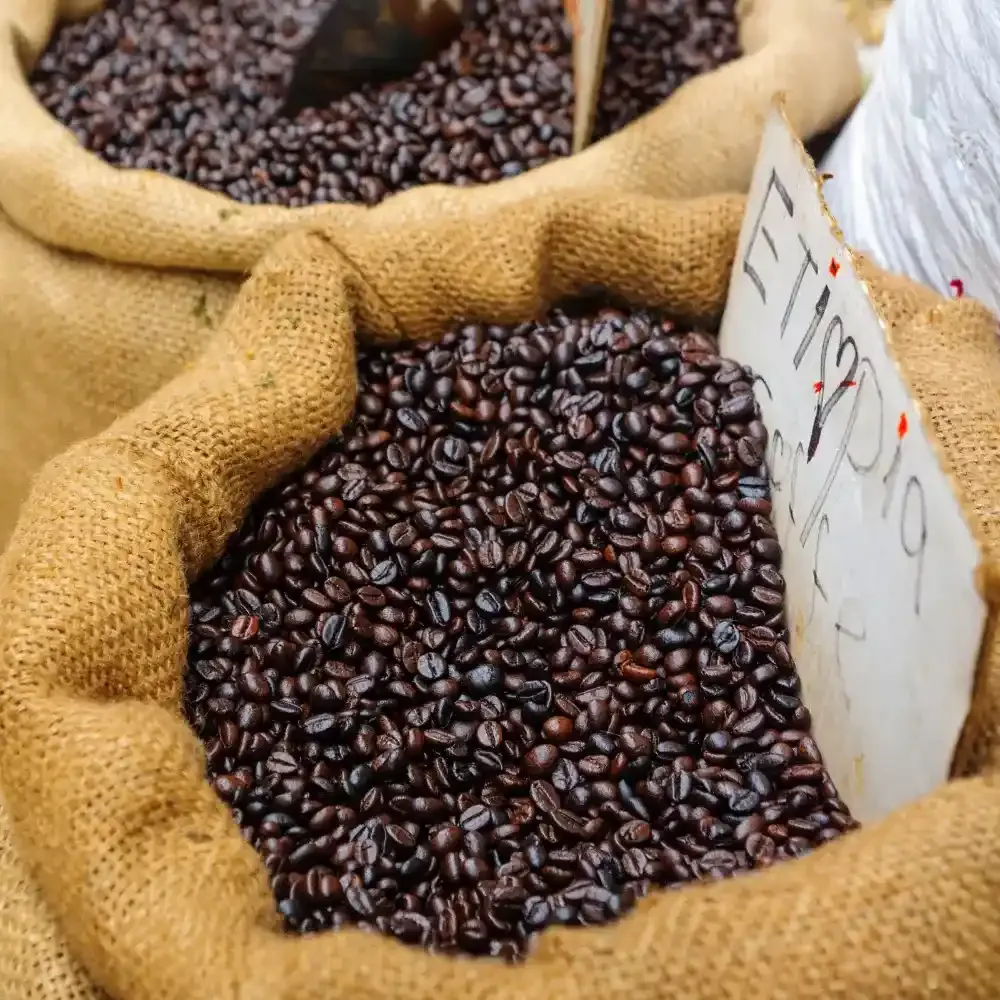
Arabica originates in Ethiopia, and the country still grows coffee that tastes like nowhere else. It is also the origin most likely to change what someone thinks coffee can be, because a good Yirgacheffe does not taste like the thing most people mean by coffee at all.
Ethiopian coffee regions and what they taste like
- Yirgacheffe. The famous one. A small area inside Sidamo, high-grown, producing the most delicate and floral coffee in commercial production: jasmine, bergamot, lemon, a tea-like body.
- Sidamo. The larger region around it. More varied, generally citrus and berry with more body than Yirgacheffe.
- Guji. Adjacent to Sidamo and increasingly sold on its own name. Often more tropical and intense, particularly when naturally processed.
- Harrar. Eastern, dry-processed by tradition, and completely different: blueberry, wine, spice, heavy body, no washing at all.
- Limu and Jimma. Western. Less fashionable, often excellent value, generally more balanced and less extreme.
Why Ethiopian coffee is labeled heirloom
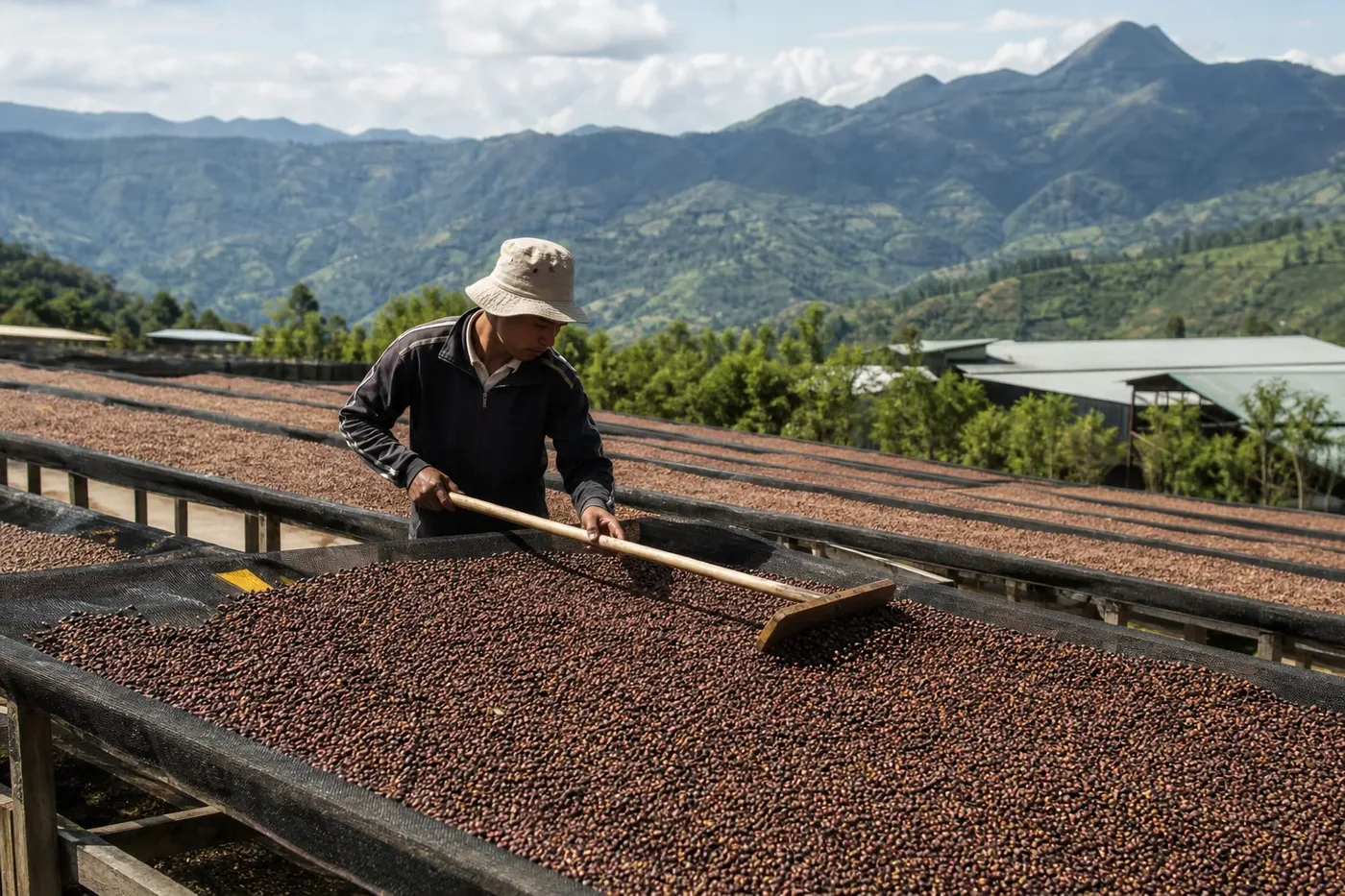
Bags say "heirloom" because the honest alternative is a shrug. Ethiopia holds the overwhelming majority of arabica's genetic diversity, most of it growing semi-wild, and the great bulk of those varieties have never been formally catalogued.
Elsewhere a bag names Bourbon or Typica or Geisha. In Ethiopia that specificity usually does not exist, and claiming it would be inventing a fact. Heirloom is a placeholder for genuine botanical uncertainty rather than a marketing evasion.
Washed vs natural Ethiopian coffee
This choice changes an Ethiopian coffee more than the region does.
Washed removes the fruit and mucilage before drying. The result is clean, floral, citric and light. This is the classic Yirgacheffe profile.
Natural dries the whole cherry with the seed inside, so the fruit's sugars work on the bean. The result is heavy, sweet, and berry-forward, sometimes to the point of tasting fermented. Harrar is traditionally natural, and naturals from Guji are among the most striking coffees available anywhere.
Neither is better. They are different products from the same fruit, and knowing which you prefer is more useful than knowing which region you prefer.
How to brew Ethiopian coffee
As filter, such as a pour over, and do not roast it dark or buy it dark. Everything worth paying for in Ethiopian coffee lives in the aromatic compounds a dark roast destroys.
Use a slightly lighter ratio than your default, around 1:17, because the acidity is the point and a heavy ratio buries it. Water a touch below boiling. If it tastes sour rather than bright, grind finer before doing anything else.
For how the country itself drinks it, which is nothing like the above, see the Ethiopian coffee ceremony.
What the G1 to G5 grades mean on a bag
Ethiopian bags carry a grade, usually G1 through G5, and it counts defects rather than scoring the cup.
Graders inspect a sample for broken beans, insect damage, stones and unripe fruit. G1 is the cleanest, and G4 and G5 are largely domestic market grades. Washed coffees are typically graded 1 or 2 and naturals 3 or 4, which reflects how much harder it is to dry whole fruit cleanly rather than any verdict on how it tastes.
A G1 natural is genuinely rare and priced accordingly. A G3 natural is ordinary and can still be superb.
Ethiopian coffee traceability, and why it used to stop at the region
For years nearly all Ethiopian coffee moved through a national commodity exchange that pooled lots by region and grade. It guaranteed farmers a buyer and a price, and in doing so it erased the farm.
Rules introduced from 2017 allowed producers, co-operatives and exporters to sell directly and keep a lot identified all the way through. That is why bags now name a washing station, a co-operative or a single grower, where a decade ago they named Sidamo and stopped there.
So a bag that names the station is telling you the roaster bought it in a way that was not available before, and generally paid more to do it.
Ethiopian coffee FAQ
What does Ethiopian coffee taste like?
Broadly floral and citrus with a light body and bright acidity when the fruit is washed off the bean before drying, and heavy berry and tropical fruit when the bean is dried inside the whole fruit, which is called a natural. It is the most aromatic coffee in commercial production.
What is the difference between Yirgacheffe and Sidamo?
Yirgacheffe is a small area within the wider Sidamo region, known for the most delicate and floral profile. Sidamo covers much more ground and is correspondingly more varied.
What does 'heirloom' mean on Ethiopian coffee?
That the varieties growing there are indigenous and largely uncatalogued. Ethiopia holds the overwhelming majority of arabica's genetic diversity, and most of it has never been formally identified.
How should I brew Ethiopian coffee?
As filter, and lighter than you might expect. Pour over shows the florals and the acidity that make it worth buying. Espresso and dark roasting bury exactly those qualities.