





Armenian Coffee: Soorj, and the Cup Read Afterwards
The same regional method under another name, with one tradition attached to it more tenaciously than anywhere else: what the grounds say when the cup is turned over.
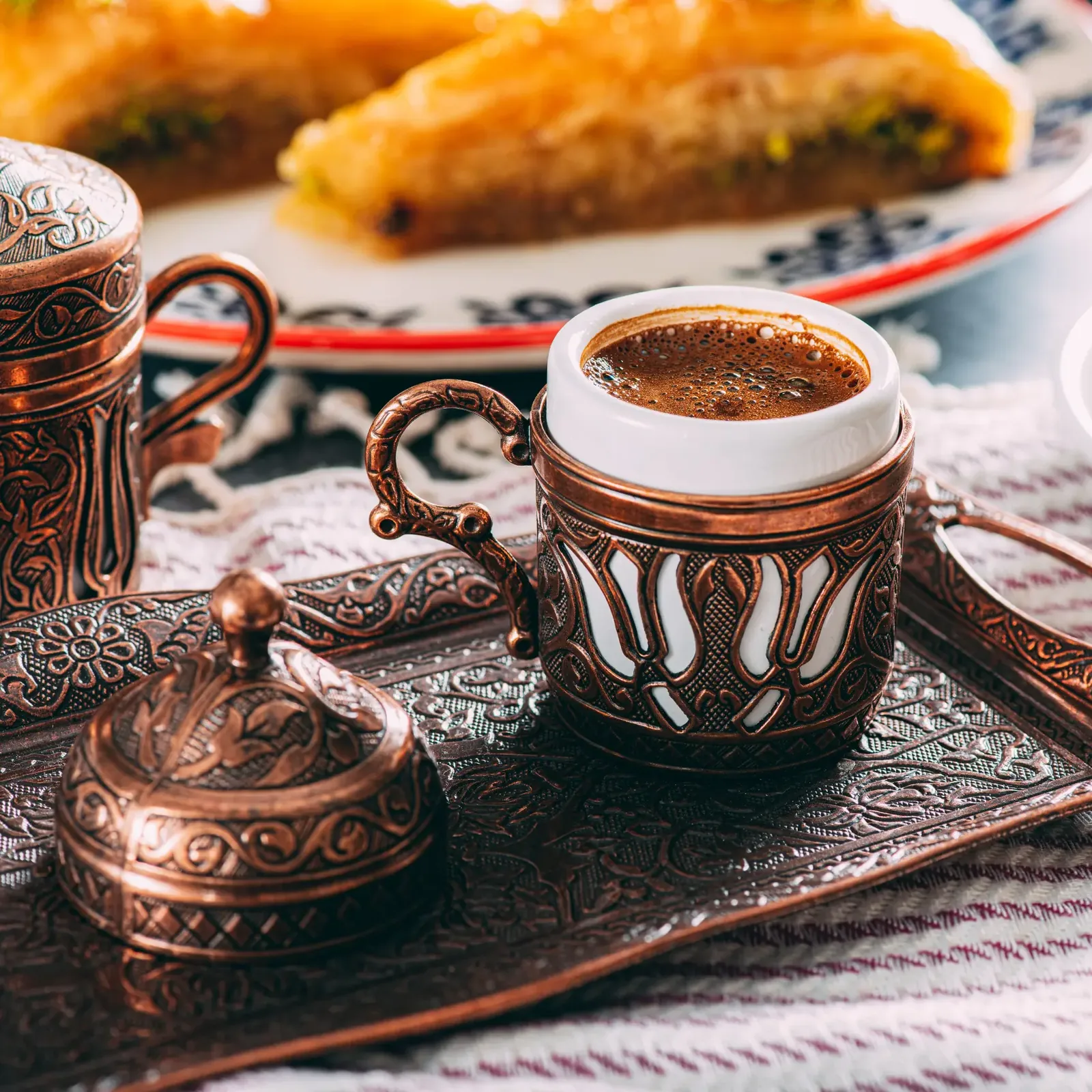
Armenian coffee, soorj, is made the way coffee has been made across the whole region for centuries: ground to powder, simmered in a small pot, poured unfiltered and drunk slowly. What is distinctly Armenian is less the brewing than what happens when the cup is empty.
How Armenian coffee (soorj) is made
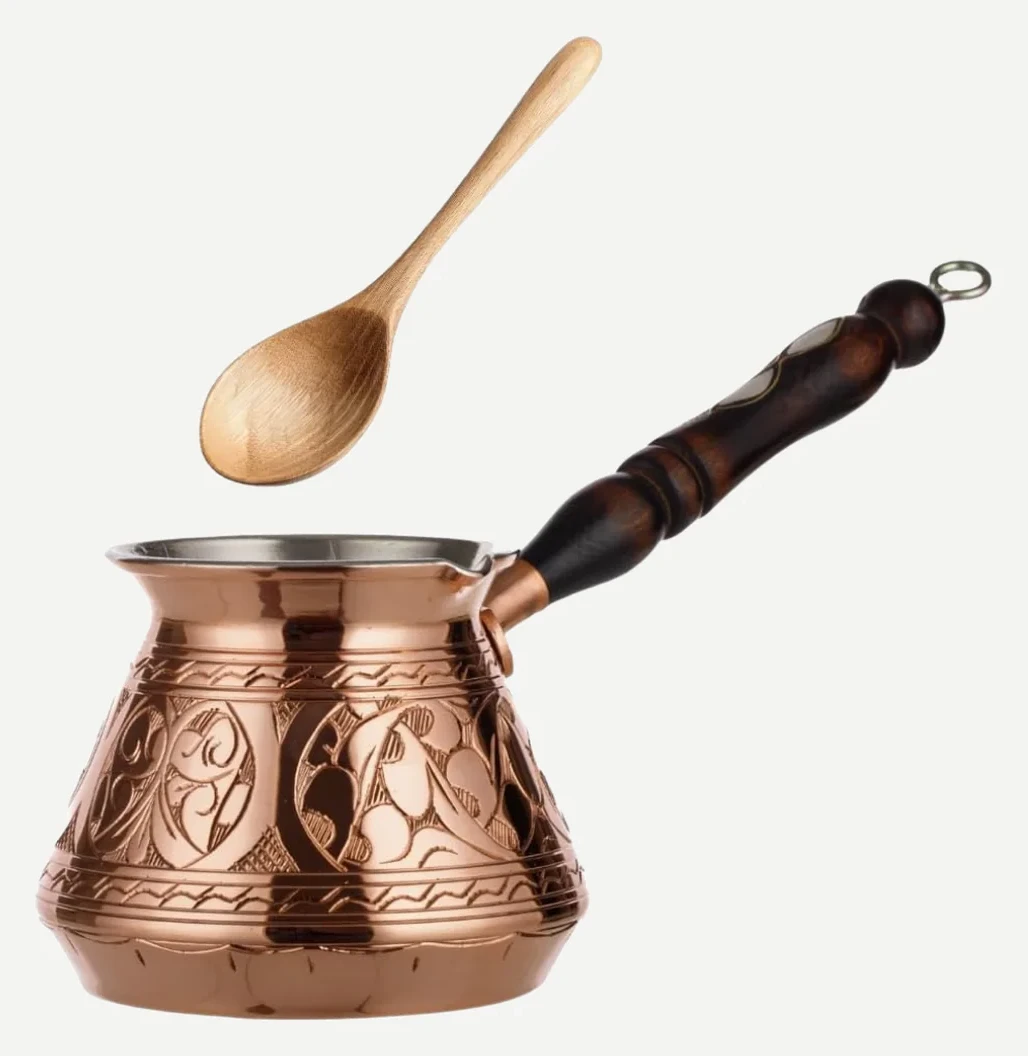
In a jazzve, which is the same vessel called a cezve in Turkish and a briki in Greek. Cold water, coffee ground finer than espresso, sugar decided in advance, brought slowly to the point where the foam rises and taken off before it boils.
The full method is the same one used region-wide, and an Armenian household and a Turkish one would each recognise the other's technique immediately even where neither wants to say so.
Armenian coffee cup reading
When the coffee is finished, the cup is turned upside down onto its saucer and left to cool. The grounds run down the inside and dry into patterns, and those patterns are read.
The practice exists across the region and is unusually alive in Armenian households, including among people who would describe themselves as entirely unsuperstitious. It is a social occasion more than a divination: the reading is performed aloud, it is discussed, and it is largely an excuse for the group to keep sitting together.
There is also a practical signal in it, whatever you make of the rest. A cup that leaves a clean, even sediment and dries into legible shapes was brewed at the right grind. A gritty, patchy one was not.
Where Armenian coffee sits among regional coffees
Armenia has grown no coffee and has been drinking it for a very long time, which is true of most of the region. The naming follows the same pattern as everywhere else along the old Ottoman frontier: the same drink is Greek coffee in Greece, Bosnian in Bosnia, Cypriot in Cyprus and Armenian in Armenia.
For why those names are contested and what genuinely differs between the versions, see Greek coffee vs Turkish coffee. The short answer is that the differences in the cup are small and the history behind the names is not.
How to drink soorj
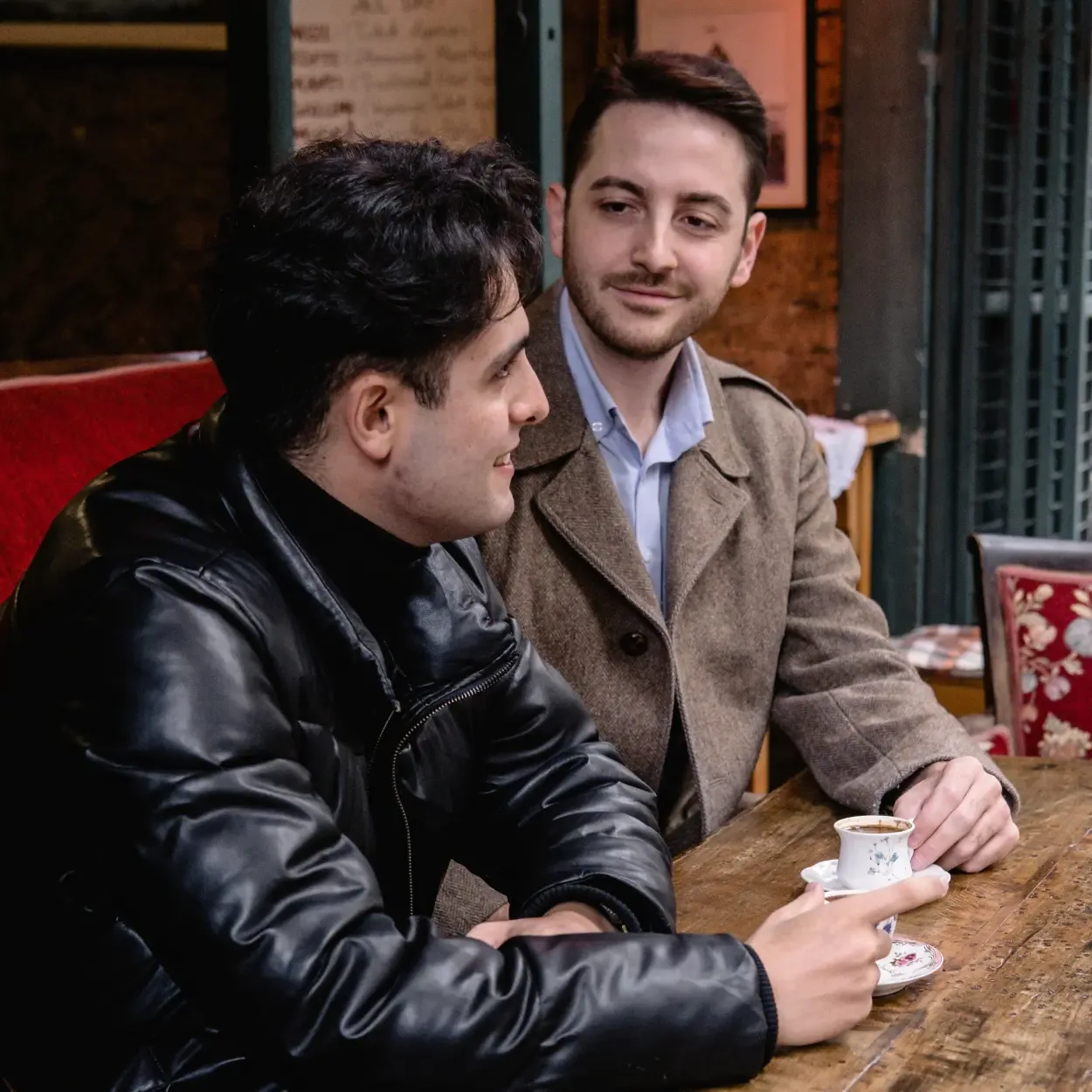
Slowly, and with company. Soorj is served in small cups, usually with something sweet, and it is not a drink anyone takes away in a paper cup.
Stop before the grounds. That is a practical instruction and, if anyone is going to read your cup, a necessary one: disturbing the sediment ruins the pattern before it has formed.
What is served with Armenian coffee
Soorj is rarely served alone, and what accompanies it is as fixed as the coffee itself.
- Gata, a sweet layered pastry, which is the most common partner.
- Sujukh, walnuts threaded on a string and dipped repeatedly in thickened grape juice.
- Dried fruit, particularly apricot, which Armenia grows and is known for.
- Water, always, and drunk before the coffee rather than after.
The coffee usually comes after a meal rather than with it, and it marks the transition from eating to sitting. Offering it is how a host signals that nobody should be leaving yet.
Soorj outside Armenia
A large part of the tradition has been carried by the diaspora, and in some places it has been preserved more carefully abroad than at home.
Communities in Lebanon and Syria, and later in Los Angeles, Marseille and Buenos Aires, kept the jazzve, the cup reading and the accompaniments intact across generations. It is common to find households several generations removed from Armenia where the coffee is still made exactly this way.
That also means a cafe advertising Armenian coffee outside Armenia is usually serving something quite faithful, which is not always true of national drinks in exile. The related traditions are set out in our Arabic coffee guide, which is the same region and a genuinely different drink.
How to make soorj at home
You need a small long-handled pot, a jazzve or cezve, and coffee ground as fine as flour, which is finer than an ordinary grinder will go; buy it ground for Turkish coffee or use a grinder with a Turkish setting. For each small cup, put a heaped teaspoon of coffee and the cupful of cold water into the pot, with sugar now if you take it, because it cannot be stirred in afterwards. Stir once, then heat it slowly. As the coffee rises to a foam, take it off the heat just before it boils over, let it settle, and bring it up once more. Pour slowly so each cup gets some foam, and wait a minute for the grounds to sink before drinking.
Soorj vs Turkish coffee vs Greek coffee
The method is the same across the region, and so is most of the equipment. What changes is the name, the pot's local name and small habits: how sweet it is made by default, whether cardamom goes in, and how much ceremony goes with the cup. Arguing about which is the original is part of the culture. Our comparison of Arabic and Turkish coffee covers the spiced version made further south.
Armenian coffee FAQ
What is Armenian coffee?
Soorj: finely ground coffee simmered in a small long-handled pot called a jazzve and served unfiltered in small cups. The method is the one used across the region under several national names.
What is a jazzve?
The Armenian name for the small brewing pot known elsewhere as a cezve, ibrik or briki. Same shape, same purpose.
What is Armenian coffee fortune telling?
After drinking, the cup is inverted onto the saucer and left to cool, and the patterns the grounds leave are read. The practice is shared across the region and is particularly persistent in Armenian households.
Is Armenian coffee different from Turkish coffee?
In technique, barely. The naming reflects a distinct national tradition and a difficult shared history rather than a different way of brewing.