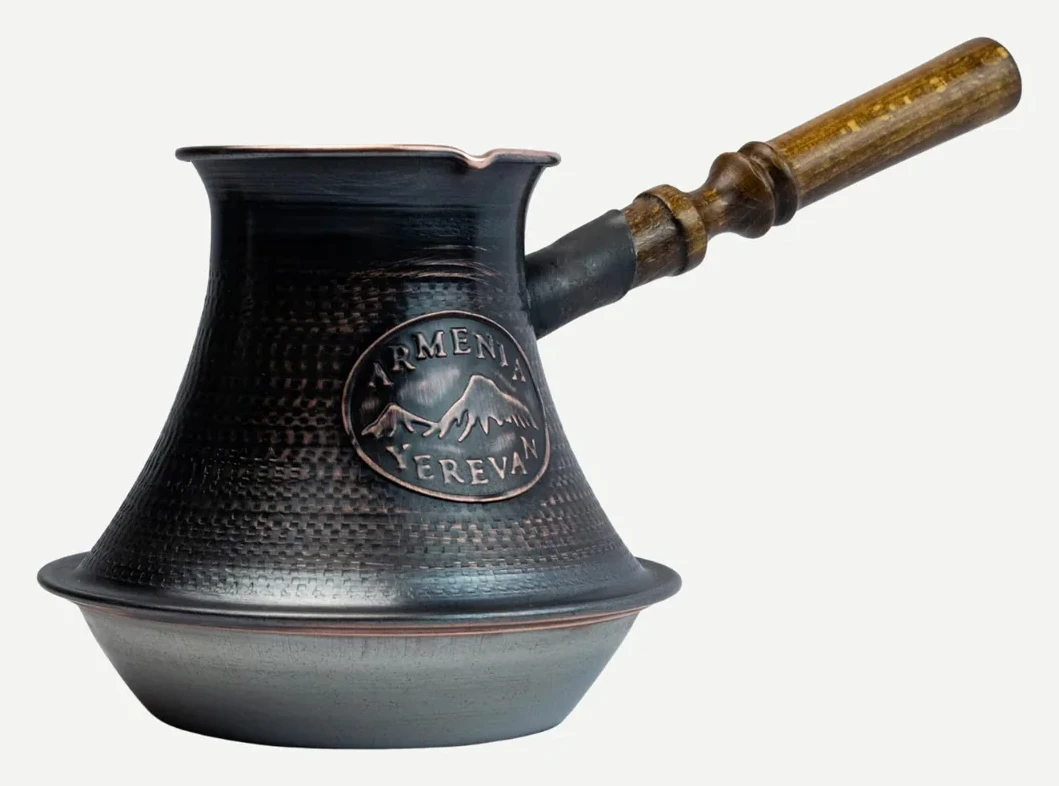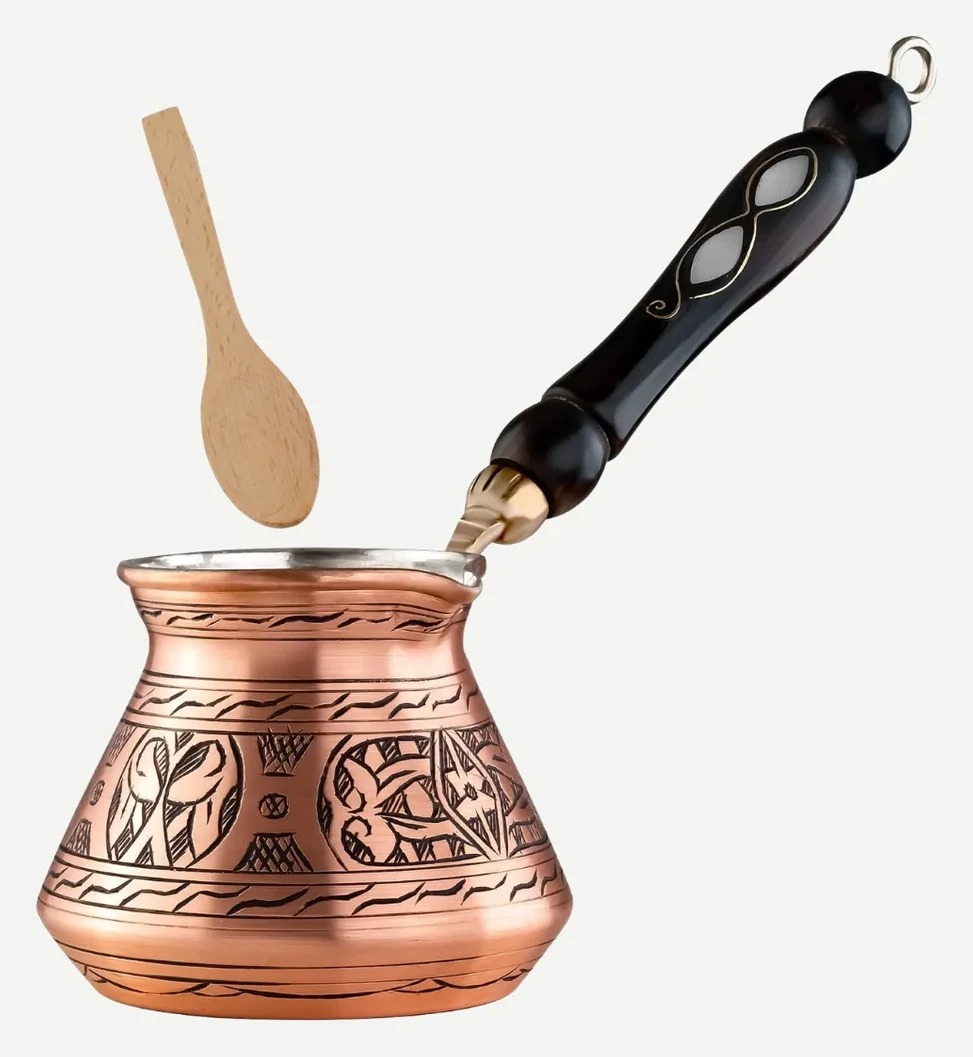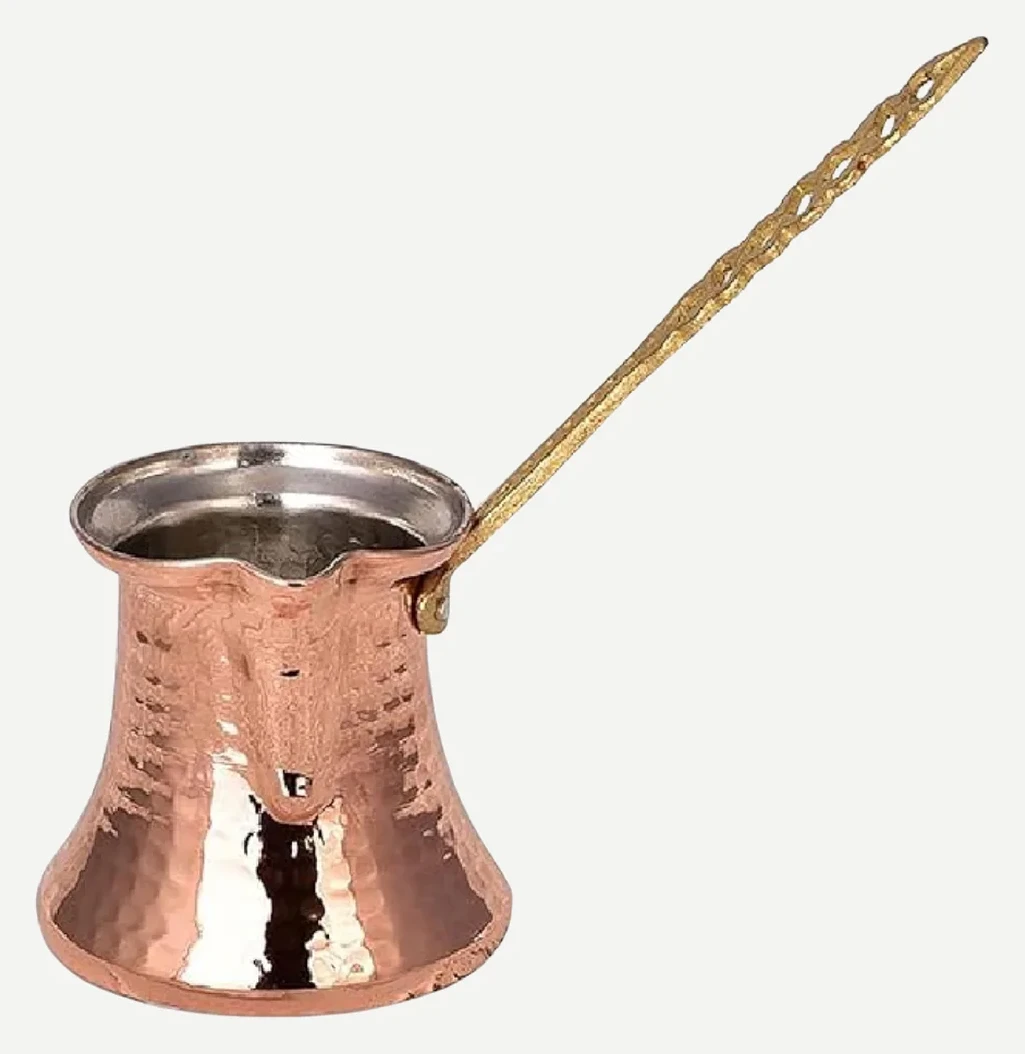

What is the DEMMEX Copper Cezve Ibrik?
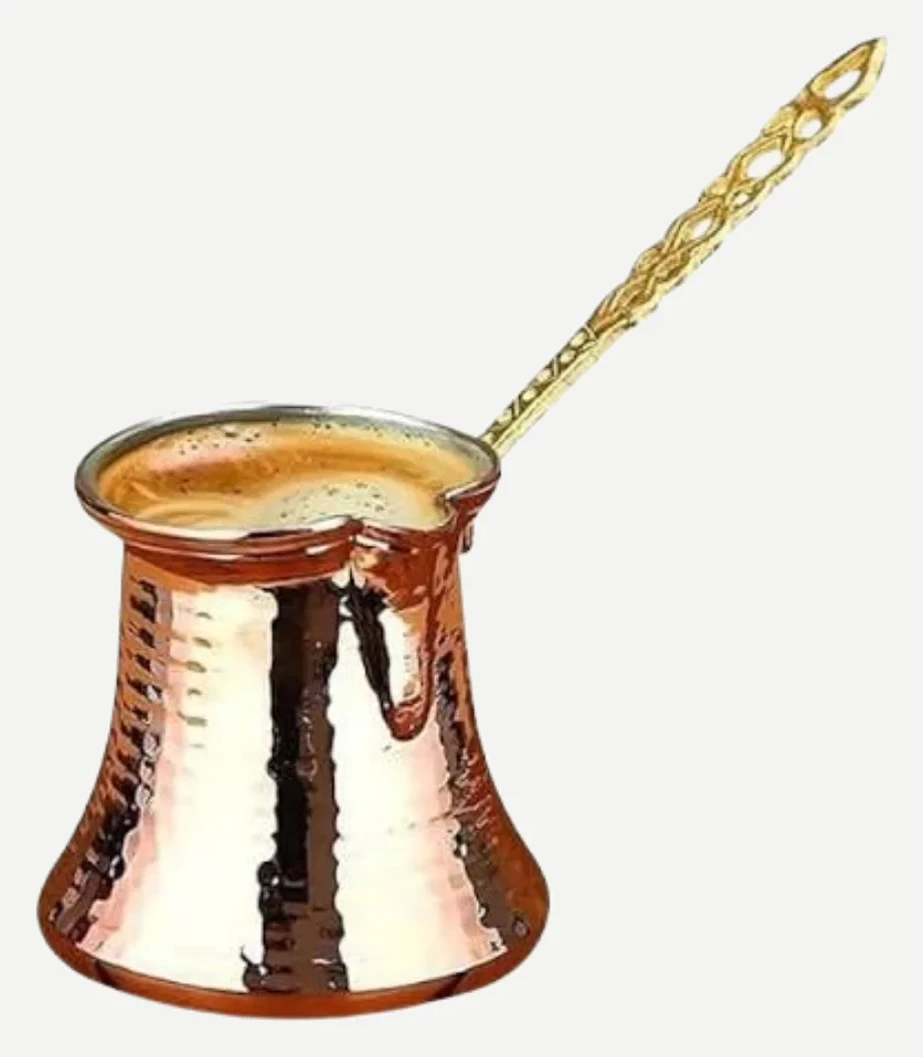
The DEMMEX Copper Cezve Ibrik is a traditional Turkish coffee pot, hand-crafted in Turkey from copper with a tin lining and a wooden handle.
It brews up to three cups, making it a single-household pot rather than a party piece. The body is copper throughout, finished in an antique copper colour, and the interior carries a tin lining that keeps the metal food-safe and prevents any copper taste from transferring to the brew.
Dimensions are 3.5 inches deep, 10 inches wide and 3 inches tall. Turkey is the country of manufacture, which places it in the tradition of hand-worked copper cezves that have been made there for centuries. A US retail price has not surfaced in our search.
DEMMEX Copper Cezve Ibrik what it is like to use
Copper walls one millimeter thick, a tin lining and a wooden handle describe a pot built to the traditional standard that Turkish coffee preparation was developed around.
Copper at one millimeter conducts heat quickly and evenly across the base and sides. That matters for Turkish coffee, where the goal is a slow, controlled rise to a foam without any hot spots burning the fine grounds sitting at the bottom of the pot.
The tin lining is the traditional and correct choice for copper cookware. It protects both the metal and the drink, and it holds up well under the low, steady heat that Turkish coffee requires. The wooden handle is a practical decision, keeping the grip cool while the copper body heats.
- One-millimeter copper walls are thick enough to distribute heat evenly, which reduces the risk of scorching fine grounds.
- Tin lining is food-safe and the traditional pairing with copper, appropriate for the temperature range this pot operates in.
- The wooden handle is specified to stay cool during use, which matters on a stovetop where a metal handle would be a burn risk.
- Made in Turkey is a meaningful provenance claim for a cezve, placing it in the craft tradition the form comes from.
What you can brew with it
This pot does one thing: it brews Turkish coffee for up to three cups, on gas or electric heat, and nothing else is in scope.
Turkish coffee is the only preparation it is designed for. The narrow neck, the straight sides and the fine-ground, unfiltered method are all specific to this form. Buyers looking for a pour-over, a moka pot or a French press are looking at the wrong category entirely.
Gas and electric stovetops are the listed compatible heat sources. Three cups is a practical capacity for one or two regular drinkers. It is not a pot for entertaining a table.
- Turkish coffee is the only brew method this pot is built for, so buyers should be clear on that before purchasing.
- Gas and electric stovetops are confirmed compatible, covering the two most common domestic hob types.
- Three cups is the maximum capacity, which suits one or two people but rules it out for group brewing.
- Induction and ceramic hobs are not listed as compatible, so buyers with those surfaces should verify before ordering.
Living with it, day to day
Copper with a tin lining needs specific care to stay in good condition, and that upkeep is a real part of owning this pot.
Tin linings are durable under normal use but should not be scrubbed with abrasive pads. A soft cloth or sponge with mild soap is the right approach. The lining can be retinned if it wears through, which is a craft service rather than a kitchen job, but it means the pot is not disposable.
Copper exteriors oxidise over time and develop a patina. Some owners polish it regularly with a copper cleaner; others leave it. The antique copper finish on this pot means the natural darkening sits within the aesthetic it was sold with. Either way, the exterior does not affect brew quality.
- The tin lining should be cleaned with a soft cloth and mild soap only, never with abrasive pads or steel wool.
- The copper exterior will oxidise gradually and can be polished with a dedicated copper cleaner if a bright finish is preferred.
- The wooden handle should be kept dry and away from prolonged soaking to prevent the wood from splitting or loosening.
- Tin linings can be retinned by a specialist if they wear through, making this a repairable pot rather than a throwaway one.
DEMMEX Copper Cezve Ibrik vs BCS Handmade Copper Cezve
The DEMMEX and the BCS Handmade Copper Cezve are both Turkish copper cezves, so the decision comes down to specifics that each buyer needs to check directly.
The DEMMEX publishes its wall thickness at one millimeter, its interior lining as tin, its capacity as three cups, and its country of manufacture as Turkey. Those are concrete specs a buyer can act on. Before choosing the BCS, a buyer should confirm its wall thickness, lining material and capacity, since this review does not hold those figures.
Both sit in the traditional hand-crafted copper cezve category. The DEMMEX's antique copper finish and wooden handle are specified clearly. Check whether the BCS offers equivalent handle material and lining before treating the two as identical.
- The DEMMEX publishes a one-millimeter wall thickness, which is a concrete spec worth comparing against whatever the BCS lists.
- The DEMMEX specifies a tin lining, which is the food-safe traditional choice. Confirm the BCS lining before assuming parity.
- Both are copper cezves made in the same tradition, so provenance and finish preference may be the deciding factor for many buyers.
- Check the BCS capacity against the DEMMEX's three-cup rating if serving size matters to the buyer.
Is the DEMMEX Copper Cezve Ibrik worth it?
Without a confirmed US retail price, a firm recommendation is not possible, but the specifications justify serious consideration at any reasonable market price for hand-crafted copper.
One-millimeter copper walls, a tin lining, Turkish manufacture and a wooden handle are the four things that separate a proper cezve from a decorative one. This pot has all four. The specifications are honest and specific, which is more than many competitors in the category offer.
Find the current retail price before deciding. Hand-crafted Turkish copper cezves typically sit in a range where the materials alone justify the cost if the price is fair. If the price at the time of purchase is competitive with comparable hand-made copper pots, this is a sound buy for anyone committed to Turkish coffee.
Who should buy it (and who should not)
This pot suits dedicated Turkish coffee drinkers who want authentic materials and craftsmanship, and it is wrong for anyone who brews other methods or uses induction.
Buyers who already know Turkish coffee and want a properly specified pot, not a decorative replica, will find the copper gauge, tin lining and Turkish origin to be the right combination. It is sized for daily personal use rather than occasional hosting.
Anyone who brews espresso, pour-over or French press alongside their Turkish coffee should not expect this pot to cover those methods. It will not. And buyers with induction hobs need to confirm compatibility before purchasing.
Buy it if
- You brew Turkish coffee daily for one or two people and want materials that match the traditional method.
- You use a gas or electric stovetop and want a copper pot that is built to last rather than to look good on a shelf.
- You are willing to do the small amount of specific upkeep that tin-lined copper requires.
Skip it if
- Your primary hob is induction or ceramic and you have not confirmed this pot works on it.
- You want a single pot that handles multiple brew methods, because this one handles exactly one.
- You need to serve more than two or three people at a time from a single brew.
Frequently Asked Questions
Is the DEMMEX Copper Cezve Ibrik good for Turkish coffee beginners?
It is a proper traditional pot rather than a simplified one, so it rewards learning the method rather than shortcutting it. The one-millimeter copper walls and tin lining mean heat response is fast, which takes a little practice to manage. Beginners who are willing to learn the technique will find it a capable tool. Those who want something more forgiving should consider starting with a smaller or thinner pot first.
DEMMEX Copper Cezve Ibrik vs BCS Handmade Copper Cezve: which should I buy?
The DEMMEX publishes its wall thickness at one millimeter, its lining as tin and its capacity as three cups, all of which are concrete things to compare. Before choosing the BCS, confirm its wall thickness, lining material and capacity directly with the seller. If those specs match, finish preference and price at the time of purchase are likely to be the deciding factors.
How many cups does it make?
It is listed as a three-cup pot, which in Turkish coffee terms means three small, traditional servings. Turkish coffee cups are considerably smaller than a standard Western coffee mug, so three cups here is roughly equivalent to a single large mug by volume. It is sized for one or two regular drinkers rather than a household that entertains frequently.
Does a copper cezve work on an electric stove?
This pot is listed as compatible with electric stovetops, so yes for standard electric coil and radiant rings. Induction is a different question. Copper is not magnetic and does not work on induction hobs without an induction-compatible base or a separate adapter disk. This pot is not listed as induction compatible, so buyers with induction hobs should check before ordering.
How do you clean a tin-lined copper cezve?
Wash it by hand with a soft cloth or soft sponge and mild dish soap. Avoid abrasive pads, steel wool or harsh chemical cleaners, all of which can damage the tin lining. Rinse and dry it promptly after washing rather than leaving it to soak, and keep the wooden handle out of standing water. The copper exterior can be polished with a dedicated copper cleaner if you prefer a bright finish over the natural patina.
What grind size do you need for a cezve?
Turkish coffee uses the finest grind of any common brew method, finer than espresso. The grounds are not filtered out before drinking and settle to the bottom of the cup. A standard home grinder with a fine espresso setting is usually not fine enough. A burr grinder capable of a true Turkish or extra-fine setting, or pre-ground Turkish coffee, is what this pot is designed to work with.