

Greek Coffee vs Turkish Coffee
The same method, the same pot, and a naming dispute with real history behind it. The differences in the cup are small and not zero.

These are the same drink made the same way, and saying so in the wrong company will start an argument. The technique is shared across the whole former Ottoman world; what differs is the name, some habits, and a history that is still close enough to matter.
Greek coffee vs Turkish coffee: what is the same
- Coffee ground to a powder, finer than espresso.
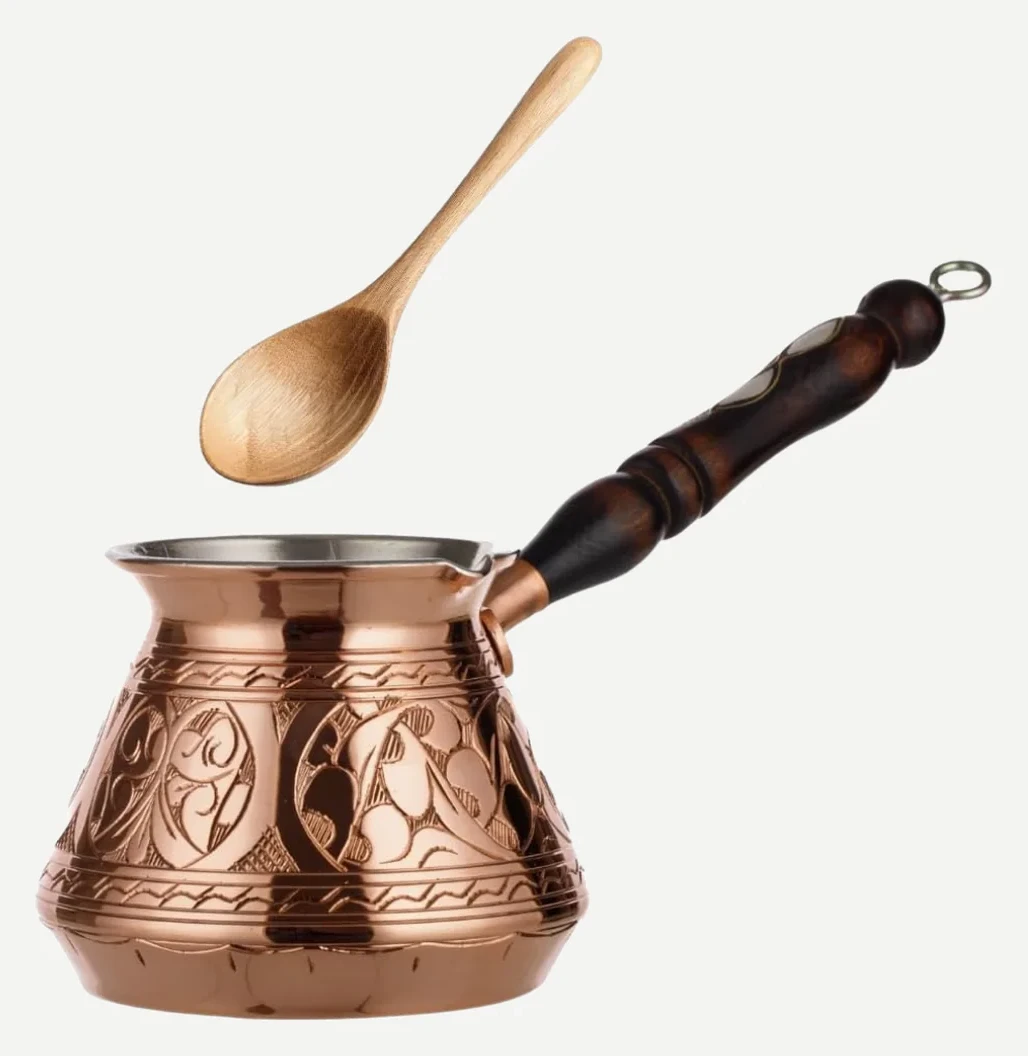
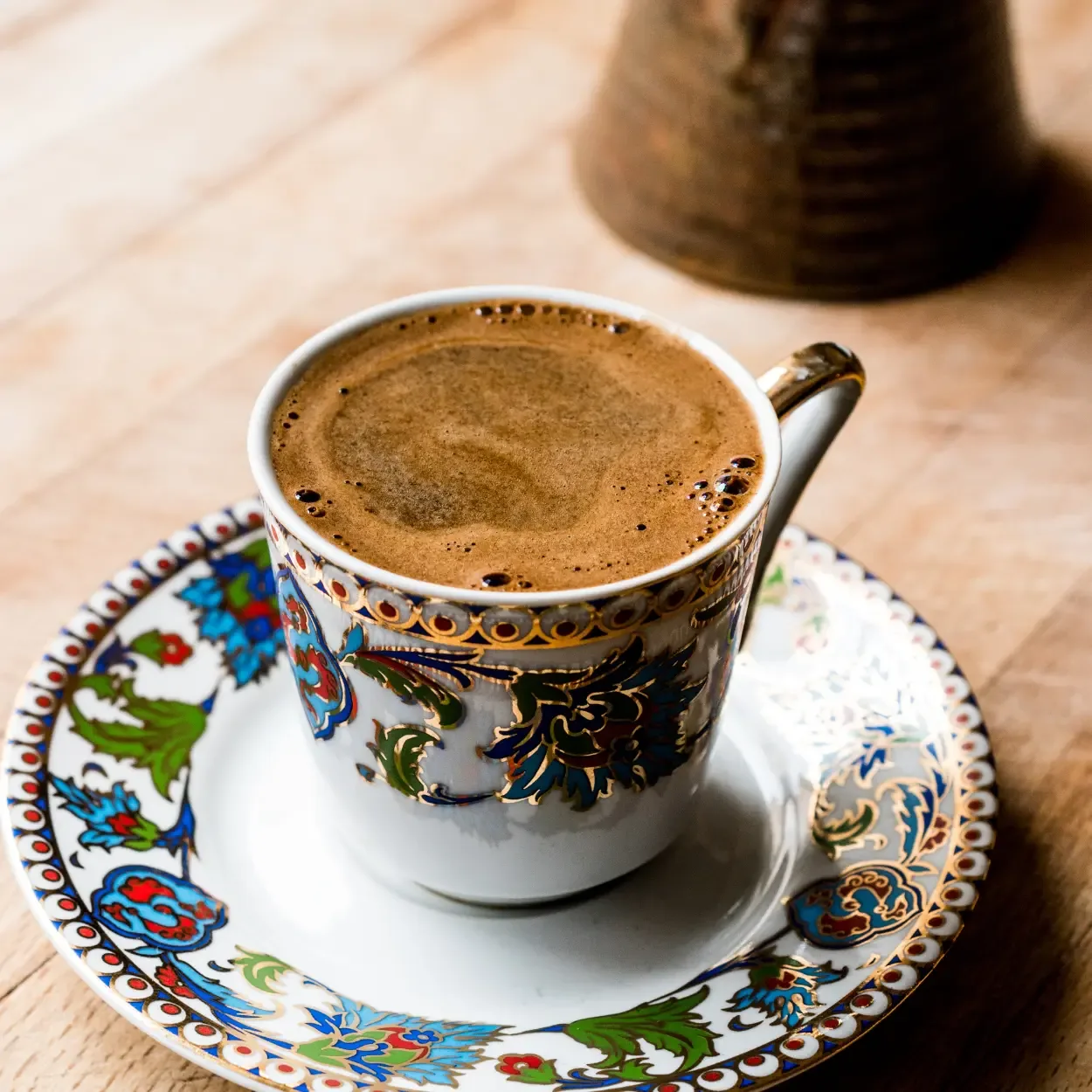
- Simmered with cold water in a small long-handled pot: briki in Greek, cezve in Turkish, the same object.
- No filter. The grounds go into the cup and settle.
- Sugar added before brewing, never after.
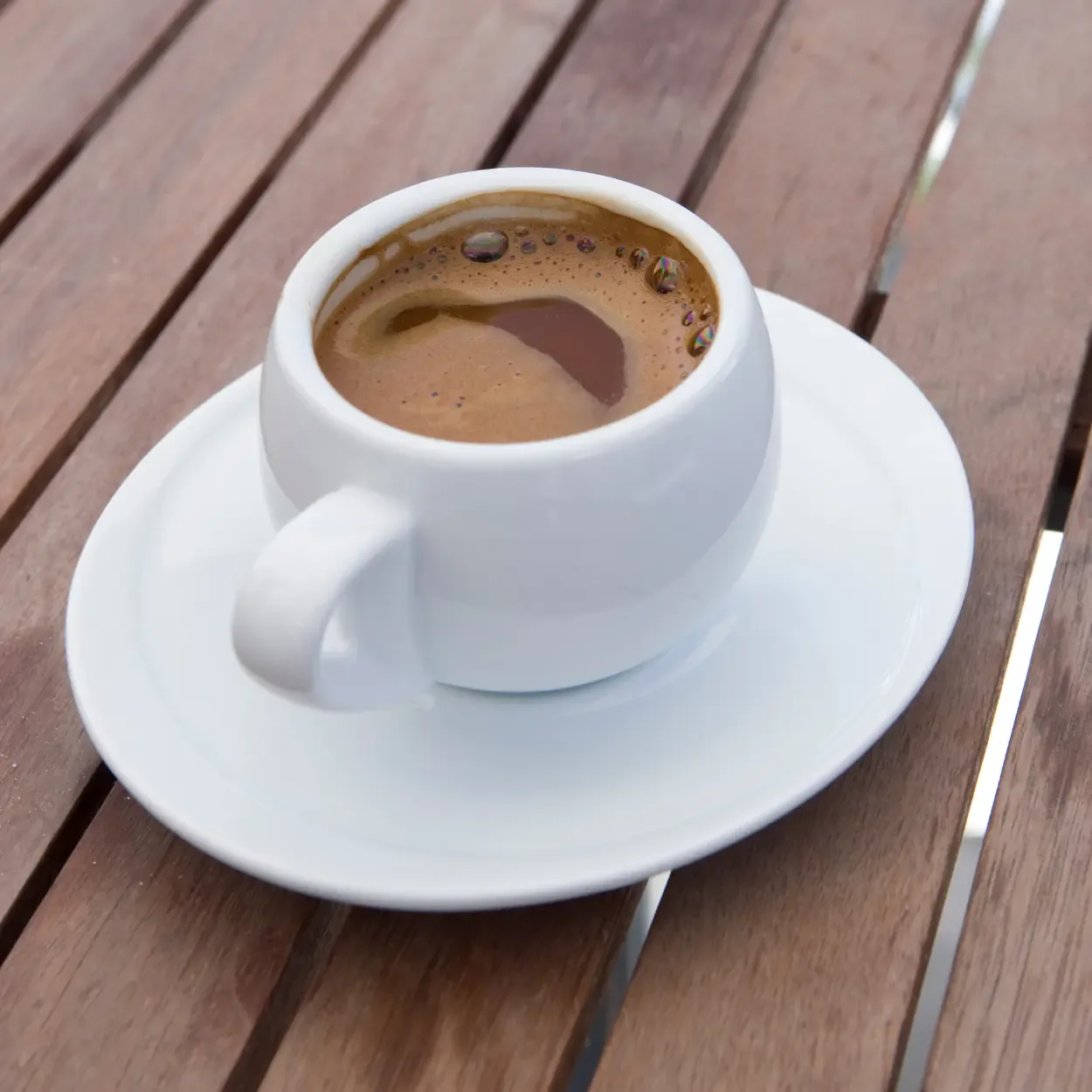
- Foam on top, and a cup judged on whether it has any.
- Served in a demitasse with a glass of water.
If you know how to make one, you know how to make the other. There is no separate technique to learn.
Greek coffee vs Turkish coffee: the real differences
Roast. Greek coffee tends to be roasted a little darker on average, which gives a slightly heavier, more bitter cup. This is a tendency across brands rather than a rule.
Grind. Greek grind is often very marginally finer. Both are finer than anything a normal domestic coffee grinder produces.
Serving. Greek coffee is more often accompanied by a sweet, and the Greek habit of drinking it slowly over a long sit is stronger than the Turkish one, though both traditions treat it as unhurried.
Foam expectations. Turkish coffee culture places more explicit weight on the kaimaki, the foam, as a mark of skill.
How to order Greek coffee or Turkish coffee by sweetness
You order by sweetness, not by size, and this is the useful part to memorise.
- Greek: sketos (none), metrios (medium), glykos (sweet).
- Turkish: sade (none), orta (medium), şekerli (sweet).
In both, that word is a brewing instruction. There is no sugar bowl on the table because sugar added after brewing costs you the foam.
Why Greeks stopped calling it Turkish coffee
The drink spread with the Ottoman Empire, which ruled Greece for centuries, and until relatively recently Greeks commonly called it Turkish coffee.
The change came after 1974 and the conflict in Cyprus, when Turkish-branded products were widely boycotted in Greece and the drink was renamed. The same happened elsewhere: it is Armenian coffee in Armenia, Bosnian coffee in Bosnia, Cypriot coffee in Cyprus.
None of those names is wrong. Each community has been making this coffee for centuries and has a legitimate claim to naming what it makes. The technique belongs to the whole region, and the argument is about history rather than coffee.
Greek frappé is not Greek coffee
Greek frappé is unrelated and is not made this way at all: instant coffee, cold water and sugar shaken to a thick foam and poured over ice. It was invented in Thessaloniki in 1957 and is one of very few contexts where instant coffee is the correct ingredient rather than a compromise. See cappuccino vs frappuccino for where it sits among the cold drinks.
Where to buy Greek coffee or Turkish coffee
This is the one category where pre-ground is correct rather than a compromise, because almost no domestic grinder reaches the fineness required and the ones that do take minutes to get there.
Greek brands are widely exported and easy to find: look for tins labelled for briki or Greek coffee rather than anything labelled espresso. Turkish brands are equally available and interchangeable in practice.
Buy small tins and use them quickly. Ground this finely, coffee stales fast, and a tin open for three months is the usual reason a cup tastes flat when the technique was fine. Keep it sealed and out of the light, and do not refrigerate it.
Cold coffee in Greece beyond Greek coffee
Greece drinks more cold coffee than hot for much of the year, and the two that matter are not versions of the above.
Frappe is instant coffee, cold water and sugar shaken to a stiff foam, poured over ice and topped with water or milk. Invented in Thessaloniki in 1957.
Freddo espresso and freddo cappuccino are newer and now more common: real espresso shaken or whisked with ice, the cappuccino version topped with cold frothed milk. They are the default order in most Greek cafes today, and neither has anything to do with a briki.
Greek coffee vs Turkish coffee FAQ
Is Greek coffee the same as Turkish coffee?
The method is the same: powder-fine coffee simmered in a small pot and served unfiltered. Differences in roast, grind and serving are real but small, and the naming is mostly political history rather than technique.
Why do Greeks call it Greek coffee?
The renaming became widespread after 1974 and the events in Cyprus, when Turkish products were widely boycotted in Greece. Before that the same drink was commonly called Turkish coffee there.
How do you order Greek coffee sweet?
Sketos is unsweetened, metrios is medium, glykos is sweet. The Turkish equivalents are sade, orta and sekerli. In both cases the sugar goes in before brewing.
Is a briki the same as a cezve?
Yes, the same object under two names. Briki is Greek, cezve or ibrik is Turkish, and the design is identical: narrow neck, wide base, long handle.