
Polish Coffee: Glass, Grounds and a Long Wait
The coffee most of Poland grew up on was made without any equipment at all: grounds in a glass, boiling water on top, and patience. Where it came from and what replaced it.
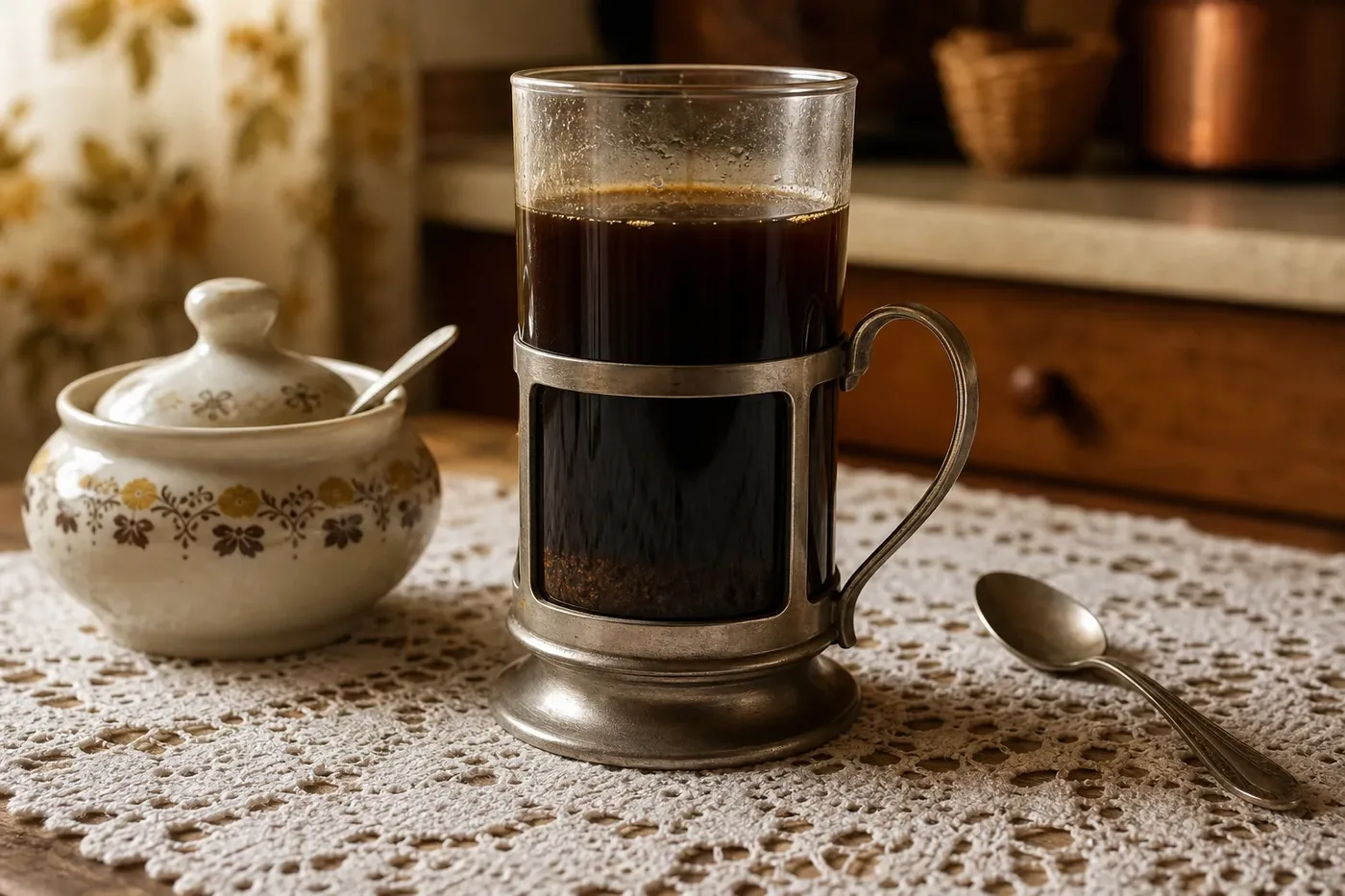
For much of the twentieth century the everyday coffee in Poland needed no equipment at all. Ground coffee went straight into a glass, boiling water was poured over it, and the drinker waited for the grounds to sink before sipping around them. It is still made this way in many homes, and it is what most people mean when they talk about Polish coffee.
What Polish coffee is called: kawa po turecku
The most common name is kawa po turecku, coffee the Turkish way, although it has little in common with Turkish coffee beyond the grounds staying in the cup. Nothing is simmered, no special pot is used and the grind is coarser. It is also known as kawa sypana, loose coffee, and less politely as plujka, from the verb to spit, which is a fair description of what happens when you drink it too soon.
How to make Polish coffee in a glass
- Put one or two heaped teaspoons of ground coffee into a tall glass, often one held in a metal holder with a handle.
- Pour boiling water over it and stir once so the grounds are wet.
- Cover the glass with a saucer and leave it for a few minutes.
- Let the grounds settle, add sugar or milk if you like, and drink from the top without stirring again.
It is, in effect, an unfiltered immersion brew, the same principle as a French press without the plunger. The grounds keep steeping as you drink, so the last third of the glass is always stronger and more bitter than the first. The principle behind it is explained in immersion against percolation.
Why Polish coffee became the national habit
The method needs nothing but a kettle and a glass, which mattered in a country where coffee makers were hard to come by for decades. Under the communist government real coffee was often scarce and expensive, sold in small packets when it was available at all, and making it without any equipment used every gram. The glass-and-saucer routine became as familiar in offices and railway station canteens as it was at home.
Inka and the grain coffees of Poland
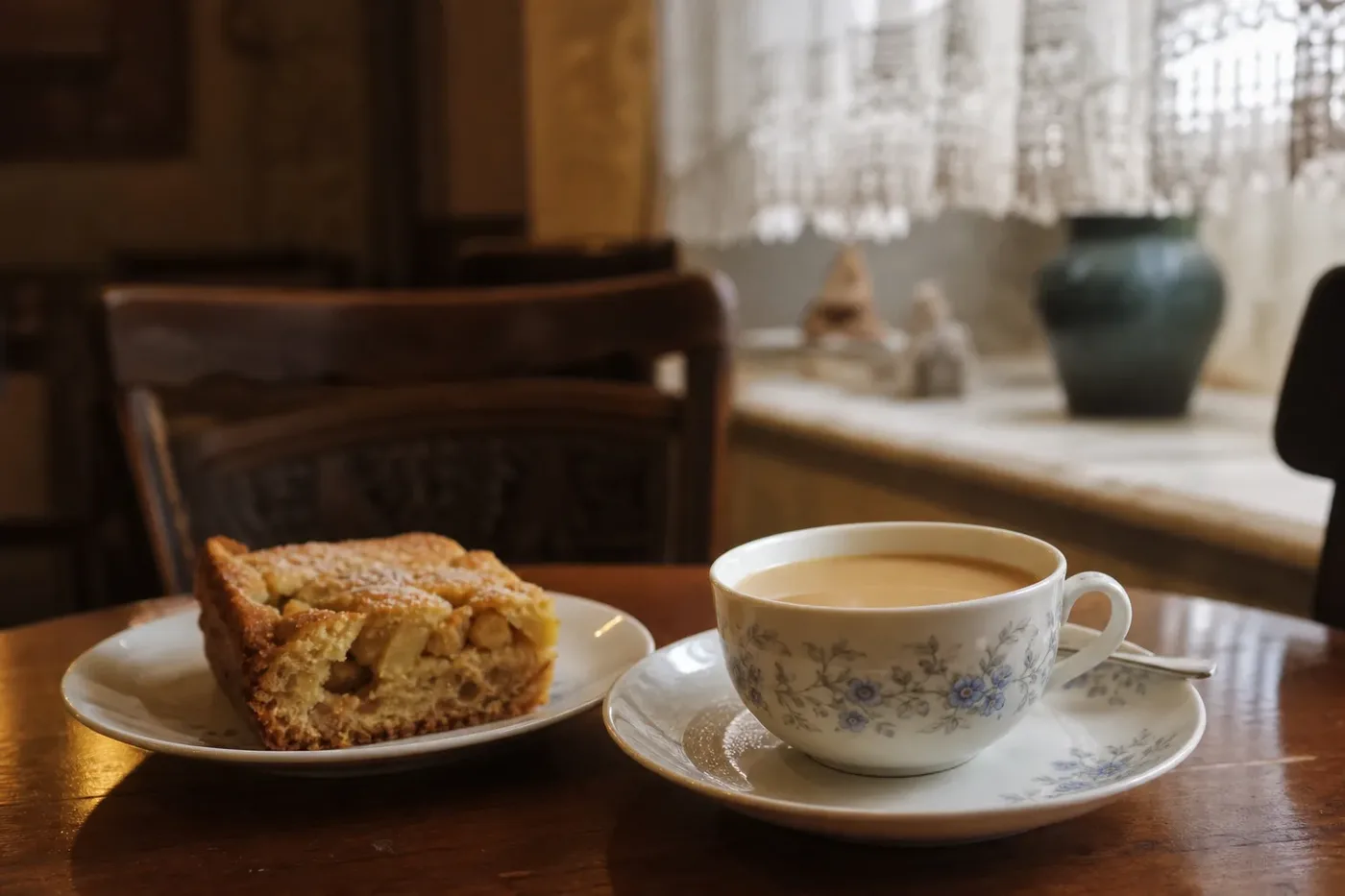
When real coffee ran short, grain coffee filled the gap. Poland's best-known version, Inka, is made from roasted cereals such as rye and barley along with chicory and sugar beet, and it contains no caffeine. It became a staple in homes and schools and is still sold today, now often chosen deliberately by people who want something coffee-like in the evening. How roasted roots and grains stand in for coffee is covered in chicory coffee.
Polish cafe culture in Krakow and Warsaw
Poland also has a long cafe tradition that sits alongside the kitchen glass. Krakow and Warsaw had literary and artistic cafes from the nineteenth century onward, some of which still trade, and the habit of sitting over coffee and cake runs deep. Since the early 2000s a strong speciality scene has grown in the larger cities, with local roasters, filter bars and competitive baristas, so a visitor today is as likely to be offered a carefully weighed pour over as a glass of kawa po turecku.
How to drink Polish coffee without the grounds
- Use a medium or coarse grind. Very fine grounds stay suspended and end up in your mouth.
- Cover it while it brews. The saucer keeps it hot and helps the grounds sink.
- Wait before the first sip, at least three or four minutes.
- Stop before the bottom, where the grounds sit.
A medium or dark roast suits it best, because the long, unfiltered steep pulls out a lot of body and bitterness and a light roast can turn harsh. If you enjoy the style but not the grit, a French press makes almost the same cup with a filter between you and the grounds.
How to make kawa po turecku at home
It needs no equipment beyond a heatproof glass and a kettle. Use a heaped teaspoon or two of finely ground coffee per glass, finer than for a French press but not as fine as Turkish coffee, put it straight into the glass and pour on water just off the boil. Stir once so the grounds are wet, then leave it alone for a few minutes. Most of the grounds sink to the bottom; a thin layer stays on top and settles if you give it time. Add sugar while it is hot if you take it. Drink slowly and stop before the last centimetre, which is mud.
The coffee matters more than the method. Because nothing is filtered, any harshness in a cheap dark roast comes straight through, so a medium roast that tastes good black makes a noticeably better glass.
Polish coffee today: specialty and grain coffee
The glass of grounds has not disappeared, but it is now one habit among many. Polish cities have a busy specialty coffee scene, with independent roasters and cafes serving espresso, filter and the same milk drinks found anywhere else, and the grain coffees remain on supermarket shelves for people avoiding caffeine. If you want the drink most visitors expect, a cafe will make you an espresso; if you want the one many Polish grandparents still drink, ask for kawa po turecku.
Polish coffee FAQ
What is Polish coffee?
Usually kawa po turecku: ground coffee put straight into a glass, covered with boiling water, left to settle and drunk without filtering.
Is Polish coffee the same as Turkish coffee?
No. Despite the name kawa po turecku, it is not simmered in a pot, uses a coarser grind and is made directly in the glass.
What is Inka coffee?
A Polish grain coffee made from roasted cereals, chicory and sugar beet. It contains no caffeine and became common when real coffee was scarce.
How do you stop grounds getting in your mouth?
Use a medium or coarse grind, cover the glass while it brews, wait several minutes before drinking, and stop before the bottom of the glass.