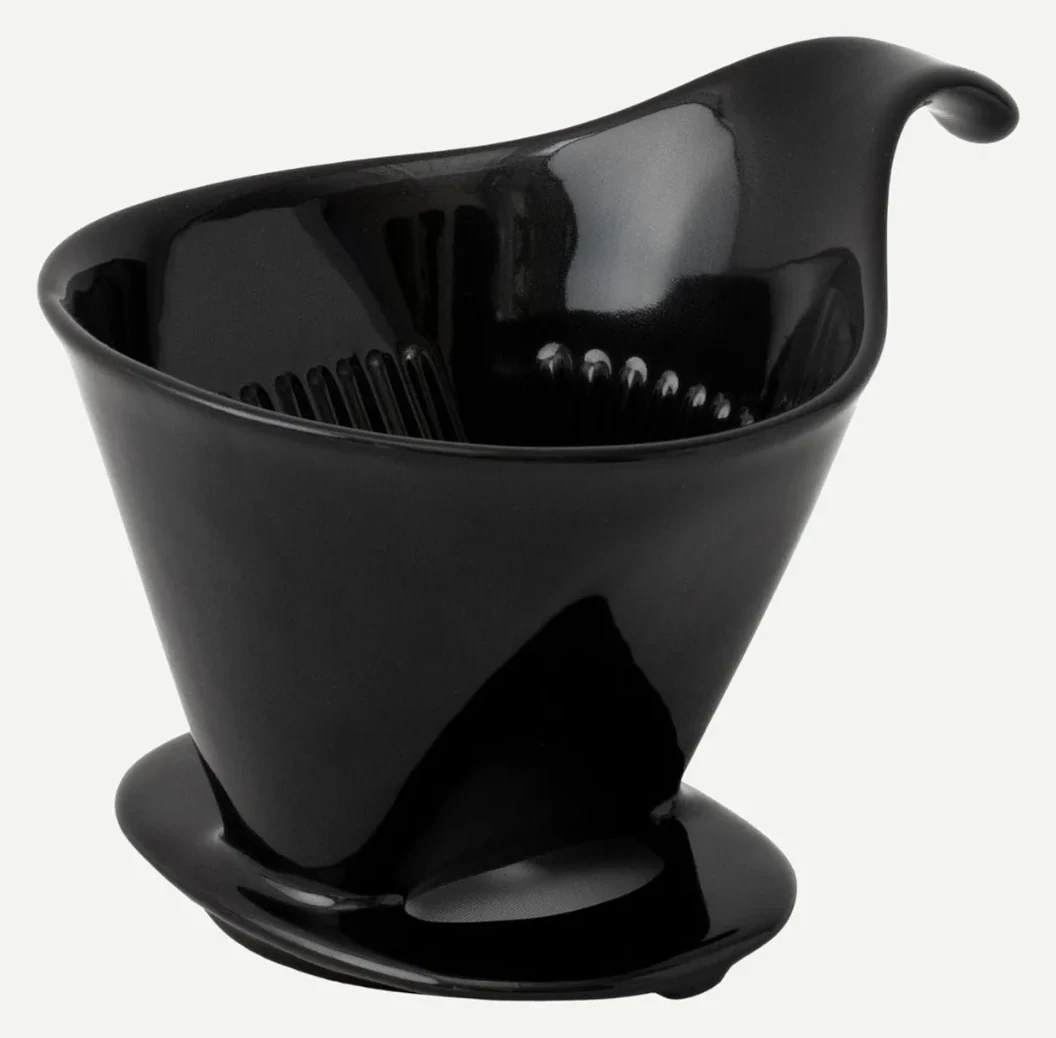
Bee House Ceramic Pour Over Dripper pour over coffee maker, Black

Black · 7 colours

Bee House Ceramic Pour Over Dripper Review

A two-hole ceramic dripper that is far harder to brew badly than a V60

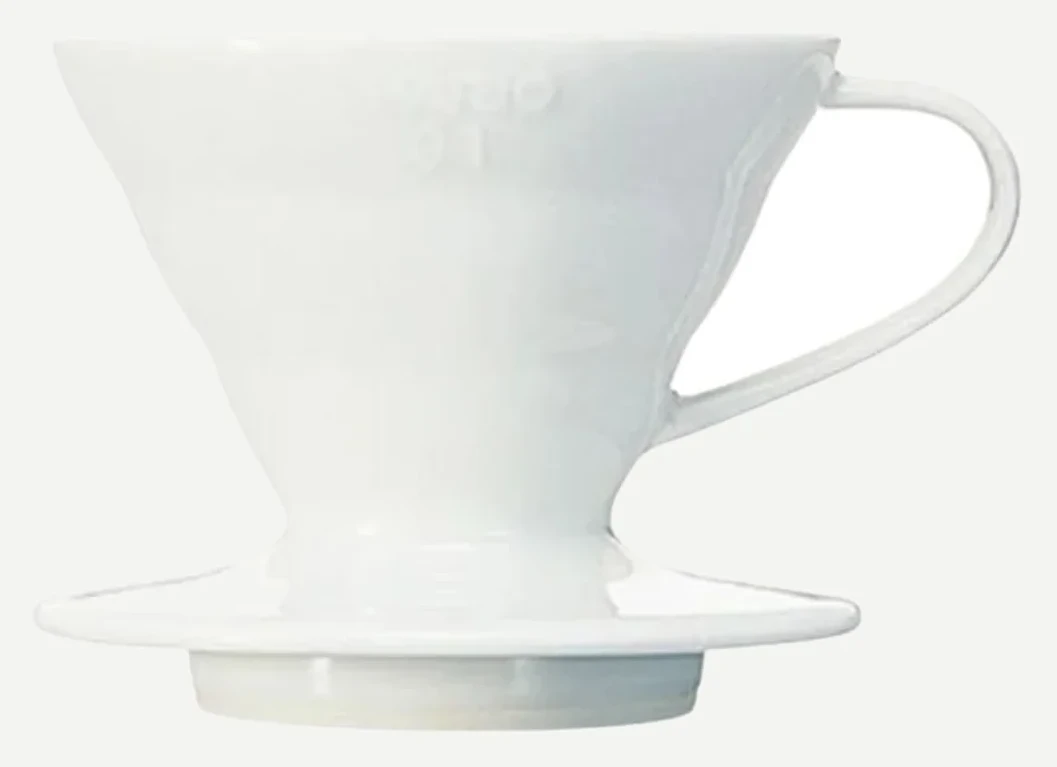
The Bee House is a ceramic conical pour over dripper by Zero Japan with two drainage holes and a side peek hole, sitting on a mug and taking standard cone filters.

Spec-led review. Built from the manufacturer’s published specification and price rather than hands-on testing. Figures we could not find stated are left blank instead of estimated. Updated when we get one in.

Where you can buy itUS confirmed

Confirmed on Amazon US, which is where this link points. Availability in other Amazon stores has not been checked, and a regional store may substitute a different product.

Our rating
7.7/ 10
Very good
5 of 6 scored, out of 75 points · 25 not judgeable from specs

How we rate pour over — what each criterion measures, and what we cannot.

Brew Quality & Consistency8.5 / 10
worth 26 of 75 · partly evidenced
how we got 8.5

what this measures, and what we cannot

What it was scored onScored from specs that predict this rather than measure it. 70% published.
Ribsnot in our data1.5 / 3.0
MaterialCeramic3.0 / 3.0
Drainage holes22.0 / 2.0
Bed shapeConical2.0 / 2.0

The rows that apply here are worth 10.0 between them and this one took 8.5, which is 8.5 out of 10. That 0–10 result is what the criterion's 26 of 75 points are then scaled by.

The 3.0 points we could not find a figure for are scored at the middle of the scale rather than as a zero, which awards 1.5 of them: the greyed figures above. We will not guess a specification and we will not mark the product down for our own missing research.

Flow Rate & Control (hole diameter not published)7.1 / 10
worth 12.6 of 75 · 5.4 unpublished · partly evidenced
how we got 7.1

what this measures, and what we cannot

What it was scored onScored from the specs the maker publishes. 57% published.
Drainage holes23.5 / 4.0
Hole diameternot applicable
Ribsnot in our data1.5 / 3.0

The rows that apply here are worth 7.0 between them and this one took 5.0, which is 7.1 out of 10. That 0–10 result is what the criterion's 12.6 of 75 points are then scaled by.

The 3.0 points we could not find a figure for are scored at the middle of the scale rather than as a zero, which awards 1.5 of them: the greyed figures above. We will not guess a specification and we will not mark the product down for our own missing research.

Build Quality & Durability7.5 / 10
worth 16 of 75 · partly evidenced
how we got 7.5

what this measures, and what we cannot

What it was scored onScored from the specs the maker publishes. 50% published.
MaterialCeramic5.0 / 5.0
Dishwasher safenot in our data1.5 / 3.0
Manufacture location publishednot in our data1.0 / 2.0

The rows that apply here are worth 10.0 between them and this one took 7.5, which is 7.5 out of 10. That 0–10 result is what the criterion's 16 of 75 points are then scaled by.

The 5.0 points we could not find a figure for are scored at the middle of the scale rather than as a zero, which awards 2.5 of them: the greyed figures above. We will not guess a specification and we will not mark the product down for our own missing research.

Ease of Use & Forgiveness
14 pts · not scored from specs
why there is no number here

what this measures, and what we cannot

needs a judgement that no published spec stands in for. Its 14 points are taken out of the total rather than scored as a zero, so the overall rating is out of what we could check. This neither helps nor hurts the product.

Filter Availability & Cost (filter cost per 100 not published)10.0 / 10
worth 8.4 of 75 · 5.6 unpublished · well evidenced
how we got 10.0

what this measures, and what we cannot

What it was scored onScored from the specs the maker publishes. 100% published.
Filters not proprietaryNo3.0 / 3.0
Filter cost per 100not applicable
Reusable filter availableYes, third party reusable cones fit3.0 / 3.0

The rows that apply here are worth 6.0 between them and this one took 6.0, which is 10.0 out of 10. That 0–10 result is what the criterion's 8.4 of 75 points are then scaled by.

Value for Money (no price published)5.0 / 10
worth 12 of 75 · not evidenced
how we got 5.0
The verdict

The Bee House is a ceramic conical pour over dripper by Zero Japan with two drainage holes and a side peek hole, sitting on a mug and taking standard cone filters.

Pros

  • A two-hole design the maker credits with dripping at a speed that balances the brew, rather than the single hole of a V60
  • A side peek hole to watch the level in the mug and avoid overfilling
  • Ceramic, made by Zero Japan, with a handle shaped to the thumb
  • Takes standard cone papers, and third-party reusable cones fit

Cons

  • No price is published for it here
  • Ceramic needs pre-heating or it pulls heat out of the brew
  • No capacity is published

What is the Bee House dripper?

A ceramic cone with two small holes, made by Zero Japan, and the holes are the design.

Zero Japan publishes a double hole design credited with dripping at an ideal speed for a balanced flow, a peek hole in the side to watch the level in the mug and avoid overfilling, an ergonomic handle shaped to the thumb, and ceramic construction.

Why two holes beat one for most people

One large hole hands the flow rate to you. Two small ones keep it.

A V60 has a single wide opening, so the water leaves as fast as the coffee bed will let it. That means the brew time is set almost entirely by your grind and your pour, which is powerful and unforgiving: grind slightly too coarse and the water runs straight through under-extracted.

Two small holes are a restriction. Above a certain point the dripper simply will not drain faster, whatever you do, so the contact time has a floor. Grind a bit coarse, pour a bit fast, and the brewer absorbs the error instead of passing it to the cup.

The trade is that you cannot brew fast even when you want to, and a very fine grind will back the water up and stall. It occupies the same territory as a Kalita Wave without needing a proprietary filter.

Ceramic, and why preheating is not optional

A cold ceramic dripper takes heat out of the brew, and there is a lot of ceramic here.

Ceramic scores well on brewing because once warm it holds temperature far more steadily than thin plastic, which matters across a three minute pour. But it gets there by absorbing heat, and the heat it absorbs comes out of your coffee.

Rinsing it with hot water before brewing is the difference between this working and not, and the same rinse wets the paper and removes its taste. Skipping it on a plastic cone costs you little. Skipping it here costs you several degrees at the start of the brew, which is exactly when it matters most.

Bee House vs Hario V60

Two ceramic cones. One is a controller and one is a governor.

The V60 has one large hole and spiral ribs and is designed to be steered. In practised hands it makes the better cup, and it is the more interesting brewer.

The Bee House restricts the flow so the brew is broadly the same whatever you do, and adds the peek hole so you do not overfill the mug. Both take standard cone papers. If pour over is something you want to get right rather than get good at, the Bee House.

Is the Bee House worth it?

Worth it as a forgiving ceramic dripper, with a caveat about how little is published.

It is a well-regarded design, the two-hole restriction genuinely works, and it uses ordinary filters rather than a proprietary paper.

Two honest notes. Zero Japan publishes no hole diameter, no rib design, no capacity, no country of manufacture and no warranty term on this listing, so it is being judged on a short description. And this listing carries only 59 reviews, which is thin. It is here because it is the only two-hole ceramic dripper on the site and that geometry has no other representative.

Who should buy it (and who should not)

Buy it if your V60 keeps running through too fast.

It suits somebody who owns a hand grinder they cannot dial precisely, who brews one mug at a time, and who wants ceramic on the counter rather than plastic.

Do not buy it if you want to control the brew by pouring, because the holes take that away. Do not buy it for a pot: it is a single-mug dripper. And expect to rinse it with hot water first, every time.

Frequently Asked Questions

Why does the Bee House have two holes?

Two small holes cap the flow rate, so the brew time cannot run away if the grind is slightly coarse or the pour slightly fast.

What is the peek hole for?

Seeing the coffee level in the mug underneath, so you stop before it overflows.

Does it take standard filters?

Yes, ordinary cone filters, and third party reusable cones fit.

Do you need to preheat it?

Yes. Ceramic absorbs heat, and a cold dripper takes it out of the brew.

Who makes the Bee House?

Zero Japan.
Bee House Ceramic Pour Over Dripper appears in

Bee House Ceramic Pour Over Dripper is featured in

More on pour over

Background reading that puts this review in context.

Alternatives to Bee House Ceramic Pour Over Dripper

See all Bee House Ceramic Pour Over Dripper alternatives →

Other Pour Over options we've reviewed.