What is the AGOGO Pour Over?
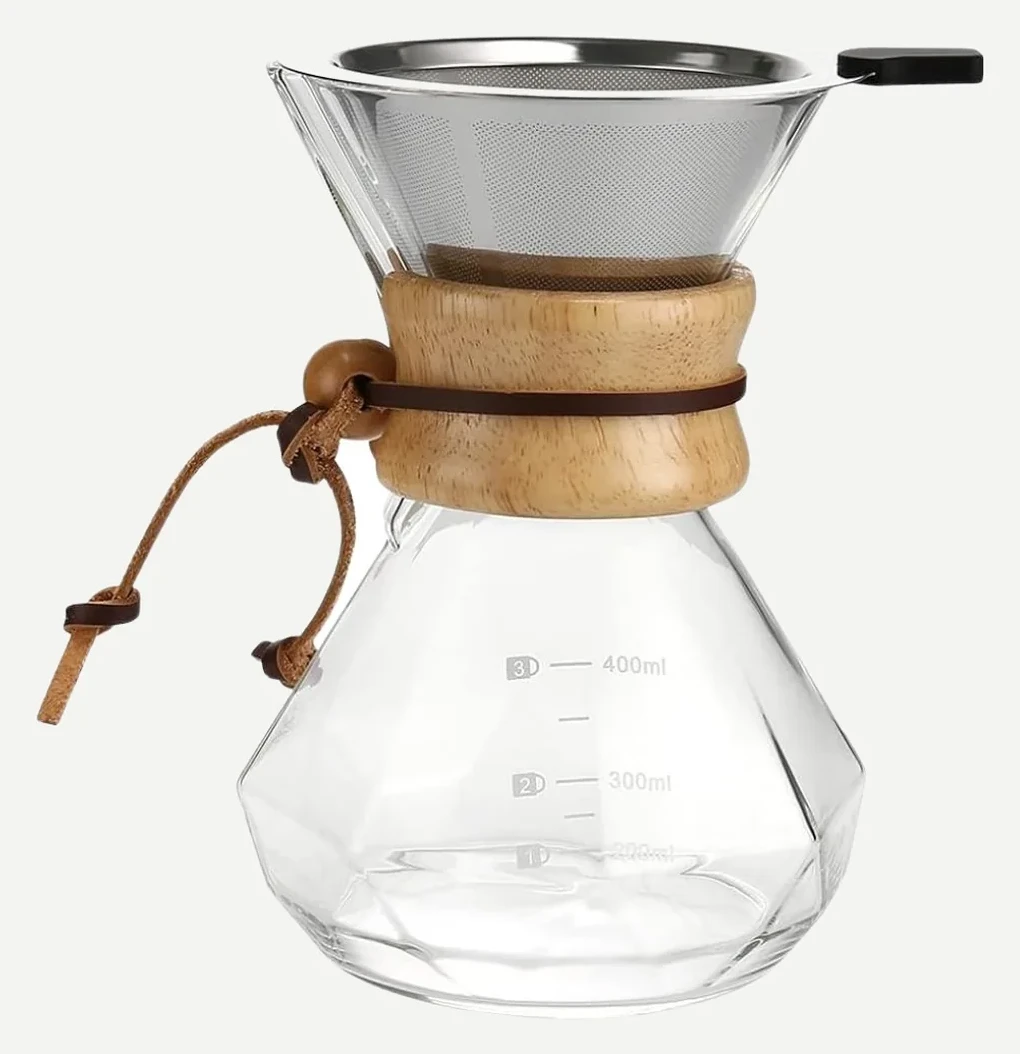
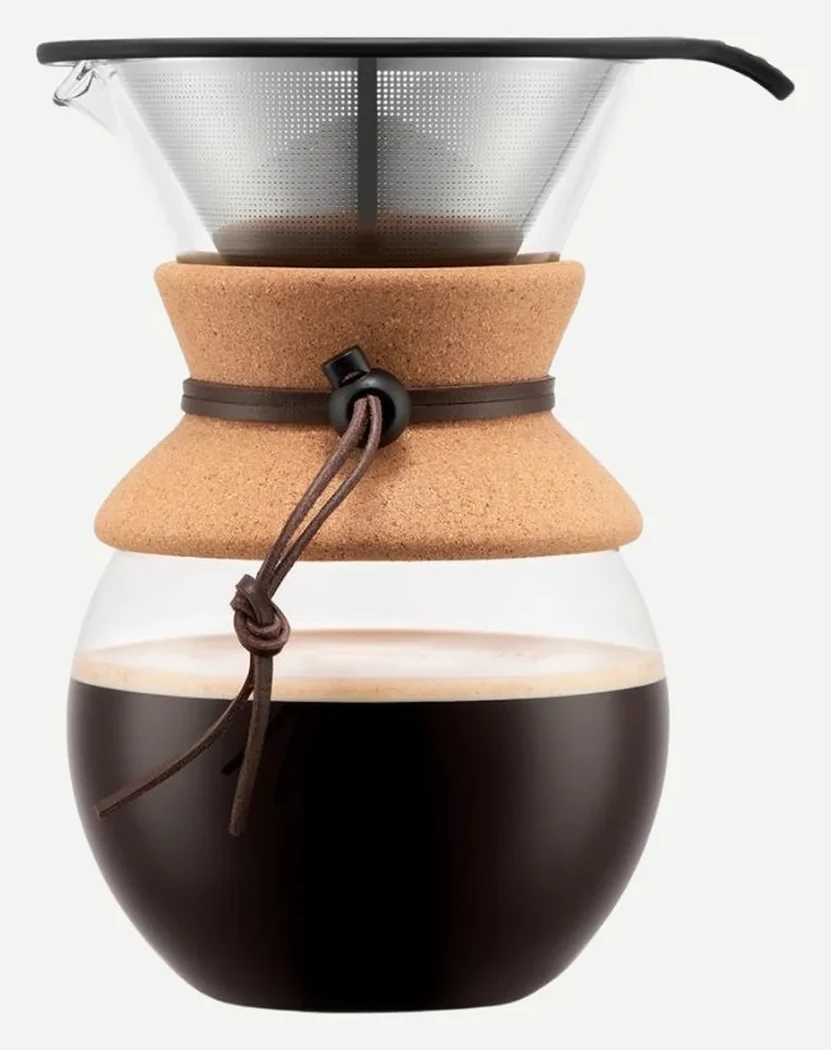
The AGOGO Pour Over is a cone-shaped pour over set combining a borosilicate glass carafe with a 304 stainless steel dripper and a permanent double-layer steel filter.
It comes in three sizes: 20 oz, 28 oz, and 34 oz. The carafe is single-walled borosilicate glass, and the build also incorporates leather and wood accents. The only available color option is brown. A cleaning brush and cleaning cloth are included in the box.
At $27.99, it sits in the budget to mid-range pour over bracket. The permanent stainless steel filter removes the ongoing cost of paper filters. Hand washing is recommended for longevity, though some parts are rated dishwasher safe.
AGOGO Pour Over brew quality and flow control
The cone shape and double-layer stainless steel filter are the two structural facts that drive brew character, and both point toward a moderate, consistent extraction.
Cone-shaped drippers concentrate the coffee bed and tend to produce a faster draw-down than flat-bottom designs, which can sharpen clarity in the cup. The double-layer stainless steel filter retains more oils than paper, lending the brew a fuller body. These are structural tendencies, not tested results.
The single-walled borosilicate glass carafe will not retain heat the way a double-walled vessel would, so brewed coffee cools at a normal rate. Buyers who want to hold temperature after brewing will need a separate vessel. Two mesh layers catch more than one, at the cost of a slower draw-down.
- The cone geometry tends toward faster draw-down and higher clarity than flat-bottom drippers at this price.
- Double-layer stainless steel retains more oils than paper, producing a fuller-bodied cup than paper-filtered alternatives.
- Single-walled borosilicate glass does not insulate, so brewed coffee cools quickly in the carafe.
- Technique is entirely the buyer's: an open cone has no mechanism to compensate for a rushed pour.
What you can brew with it
The AGOGO Pour Over handles single servings through small group brews across its three sizes, suited to filter-style black coffee only.
The 20 oz option covers one to two cups, the 28 oz sits comfortably at two to three, and the 34 oz serves three to four people from a single brew. All three use the same cone dripper and stainless steel filter, so the brewing process is identical across sizes.
This is a manual pour over intended for regular drip-style coffee. The stainless filter is not suited to espresso, and the single-walled glass carafe is not appropriate for cold brew holding or extended steep methods. Buyers wanting those functions should look at a different category.
- Three size options give genuine flexibility for solo drinkers up to small households brewing simultaneously.
- The reusable steel filter suits regular filter coffee, not espresso or any pressurised brewing method.
- Single-walled glass makes it unsuitable for keeping coffee warm during a slow morning service.
- No travel or sealed lid is indicated, so this is a brew-and-pour setup, not a carry option.
Living with it, day to day
Hand washing is recommended, a cleaning brush and cloth are included, and the reusable filter means no weekly paper filter order to manage.
The manufacturer recommends hand washing and rinsing with water. Some parts are listed as dishwasher safe, but running the borosilicate glass or the leather and wood accents through a dishwasher regularly risks shortening their life. The included brush is sized for cleaning the steel filter.
The permanent steel filter needs a thorough rinse after each brew to prevent oil buildup, and a deeper clean with the brush periodically. There are no descaling steps involved, since this is a passive dripper with no heating element. Replacement filter sourcing has not been confirmed.
- Rinse the stainless filter immediately after each brew to prevent coffee oil residue from accumulating between the layers.
- The included cleaning brush is intended for the filter; use it periodically rather than only when buildup is visible.
- Leather and wood accents should not be submerged or machine washed, as both materials degrade with prolonged water exposure.
- No descaling is required, since the dripper has no heating element or internal water pathway.
AGOGO Pour Over vs COSORI Pour Over
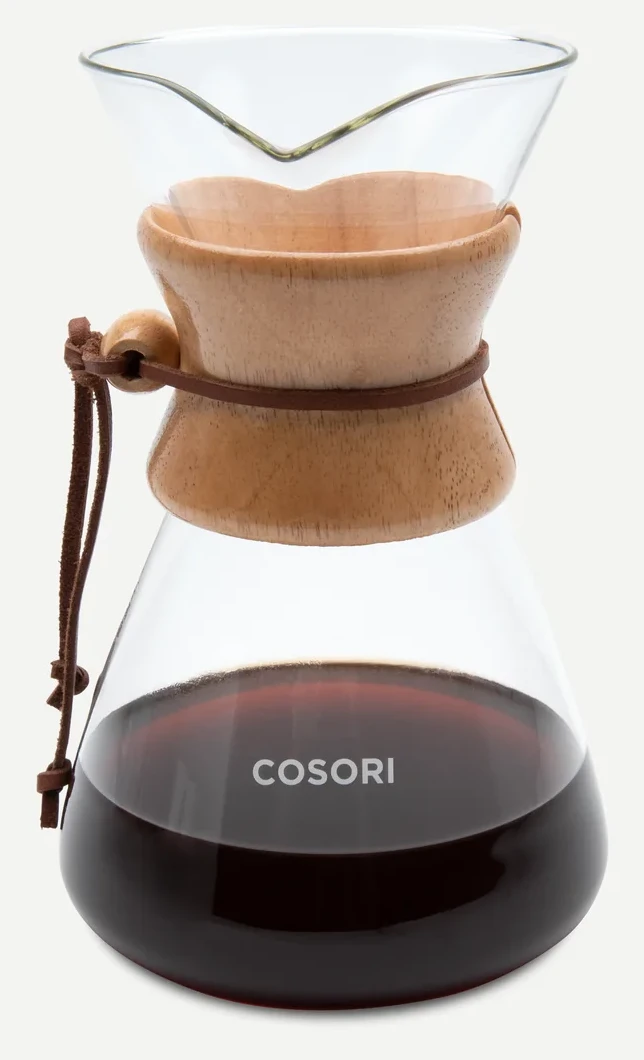
At $27.99 with a permanent steel filter, the AGOGO sits close in price to several paper-filter pour overs, and the choice turns on filter preference and build materials.
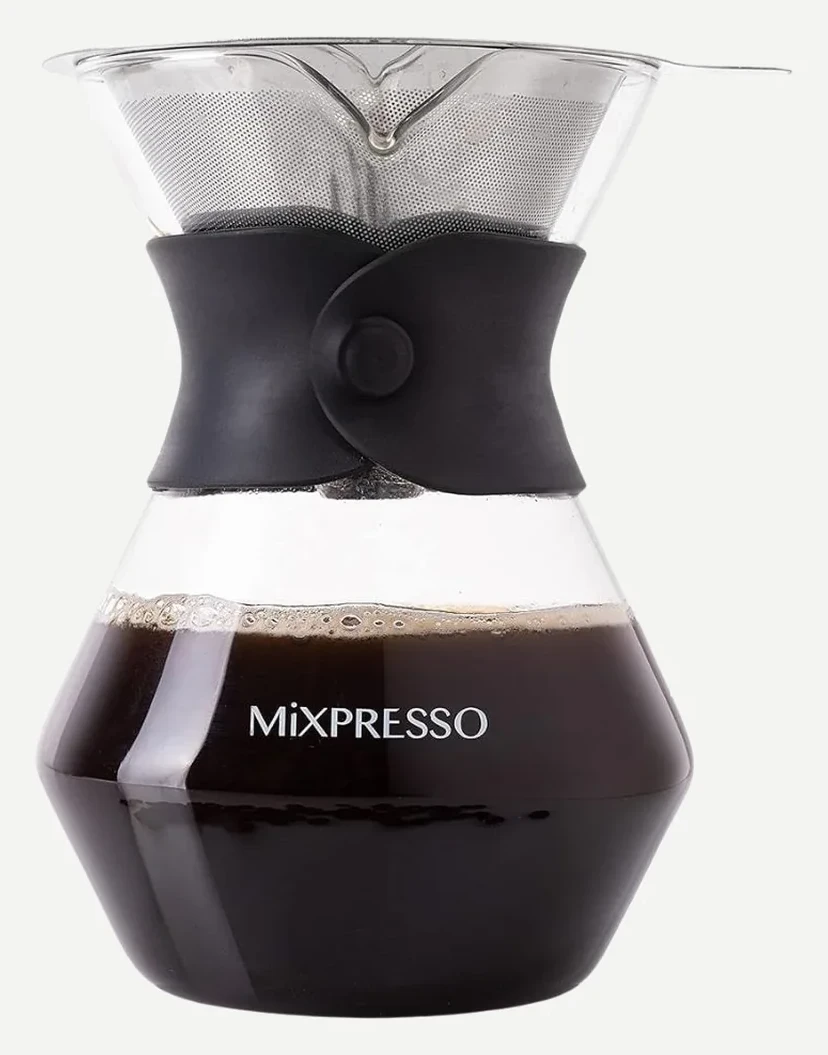
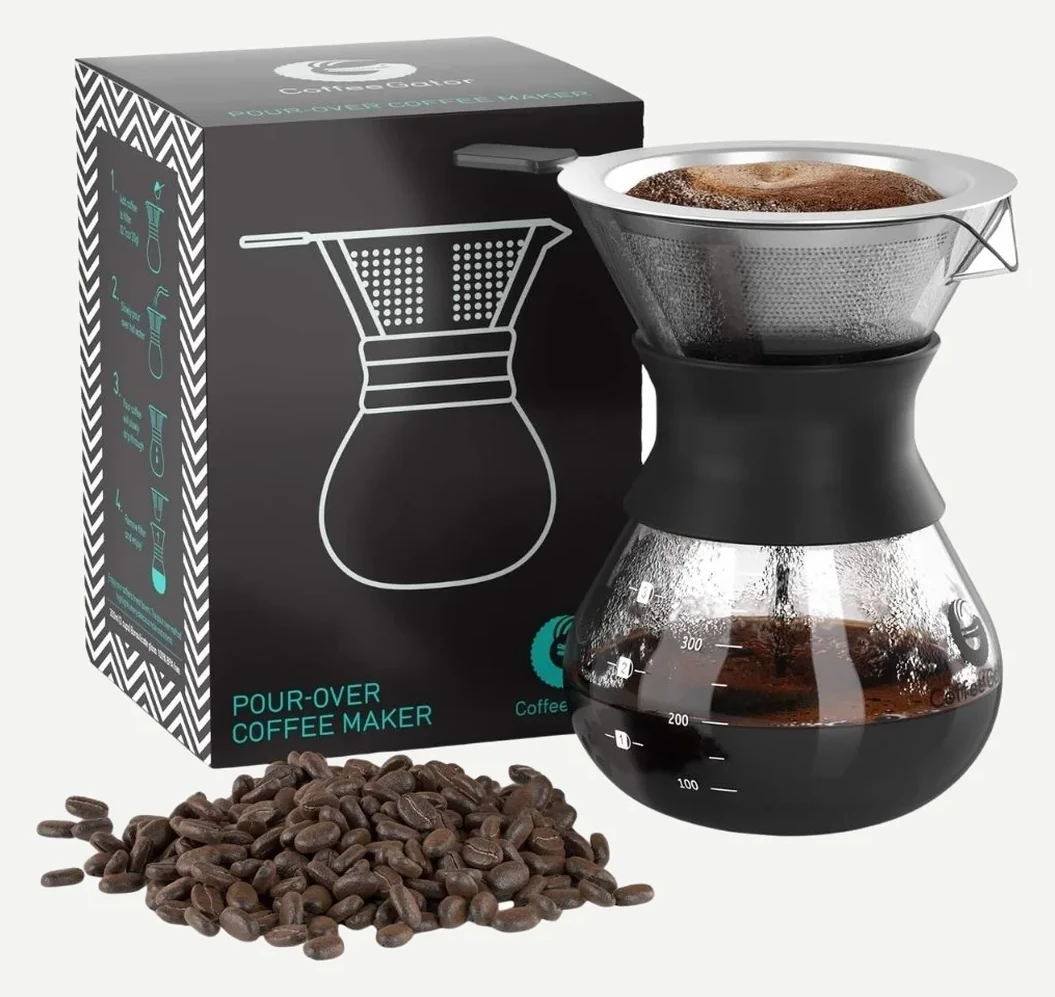
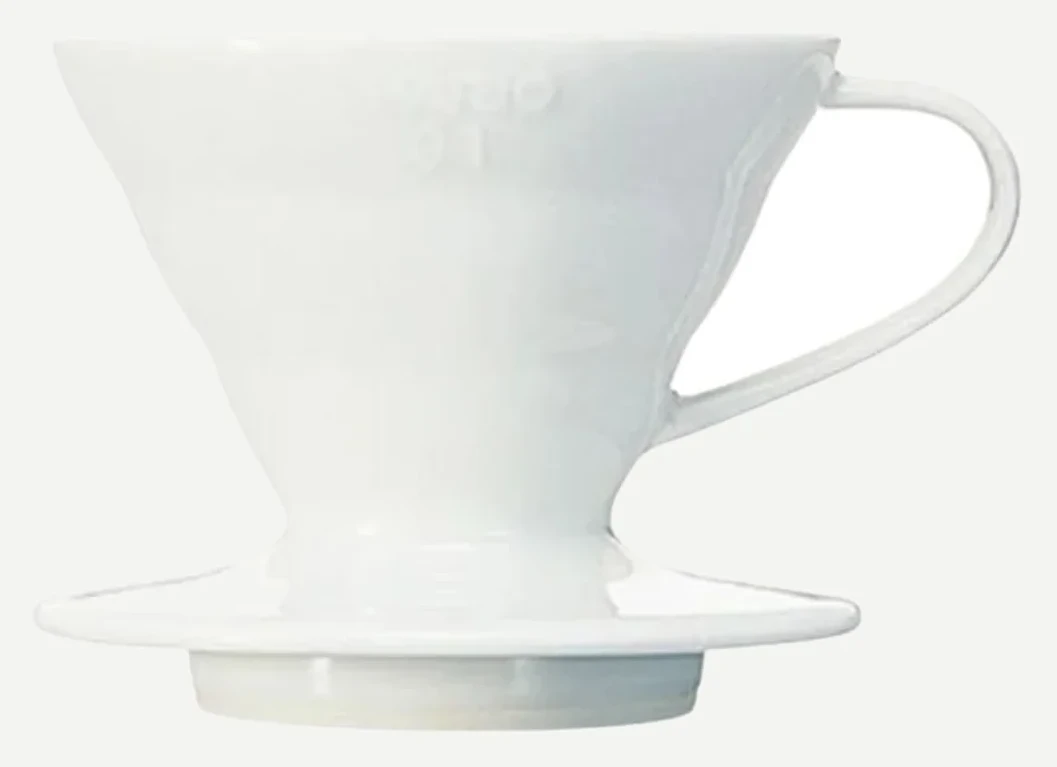
Buyers choosing between this and a Hario V60 or similar ceramic or glass dripper should weigh the filter type first. Paper-filtered drippers produce a cleaner, more transparent cup with less oil. The stainless filter here delivers more body but requires more frequent cleaning. Neither is better in absolute terms; it depends on the cup the buyer wants.
On build, the combination of borosilicate glass, 304 stainless, leather, and wood at $27.99 is a strong material proposition. Buyers should check whether rival options at this price include a carafe or sell the dripper alone, as that affects the true cost comparison significantly.
- The AGOGO wins on filter economy: no recurring paper cost once purchased, unlike most V60 or Chemex setups.
- Paper-filter drippers win on cup clarity and oil separation, which matters to buyers who prefer a brighter, lighter-bodied coffee.
- The three-size range is broader than many single-dripper competitors sold at this price point.
- Buyers should verify whether a rival includes a carafe before comparing prices, as dripper-only products look cheaper but are not.
Is the AGOGO Pour Over worth it?
At $27.99 with a glass carafe, permanent filter, and three size options included, the material value is strong, but thin guidance leaves the result dependent on the buyer's existing technique.
The combination of borosilicate glass, 304 stainless steel, leather, and wood accents at under $30 is a reasonable material offer. The permanent filter removes the cost of consumables, which adds up quickly with daily brewing. For a buyer who already knows how to pour, the hardware holds up its end of the deal.
For a buyer new to pour over, the absence of any published grind, ratio, or pour guidance puts the learning curve entirely on them. A paper-filter dripper from a brand with detailed brew guides may produce better results in the early weeks, even if the hardware is less substantial. The AGOGO rewards experience more than it builds it.
Who should buy it (and who should not)
Experienced pour over brewers who want a permanent filter and a full carafe set at a low price will get the most from this; beginners may struggle without published guidance.
This suits a buyer who already brews pour over regularly and wants to eliminate paper filter costs without spending heavily on hardware. The three size options also make it a reasonable choice for someone who brews for varying numbers of people across the week.
It is less suited to someone new to the method who needs grind and ratio guidance to get consistent results, or to anyone who needs heat retention from the carafe. A single-walled glass vessel cools quickly, which matters if mornings are unhurried.
Buy it if
- You already brew pour over and want to cut ongoing paper filter costs without upgrading to expensive hardware.
- You brew for one to four people and want a single set that covers different batch sizes.
Skip it if
- You are new to pour over and need grind size and brew ratio guidance to get consistent results from day one.
- You need the carafe to hold coffee hot for more than a few minutes after brewing.
Frequently Asked Questions
Is the AGOGO Pour Over dishwasher safe?
Some parts are listed as dishwasher safe, but the manufacturer recommends hand washing. The borosilicate glass carafe and the leather and wood accents are particularly sensitive to repeated machine washing. Rinsing with water after each brew and using the included brush on the stainless filter is the safer routine for keeping all parts in good condition.
AGOGO Pour Over vs Hario V60: which should I buy?
The core difference is the filter. The AGOGO uses a permanent double-layer stainless steel filter, which produces a fuller-bodied, oilier cup and costs nothing to run after purchase. The V60 uses paper filters, which produce a cleaner, brighter cup but carry an ongoing cost. The AGOGO also includes a glass carafe; the V60 is sold as a dripper only in most configurations.
How many cups does the AGOGO make?
It comes in three sizes. The 20 oz version covers one to two cups, the 28 oz suits two to three, and the 34 oz handles three to four cups from a single brew. All three use the same cone dripper and stainless steel filter, so the brewing process is identical across the range.
What grind size should I use for pour over coffee?
For cone-shaped pour over drippers with a metal filter, a medium to medium-fine grind is the common starting point. Metal filters flow faster than paper, so grinding slightly coarser than you would for a paper-filtered V60 helps prevent over-extraction. Adjust based on how the brew tastes: sour suggests finer, bitter suggests coarser.
Does a stainless steel pour over filter change the taste of coffee?
Yes, in a measurable way. Stainless steel filters allow coffee oils and fine particles to pass through into the cup, which paper filters trap. The result is a heavier body and more pronounced mouthfeel. Buyers who prefer a clean, transparent cup tend to favour paper. Those who want richness and texture generally prefer metal.
Is single-walled glass good enough for a pour over carafe?
Single-walled borosilicate glass is durable and heat-resistant, making it a practical material for a pour over carafe. The limitation is insulation: it does not retain heat after brewing the way a double-walled vessel would. If you pour and drink immediately, it is fine. If you brew and return to the carafe later, expect coffee to have cooled significantly.