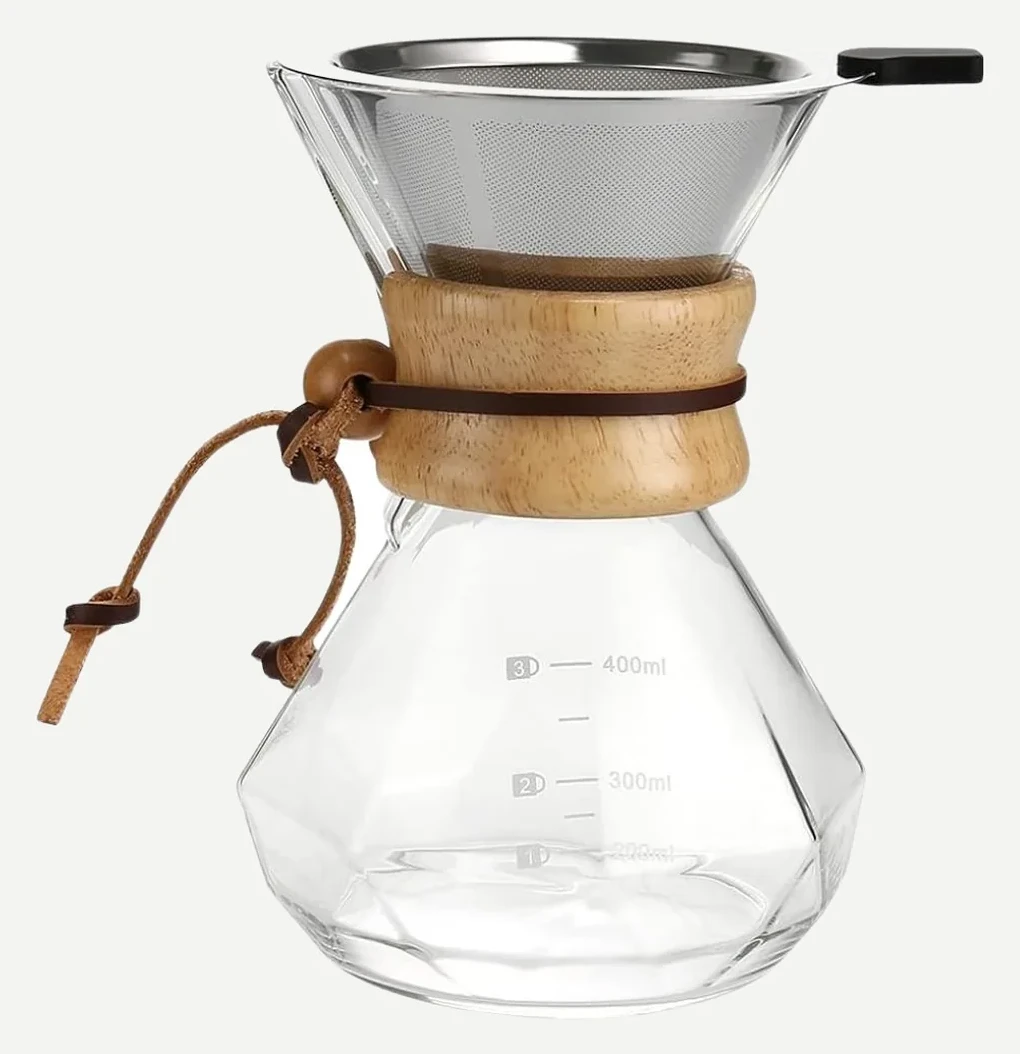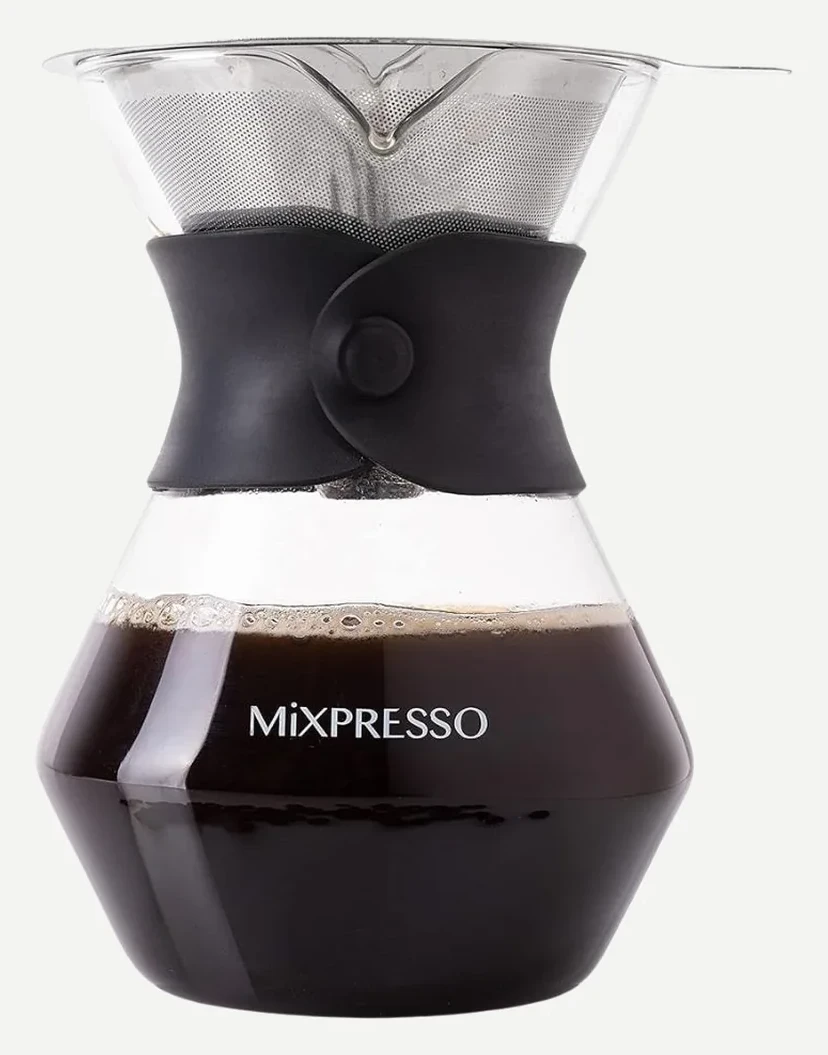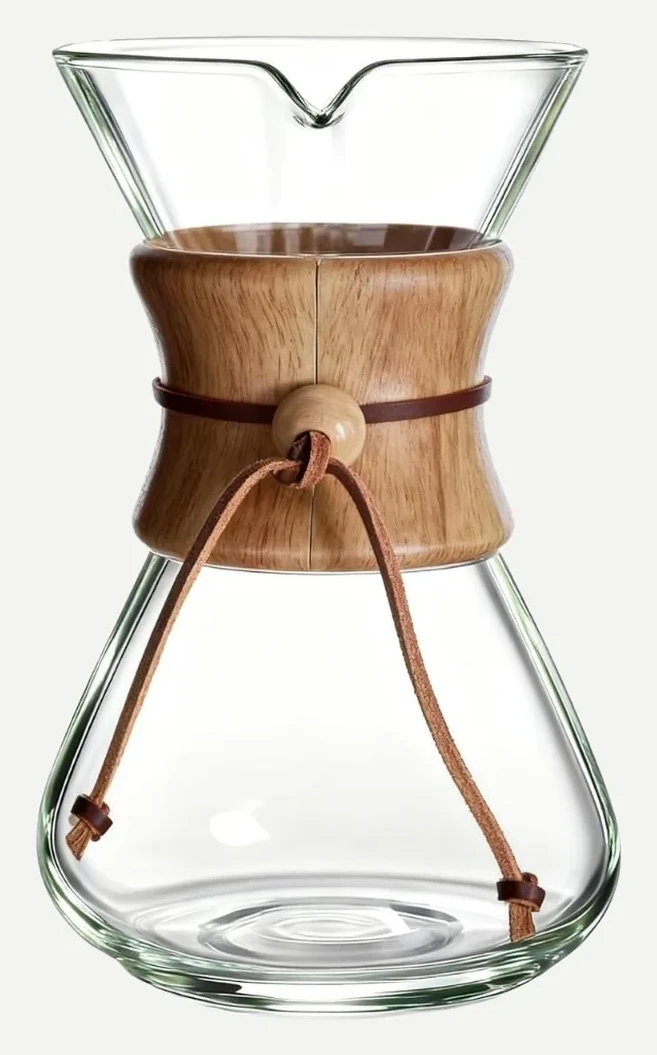
What is the Bodum Pour Over?
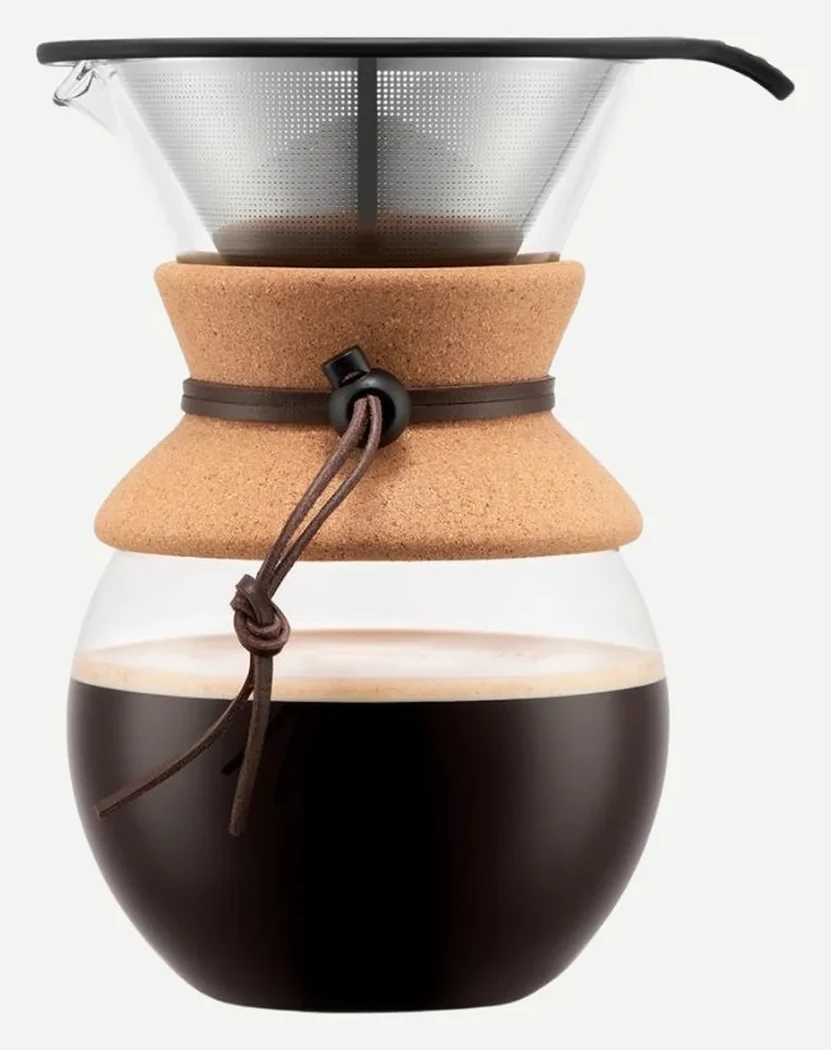
A European-made borosilicate glass cone dripper with a built-in stainless steel filter, available in three sizes for under twenty dollars.
The dripper comes in 0.5 L, 1 L, and 1.5 L capacities, covering a single cup through a large carafe. Color options include black, cork, red, and white. A measuring scoop is included. The glass carafe and filter are both dishwasher safe.
Construction uses borosilicate glass, known for thermal resistance and clarity, paired with a stainless steel filter. Some versions use double-walled glass for insulation, others single-walled. At $19.99 the package undercuts most glass drippers that ship with a reusable filter.
Bodum Pour Over brew quality and flow control
Borosilicate glass and stainless steel construction are the main quality signals; brew consistency depends heavily on the technique the buyer brings.
The cone shape is standard for pour over, directing water through a central point and promoting even extraction when the pour is controlled. The stainless steel filter passes more fine particles than paper, which is a cup character choice as much as a quality one.
Double-walled glass on the larger versions retains heat longer than single-walled. European manufacture and confirmed dishwasher safety suggest the build is meant to last. Beyond that, grind tolerance and extraction range are not covered by what is published.
- The stainless steel filter is permanent and included, removing the paper filter cost and paper taste from every brew.
- Double-walled borosilicate glass on some sizes slows heat loss during a pour, which matters for larger batches.
- Cone geometry is well established for pour over, but extraction consistency depends on grind size and pour rate, neither of which is specified.
- Metal filters allow more oils and fine sediment into the cup than paper, producing a heavier body that not every drinker prefers.
What you can brew with it
Three size options mean it covers a single-serve cup through a generous 1.5 L carafe, all with the same dripper design.
The 0.5 L size is practical for one cup at a time. The 1 L and 1.5 L versions suit two to four cups per brew. All three sizes share the cone design and the stainless steel filter, so the brewing method is consistent across the range.
This is a manual pour over tool, so the quality of the result scales with the care the brewer puts in. It is not suited to espresso or immersion styles. Buyers who want a set-and-forget brew will want a different category of product.
- Three capacities, 0.5 L through 1.5 L, cover solo brewing and small-group serving without changing the method.
- The cone filter is for drip-style pour over only; it will not replicate immersion brewing or pressure-based extraction.
- Color and finish options give buyers a degree of choice that is unusual at this price point.
- Single and double-walled versions suit different needs: single-walled for quick cool-down pours, double-walled for retaining temperature through a longer brew.
Living with it, day to day
Both the glass carafe and the stainless steel filter go in the dishwasher, making daily upkeep straightforward.
The manufacturer also lists rinsing with water as an acceptable cleaning method, so a quick rinse after each brew is enough for routine use. There are no paper filters to stock or dispose of, which simplifies the weekly shopping list.
Borosilicate glass resists thermal shock better than standard glass, but it is still glass and will break if dropped. The stainless steel filter should be inspected occasionally for clogging, particularly if very fine grinds are used.
- Both the carafe and filter are dishwasher safe, so a full clean requires no hand scrubbing.
- A rinse with water after each use is listed as sufficient for daily maintenance between deeper washes.
- No paper filters are needed, so there is nothing to run out of mid-week.
- The stainless steel filter can clog with very fine grinds; a periodic soak or brush clean will keep flow consistent.
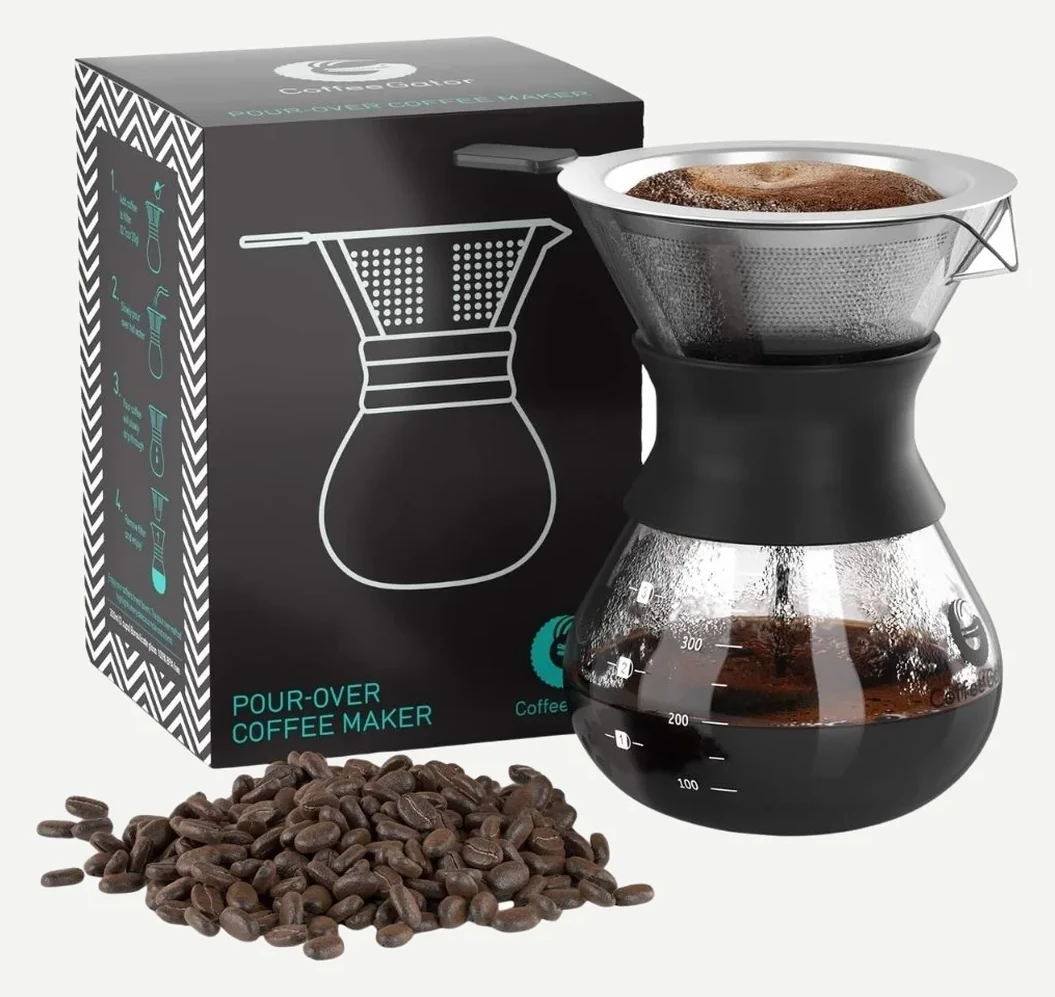
Bodum Pour Over vs Coffee Gator Pour Over
At under twenty dollars the main competition is other entry-level glass drippers, most of which require paper filters and cost more to run.
The Hario V60 is the most common reference point in the cone dripper category. It is available in glass, ceramic, and plastic versions across a range of prices. Buyers should check whether their preferred V60 version includes a filter and whether ongoing paper filter costs matter to their budget.
The Chemex uses a proprietary thick paper filter that produces a notably clean, sediment-free cup. It costs more to buy and more to run. Buyers who prioritise clarity over body and do not mind the filter expense will find it a different drinking experience entirely.
- The V60 has a larger community of published recipes and grind guides; buyers who want structured guidance may find that useful.
- The Chemex produces a cleaner cup through its thick paper filter, but adds ongoing filter cost that this unit avoids entirely.
- At $19.99 with a reusable filter included, this dripper has a lower total cost of ownership than most paper-filter alternatives at a similar entry price.
- Buyers considering the V60 or Chemex should confirm whether a filter, scoop, or carafe is included before comparing prices directly.
Is the Bodum Pour Over worth it?
For under twenty dollars with three sizes, borosilicate glass, and a reusable filter included, the price is hard to argue with.
Most glass drippers in this category either cost more or require paper filters that add up over time. The inclusion of a stainless steel filter and a measuring scoop at this price means the out-of-pocket cost on day one is also the total cost of ownership, barring breakage.
The trade-off is that buyers get minimal published guidance on how to use it well. Pour over rewards attention to grind size, water temperature, and pour rate, and none of those are covered here. Experienced brewers will not miss that information. Newcomers will need to find it elsewhere, but the low entry cost makes that a reasonable ask.
Who should buy it (and who should not)
Experienced pour over brewers who want a low-cost, low-maintenance glass dripper will get the most from it; beginners need to know what they are signing up for.
Anyone who already brews pour over and wants a dishwasher-safe glass option without a recurring filter cost will find this fits that brief neatly. The three size options also make it a practical choice for households where batch size varies.
Buyers who are new to pour over and expecting guidance on how to brew well will need to look beyond what is in the box. The dripper itself is capable, but the technique has to come from the buyer.
Buy it if
- You already know how to brew pour over and want a fuss-free, dishwasher-safe glass dripper at a low price.
- Eliminating paper filter costs and waste matters to you more than having a very precisely controlled flow rate.
- You want a single dripper that covers solo cups and larger batches without buying separate equipment.
Skip it if
- You are new to pour over and want a product that comes with enough guidance to brew a good cup on the first try.
- You prefer a very clean, sediment-free cup, because a metal filter will not deliver that the way a paper one does.
- You need espresso or any pressurised extraction method, as this is a gravity dripper only.
Frequently Asked Questions
Is the Bodum Pour Over dishwasher safe?
Yes. Both the borosilicate glass carafe and the stainless steel filter are listed as dishwasher safe. The manufacturer also notes that rinsing with water is sufficient for everyday cleaning between deeper washes, so day-to-day upkeep is straightforward.
What sizes does the Bodum Pour Over come in?
It is available in three sizes: 0.5 L (17 oz), 1 L (34 oz), and 1.5 L (51 oz). The 0.5 L is designed for a single cup, while the 1.5 L suits two to four cups per brew. All three sizes use the same cone design and stainless steel filter.
Does the Bodum use paper filters?
No. It comes with a built-in reusable stainless steel filter, so no paper filters are needed. This removes the ongoing cost and means the cup will have more oils and a slightly heavier body than a paper-filtered brew. Buyers who prefer a very clean, sediment-free cup should factor that in.
What is the Bodum made of?
The carafe is borosilicate glass, which resists thermal shock better than standard glass. The filter is stainless steel and is permanently attached. Some size versions use double-walled borosilicate glass for better heat retention. It is manufactured in Europe and retails at $19.99.
What colors does the Bodum come in?
It is available in black, cork, red, and white. The color options apply to the lid and collar area rather than the glass itself. Availability may vary by size, so buyers should check which color and size combinations are in stock at the point of purchase.
Is the Bodum good for beginners?
It is an accessible entry price and simple to clean, but it does not come with published brewing ratios, grind size guidance, or brew time recommendations. Beginners will need to source that information separately. Buyers who already understand pour over basics will get more out of it from the start.