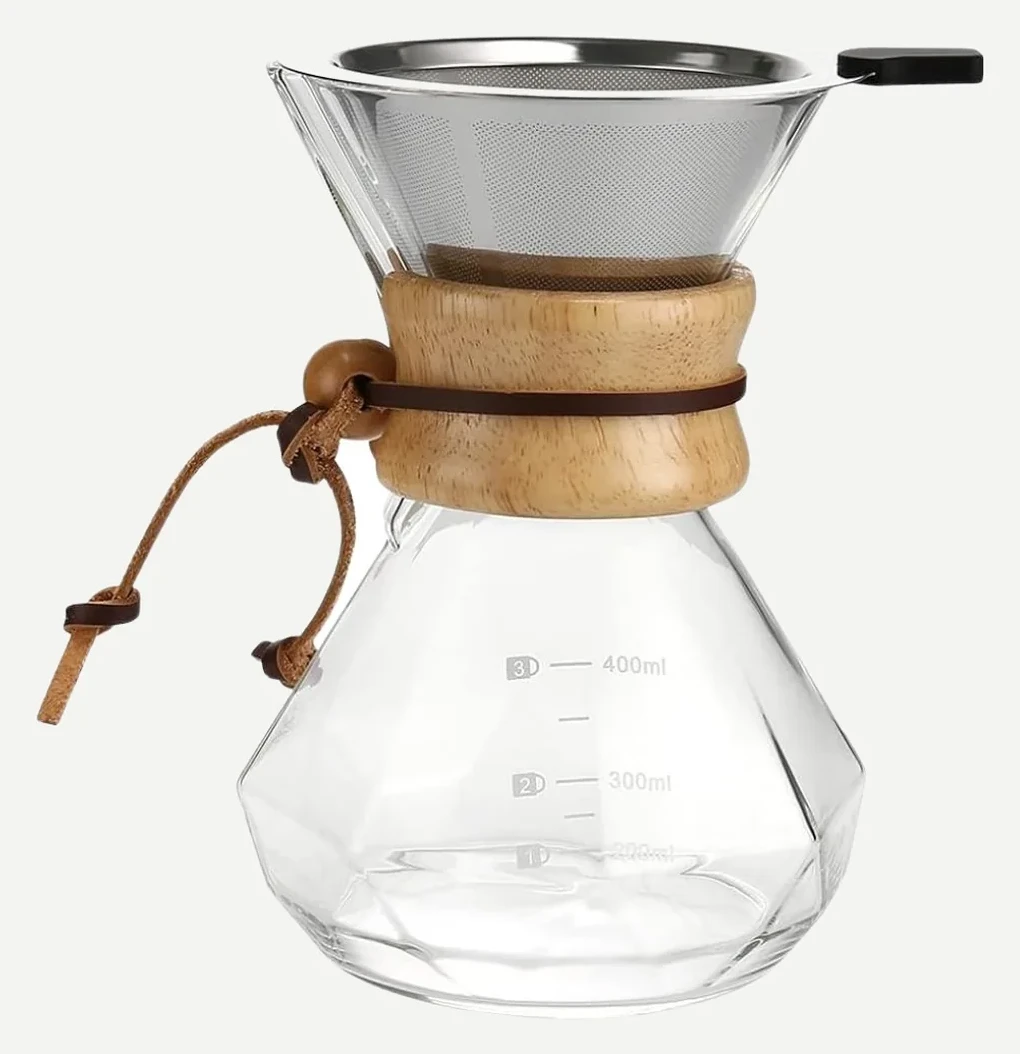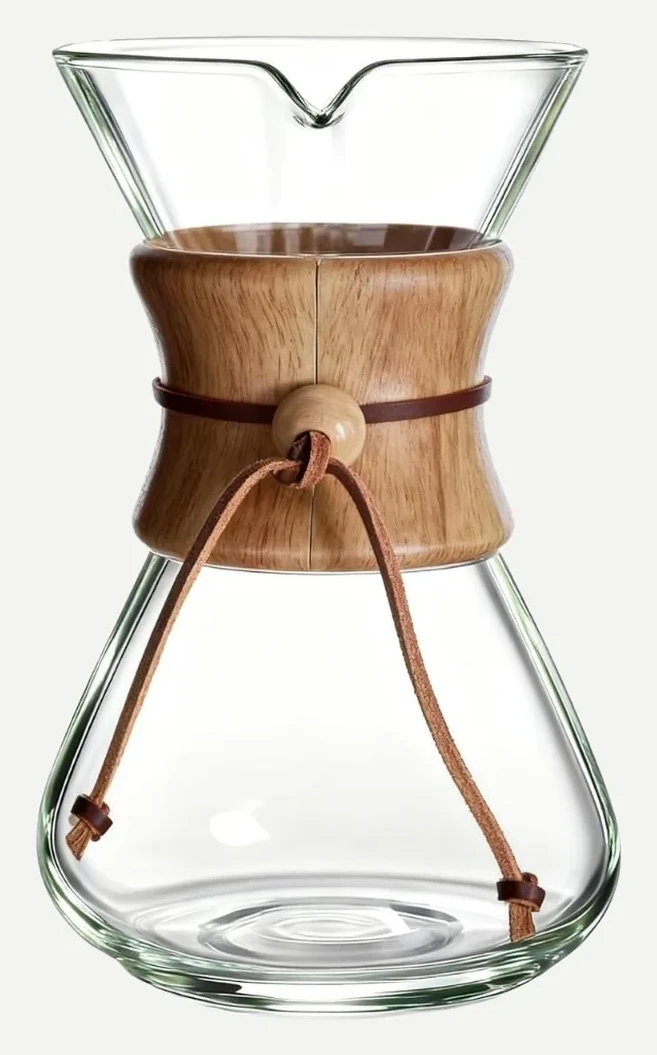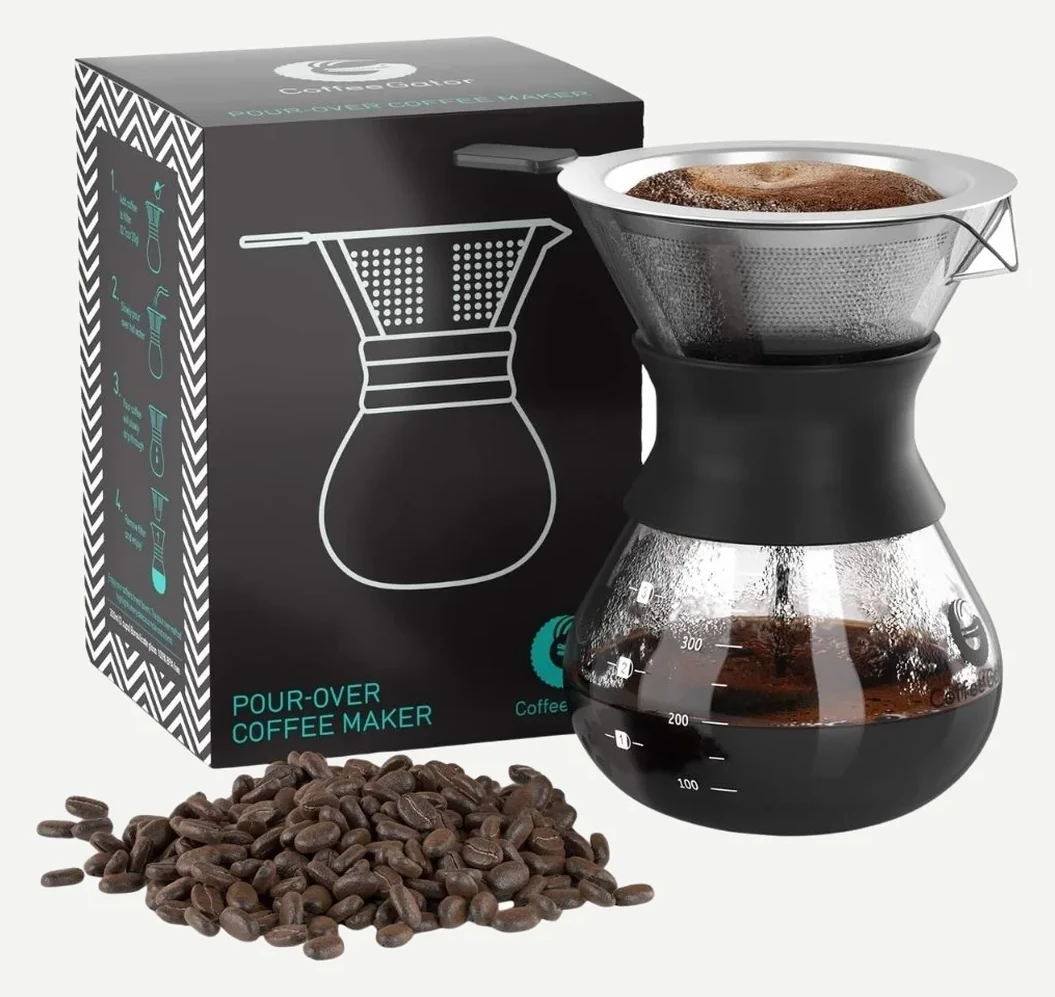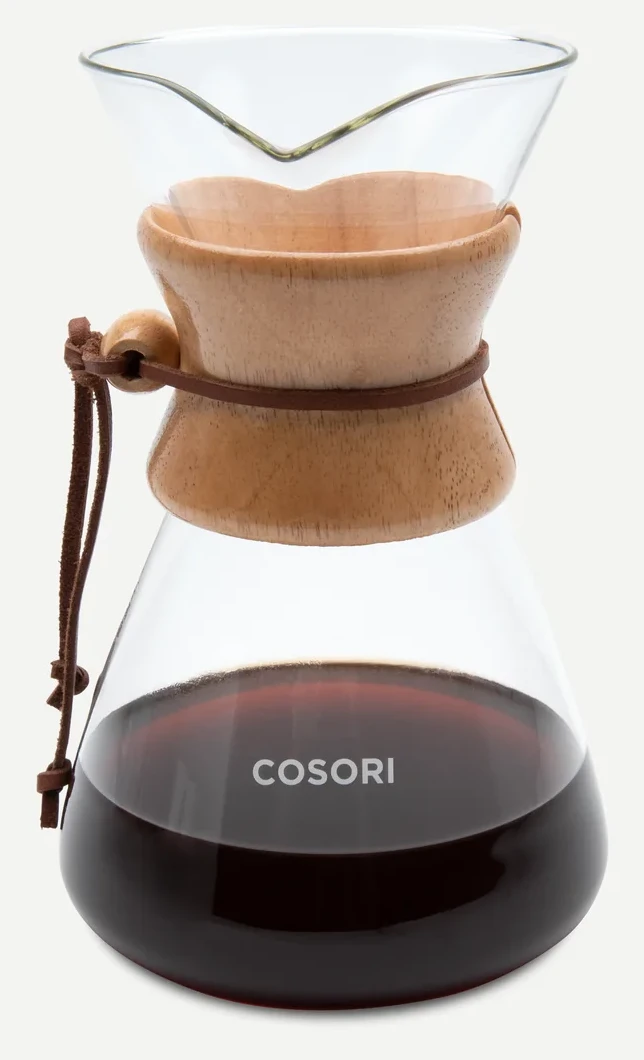
What is the Mixpresso Pour Over?
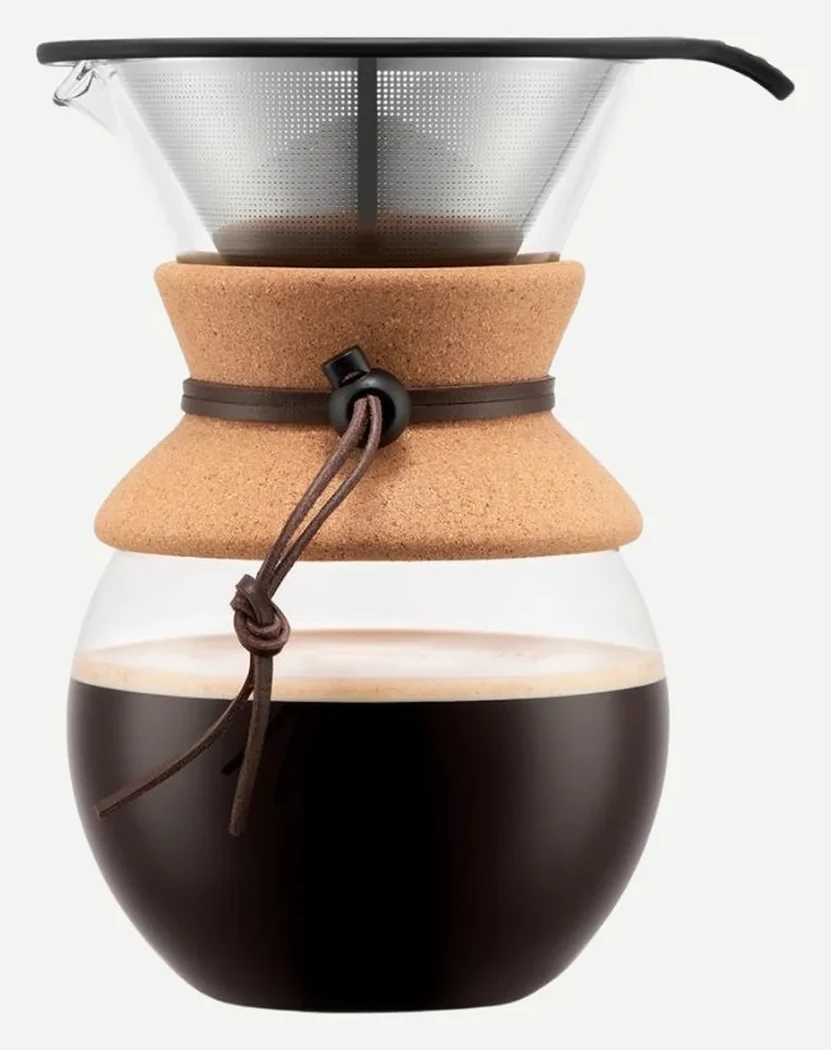
This is a 414 ml cone-shaped glass pour-over dripper with a permanent stainless steel filter, priced at $18.99.
The dripper is built from borosilicate glass and stainless steel, with silicone used for sealing. The glass is single-walled, so there is no insulation layer. It holds 0.41 liters, roughly 14 oz, and comes in black only.
The permanent stainless steel filter means no paper filters to buy. Some parts are dishwasher safe, though the maker recommends hand washing. A one-year warranty is included. No accessories are bundled in the box.
Mixpresso Pour Over brew quality and flow control
The materials are sound for the price, and brew consistency depends entirely on user technique, because an open cone meters nothing on its own.
Borosilicate glass is heat-resistant and less prone to thermal shock than standard glass, which matters when hot water is poured directly into it. The stainless steel filter and silicone components add structural reliability at this price point.
The cone shape will concentrate flow toward a single exit, which tends to produce a faster draw-down than flat-bottomed designs. How fast, and how that affects extraction, is not quantified anywhere for this dripper, so buyers are working from general pour-over knowledge.
- Borosilicate glass resists thermal shock, making it safer for direct hot-water contact than standard glass.
- The stainless steel reusable filter eliminates paper filter costs but passes more oils and fine sediment than paper.
- Cone geometry typically brews faster than a flat-bottom design, because the flow converges on one exit instead of several.
- Single-walled construction means the brewed coffee cools quickly if left in the dripper before serving.
What you can brew with it
This dripper is built for a single serve of filter coffee up to 14 oz, with no adjustment for larger batches or other brew styles.
At 414 ml the pour-over is sized for one generous mug or two smaller cups, depending on brew strength. The cone shape and steel filter suit medium to medium-coarse grinds typically used in manual pour-over. It will not accommodate espresso or any pressurised brew method.
Because the filter is permanent steel mesh rather than paper, it will pass coffee oils into the cup, producing a fuller-bodied result than a paper-filtered brew. Buyers who prefer a very clean, sediment-free cup may find that trade-off matters.
- Well suited to a single-serve manual pour-over for one person using a medium or medium-coarse grind.
- The steel mesh filter produces a fuller, oilier cup than paper, which suits some palates and not others.
- Not suitable for espresso, cold brew concentrate, or any brew method requiring pressure or extended steeping.
- Capacity tops out near 14 oz, so households brewing for two or more will need a second vessel or a larger brewer.
Living with it, day to day
Day-to-day ownership is straightforward, but the single-walled glass and hand-wash recommendation set the basic upkeep routine.
The maker recommends hand washing and rinsing with water after each use. Some parts are listed as dishwasher safe, but running borosilicate glass through a dishwasher regularly increases the risk of thermal stress over time, so the hand-wash guidance is worth following.
The permanent stainless steel filter will accumulate coffee oils and needs thorough rinsing after every brew. Periodic soaking in hot water or a dilute cleaning solution will prevent oil buildup affecting taste. No descaling is required because this is a passive brewer with no heating element.
- Rinse the stainless steel filter immediately after each brew to prevent coffee oil buildup that affects flavor.
- Hand wash the glass body; repeated dishwasher cycles carry a higher risk of stress damage to borosilicate glass.
- No descaling routine is needed, as there is no internal heating element or water reservoir.
- The one-year warranty covers manufacturing defects but will not cover breakage of the glass body from drops or impacts.
Mixpresso Pour Over vs Bodum Pour Over
At $18.99 this sits in a crowded entry-level pour-over field, and the permanent filter is its clearest point of difference.
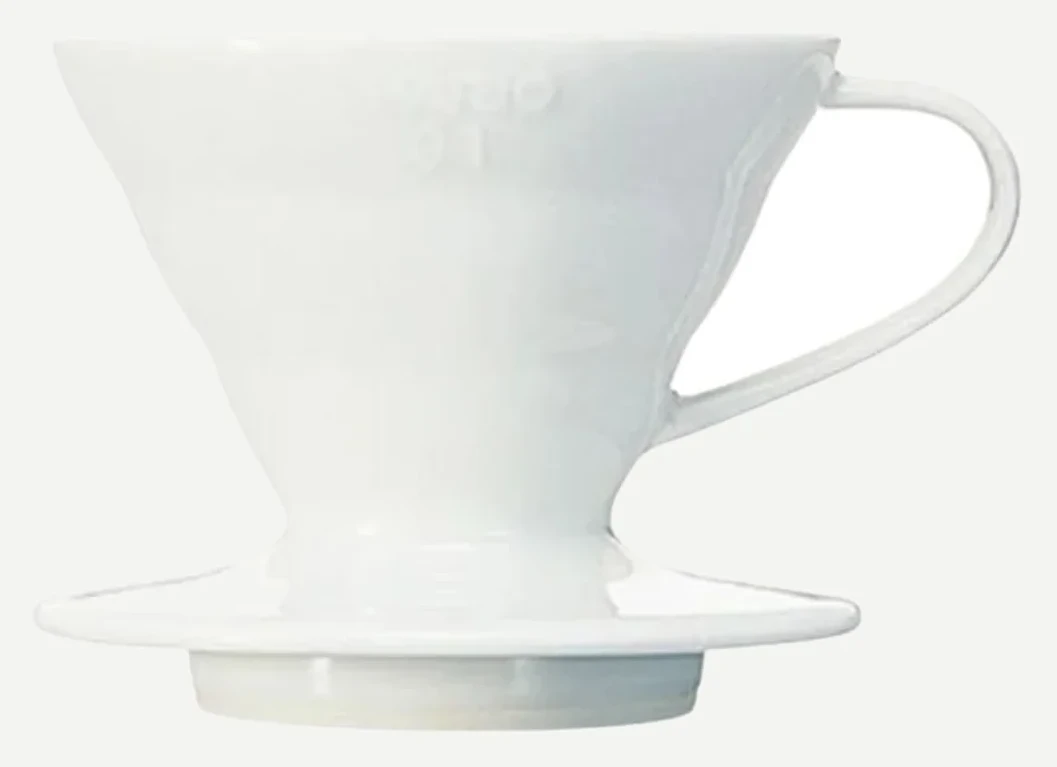
The Hario V60 and similar cone drippers in the same price bracket typically require paper filters, adding an ongoing cost and a trip to the shop when you run out. The built-in steel filter removes that friction entirely, and for buyers who do not want to manage a filter supply, that is a genuine advantage.
What buyers should check before choosing a rival is whether it includes a filter, what its capacity is, and whether the glass or plastic construction suits their kitchen setup. On those points this dripper is transparent. Where it is less clear is brew guidance and flow characteristics, so buyers who want a manufacturer to walk them through technique may prefer a brewer with published recipes.
- The V60 requires paper or cloth filters at ongoing cost; this dripper does not, which matters for regular brewers.
- Plastic cone drippers at this price are lighter and more drop-resistant; borosilicate glass here is more fragile.
- Rivals with flat-bottom designs produce slower, more even extraction; the cone here brews faster with less room for error.
- Brewers with published brew guides or wider brand support may suit beginners better than this option.
Is the Mixpresso Pour Over worth it?
At $18.99 with a permanent filter included, the value case is straightforward for occasional pour-over brewers who already know the method.
The materials, borosilicate glass and stainless steel, are appropriate for the price. The permanent filter is a real saving over time if you brew daily. At under $20 the financial risk is low, and the one-year warranty provides a basic safety net against manufacturing defects.
The case weakens for buyers who are new to pour-over and need guidance on grind size, pour rate, or brew time. Those buyers may be better served by a brewer with a published brewing guide or an established community of users. For someone who already knows how to pour, this is a competent and inexpensive tool.
Who should buy it (and who should not)
This suits experienced pour-over brewers making a single cup who want to cut filter costs; it is less suited to beginners or households.
The permanent filter and low price make it practical for solo brewers who already have a pour-over routine. The borosilicate glass is a step up from plastic alternatives in the same range, and the absence of recurring filter costs is a genuine long-term saving.
It is a poorer fit for anyone new to pour-over who needs step-by-step guidance, anyone brewing for more than one person at a time, or anyone who needs the portability and resilience of a plastic or ceramic dripper.
Buy it if
- You already brew pour-over and want to stop buying paper filters for under $20.
- You make one cup at a time and prefer a glass vessel over plastic at this price point.
- You want a backup or travel brewer and are comfortable with the glass fragility trade-off.
Skip it if
- You are new to pour-over and need published brew guidance to get consistent results.
- You regularly brew for two or more people and need more than 14 oz per batch.
- You want a sediment-free, paper-clean cup, as the steel mesh filter passes coffee oils and fines.
Frequently Asked Questions
Is the Mixpresso Pour Over good for beginners?
It is a simple cone dripper with no moving parts, so the grind, the pour rate and the brew time are all the brewer's to set. Beginners who already understand pour-over basics will manage fine. Those who are starting from scratch may find the lack of guidance frustrating and should consider a brewer with published step-by-step instructions.
Mixpresso Pour Over vs Hario V60: which should I buy?
The main practical difference is the filter. This dripper has a permanent stainless steel filter built in, so there is no ongoing paper filter cost. The V60 requires paper or cloth filters, which add expense and a supply to manage. Both are cone-shaped. If cutting filter costs matters to you, this is the more convenient option at this price.
How many cups does it make?
The dripper holds 414 ml, or roughly 14 oz. That is one large mug or two smaller cups, depending on how strong you brew. It is sized for a single-serve routine. If you regularly brew for more than one person at a sitting, you will need to brew multiple batches, which adds time to your morning.
Is it dishwasher safe?
Some parts are listed as dishwasher safe, but the maker recommends hand washing and rinsing with water. Running borosilicate glass through a dishwasher repeatedly can cause stress over time from temperature changes. Following the hand-wash guidance is the safer long-term approach, and it only takes a quick rinse after each use.
What kind of filter does a pour-over cone use?
Most cone drippers use disposable paper or cloth filters. This dripper uses a built-in reusable stainless steel mesh filter, which means no paper filters to buy or run out of. The trade-off is that steel mesh passes more coffee oils and fine particles into the cup than paper does, producing a fuller-bodied, slightly less clean result.
Does borosilicate glass break easily?
Borosilicate glass is more resistant to thermal shock than standard glass, meaning it handles the rapid temperature change of hot water being poured into it better than ordinary glass would. It is still glass, though, and will break if dropped. The single-walled construction also means the brewed coffee cools faster than it would in an insulated vessel.