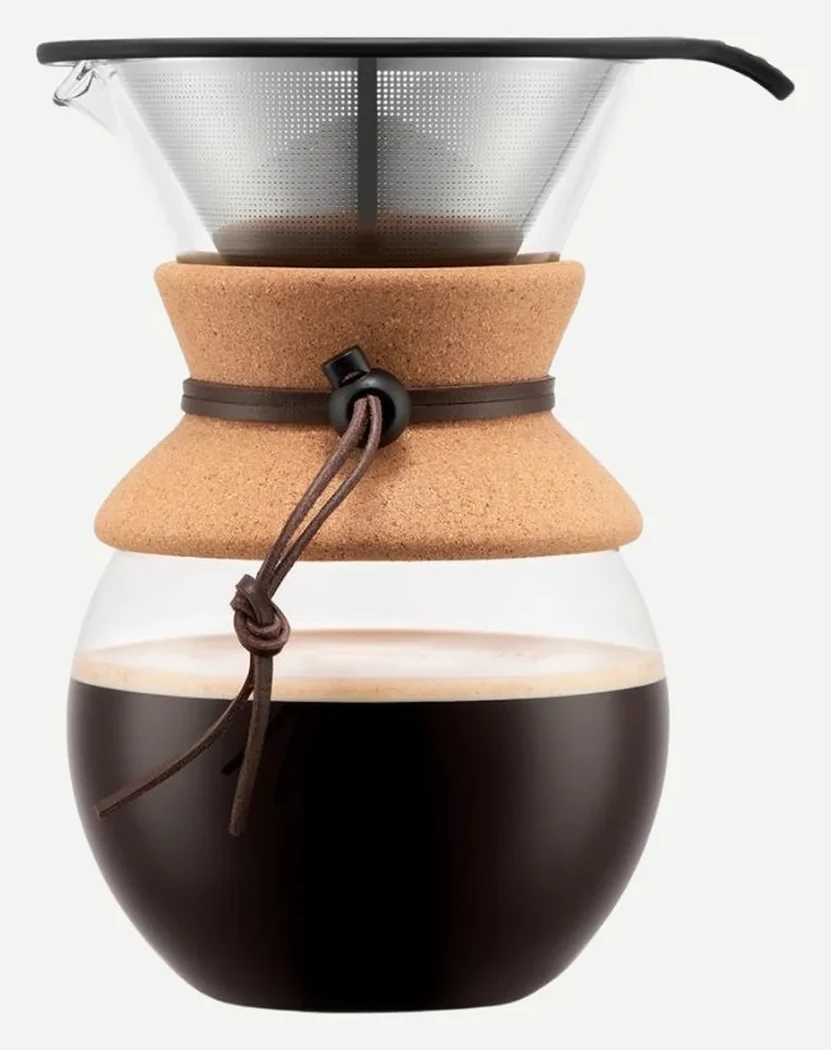
What is the Bodum Brazil?
A Chambord with the steel taken out of it, and the coffee is the same.
Bodum publishes a non-stain heat-resistant borosilicate glass carafe, a body, handle and domed lid in lightweight BPA-free plastic, a stainless steel plunger and filter, manufacture in Portugal, and dishwasher safety. It holds 34oz and measures 5.11 by 4.13 by 9.24 inches.
What the plastic frame actually costs you
Three things, and only one of them affects the coffee.
The first is durability. A plastic frame flexes, scratches and eventually goes brittle around the handle mount, where a steel frame does not. This is the real difference over five years.
The second is heat, marginally. The plastic domed lid insulates slightly better than steel in the first minute and the frame holds nothing either way. Neither press keeps coffee hot; both are single-walled glass. If heat retention is the problem, the answer is not a better frame but a double-walled press.
The third is that it looks like what it costs. That is not nothing when the press comes to the table, and it is the honest reason many people pay the difference for a Chambord.
What does not change is the carafe, the plunger and the filter, which are the three parts the coffee touches. Same borosilicate, same stainless mesh, same factory in Portugal.
Why this is the press to buy first
Because the money is better spent on the grinder.
French press is the brewing method most exposed to grind quality. A single mesh screen passes everything smaller than its holes, so a blade grinder's mixture of boulders and dust gives you a cup that is simultaneously under-extracted and full of silt. No press fixes that, and an expensive press fixes it least of all.
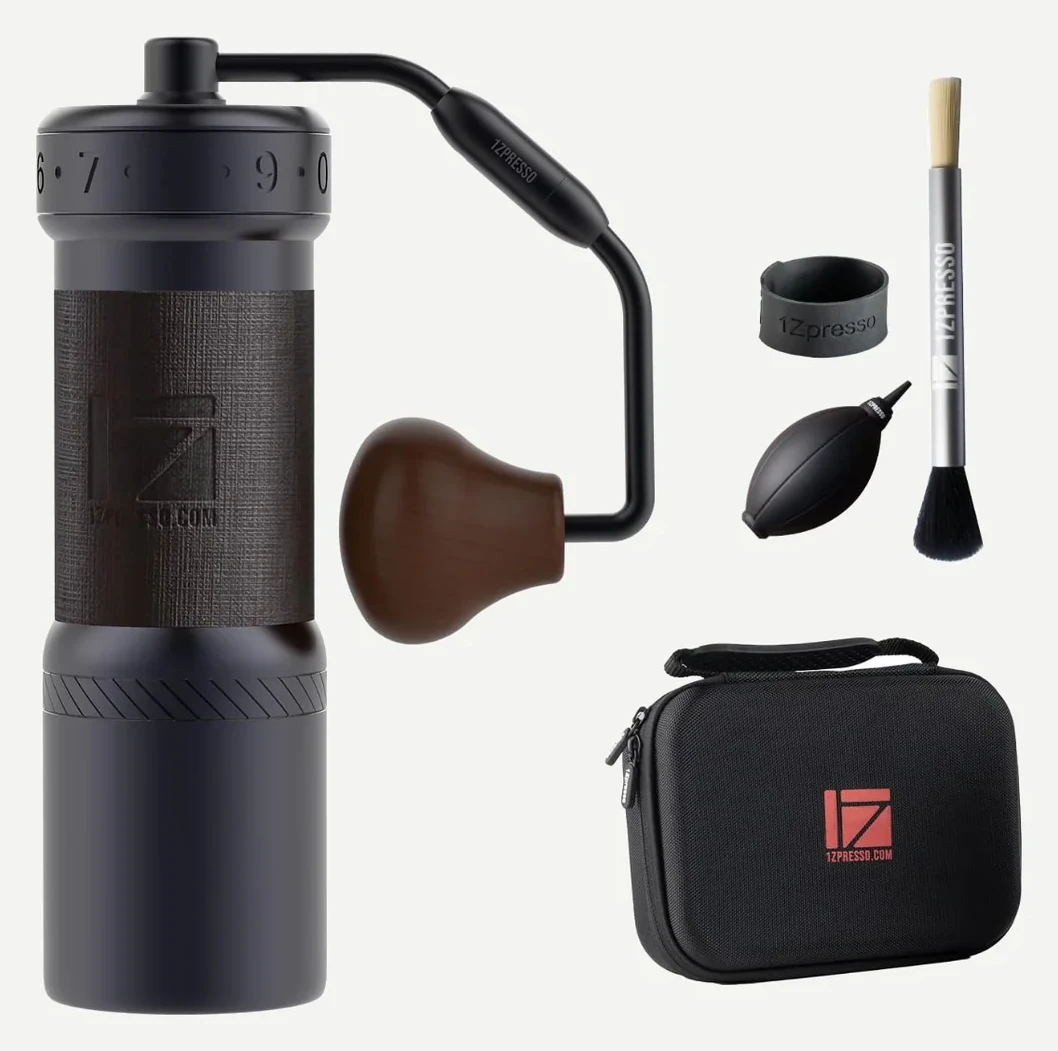
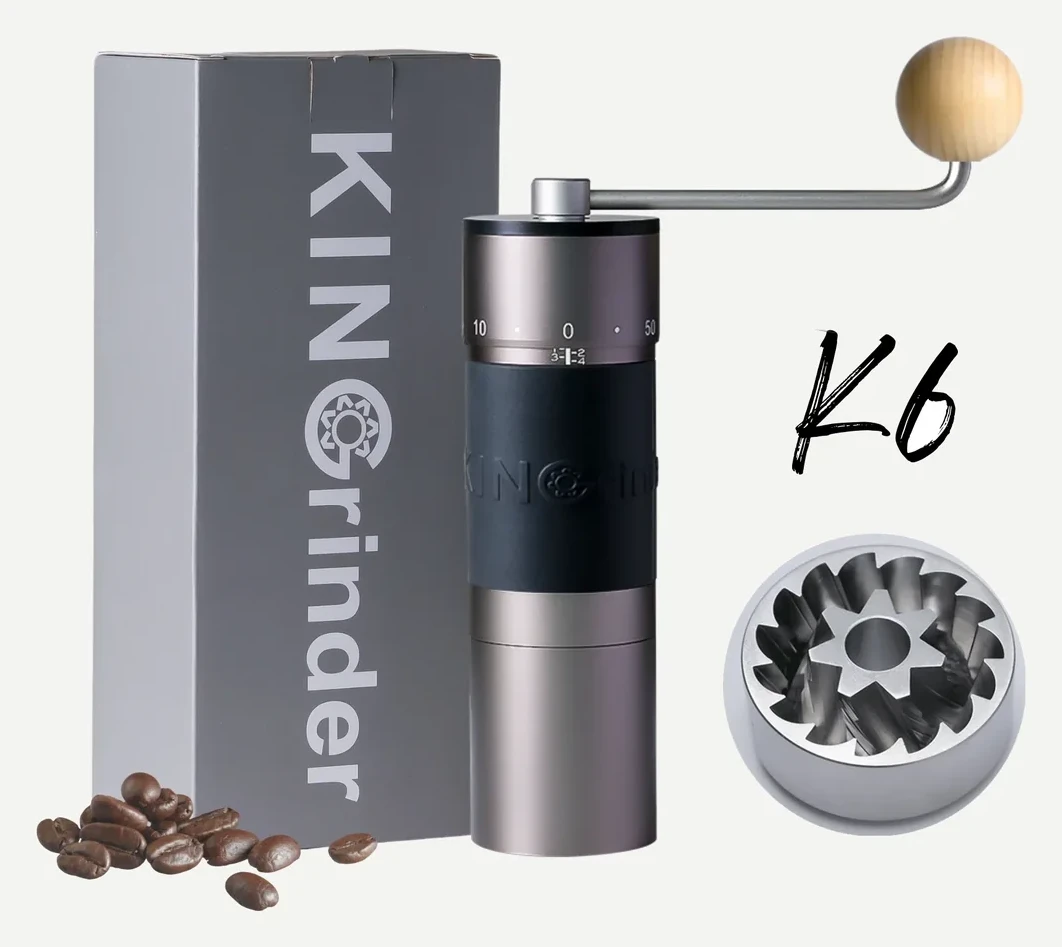
Somebody with a fixed budget gets a dramatically better cup from a Brazil plus a hand grinder than from a premium press and pre-ground coffee. That is the single most useful thing to know about this category.
Bodum Brazil vs Bodum Chambord
Identical coffee. Buy on how long you need it to last and where it will sit.
The Chambord's steel frame and steel lid survive knocks and years better and look considerably more expensive. The Brazil costs much less and is lighter to hold when full.
If it lives in a cupboard and comes out daily for one person, the Brazil is the sensible purchase. If it lives on the counter, gets used by a household and needs to look like it belongs there, the Chambord.
Is the Bodum Brazil worth it?
The best value in this category, and it is not close.
It is the cheapest way to get a genuine borosilicate carafe and a genuine stainless filter rather than the thin steel and loose mesh of an unbranded press. Bodum has made this design for decades and replacement carafes are easy to find.
Bodum publishes no warranty term, no filter micron rating and no weight on this listing. The plastic is stated as BPA-free.
Who should buy it (and who should not)
Buy it as a first press, a second press, or a press for a shared kitchen where things get broken.
It suits students, offices, holiday flats, and anybody who would rather put the saved money into beans or a grinder.
Do not buy it if the press will be handled roughly for years, because the plastic frame is where it will fail. And do not buy it expecting hot coffee at the second cup: for that you want steel and a vacuum wall.
Frequently Asked Questions
Is the Bodum Brazil the same as the Chambord?
Same borosilicate carafe, same stainless plunger and filter, same country of manufacture. The frame and lid are plastic instead of steel.
Does the Brazil make worse coffee than the Chambord?
No. Every part the water and coffee touch is the same.
Is the plastic BPA-free?
Yes, Bodum states the body, handle and lid are BPA-free plastic.
Is it dishwasher safe?
Yes, per the maker.
What size is it really?
34oz, which Bodum sells as eight small cups. In mugs it is three or four.