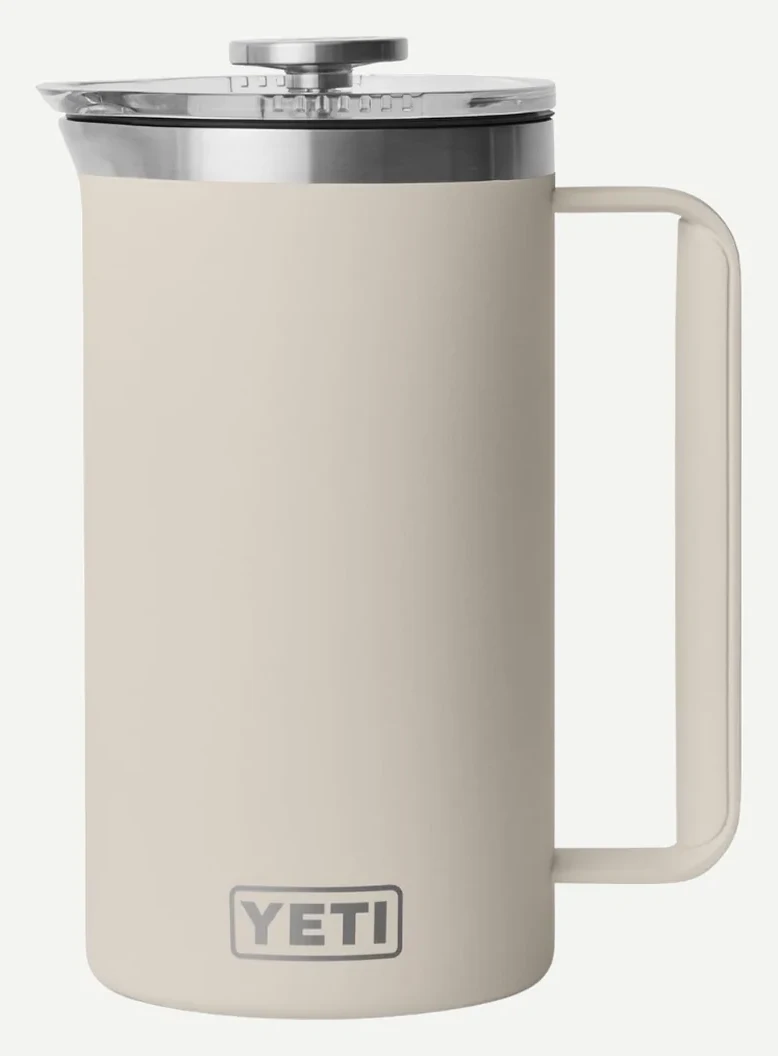
What is the YETI Rambler French Press?
A press built around the one flaw every other press shares.
YETI publishes a GroundsControl filter which, after plunging, separates the grounds from the brew and stops the brewing process, kitchen-grade 18/8 stainless steel that is puncture and rust resistant, double-wall vacuum insulation, and dishwasher safety. It holds 34oz and measures 6.2 by 6.2 by 8.2 inches.
The problem every French press has
Plunging does not end the brew. It only pushes the grounds to the bottom.
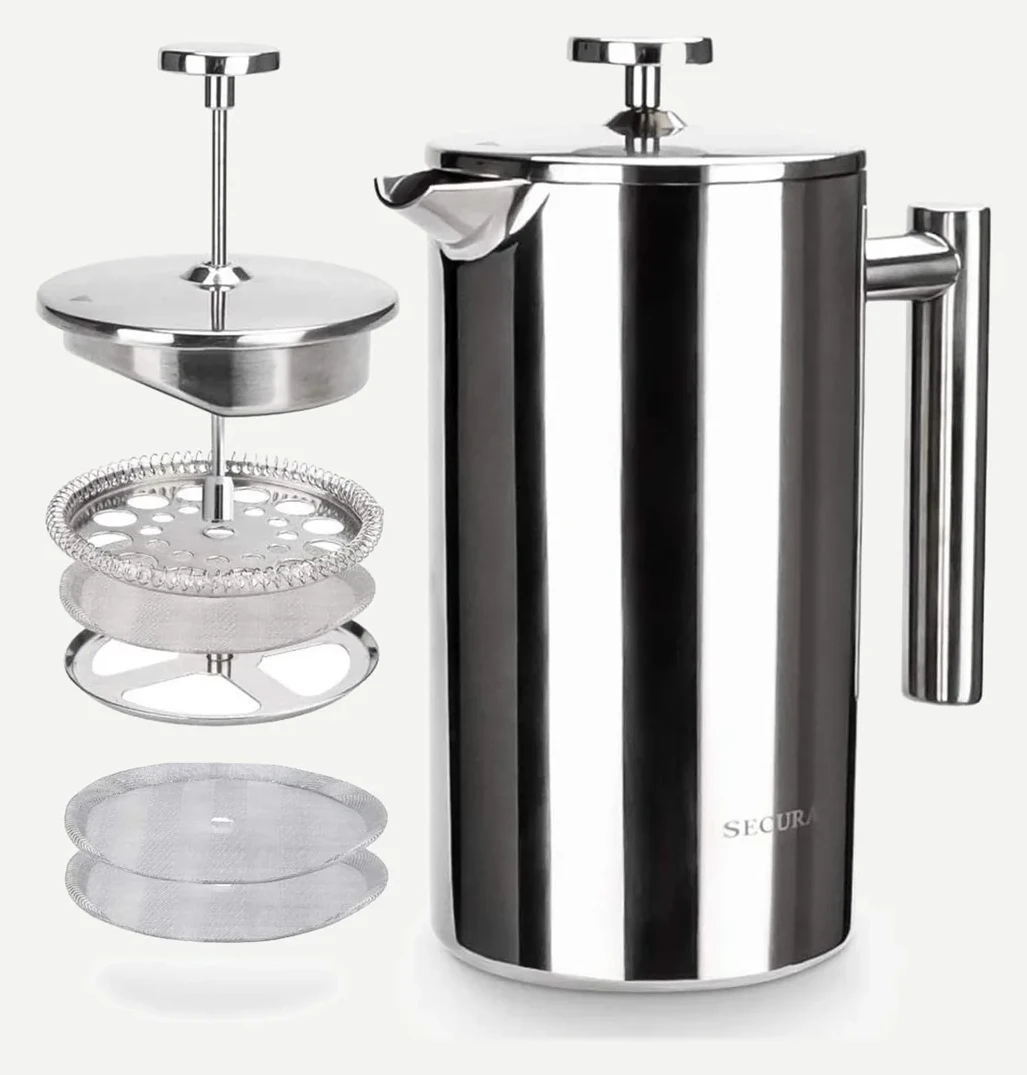
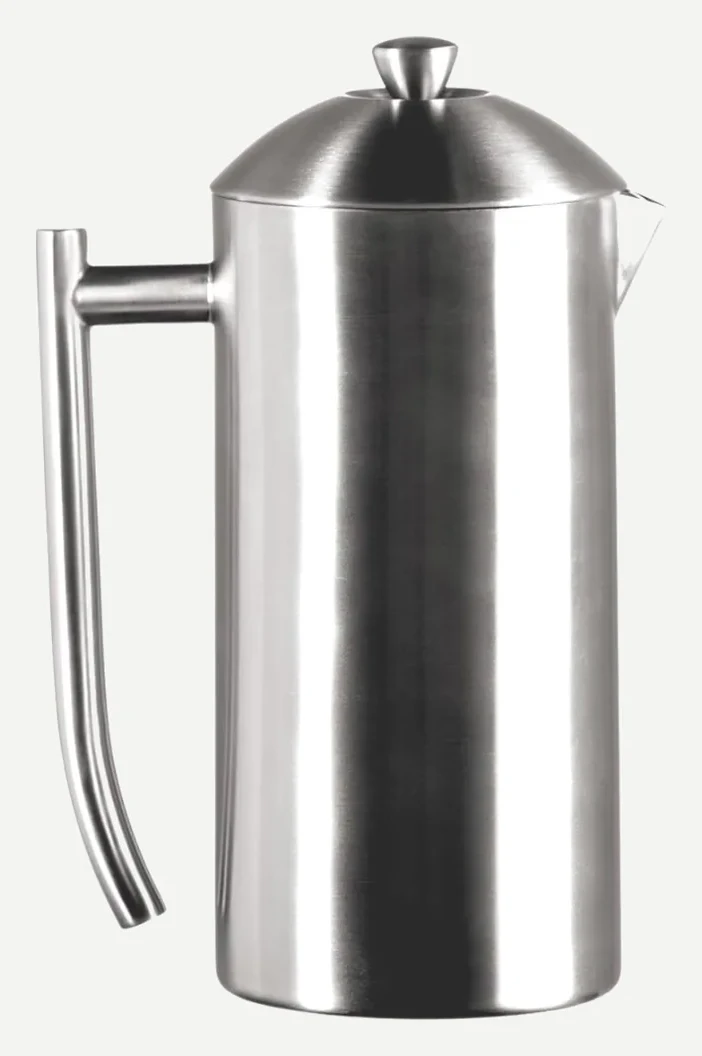
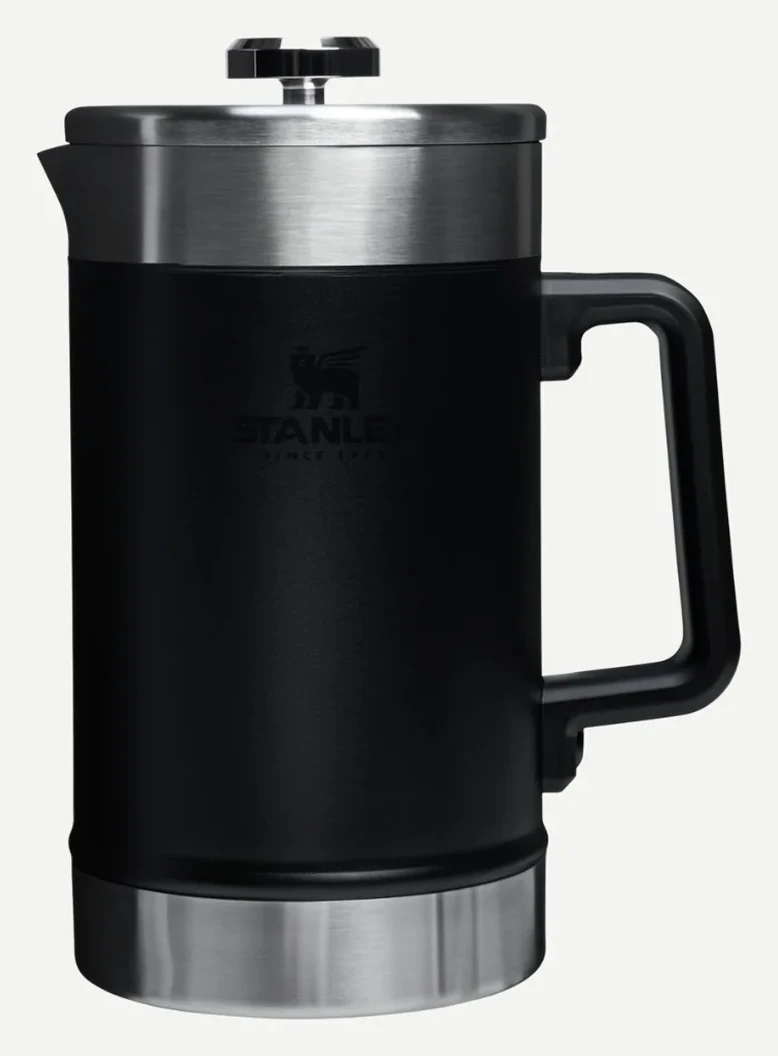
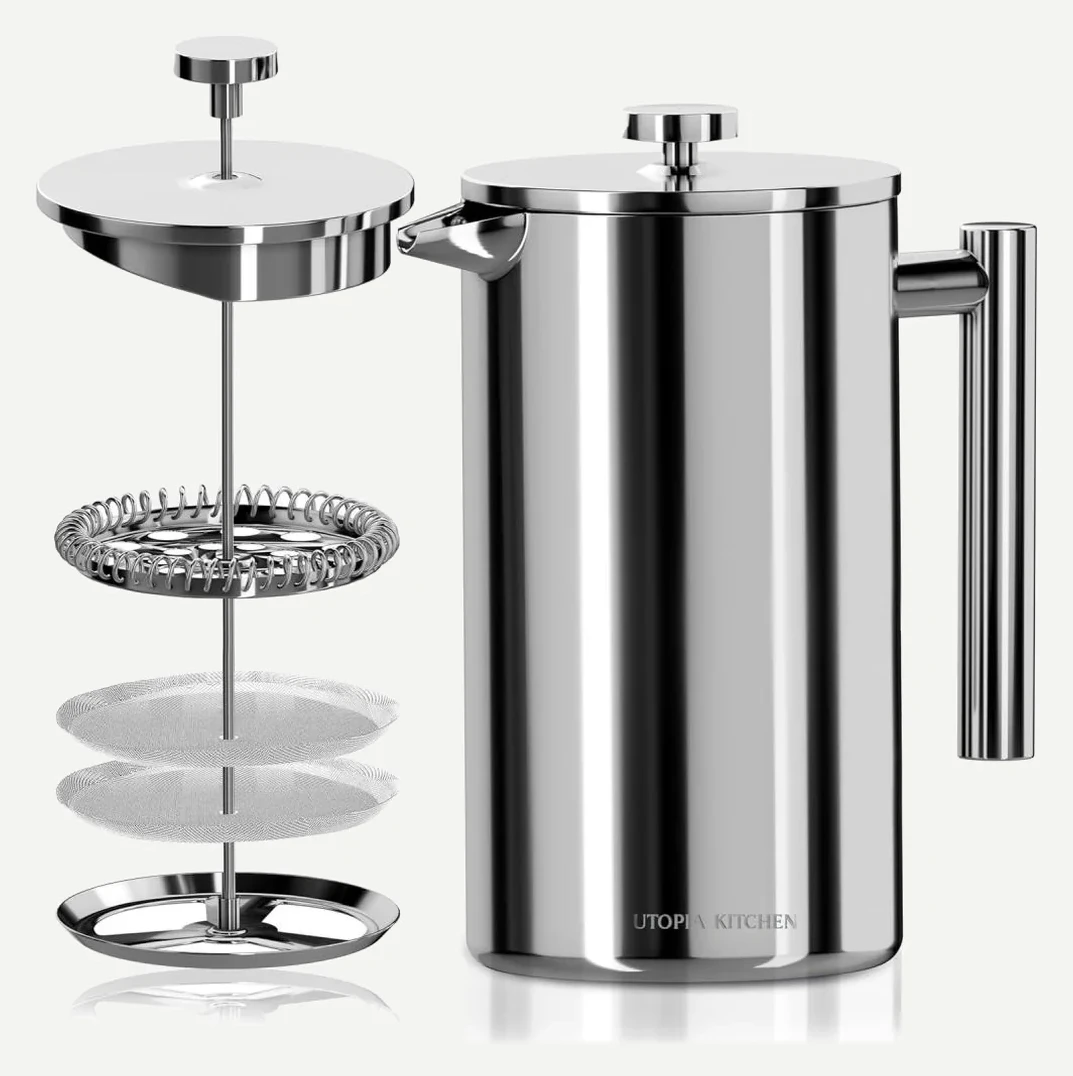
In a Chambord, a Frieling double-walled press or a Stanley Stay-Hot press, the coffee sits on top of a compressed bed of wet grounds in hot water. Extraction continues. Ten minutes later the pot is measurably more bitter than it was at the plunge, and an insulated press makes this worse because it holds the temperature that drives it.
The standard answer is to decant immediately, which works and which nobody actually does. GroundsControl is the hardware answer: the filter seals the grounds off, so the coffee left in the pot is the coffee you plunged.
This is the same problem the Espro P7 solves with a sealed microfilter basket, arrived at from a different direction. Both are real engineering rather than marketing, and between them they are the reason to spend more than twenty pounds on a press.
Insulation plus a stop valve is the combination that matters
Either feature alone is compromised. Together they make sense.
An insulated press without a stop is a machine for making bitter coffee slowly. A press with a stop but no insulation goes cold. The YETI has both, which means a pot brewed at eight is drinkable at nine and tastes like it did at eight.
For anybody who brews once and drinks across a morning, at a desk or in a tent, that is the whole argument and it is a good one.
YETI Rambler vs Espro P7
Two answers to stopping the brew, and they differ on ruggedness and volume.
The Espro P7 filters harder, with a double microfilter that produces a cleaner cup than any mesh screen. It is the better brewer.
The YETI holds more at 34oz against the P7's 18oz, and it is built to be dropped. If the press lives in a kitchen and the cup is the priority, the Espro. If it goes in a truck or a rucksack, the YETI.
Is the YETI Rambler French Press worth it?
Worth it if you drink slowly. Overpriced if you drink fast.
It is one of the most expensive presses on this site and much of that is the brand. Somebody who plunges and pours out three mugs in ten minutes gets nothing from GroundsControl that a twenty pound Bodum Brazil would not have given them.
YETI publishes no warranty term, no heat retention figure in hours, no weight and no filter micron rating on this listing. That last absence matters: the case for the press is the filter, and the filter is described rather than specified. Stanley publishes hours; YETI does not.
Who should buy it (and who should not)
Buy it if the pot sits between cups.
It suits one or two people brewing 34oz and returning to it, working from home or from a campsite, who have noticed press coffee turning bitter and want it to stop.
Do not buy it to serve a group quickly, where a 48oz Stanley costs less and holds more. And do not buy it if the cleanest possible cup is the goal, because a single steel screen will not beat a microfilter.
Frequently Asked Questions
What is the GroundsControl filter?
A filter that separates the grounds from the coffee after you plunge, which stops the brewing instead of just holding the grounds down.
Does it actually stop the coffee getting bitter?
That is what the mechanism is for: taking the grounds out of contact ends extraction. YETI publishes no measurement, so the claim is the maker's.
How long does it stay hot?
YETI states double-wall vacuum insulation and hot for pour after pour, without publishing a figure in hours.
Is it dishwasher safe?
Yes, per the maker.
How much does it hold?
34oz, the same as a standard Chambord, or about three to four mugs.