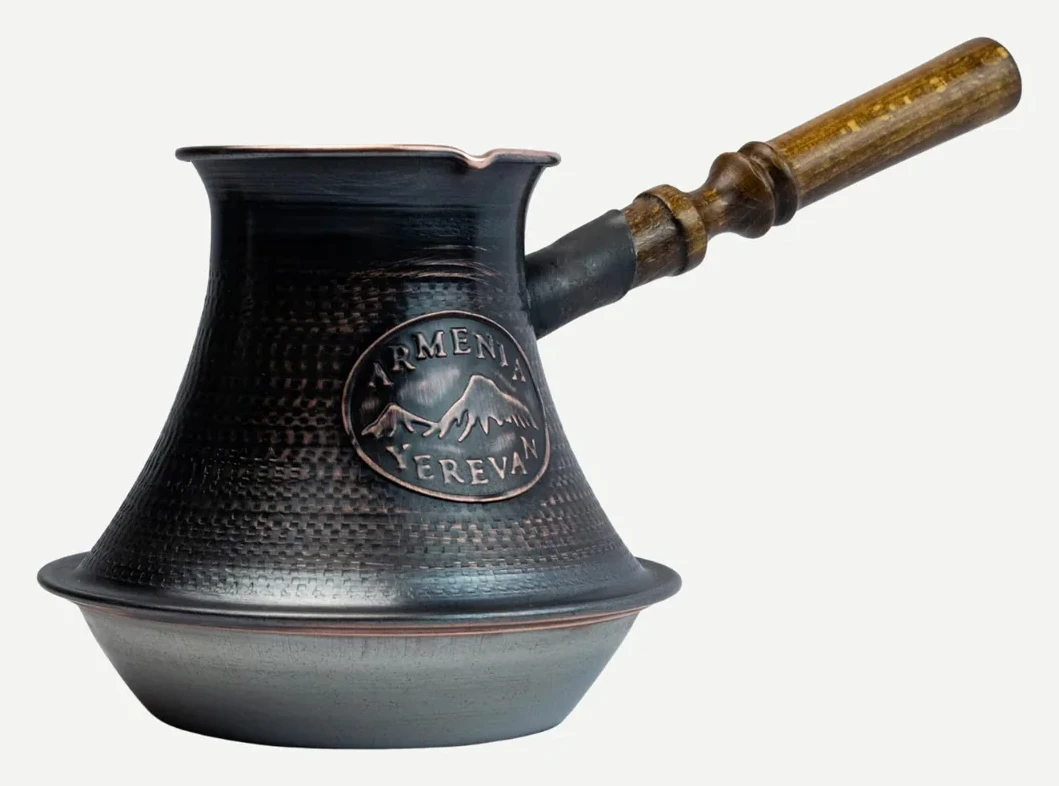
What is the BCS Hand-Engraved Copper Cezve?
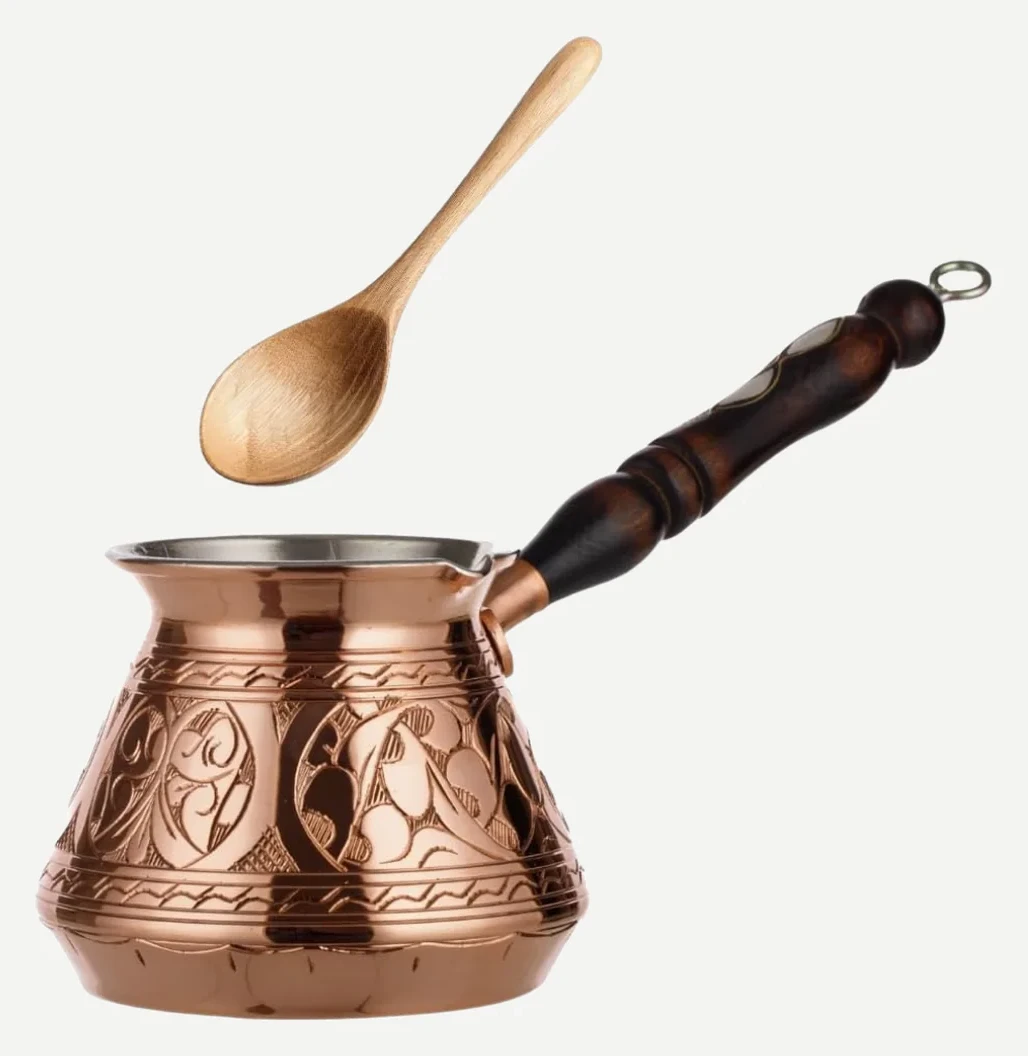
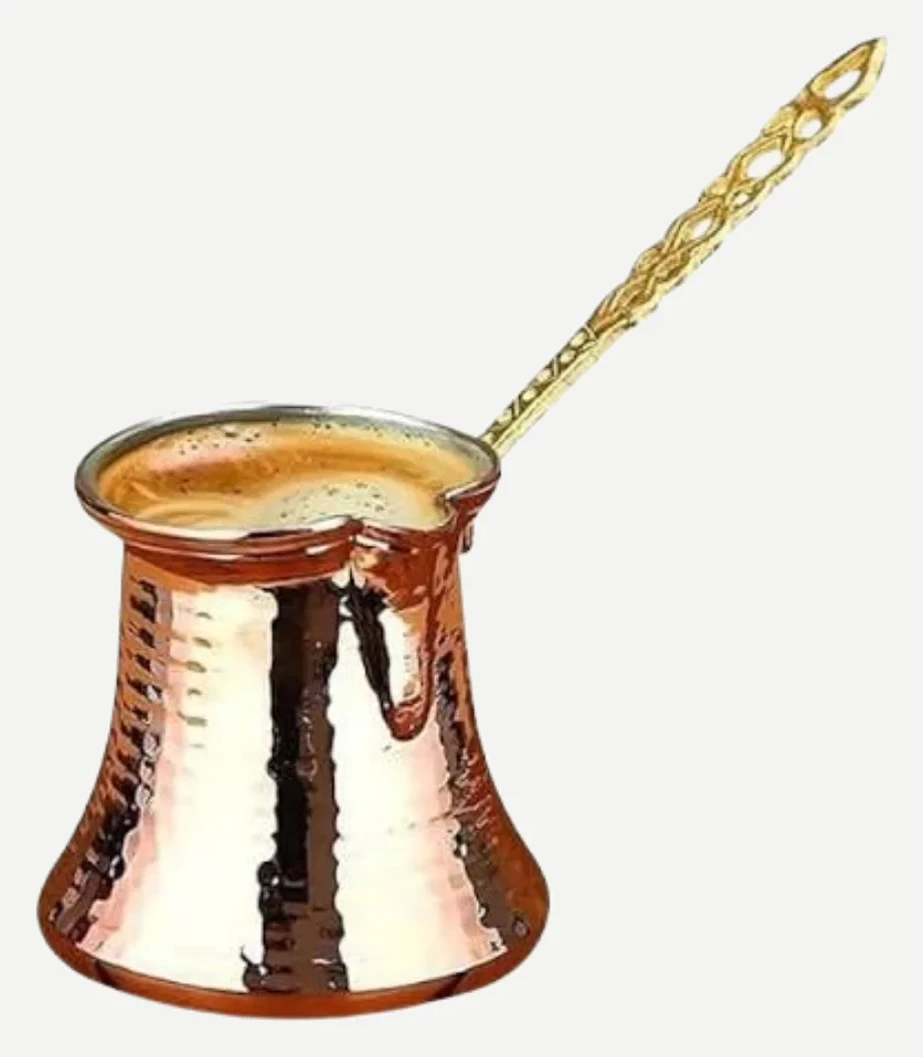
A 12 ounce hand-engraved copper cezve made in Gaziantep, tin lined, with a long wooden handle, sold with a wooden spoon and a gift box for $49.99.
The body is 1mm copper, engraved by hand rather than hammered, so the pattern is cut into the surface instead of beaten into it. The interior carries a lead-free tin lining, which is what keeps the coffee off bare copper.
BCS name the town: Gaziantep, in south-eastern Turkey, which has been known for its coppersmiths for centuries. Naming a place is a small thing and almost nobody in this category does it.
An 18 fluid ounce size is offered alongside the 12, and the same pot is sold in a black finish at $59.99.
Brew quality and what it is made of
This is the specification a cezve is supposed to have, and there is not much to argue with. Copper conducts heat faster than almost anything in a kitchen, which is what gives you a chance of catching the foam as it rises rather than after it has gone. 1mm is the thickness the better pots use: thin enough to respond, thick enough not to dent.
The tin lining is the wear item and BCS state it is lead-free, which is the detail worth confirming when the alternative is an unlined pot. Tin is soft, so never heat it dry and never scour the inside; treated properly a lining lasts years and can be renewed.
Engraved rather than hammered is a matter of taste. Engraving cuts into the copper, hammering displaces it, and neither changes what happens in the pot.
What you can brew with it
Turkish coffee, and the Greek and Arabic versions of the same method. BCS print their own ratio on the listing: two teaspoons of coffee, six grams, per 65ml of water, brewed on low heat, foam shared out first and the rest returned for one more rise.
That is a sound recipe and close to what we would tell you. Six grams to 65ml is a strong ratio, which is correct here: this is not filter coffee and it is not meant to be.
Like every pot of this shape it also warms milk, melts chocolate and heats small quantities of anything, with the usual caution about the lining.
Living with it, day to day
The wooden handle is the reason to choose this over cheaper copper. Wood does not conduct, so the pot can be lifted bare-handed at the moment it matters, which on a method that wants the pot pulled off the instant the foam climbs is not a convenience but a technique.
Hand wash only, and BCS say to dry it immediately. Copper spots if it sits wet. That is the maintenance a copper pot asks for and there is no way around it.
Induction is out. Gas, electric and ceramic are all fine.
BCS Hand-Engraved Copper Cezve vs the Hakan Hammered Copper Cezve
Both are handmade tin-lined copper, and the gap between them is $26 and a handle.
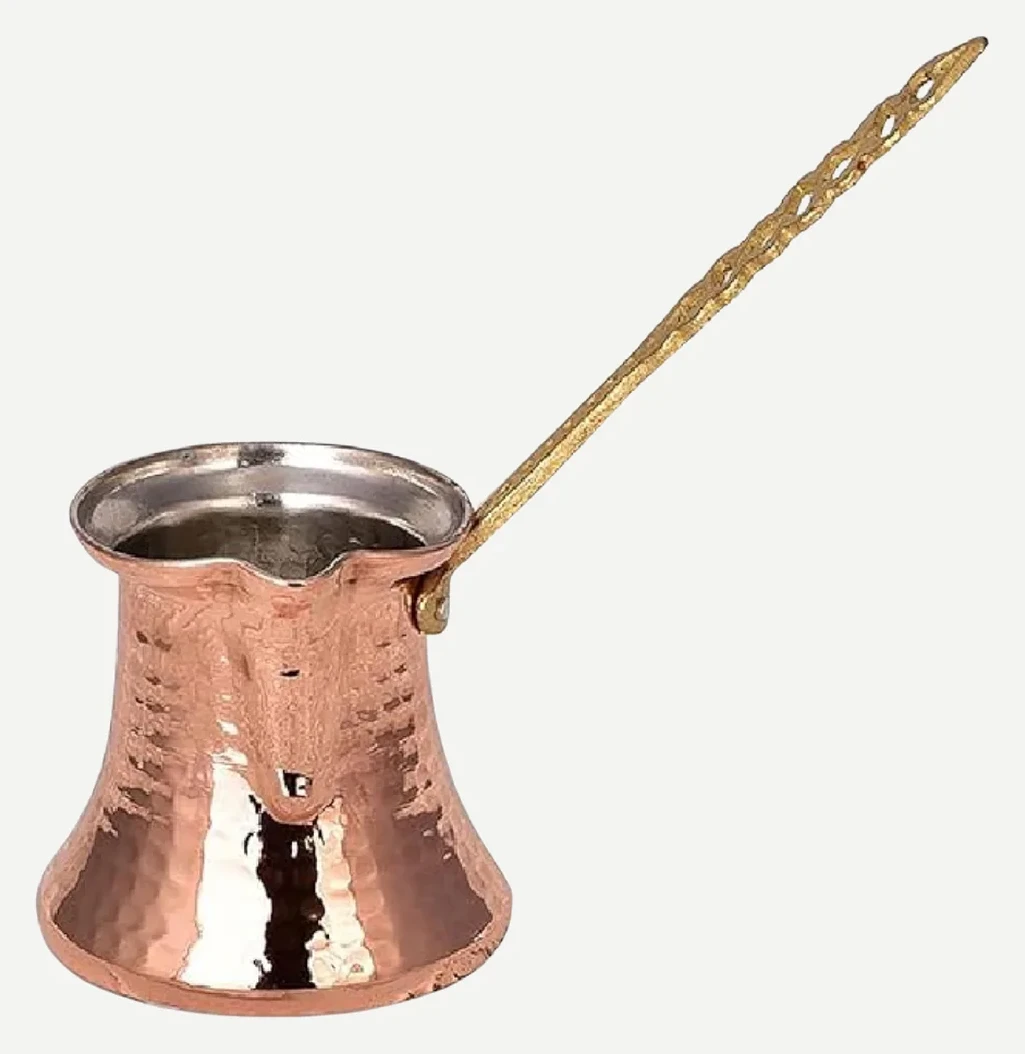
The Hakan Hammered Copper Cezve starts at $23.90 for 5 ounces and runs to $38.90 for 16, hammered rather than engraved, with a brass handle its own care notes say to hold with mittens.
The BCS is $49.99 for 12 ounces with a wooden handle, a named town of origin, a stated lead-free lining, a spoon and a box.
If you want the cheapest real copper, the Hakan wins outright and you use a cloth. If you are buying one pot to keep, the BCS is the better object and the handle alone justifies a good part of the difference. Against the DEMMEX Copper Cezve, which is also 1mm engraved copper with a wooden handle, the two are close; the BCS is larger and priced, the DEMMEX is not.
Is the BCS Hand-Engraved Copper Cezve worth it?
At $49.99 it sits mid-table among the copper here, under the Silk Road at $57.90, the YJX at $61.75 and the HandCraftoria at $89.90, and it is the only one of them where nothing on the specification is missing or hedged.
What you are paying for is the handle, the stated lining, the named origin and the packaging. None of those change the coffee. All of them change how long you keep the pot and how pleasant it is to use, which for an object with no moving parts is most of what there is to buy.
Amazon buyers rate it 4.6 out of 5 across 767 ratings, the strongest of the pots covered here. We do not score on other people's ratings, but that is a large sample.
The counter-argument is simply the Hakan at half the price. If the mittens do not bother you, that money buys a lot of coffee.
Who should buy it (and who should not)
Buy it if
- You want one copper cezve and want it right: wooden handle, stated lining, known origin
- It is also the obvious gift here, since the spoon and box come with it
- The 12 ounce suits a household brewing for three or four
Skip it if
- Your hob is induction, or if you want the cheapest way into copper, where the Hakan does the same job for less
- Skip it too if you will not hand wash and dry a pot after every use, in which case stainless is the honest answer
Frequently Asked Questions
Where is the BCS cezve made?
In Gaziantep, in south-eastern Turkey, a province known for its coppersmiths. BCS state this on the listing, which most sellers of copper cookware do not.
Is the BCS cezve induction compatible?
No. The listing rules out induction. Gas, electric and ceramic are all listed as fine.
What coffee ratio does BCS recommend?
Two teaspoons, about 6 grams, per 65ml of water, brewed on low heat. Share the risen foam between the cups first, then return the pot for one more rise before pouring the rest.
Can it go in the dishwasher?
No. Hand wash only, and dry it immediately - copper spots if it is left wet, and the tin lining should not be scoured.