Hario Polaris Coffee Scale CST-2000 Review

Seeing how far through the pour you are, as a percentage

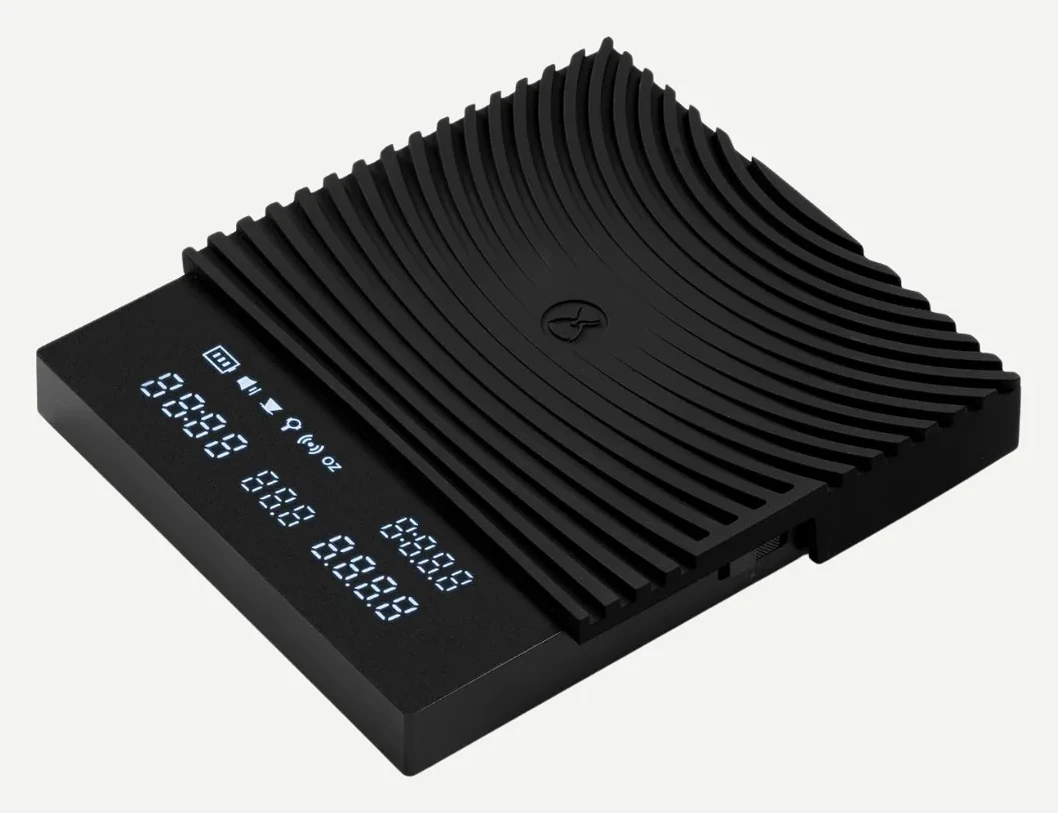
The Hario Polaris CST-2000 is a coffee scale with a built-in timer that calculates the extraction ratio for a recipe and displays your progress as a percentage of the target water.

Spec-led review. Built from the manufacturer’s published specification and price rather than hands-on testing. Figures we could not find stated are left blank instead of estimated. Updated when we get one in.

Where you can buy itUS confirmed

Confirmed on Amazon US, which is where this link points. Availability in other Amazon stores has not been checked, and a regional store may substitute a different product.

Our rating
4.9/ 10
Below average
5 of 6 scored, out of 67.4 points · 32.6 not judgeable from specs

How we rate scales — what each criterion measures, and what we cannot.

Accuracy & Resolution5.0 / 10
worth 26 of 67.4 · thinly evidenced
how we got 5.0

what this measures, and what we cannot

What it was scored onScored from the specs the maker publishes. 0% published.
Resolutionnot in our data3.0 / 6.0
Max capacitynot in our data2.0 / 4.0

The rows that apply here are worth 10.0 between them and this one took 5.0, which is 5.0 out of 10. That 0–10 result is what the criterion's 26 of 67.4 points are then scaled by.

The 10.0 points we could not find a figure for are scored at the middle of the scale rather than as a zero, which awards 5.0 of them: the greyed figures above. We will not guess a specification and we will not mark the product down for our own missing research.

Response Speed
20 pts · not scored from specs
why there is no number here

what this measures, and what we cannot

What it was scored onScored from the specs the maker publishes. 0% published.
Response timenot applicable
Build Quality & Water Resistance (water resistance not published)4.5 / 10
worth 10.8 of 67.4 · 7.2 unpublished · partly evidenced
how we got 4.5

what this measures, and what we cannot

What it was scored onScored from the specs the maker publishes. 50% published.
Water resistancenot applicable
Surfacenot in our data1.5 / 3.0
Warranty1 year1.2 / 3.0

The rows that apply here are worth 6.0 between them and this one took 2.7, which is 4.5 out of 10. That 0–10 result is what the criterion's 10.8 of 67.4 points are then scaled by.

The 3.0 points we could not find a figure for are scored at the middle of the scale rather than as a zero, which awards 1.5 of them: the greyed figures above. We will not guess a specification and we will not mark the product down for our own missing research.

Timer & Brewing Features5.5 / 10
worth 14 of 67.4 · thinly evidenced
how we got 5.5

what this measures, and what we cannot

What it was scored onScored from the specs the maker publishes. 30% published.
TimerYes2.0 / 2.0
Auto timer startnot in our data1.0 / 2.0
Flow rate displaynot in our data1.0 / 2.0
Brewing modesnot in our data1.0 / 2.0
Auto tarenot in our data0.5 / 1.0
App connectivityNo0.0 / 1.0

The rows that apply here are worth 10.0 between them and this one took 5.5, which is 5.5 out of 10. That 0–10 result is what the criterion's 14 of 67.4 points are then scaled by.

The 7.0 points we could not find a figure for are scored at the middle of the scale rather than as a zero, which awards 3.5 of them: the greyed figures above. We will not guess a specification and we will not mark the product down for our own missing research.

Ease of Use & Display (display, power only)6.8 / 10
worth 6.6 of 67.4 · 5.4 unpublished · partly evidenced
how we got 6.8

what this measures, and what we cannot

What it was scored onScored from specs that predict this rather than measure it. 55% published.
DisplayLCD2.5 / 3.0
Backlitnot applicable
Powernot in our data1.25 / 2.5
Battery lifenot applicable
USB-Cnot applicable

The rows that apply here are worth 5.5 between them and this one took 3.75, which is 6.8 out of 10. That 0–10 result is what the criterion's 6.6 of 67.4 points are then scaled by.

The 2.5 points we could not find a figure for are scored at the middle of the scale rather than as a zero, which awards 1.25 of them: the greyed figures above. We will not guess a specification and we will not mark the product down for our own missing research.

Value for Money3.0 / 10
worth 10 of 67.4 · well evidenced
how we got 3.0
The verdict

The Hario Polaris CST-2000 is a coffee scale with a built-in timer that calculates the extraction ratio for a recipe and displays your progress as a percentage of the target water.

Pros

  • Calculates the extraction ratio for a recipe and works out the water needed
  • A percentage readout showing how much of the target water you have poured
  • One-year warranty, stated by Hario for electric items

Cons

  • $83.50 against a $49.95 median, and the ratio maths is something the $28.79 Maestri House S3 also does
  • No resolution or capacity is published for it
  • No app connectivity
From $83.50Warranty 1 year

What is the Hario Polaris?

A scale that does the recipe arithmetic and then shows you a progress bar.

Hario publishes on-scale calculation of the extraction ratio needed for a recipe, working out the amount of water to pour so you are not relying on feel and avoiding brews that come out too concentrated or too dilute, and a percentage display showing at a glance what proportion of the target water you have poured. It has a timer, an LCD display and auto shut-off.

A percentage is a different idea from a target weight

Three scales here handle ratios, and all three present it differently.

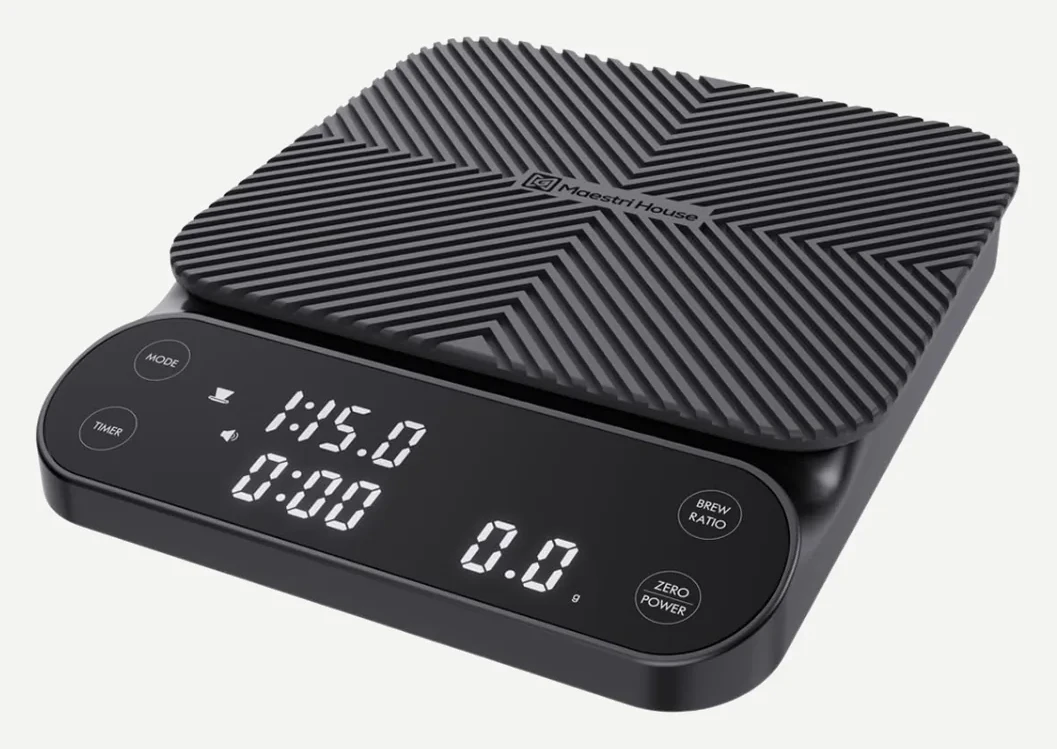
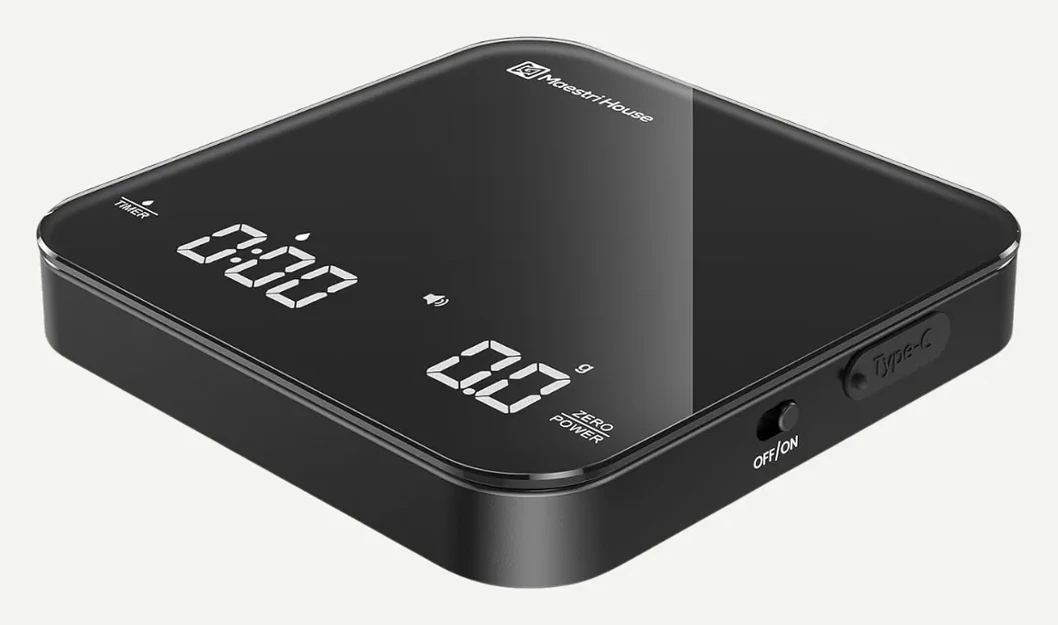
The Maestri House S3 takes a ratio you set and calculates a target water weight, then beeps when you reach it. You are watching for a number.

The BOOKOO Themis Ultra shows the live ratio as it changes, so you decide when to stop. You are watching a ratio.

The Polaris shows a percentage of the way there. That sounds trivial and it changes the pouring, because a pour over is done in stages: a bloom, then two or three additions. Knowing you are at 40 percent tells you where you are in the sequence far more directly than knowing you are at 128 grams of a 320 gram target.

Which is better is a matter of how you think. That three good scales solve the same problem three ways is worth knowing before buying any of them.

Hario framing it around recipe reproduction

The listing is about repeating a brew, not about a single cup.

Hario describes adjusting water and time in small steps to find a recipe that works, and then being able to hit it again. That is the actual use of a coffee scale and it is rarely how they are sold.

Most scale listings talk about precision as if accuracy were the goal. Accuracy is only useful because it makes repetition possible: a brew you cannot repeat taught you nothing. The Polaris page is unusual in saying so, and the percentage display follows from it.

What it does not publish

A lot, including the two numbers that define a scale.

Hario publishes no resolution and no maximum capacity on this listing. The model number CST-2000 suggests 2000g and the rest of the range resolves to 0.1g, but neither is stated on the page and this site does not fill blanks from inference.

Also absent: response time, water resistance, power source, platform size, weight and warranty. For a scale, resolution is the specification, and its absence is the same gap the Subminimal SubScale has.

Polaris vs the Hario V60 Drip Scale

Two Hario scales, and this is the one that calculates.

The V60 Drip Scale is the plain one: 0.1g, 2kg, a timer, and an auto-off that pauses while the timer runs. It publishes its specification properly and it is shaped to sit under a server.

The Polaris adds the ratio calculation and the percentage display and publishes far less about itself. If you brew by recipe and want the maths done, this. If you want to know what you are buying, the V60 Drip Scale.

Is the Polaris worth it?

Worth it for the percentage display, if you can live with the unpublished specification.

The progress readout is a genuinely good idea and nothing else on this site does it. Hario has made coffee scales for years and the brand is not a risk.

Against that, buying a measuring instrument that does not publish what it measures to is uncomfortable, and this site scores it on what is published. It carries 482 reviews.

Who should buy it (and who should not)

Buy it if you pour in stages and want to know where you are.

It suits multi-pour pour over recipes, somebody dialling a recipe in over several mornings, and anybody who finds gram targets harder to track than percentages.

Do not buy it for espresso, where nothing here suggests it is fast enough and no response time is given. And confirm the resolution before ordering if that matters to you.

Frequently Asked Questions

What does the percentage display show?

How much of your target water you have poured so far, which suits pour over recipes done in stages.

Does it calculate the brew ratio?

Yes, Hario says the extraction ratio calculation is done on the scale so you know how much water to pour.

What resolution does it weigh to?

Not published on this listing, which for a scale is the specification that matters most.

How is it different from the Hario V60 Drip Scale?

The V60 Drip Scale is a plain weigh-and-time scale that publishes its specification. The Polaris adds ratio maths and a percentage readout and publishes very little.

Is it good for espresso?

Nothing on the listing suggests it. There is no response time and no espresso mode.
Hario Polaris Coffee Scale CST-2000 appears in

Hario Polaris Coffee Scale CST-2000 is featured in

More on scales

Background reading that puts this review in context.

  • How to Brew Coffee by Weight

    Scoops measure volume and coffee is sold by mass, which is why the same scoop gives you a different dose every time you change beans. Weighing fixes it in about ten seconds.

  • Why a Coffee Scale Needs to Read to 0.1g

    A kitchen scale rounds to the nearest gram and starts weighing late. Both of those quietly move your recipe, and neither shows up as an obvious mistake.

Alternatives to Hario Polaris Coffee Scale CST-2000

See all Hario Polaris Coffee Scale CST-2000 alternatives →

Other Scales options we've reviewed.