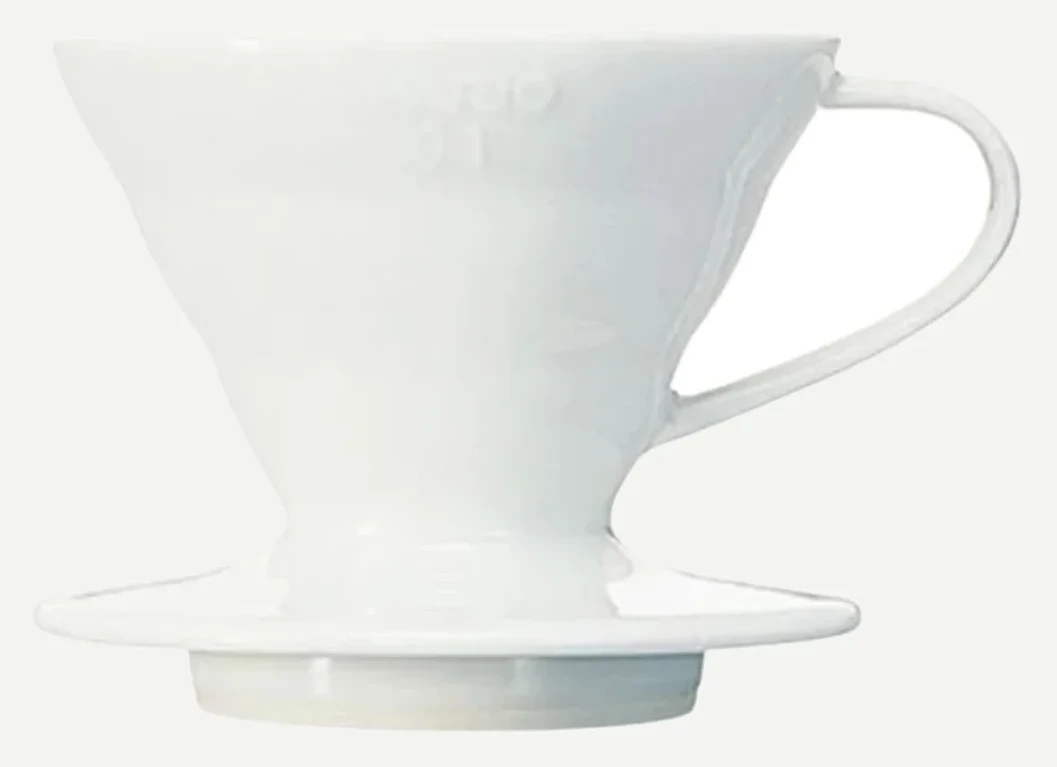
The Kalita Style 102 is a ceramic pour over coffee dripper with the 3-hole extraction design Kalita is known for. Kalita USA's store lists the white version at $20.00 for two to four cups, and it asks for Kalita 102 filters. The maker's page is brief, so this page spells out what a dripper like this asks of you, the choice between a ceramic cone and its alternatives, and how it compares with two other drippers on this site.
What is the Kalita Style 102 ceramic coffee dripper?
It is a manual brewer: a ceramic cup-shaped holder for a paper filter that sits on top of a mug or server. You add ground coffee to the filter, pour hot water over it, and the brewed coffee drips through the holes in the base into the vessel below. There is no machine, no cord and no moving parts.
Kalita describes it as a great option for brewing high-quality coffee in small spaces and easy enough for beginners. The maker says most people pick it for its elegant look and for the iconic 3-hole Kalita extraction design. The version on this page is white, which the maker calls a classic choice.
Kalita Style 102 specs
| Type | Pour-over dripper |
|---|---|
| Material | Ceramic |
| Capacity | 2 to 4 cups |
| Extraction design | 3-hole |
| Filters | Kalita 102 filters |
| Base diameter | 4 inches |
| Dishwasher | Safe |
| Made in | China |
| Colors on the maker's store | White, Black, Brown |
The maker does not publish a weight, a height, a hole size, a volume in milliliters or a warranty. Those stay blank here instead of being guessed. The price also depends on the color: white is $20.00, while black and brown are listed at $36.00 each.
How the Kalita 3-hole design and ceramic body work
A dripper controls how fast water leaves the coffee bed, and the holes in the base are one of the levers. A single large hole lets the pour speed matter a lot: pour fast and the water runs through quickly, pour slowly and it lingers. Kalita's approach is three holes, and the maker presents that as its signature. The page does not explain the physics or give a hole size, so there is no claim here about how it changes the cup. What it does tell you is that the dripper is meant to be consistent and beginner-friendly.
The ceramic body has one practical instruction from the maker: warm the dripper up before you start brewing for better results. Ceramic takes a moment to heat, and a cold body cools the first water through it. Rinsing the dripper and the filter with hot water first, then discarding that water, is the usual way to do it.
The size range matters too. The maker rates the dripper for two to four cups, so it fits one large mug or a couple of smaller ones. A pour-over method works in stages: wet the grounds, wait briefly, then pour in controlled circles. The filters are a specific type, Kalita 102, so check that you have the right ones before the first brew.
Kalita Style 102 vs Melitta 64007 Pour-Over Coffee Brew Cone
The Melitta 64007 Pour-Over Coffee Brew Cone is the budget alternative on this site. Its page publishes a plastic cone, one hole, a conical wedge shape, standard Melitta #2 filters and a 300 ml capacity, and it brews straight into a mug. The Kalita 102 is ceramic, has three holes and takes its own 102 filters, and it is rated for two to four cups rather than one. The Melitta's #2 filter is an open standard sold widely, while the Kalita asks for the 102 size specifically.
The trade is material and capacity against filter convenience. Ceramic holds heat and looks better on a counter, and the Kalita handles more cups. The Melitta is plastic, takes a filter every supermarket stocks and has no price on its page.
Kalita Style 102 vs Kalita Wave 185
The Kalita Wave 185 Dripper is the same maker's best-known dripper. It is polished stainless steel with a flat bed and three holes, made in Japan, and it takes the wave filters that fit Kalita drippers only. Its page lists a 500 ml capacity, up to four cups, and says the steel heats faster than ceramic or glass and holds temperature through the brew. It is dishwasher safe, like the 102.
So the choice inside the Kalita range is mostly material and filter shape. Both have three holes and both serve up to four cups. The 102 is ceramic and made in China, with a base 4 inches across. The Wave 185 is steel, made in Japan and uses wave filters. The Wave's page publishes a 500 ml figure and a Japanese origin, while the 102's page publishes neither.
Is the Kalita Style 102 worth it?
Nobody tested the 102 for this page, so there is no claim about how the coffee tastes, how even the extraction is or how the ceramic holds up. What is stated is a $20.00 price for the white version, ceramic construction, the 3-hole design, a two to four cup range and dishwasher-safe care. For a first pour-over setup or a small kitchen, that is a modest outlay. The ongoing cost is the 102 filters, and the extras you will need are a mug or server, a kettle and a way to weigh or measure coffee.
Who should buy the Kalita Style 102 (and who should not)
It suits a beginner who wants a manual brewer for a couple of cups, someone short on counter space and a buyer who prefers a ceramic dripper to plastic or steel.
It does not suit anyone who wants a no-attention machine, a person who brews for a crowd, or someone who wants a lot published about the hole size and flow before buying. A person who needs a free choice of filter should also look at the Melitta, whose #2 filters are widely sold. The page also carries a California Prop 65 warning that names lead, which is worth reading if that matters to you.
Frequently Asked Questions
How many cups does the Kalita 102 make?
The maker says it is for two to four cups.
What filters does it need?
Kalita 102 filters.
Is the Kalita 102 dishwasher safe?
Yes, the maker lists it as dishwasher safe.
Do I need to warm the dripper first?
The maker advises warming the dripper up before you start brewing for better results.
What is the Kalita 102 made of and where is it made?
It is made of ceramic, and the page says it is made in China.
Why do the colors cost different amounts?
The maker's store lists the white version at $20.00 and black and brown at $36.00. The page does not explain the difference.