The KINGrinder P2 is a manual hand grinder with an ABS plastic body, a conical stainless steel burr and 30 clicks per rotation of the adjustment dial. KINGrinder says it weighs 330 g and grinds up to 20 g at a time. The maker's own store showed it out of stock on 2026-11-06, and it is also sold on Amazon US.
What is the KINGrinder P2?
It is the lightweight, low-cost hand grinder in KINGrinder's range. The maker's product page calls it a lightweight manual hand coffee grinder and builds its pitch on six short points: a light ABS body, a metal burr, easy cleaning, an adjustment dial with fine steps, a compact size for travel, and a recommendation from a YouTube reviewer with 2 million subscribers. That last point is an endorsement, not a specification, so nothing about grind quality is claimed here on the strength of it.
A hand grinder trades speed and convenience for price and portability. You turn a crank, there is no motor and no cable, and the whole thing fits in a bag. The P2 sits at the plain, plastic end of that idea, which is the reason KINGrinder can describe it as lightweight and compact at the same time.
KINGrinder P2 specs
| Type | Manual hand grinder |
|---|---|
| Burr | Conical, SUS420, recommended for drip coffee |
| Body | ABS |
| Adjustment | 30 clicks per rotation, 0.0333 mm per click |
| Capacity | Up to 20 g at a time |
| Weight | 330 g |
| In the box | A cleaning brush |
That is everything the maker's product page states. It gives no burr diameter, no overall dimensions, no warranty term, no country of manufacture, no colour, no mention of espresso, and no statement about single dosing. Those are left blank on this page rather than guessed.
How the KINGrinder P2 grind adjustment works
KINGrinder describes the adjustment as 30 clicks per rotation, with each click moving the burr by 0.0333 mm. That is a stepped design: you cannot stop between clicks, but the steps are small, and turning the dial by one click changes the setting by a third of a hundredth of a millimeter. The maker says this makes adjusting the particle size easy, and that you simply turn the adjustment dial.
The figure that matters for choosing a grind is how many full rotations the dial has between its finest and coarsest positions, and KINGrinder does not say. Without that, the total number of settings cannot be worked out, and the 30 clicks per rotation figure should not be multiplied into a setting count. The maker does say the burr is recommended for drip coffee, which is the one brewing method it names. It does not say whether the P2 can reach an espresso grind or a French press grind, so neither is claimed.
KINGrinder P2 burr and body
The burr is conical and made of SUS420, a stainless steel grade. The maker does not publish the burr diameter, and that is the number its larger models lead with. The body is ABS plastic, which is why the weight is only 330 g, and plastic also means there is no metal housing like the aluminum bodies on dearer hand grinders.
Cleaning is described as tool free: the grinder comes apart without tools, and a cleaning brush is included in the box. KINGrinder gives no guidance on how often to clean it, and none on water or dishwashers, so keep to the brush.
KINGrinder P2 vs KINGrinder K6
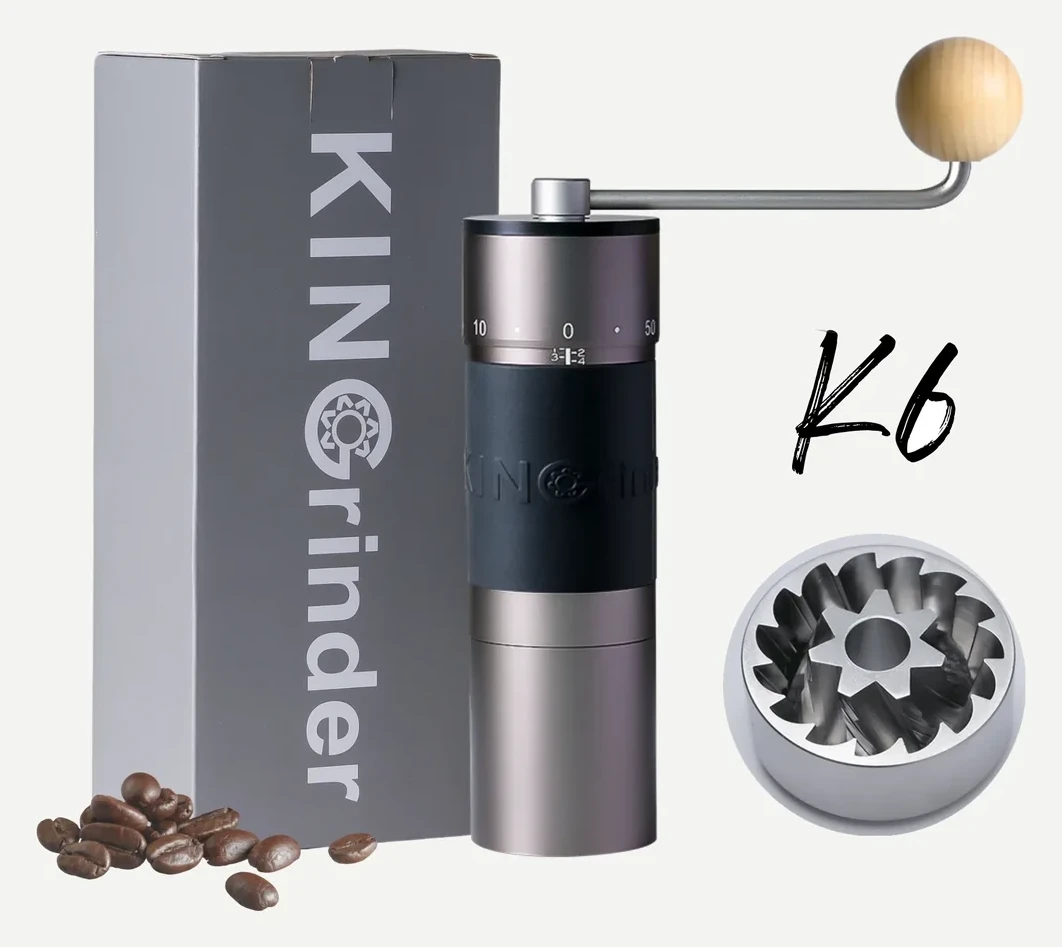
The Kingrinder K6 is the same maker's step up, listed on this site at $126. Its page publishes a 48 mm heptagonal conical stainless steel burr, 60 clicks per round, a hopper of 25 to 30 g, an aluminum body, and a statement that it handles espresso and French press. The P2 publishes a 20 g capacity, 30 clicks per rotation and an ABS body, and says nothing about burr size or espresso.
On published figures, the K6 tells you far more about what it can do. The P2 is the lighter and cheaper design, but its page does not give you the numbers to say how its grind compares. The two also state their adjustment differently, 60 clicks per round against 30 clicks per rotation, so do not read the 30 against the 60 as a like for like comparison of fineness.
KINGrinder P2 vs TIMEMORE Chestnut C2
The TIMEMORE Chestnut C2 is another hand grinder at this size, listed here at $79.99. It publishes a conical burr of 420 stainless steel hardened to 55 to 58 HRC, a 25 g hopper, double bearing centre axis positioning, a metal body of aluminium with stainless steel, and a weight of 0.59 kg. It also lists pour over, French press and moka pot as brew methods.
The P2 is lighter by about 260 g on the published weights, 330 g against 590 g, and its capacity is 20 g against 25 g. The Chestnut C2 states its burr steel and hardness, its bearings and the brew methods it covers. The P2 states a burr material code and a single recommended method. For a choice made on published information, the C2 gives you more to go on, and the P2 gives you a lower weight.
KINGrinder P2 vs 1Zpresso Q Air
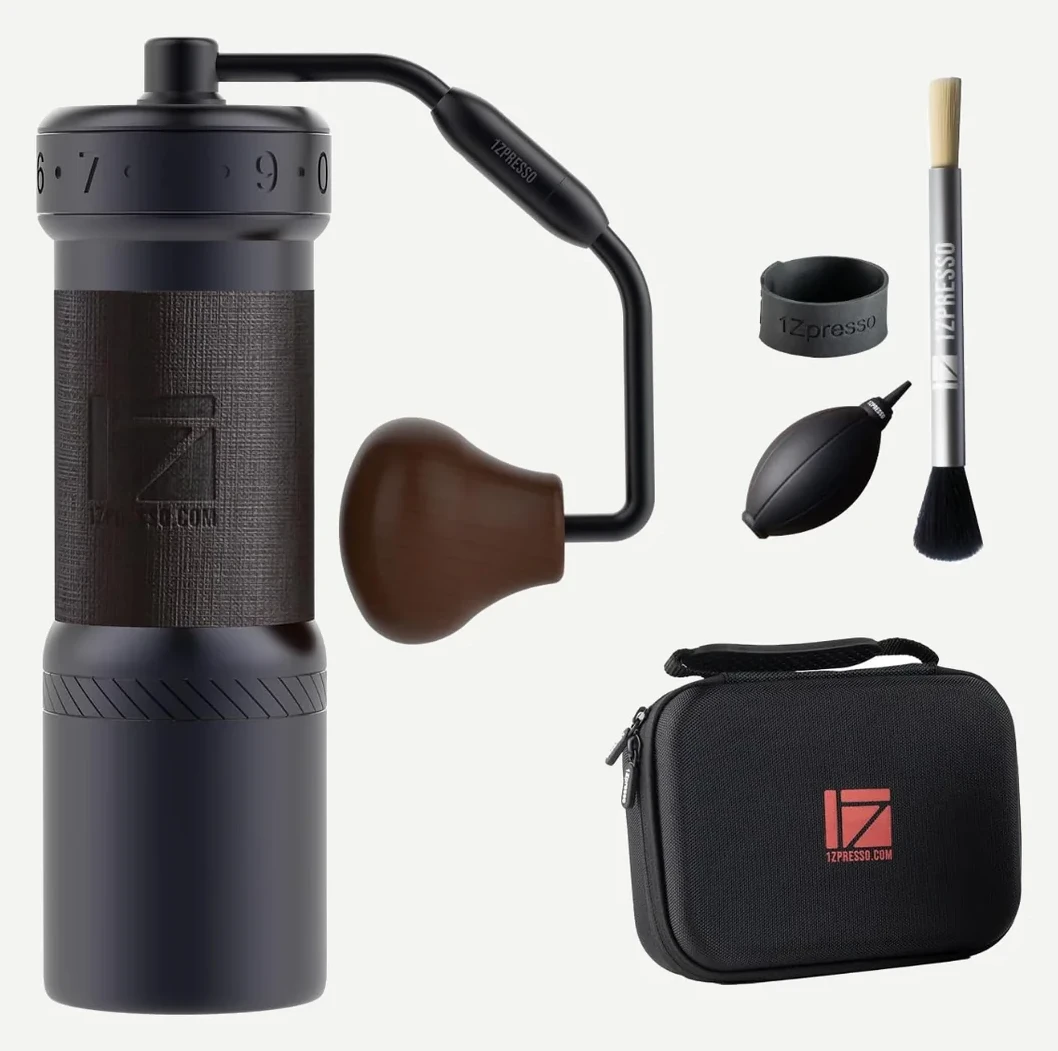
Another light pour over grinder for the road is the 1Zpresso Q Air Manual Coffee Grinder, at about 365 g with 30 stepped clicks, sold by 1Zpresso for pour over only.
Is the KINGrinder P2 worth it?
Nobody has tested the P2 for this page, so there is no claim about how even the grounds are, how many turns a dose takes, or how the plastic body wears. What can be said is narrow. It is a lightweight conical burr hand grinder with a fine click step, a 20 g capacity and a brush in the box, from a maker whose heavier models publish far more. KINGrinder's own store showed every option out of stock on the day it was read, with a price of 44 pounds sterling shown to a visitor in Europe. The maker's US dollar price is not published, so no US maker price is given here.
Value depends on how little you need from a grinder. For a small batch of drip coffee at home or on a trip, a light plastic hand grinder is a reasonable thing to carry. For espresso, or for anyone who wants burr size and a setting range in writing before buying, the K6 or the Chestnut C2 states more. The grinder category lists every grinder with its figures side by side.
Who should buy the KINGrinder P2 (and who should not)
It suits someone who wants the lightest possible hand grinder for drip coffee, who is travelling or camping, and who would rather not carry a metal grinder. A 20 g capacity covers one or two cups of drip coffee at a time, and a tool free clean-up with a brush suits a bag.
It is a weaker fit for espresso, since the maker names only drip, and for anyone grinding a large batch, since 20 g is the stated limit for one load. Buyers who want a stated burr diameter, a warranty period or a country of manufacture will not find them on KINGrinder's page for this grinder.
Frequently Asked Questions
How much does the KINGrinder P2 weigh?
KINGrinder states 330 g. The body is ABS plastic.
How much coffee can the KINGrinder P2 grind at once?
The maker says it can grind up to 20 g at a time.
What burr does the KINGrinder P2 use?
A conical burr made of SUS420, which the maker recommends for drip coffee. No burr diameter is published.
How many clicks does the KINGrinder P2 have?
The maker says 30 clicks per rotation, with each click a fine adjustment of 0.0333 mm. It does not state how many rotations the dial covers.
Can the KINGrinder P2 make espresso?
KINGrinder does not say. The only brewing method it names is drip coffee.
Is the KINGrinder P2 easy to clean?
The maker says it needs no tools to take apart and clean, and includes a cleaning brush.