What is the Silk Road Trade PC Series?
A copper cezve built to outlast you, and honest about the one thing it cannot do.
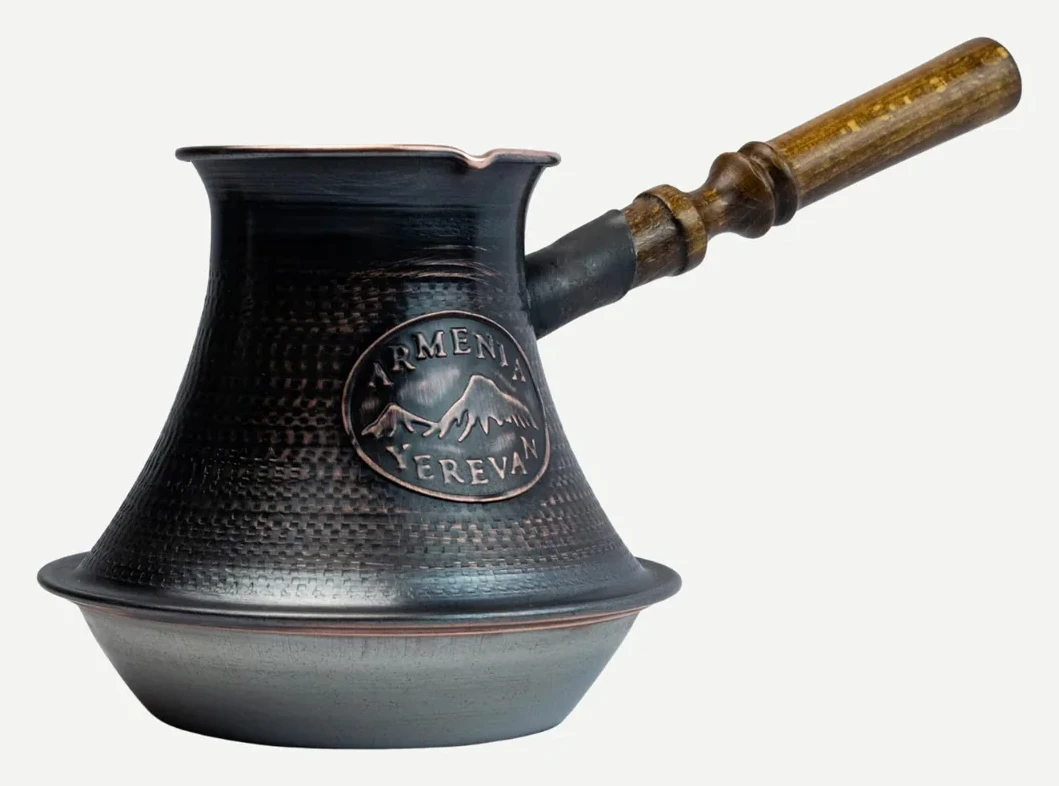
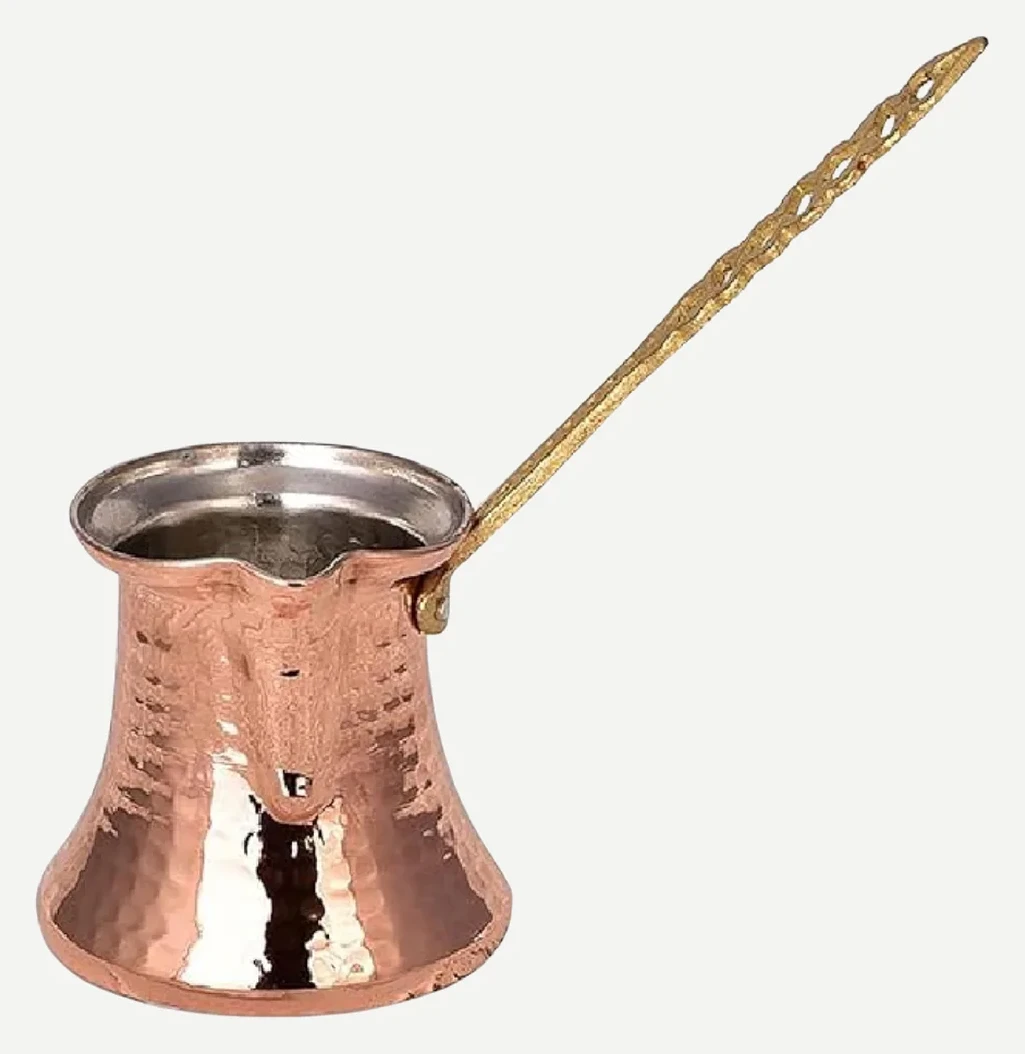
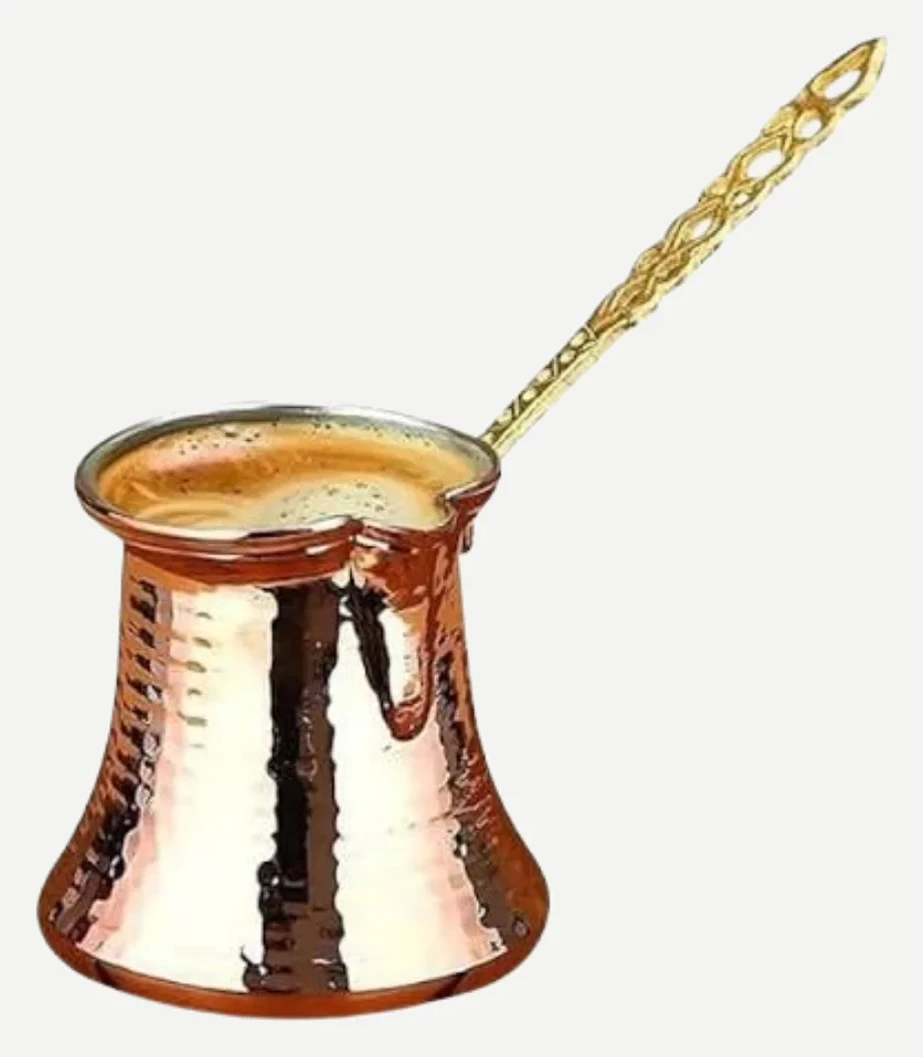
Silk Road Trade publishes a body made from a single sheet of solid engraved copper with a hammered base, nonreactive tin linings inside, a 14oz capacity, and hand production at every step. The handle is turned wood on a brass collar. It works on gas, electric, ceramic and halogen, and the maker states plainly that it does not work on induction.
How well does it brew Turkish coffee?
Thickness is the whole argument, and here it is the right kind.
Turkish coffee wants heat that arrives evenly and then stops arriving the moment you lift the pot. Thin copper heats fast and unevenly. Thick copper spreads the heat across the whole base before it reaches the coffee, which is what stops a burnt ring forming under the grounds.
There is a limit to this, and it is worth saying because more is not simply better: mass in the base keeps cooking after the pot leaves the flame, which is why a heavy fondue-style pot is wrong for a drink decided in seconds. A cezve wants thick enough to spread and thin enough to stop. The maker claims the thickest copper available, and the honest position is that no thickness figure is published, so the claim is a claim.
Build quality and materials
Single sheet, tin lined, hammered base, and one contradiction.
Pressing the body from one sheet means no seam, and a seam is where a cezve eventually fails. The tin lining is published as nonreactive, which is the right answer to copper and acid. The hammered base is not decoration either; hammering work-hardens the metal and gives sand a keyed surface to grip.
The handle is turned wood on a brass collar, which the product photo shows clearly. Wood stays cool through a two-minute brew, which matters on a pot you hold over the flame.
Will it work on your hob?
Gas, electric, ceramic and halogen yes. Induction no, and the maker says so.
Copper is non-ferrous, so an induction hob has nothing to induce a current in. Silk Road Trade states this outright, which is more useful than the silence most copper listings offer, and it should be the first thing you check before buying any copper cezve.
What it adds instead is sand. The traditional method buries the pot in hot sand so heat arrives from every side at once, and the maker publishes this pot as suitable for it. That is the setup a Turkish coffeehouse uses, and it is the single biggest upgrade available to somebody already brewing well. If your hob is induction, the HandCraftoria copper jazva is the copper pot that works.
Silk Road Trade vs BCS Hand-Engraved Copper Cezve
Two handmade engraved copper pots at similar sizes.
The BCS copper cezve is the other hand-engraved copper cezve on this list and scores near the top of the category. Both are handmade, both are tin lined, and both are objects as much as tools.
Silk Road Trade's case is the single-sheet body, the hammered base and the published sand capability. Its weakness is the handle contradiction, which BCS does not have. If you want to cook in sand, this one. If you want a spec sheet that agrees with itself, the BCS.
Is the Silk Road Trade cezve worth it?
Yes if you are buying a pot for twenty years, no if you are trying one out.
It is priced above the stainless cezves and below nothing much. What the money buys is hand production, a seamless body and a lining that means the pot stays safe as it ages. The maker's line about lasting generations unlike thin imitations is marketing, but the construction behind it is the real thing.
The honest caution is that no wall thickness, warranty or weight is published, and the handle material is contradicted on its own page. You are buying craft on trust rather than on numbers.
Who should buy the Silk Road Trade (and who should not)
Buy it if you want the traditional pot and have a flame or a sand tray.
It suits somebody who already makes Turkish coffee well and wants to stop upgrading, and anybody curious about sand brewing, which this is one of very few pots explicitly sold for.
Do not buy it for an induction hob, which the maker rules out. Do not buy it if you need to know exactly what the handle is made of before you commit. And a tin-lined copper pot never goes in a dishwasher.
Frequently Asked Questions
Can the Silk Road Trade cezve be used on induction?
No. The maker states plainly that it does not work on an induction stove. Copper is non-ferrous, so induction has nothing to work against.
Can you use this cezve in hot sand?
Yes, the maker publishes it as suitable for hot sand, which is the traditional method and heats the pot from every side at once.
Is the Silk Road Trade handle wood or bronze?
The listing says both: a bullet describes cast solid bronze, the title says wooden. We have recorded the contradiction rather than choosing, because the two feel completely different through a brew.
Is the copper lined?
Yes, with nonreactive tin on the inside, which is what keeps acidic coffee off bare copper.